Key takeaways
- December marks the start of summer in Australia, offering optimal warm soil temperatures for sowing heat-loving vegetables.
- Early summer suits heat-loving fruiting crops, but across hot temperate and inland zones, start seeds in semi-shade or use established seedlings with shade-cloth protection rather than direct sowing in 35°C+ heat.
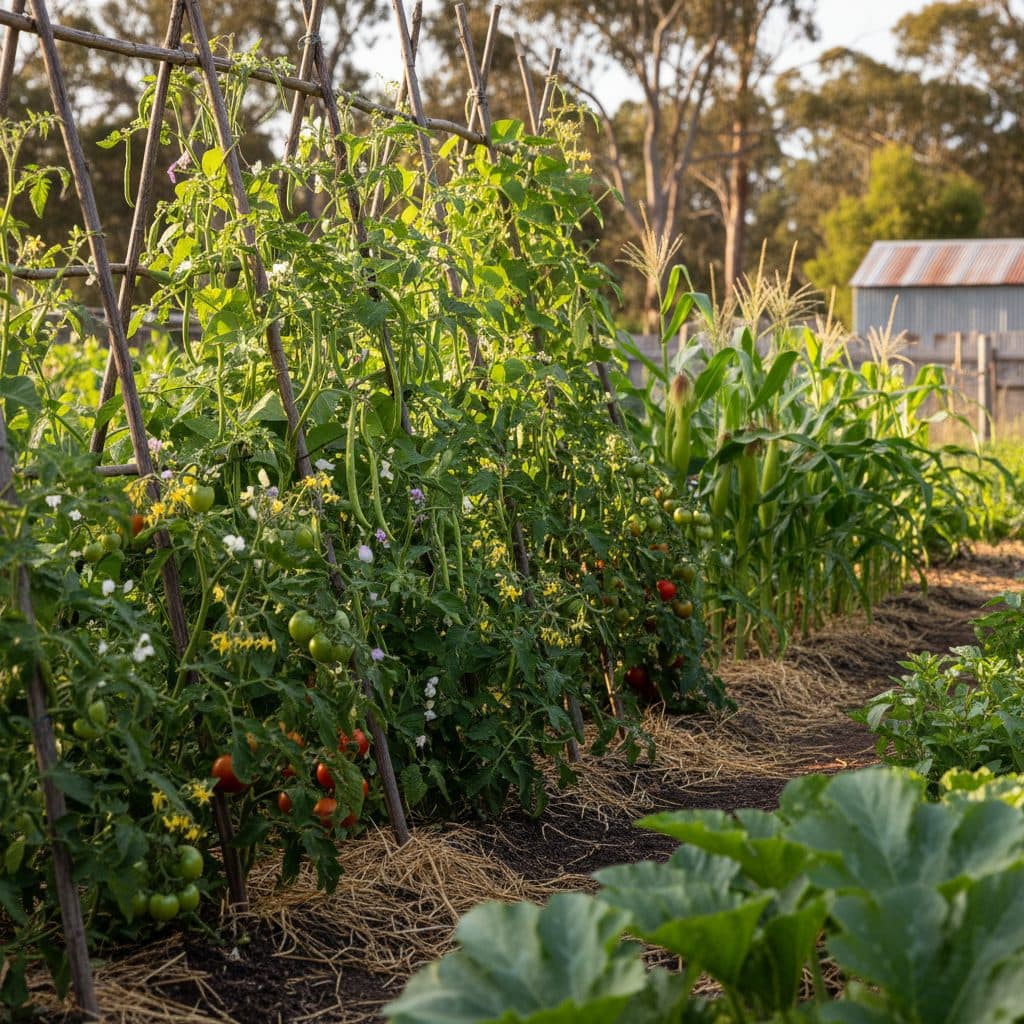
- Temperate and subtropical gardeners plant climbing beans, sweetcorn, zucchini, pumpkins, cucumbers, and capsicums.
- Cool and tableland regions experience their peak planting window for warm-season transplants before the short summer passes.
- Tropical northern growers prepare for monsoonal rains with wet-season crops planted on raised ridges for drainage, rosella, and sweet potatoes.
- Installing drip irrigation and applying a 5 to 8 cm blanket of organic mulch conserves soil moisture during early summer heat.
Quick answer: Knowing what to plant in December Australia centers on fast-growing, warm-season crops that thrive in high soil temperatures. In temperate and subtropical regions, December is ideal for planting climbing beans, sweetcorn, zucchini, cucumbers, capsicums, eggplants, and basil. In tropical northern areas, planting focuses on monsoon-hardy crops including sweet potato, cassava, snake beans, and rosella.
December brings long daylight hours, warming soils, and the official start of summer across Australia. For home gardeners, early summer is an energizing period when warm-season crops take off with vigorous growth. Understanding what to plant in december australia allows you to fill empty garden beds with productive edibles that will yield heavily through late summer and autumn.
In southern and temperate zones, December soil temperatures consistently sit between 18°C and 25°C, providing the ideal conditions for rapid seed germination. Direct-sown seeds of beans, squash, and corn emerge within days, catching up quickly to spring transplants. In cooler southern districts, December is the final reliable window to establish warm-season crops before autumn arrives.
Meanwhile, northern Australia transitions into the wet season, bringing tropical humidity and heavy monsoonal downpours. By tailoring crop selection to your specific Australian climate zone and implementing water-wise practices, your veggie patch will remain resilient and bountiful throughout the summer months.
Australian climate zones for December sowing
Australia spans four distinct climatic zones in December, each requiring a tailored planting schedule:
+-------------------------------------------------------------------+
|               DECEMBER CLIMATE ZONES IN AUSTRALIA                 |
|                                                                   |
|  TROPICAL (Far North QLD, NT, Kimberley)                          |
|  - Start of wet season, 28°C to 34°C, high humidity & storms      |
|  - Sweet potato, snake beans, rosella, cassava, kangkong*         |
|                                                                   |
|  SUBTROPICAL (SE QLD, Northern NSW)                               |
|  - Warm, humid 24°C to 30°C days, frequent afternoon storms       |
|  - Capsicum, eggplant, cucumber, sweetcorn, climbing beans        |
|                                                                   |
|  TEMPERATE (Sydney, Melbourne, Adelaide, Perth)                   |
|  - Warm to hot days (22°C to 32°C), long daylight, sunny          |
|  - Tomatoes, zucchini, pumpkins, bush beans, sweetcorn            |
|                                                                   |
|  COOL / COLD (Canberra, Tasmania, Tablelands)                     |
|  - Mild to warm days (18°C to 26°C), cool nights, prime summer    |
|  - Bush beans, sweetcorn transplants, zucchini, salad greens      |
+-------------------------------------------------------------------+- Tropical (Darwin, Cairns, Townsville): As monsoonal rains begin, avoid standard Mediterranean vegetables and plant tropical perennials, snake beans, cassava, and sweet potatoes. *Note on kangkong (Ipomoea aquatica):* It is restricted or prohibited in some states—check your state biosecurity rules before planting it.
- Subtropical (Brisbane, Sunshine Coast, Northern Rivers): Excellent growing conditions for fruiting summer crops. Sow sweetcorn, climbing French beans, zucchini, cucumber, and capsicums.
- Temperate (Sydney, Adelaide, Perth, coastal Victoria): Prime summer conditions. Direct sow beans, corn, cucumbers, and pumpkins, while transplanting late tomatoes and capsicums. In hot inland regions, start seeds in semi-shade or use 30% shade cloth over seedbeds to prevent heat scorch and thermodormancy.
- Cool and Cold (Canberra, Hobart, Ballarat, Southern Tablelands): Warm summer days provide the main growing window. Plant bush beans, zucchini, beetroot, carrots, and sweetcorn transplants immediately.
Warm-season fruiting vegetables to plant in December
Fruiting crops require warm soil, consistent moisture, and full sunlight to produce heavy harvests.
Climbing and dwarf French beans
December is the premier month to sow French beans across temperate and cool regions. Climbing varieties like 'Blue Lake', 'Rattlesnake', and 'Purple King' yield continuously over two to three months when trained up vertical trellises, maximizing vertical space in small gardens. Dwarf bush beans mature rapidly in 50 to 60 days, making them ideal for quick successions. Sow seeds 3 cm deep in moist soil, withholding additional watering until sprouts emerge to prevent seed rot.
Zucchini, squash, and pumpkins
Cucurbits grow rapidly in December. Sow seeds in small mounds enriched with compost and aged cow manure. For small veggie patches, choose compact bush zucchini cultivars like 'Black Beauty', 'Lebanese', or scallopini squash. If planting sprawling winter pumpkins (such as 'Queensland Blue', 'Jap' / 'Kent', or 'Butternut'), allow at least 2 to 3 m of space per vine or train them along sturdy boundary fences.
Sweetcorn (Zea mays)
Direct sow sweetcorn seeds 3 cm deep in grid blocks (e.g., 4 rows by 4 plants) with 30 cm spacing. Block planting ensures airborne pollen from the tassels at the top of the stalk falls directly onto the developing silks below, preventing patchy, missing kernels on harvested cobs.
Capsicums and eggplants
In temperate zones, transplant established capsicum and eggplant seedlings into full sun. In hot inland regions, high daytime temperatures can cause flower abort; consulting our troubleshooting guide on tomato blossom drop heat explains how heat stress impacts solanaceous fruit set.
Summer leafy greens, herbs, and succession crops
Standard winter greens quickly turn bitter and bolt to seed in December heat. Switch to heat-tolerant varieties that thrive in summer sun.
+-------------------------------------------------------------+
|             SUMMER GREENS AND HERBS SELECTION               |
|                                                             |
|  VARIETY                    GROWING HABIT   HEAT TOLERANCE  |
|  ---------------------------------------------------------  |
|  Silverbeet (Fordhook)      Upright clump   High            |
|  Sweet Basil (Genovese)     Bushy annual    High            |
|  Warrigal Greens (Native)   Sprawling vine  Exceptional     |
|  Malabar Spinach (Ceylon)   Climbing vine   High            |
|  Lemongrass (Perennial)     Large clump     Exceptional     |
+-------------------------------------------------------------+- Silverbeet: Silverbeet is exceptionally dependable during early summer. Sow seeds or transplant seedlings 30 cm apart, harvesting outer stems weekly to encourage fresh growth.
- Sweet basil and Greek basil: Basil is the premier summer culinary herb. Plant seedlings alongside tomatoes, pinching out flower buds to prolong leafy production.
- Warrigal greens (Tetragonia tetragonioides): An exceptional native summer ground cover. Always blanch warrigal greens in boiling water for about two minutes before eating to reduce the oxalates.
- Carrots and beetroot: Direct sow quick summer successions. Keep seedbeds damp by covering rows with a timber plank or burlap until the first seedlings appear—usually one to three weeks for carrots; lift the cover to check every few days. Understanding early signs of plant thirst through watering vegetables signs ensures seedlings never dry out.
Tropical wet season edibles for Northern Australia
For gardeners in Far North Queensland, the Northern Territory, and northern Western Australia, December marks the start of the wet season. Traditional European vegetables succumb to fungal leaf spot and root rot in the heavy tropical rain, making heat-hardy tropical perennials the preferred choice.
- Sweet potato (Ipomoea batatas): Plant stem cuttings (slips) 30 cm apart in raised ridges. Sweet potatoes grow strongly in warm, wet conditions provided the ridges shed water; the roots rot if the soil stays saturated, providing edible green shoots throughout summer followed by storage roots.
- Rosella (Hibiscus sabdariffa): Plant rosella seedlings in full sun. Plants grow into large, robust shrubs that produce bright red calyces in late autumn, prized for homemade jams, cordials, and herbal teas.
- Snake beans (Vigna unguiculata subsp. sesquipedalis): Unlike European green beans, Asian snake beans thrive in extreme heat and high humidity. Train vines up a trellis, harvesting long, crisp pods when pencil-thin.
- Cassava and taro: Plant taro corms into moisture-retentive ground, and plant cassava stem cuttings on raised mounds or ridges in free-draining soil, since cassava roots rot where water sits. Food safety: cassava roots must be peeled and thoroughly cooked before eating, never eaten raw, and raw cassava foliage should never be fed to livestock.
Summer irrigation and mulching strategies
Managing soil moisture is the primary factor that determines summer garden success across Australia.
+-------------------------------------------------------------+
|             EARLY SUMMER WATERING BEST PRACTICES            |
|                                                             |
|  1. Water early: Irrigate before 8:00 AM at ground level    |
|  2. Deep soaking: Water deeply 2-3 times weekly vs shallow  |
|  3. Mulch deeply: Apply 5-8 cm organic straw or lucerne     |
|  4. Protect roots: Keep mulch 5 cm clear of plant stems     |
|  5. Automate: Use drip lines beneath mulch for efficiency   |
+-------------------------------------------------------------+
Apply a generous 5 to 8 cm layer of organic mulch (pea straw, lucerne, or sugarcane mulch) across all garden beds. Mulch keeps the soil markedly cooler than bare ground, reduces surface evaporation, and suppresses weed seeds. Applying practices from mulching vegetables and trees ensures delicate feeder roots remain protected.
Water garden beds deeply two to three times per week early in the morning before heat builds, applying water at soil level via drip lines beneath mulch to keep foliage dry and reduce evaporation. Avoid late evening overhead watering, which creates damp foliage conditions overnight that encourage powdery mildew and fungal leaf spots. As summer advances, follow our month-by-month recommendations in what to plant in january australia to maintain continuous garden productivity.
Selecting climate-adapted summer crops and protecting soil moisture keeps an Australian veggie patch productive. At agripure, straightforward horticultural guidance helps you get reliable harvests in every Australian season.