Key takeaways
- January sowing in the UK focuses primarily on long-season crops started indoors with supplementary heat and light.
- Chillies, sweet peppers, and aubergines require early indoor sowing to ensure maturity before autumn.
- Outdoor planting is restricted to dormant bare-root fruit trees, bushes, and garlic, provided the soil is neither frozen nor waterlogged.
- Cold greenhouses and polytunnels support hardy salad greens such as winter purslane, corn salad, and brassica microgreens.
- Forcing rhubarb crowns beneath terracotta pots or buckets delivers succulent, tender pink stems roughly 8 weeks later.
Quick answer: In January in the UK, sow long-season crops indoors with heat, including chillies, aubergines, and exhibition onions. In unheated greenhouses or cold frames, sow hardy winter salads like land cress and corn salad. Outdoors, plant dormant bare-root fruit trees, canes, and overwintering garlic cloves whenever the ground is not frozen solid or waterlogged.
January marks the turning of the gardening calendar across the British Isles. While frost glazes the allotment grass and daylight remains brief, the month provides an exciting opportunity to launch the new growing season. Understanding what to plant in january uk requires balancing ambitious enthusiasm with the biological realities of low ambient light and freezing soil temperatures.
Attempting to direct sow tender summer vegetables outdoors in midwinter will result in rotted seeds and frustration. However, with a heated propagator, a bright windowsill, or a sheltered cold frame, January is the ideal moment to establish crops that demand a long maturation window. Early preparation now ensures sturdy plants ready for spring planting.
The January indoor sowing list: long-season champions
Certain vegetable varieties require five to six months from germination before producing their first harvest. Sowing these in January gives them the head start they need to thrive through the British summer.
+---------------------+-----------------------+---------------------------------------+
| Vegetable Crop      | Temperature Needed    | Growing Environment                   |
+---------------------+-----------------------+---------------------------------------+
| Chillies & Peppers  | 20°C to 25°C          | Heated propagator, bright grow light  |
| Aubergines          | 21°C to 26°C          | Heated propagator, warm windowsill    |
| Exhibition Onions   | 15°C to 18°C          | Cool greenhouse staging or indoors    |
| Early Broad Beans   | 10°C to 15°C          | Unheated greenhouse / cold frame pots |
| Winter Salads       | 5°C to 12°C           | Cold frame, polytunnel border         |
+---------------------+-----------------------+---------------------------------------+
Chillies and sweet peppers (Capsicum annuum, chinense, and pubescens)
Chilli peppers, particularly slow-ripening varieties like Scotch Bonnet and Habanero (Capsicum chinense), along with Andean Rocoto (Capsicum pubescens), germinate slowly and need up to 120 days from potting on to fruit ripening.
- Sow seeds in shallow modular trays filled with fine seed compost, such as a loam-based John Innes compost seed blend.
- Place the tray in a heated propagator maintaining a steady temperature between 20°C and 25°C.
- Once germinated, position seedlings beneath LED grow lights or on the brightest south-facing windowsill to prevent leggy, weak stems. Keep compost damp but never soaking wet to avoid damping-off fungal infections. For comprehensive indoor setup rules, read seed starting for beginners.
Aubergines (Solanum melongena)
Like chillies, aubergines demand a long, warm season to flower and set fruit reliably in the UK climate. Sowing in mid to late January ensures sturdy plants ready for greenhouse borders or large patio pots by May. Cultivars such as Black Beauty or early hybrid varieties establish strong root crowns when started under heat now.
Large exhibition and bulb onions (Allium cepa)
Traditional allotment growers aiming for giant exhibition onions or heavy maincrop bulbs sow seed in modular trays in early January. Sown under gentle warmth, these seedlings form sturdy root systems before being hardened off for spring planting. Varieties like Ailsa Craig and Bedfordshire Champion perform well when given this early start.
What to sow in an unheated greenhouse or cold frame
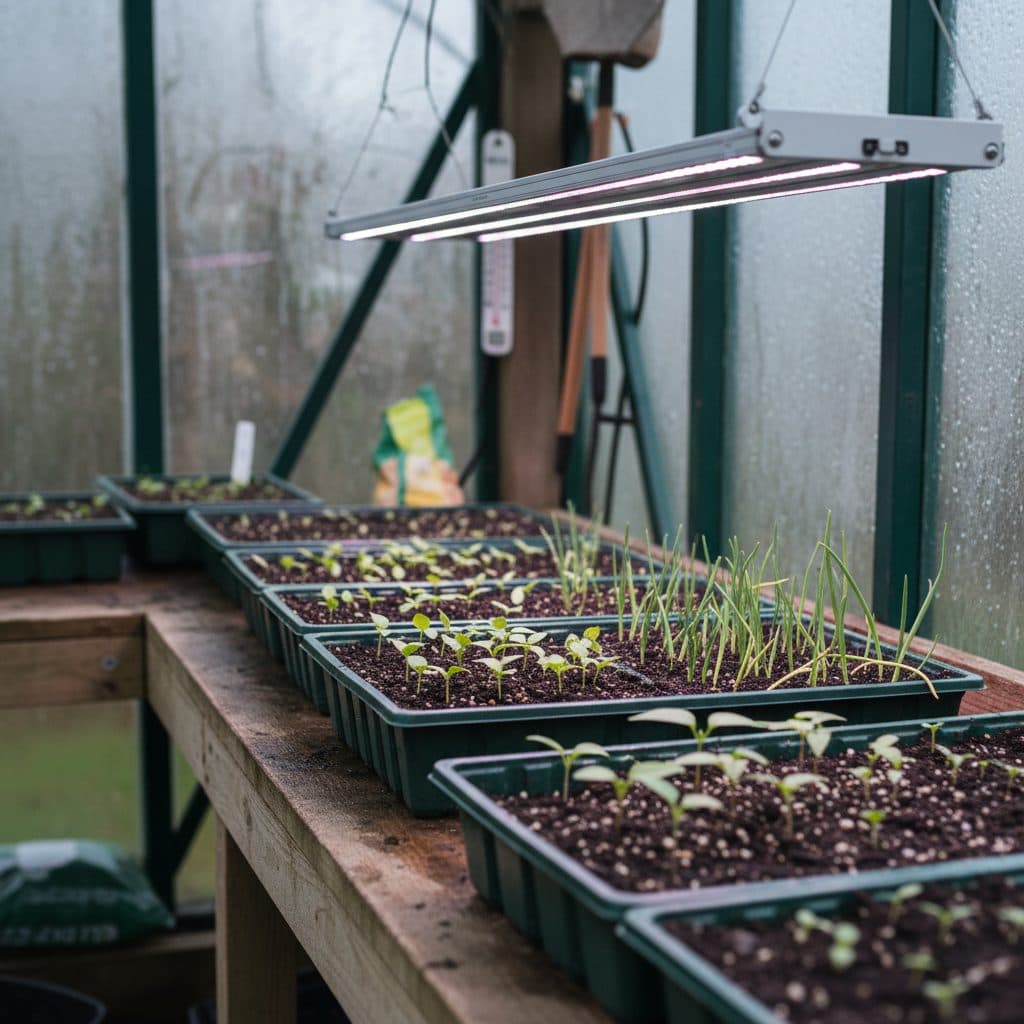
An unheated greenhouse or polytunnel creates a sheltered microclimate that protects hardy crops from windchill and winter rain, even when outdoor ground is frozen.
- Early broad beans (Aquadulce Claudia): Sow seeds 5 cm deep in deep root trainers or 9 cm pots. Raising broad beans under glass protects seeds from being eaten by field mice or rotting in cold, waterlogged outdoor soil.
- Hardy winter salads: Sow cut-and-come-again leaves including corn salad (lambs lettuce), land cress, winter purslane (claytonia), and mustard greens into shallow seed trays. These cold-hardy greens continue slow vegetative growth and provide fresh salad bowls throughout February and March.
- Sweet peas (Lathyrus odoratus): Sow sweet peas in cardboard tubes or deep pots. Kept cool and unheated, they develop deep root systems that produce vigorous, heavily flowered vines once planted out in April.
To plan your full year of allotment successions, compare these early steps with our summer guide on what to plant in june uk and autumn planning in what to plant in september uk.
Outdoor January planting: bare-root trees and canes
While direct seed sowing in outdoor beds is paused during January, the dormant winter period is the standard time to plant bare-root fruit stock.
+-----------------------------------------------------------------------------------+
|  [Check Soil Condition Before Outdoor Planting]                                   |
|       |                                                                           |
|       +--> Soil Frozen Solid?  ===> DO NOT PLANT (Heel in damp compost in shed)   |
|       |                                                                           |
|       +--> Soil Waterlogged?   ===> DO NOT PLANT (Wait for drainage)              |
|       |                                                                           |
|       +--> Soil Moist & Workable => Dig hole, spread roots, backfill & firm down  |
+-----------------------------------------------------------------------------------+
Bare-root fruit trees, bushes, and outdoor garlic
Bare-root specimens are lifted from field nurseries while dormant and sold without plastic pots, making them far cheaper and environmentally lighter than container-grown trees.
- Top fruit: Apple, pear, plum, and cherry trees can be planted throughout January whenever the ground is workable. Ensure root collars sit level with the surrounding soil surface and stake young trees securely against winter gales.
- Soft fruit: Raspberry canes, blackcurrants, redcurrants, and gooseberries establish strong root networks in cold soil, ready to shoot vigorously with the first spring warmth.
- Hardy garlic: Hardy hardneck garlic cloves can also go into workable, unfrozen soil if autumn planting was missed, though October–November remains best.
- The Golden Rule: Never plant bare-root stock into frozen ground or waterlogged soil. If your plot is frozen when a delivery arrives, keep the root bundles in a cool shed and cover the roots with damp compost or sacking (heeling in) until conditions improve.
Forcing rhubarb (Rheum rhabarbarum)
January is the classic month to force established rhubarb crowns on the allotment for an ultra-early harvest of tender, champagne-pink stems:
- Clear away dead leaves and weeds around a vigorous, established crown (at least three years old).
- Cover the crown with a traditional terracotta forcing pot, an upturned bucket, or a clean dustbin.
- Pack straw or dry leaves around the outside of the container to provide insulation against freezing winds.
- Excluded from daylight, the crown sends up sweet, delicate stems that are ready to harvest in roughly 8 weeks under winter weather, long before unforced outdoor rhubarb emerges.
January allotment jobs and winter preparation
Beyond seed sowing, January is a practical time for structural maintenance on the plot:
- Order seed potatoes for chitting: Purchase first earlies and second earlies in late January. Set them rose-end upwards in empty egg boxes in a cool, bright, frost-free room to produce sturdy green shoots before spring planting.
- Prune dormant fruit trees: Prune established apple and pear trees on dry winter days, opening the canopy to light and removing crossing branches.
- Turn the compost heap: If the weather is mild, turn inactive compost bins to re-aerate the organic matter, incorporating fallen winter leaves and kitchen scraps.
- Service tools and equipment: Clean, sharpen, and oil hoes, spades, and secateurs so everything is ready for the spring rush.
- Check winter brassicas: Firm down the soil around the base of tall Brussels sprouts and purple sprouting broccoli plants that have been rocked loose by winter gales.