Key takeaways
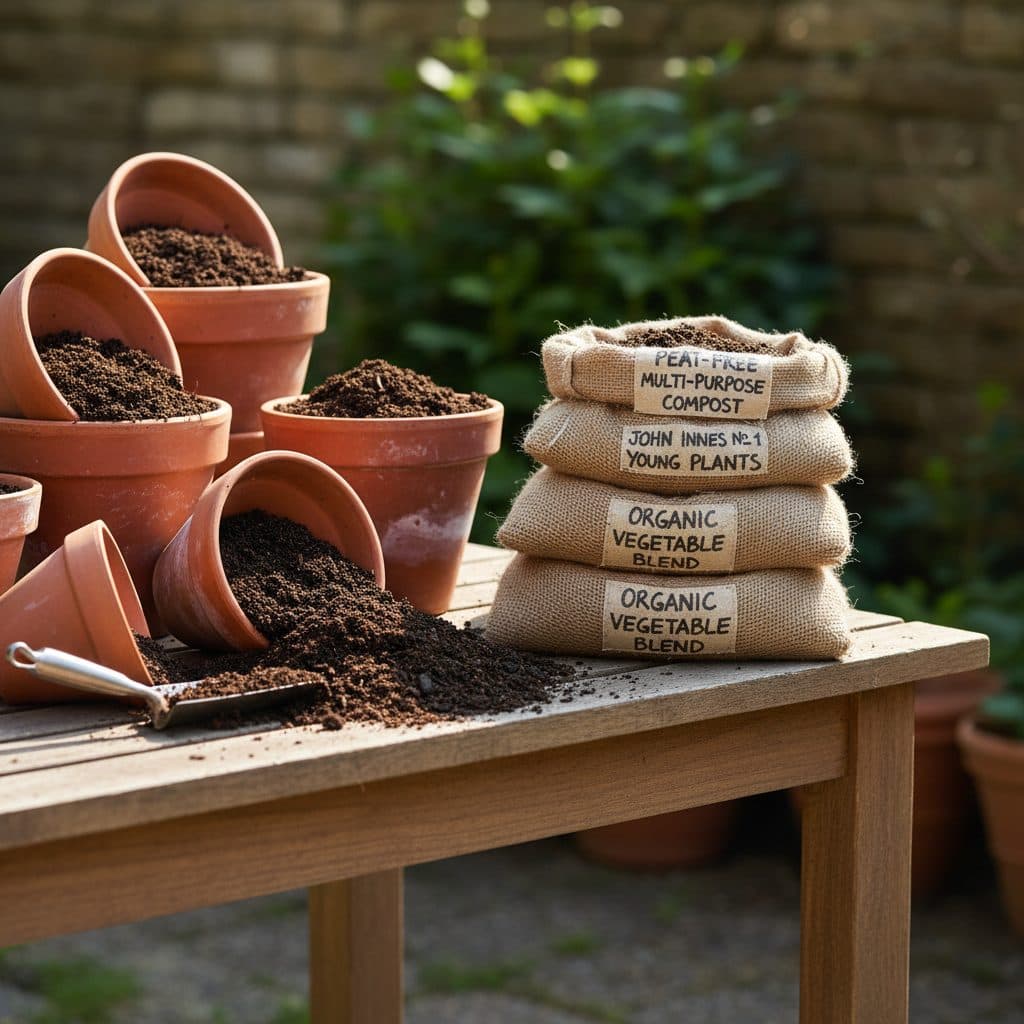
- John Innes compost is a standardized, loam-based growing medium rather than a commercial brand.
- The numeric grades represent increasing nutrient concentrations matched to plant growth stages.
- Loam provides mineral weight, nutrient buffering capacity, and easy re-wetting compared to peat-free multipurpose compost.
- Seed formulation contains minimal nutrients to prevent burning tender emerging roots.
- Number 3 carries the highest fertilizer charge, formulated specifically for established shrubs and permanent container plantings.
Quick answer: John Innes compost refers to a classic British series of loam-based potting soil formulas developed to provide reliable structure, steady nutrient release, and water retention. The range spans from Seed Compost for germination to No. 1, No. 2, and No. 3, with each ascending number containing higher concentrations of fertilizer for successively larger, established plants.
Gardeners across the UK frequently encounter bags marked with John Innes formulas at garden centres and allotment sheds. Unlike modern bagged potting mixes that consist almost entirely of composted bark, wood fibre, or coir, john innes compost relies on a foundation of sterilized loam. This mineral base creates a heavy, stable medium that behaves more like fertile garden soil than lightweight peat alternatives.
Understanding how to navigate these traditional mixes helps you choose the correct formulation for every container crop. Whether raising delicate seedlings on a windowsill or planting a fruit tree into a half-barrel for decades of growth, selecting the right number ensures your plants receive balanced nutrition without root scorch or physical instability.
What is John Innes compost?
John Innes compost is not a brand manufactured by a single company. It is a public-domain formulation developed in the 1930s at the John Innes Horticultural Institution in Surrey. Researchers set out to eliminate the unpredictability of traditional potting soils, which were previously mixed from unsterilized garden soil, rotted manure, and leaf mould with wildly variable results.
The institution standardized a recipe combining sterilized loam, horticultural sand or grit, and sphagnum moss peat (now often replaced by sustainable organic fibre alternatives in modern mixes), amended with a precise balance of ground limestone and a specialized base fertilizer. The base fertilizer traditionally consists of hoof and horn meal for slow-release nitrogen, superphosphate for root establishment, and potassium sulphate for bloom and fruit strength.
Because any manufacturer can blend and package the formula, quality depends on the quality of the loam used by the maker. High-grade mixes use sterilized medium clay loam with plenty of fibrous turf roots, ensuring physical pore space and steady aeration for plant root systems.
Decoding the formulas: Seed through No. 3
The John Innes grading system follows a clear logic based on plant age, root sensitivity, and feeding requirements. Using a high-numbered compost on seedlings will damage delicate roots, while using a low number on a vigorous shrub leads to rapid nutrient starvation.
John Innes Seed Compost
The seed formulation is designed exclusively for seed germination and very early seedling growth. It contains two parts sterilized loam, one part organic matter, and one part coarse grit or sand. The fertilizer addition is kept exceptionally low: a small amount of superphosphate and ground chalk.
This minimal fertility encourages seeds to send out questing root hairs without suffering salt stress or fertilizer burn. Its sterilised base and open structure reduce the risk of damping-off (Pythium and Rhizoctonia), though careful watering and good ventilation still do most of the work. Note that the range also includes a distinct John Innes Cutting Compost (loam, organic matter, and sand with no base fertiliser) engineered specifically for rooting cuttings. For fundamental germination techniques, review our guide on seed starting for beginners.
John Innes No. 1
John Innes No. 1 is formulated for pricking out young seedlings and potting on rooted cuttings. The physical base shifts to seven parts loam, three parts organic matter, and two parts grit. To this base, one standard dose of John Innes base fertilizer and chalk is added.
This formulation supplies enough nitrogen, phosphorus, and potassium to support active vegetative growth for approximately four to five weeks after transplanting. It is ideal for young vegetable plugs, bedding plants, and delicate indoor plants that have outgrown their seed trays.
John Innes No. 2
John Innes No. 2 contains the same physical base as No. 1, but with double the quantity of base fertilizer and chalk. It is intended for general potting on of established plants, vigorous vegetables, and container displays.
Common uses include potting on tomatoes, peppers, pelargoniums, and patio perennials that have filled their initial pots. The nutrient charge sustains healthy growth for roughly six weeks before supplemental liquid feeding becomes necessary.
John Innes No. 3
John Innes No. 3 carries triple the fertilizer and chalk addition of No. 1 on the identical loam-grit base. It is the richest blend in the series, engineered for mature, heavy-feeding plants and permanent container plantings.
Use No. 3 when potting established fruit trees, ornamental shrubs, climbing roses, and robust perennials that will remain in large tubs or planters for multiple seasons. The rich mineral reservoir provides sustained feeding and strong root anchorage over long periods.
+------------------+-----------------------+-----------------------------------------------+
| Formula Name     | Fertilizer Ratio      | Primary Horticultural Use                     |
+------------------+-----------------------+-----------------------------------------------+
| Seed Compost     | Minimal superphosphate| Germinating seeds, very early seedling growth |
| No. 1 Compost    | 1x Base Fertilizer    | Pricking out seedlings, young plugs           |
| No. 2 Compost    | 2x Base Fertilizer    | Potting on vegetables, mature annuals         |
| No. 3 Compost    | 3x Base Fertilizer    | Shrubs, fruit bushes, permanent tubs          |
+------------------+-----------------------+-----------------------------------------------+
John Innes vs multipurpose compost: key differences
Modern gardeners often debate whether to purchase standard multipurpose compost or invest in a loam-based John Innes mix. Both options have distinct physical characteristics that suit different situations.
Multipurpose compost is predominantly formulated from composted bark, wood fibre, coir, and green waste. It is lightweight, pleasant to handle, and excellent for short-season hanging baskets, window boxes, and annual displays where pots must be moved frequently. However, peat-free multipurpose mixes can dry out rapidly in warm weather and can be challenging to re-wet once completely desiccated.
Loam-based John Innes compost is considerably heavier due to its mineral soil and grit content. This weight is a major advantage for tall potted plants, top-heavy patio fruit trees, and exposed allotment containers where wind easily topples lightweight pots. Furthermore, the clay particles in the loam act as a natural nutrient buffer, holding onto fertilizer ions and releasing them gradually as roots demand.
Loam also absorbs water evenly, even if the container has dried out moderately between waterings. Understanding these soil dynamics pairs closely with broader practices in soil amendments demystified.
Best uses for John Innes mixes in pots and containers
Selecting John Innes compost is particularly advantageous for long-term container gardening where structural stability and steady soil ecology matter.
- Permanent outdoor containers: Woody shrubs, dwarf fruit trees, and perennial herbs benefit from the stable physical structure of No. 3, which does not slump or decompose into a dense, airless mass after a single season.
- Top-heavy specimens: Standard roses, large dahlias, and potted bay trees gain physical ballast from the weight of loam, preventing wind damage in exposed allotment plots.
- Long-term feeding stability: When combined with rich biological inputs like vermicomposting at home, loam particles provide excellent mineral binding sites for beneficial microbes and plant nutrients.
- Container vegetable production: Heavy-feeding crops such as patio tomatoes, aubergines, and potatoes grown in large tubs perform well in No. 2 or No. 3 blends. For field and allotment cultivation techniques, see our guide on earthing up potatoes.
Every John Innes grade contains added chalk, so none of them suits lime-hating plants. For blueberries, cranberries, rhododendrons, azaleas, camellias and pieris, use John Innes Ericaceous compost — the same loam-based structure with the chalk left out.
How to use and maintain loam-based compost
When potting with John Innes compost, avoid over-compacting the mix with your fists or tools. Fill the pot loosely around the root ball and tap the base of the container on the potting bench to settle the medium naturally. Water thoroughly after planting to establish root-to-soil contact.
Because John Innes formulations contain real soil minerals, drainage is critical. Always ensure your containers have unobstructed drainage holes, and stand pots on feet or battens so the holes cannot silt up on paving. Skip the traditional layer of crocks or gravel — a coarse layer at the base holds a wetter zone above it rather than draining the pot.
After four to six weeks in a pot, the initial nutrient charge from the base fertilizer will be largely utilized by active plant roots. At this point, begin applying organic liquid feeds such as seaweed extract or comfrey tea to maintain steady nutrient levels throughout the growing season.
If reusing loam-based compost from spent annuals, revive the structure by discarding root-bound clumps, incorporating fresh garden compost, and refreshing the mineral balance before replanting.