Key takeaways
- June is the pivot month in the UK garden, transitioning from planting tender summer crops to sowing winter-hardy vegetables.
- Direct sow warm-season crops including french beans, runner beans, courgettes, and squash directly into warm soil.
- Sow winter brassicas such as purple sprouting broccoli, kale, and winter cabbage in seed beds for autumn planting.
- Practice succession sowing every two to three weeks with beetroot, carrots, radishes, and salad leaves to prevent glut cycles.
- Plant out hardened-off greenhouse transplants including outdoor tomatoes, sweetcorn, and pumpkins after all frost risk has passed.
Quick answer: In June in the UK, direct sow tender warm-season vegetables outdoors, including french beans, runner beans, courgettes, and sweetcorn. Simultaneously, start successions of root vegetables (carrots, beetroot) and sow winter brassicas such as purple sprouting broccoli and kale to secure autumn and winter harvests.
June has the longest daylight hours of the year, bringing warm sunshine, active soil biology, and rapid plant growth across the UK. Soil temperatures are reliably warm (averaging 15°C to 18°C), the threat of frost has passed for all but northern and upland areas, and day length peaks at over 16 hours. Planning your June planting keeps your allotment productive through high summer and into the cold winter months.
While many beginners assume spring is the only time to sow seeds, experienced allotment growers treat June as an important succession window. As early crops like radishes, first early potatoes, and spring salads are harvested, empty bed space should immediately be replanted with fast-growing summer vegetables or winter-hardy staples to maintain continuous ground cover and food production.
Direct sowing tender summer vegetables
With the soil warm and friable, large-seeded tender crops can be sown straight into prepared garden beds without needing indoor propagation.
+---------------------+-----------------------+---------------------------------------+
| Crop                | Sowing Depth          | Spacing & Support                     |
+---------------------+-----------------------+---------------------------------------+
| Runner Beans        | 5 cm deep             | 20 to 25 cm along sturdy bamboo canes |
| French Dwarf Beans  | 5 cm deep             | 15 to 20 cm in blocks or short rows   |
| Courgettes & Squash | 2.5 cm deep           | 90 cm apart in fertile compost mounds |
| Sweetcorn           | 3 to 4 cm deep        | 35 to 45 cm in grid blocks for wind   |
| Beetroot            | 2 cm deep             | 10 cm apart in rows 25 cm apart       |
+---------------------+-----------------------+---------------------------------------+
Climbing runner beans and French beans (Phaseolus)
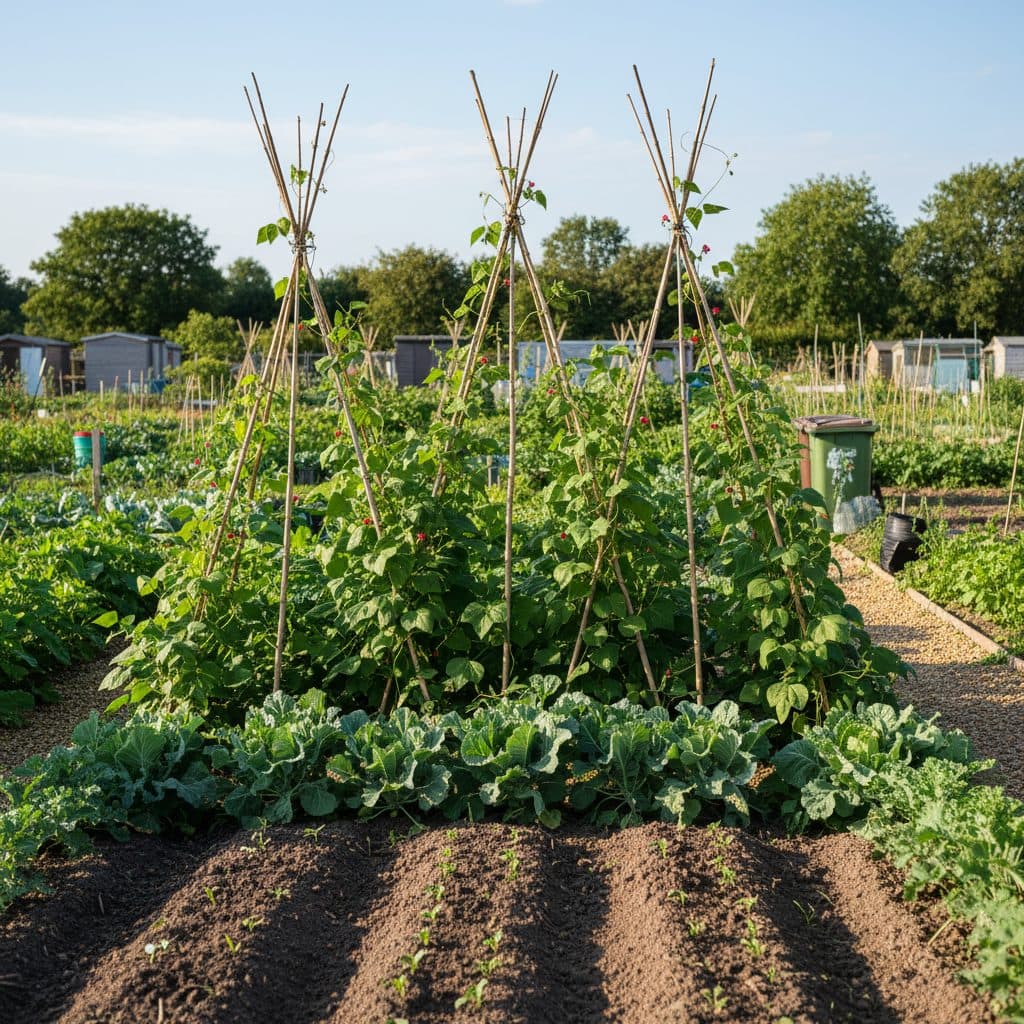
Beans thrive in warm June soil. Sow climbing runner beans and climbing french beans at the base of traditional bamboo cane wigwams or A-frames. Sow two seeds per cane, 5 cm deep, thinning to the strongest seedling once sprouted. Dwarf french beans make excellent additions to compact plots and raised beds, providing continuous tender pods without requiring tall supports. Keep soil well-watered when flowering begins to ensure good pod set.
Courgettes and summer squashes (Cucurbita pepo)
Courgettes grow rapidly once June temperatures settle. Plant them into soil heavily amended with garden compost or well-rotted manure. Two or three healthy plants will yield an abundant supply of fresh courgettes throughout July, August, and September. Harvest fruit when young (15 to 20 cm long) to encourage the plant to produce a steady stream of fresh blossoms.
Sweetcorn (Zea mays)
Sweetcorn must be planted in rectangular blocks rather than a single long row. Because sweetcorn is wind-pollinated, grouping plants in a tight grid ensures pollen from the upper tassels drifts onto the silks below, guaranteeing full, well-formed kernels on every cob. Mulch the soil heavily around plants to conserve moisture during summer heat.
For early season context, review what we started earlier in what to plant in january uk.
Sowing winter brassicas and root vegetables
June is the main deadline for starting winter-standing crops that will sustain your kitchen from November through to April.
+-----------------------------------------------------------------------------------+
|  [June Sowing Window for Winter Vegetables]                                       |
|       |                                                                           |
|       +--> Purple Sprouting Broccoli => Sow in nursery bed, transplant in July    |
|       |                                                                           |
|       +--> Winter Kale (Cavolo Nero)  => Sow modules or beds for winter picking   |
|       |                                                                           |
|       +--> Autumn/Winter Leeks        => Plant out pencil-thick seedlings in holes|
|       |                                                                           |
|       +--> Maincrop Carrots & Beetroot=> Direct sow for autumn lifting & storing  |
+-----------------------------------------------------------------------------------+
Purple sprouting broccoli and winter kale
Sow seeds in modular trays or a dedicated nursery seedbed in early June. Varieties like Purple Sprouting Early, Red Russian kale, and Cavolo Nero (Tuscan kale) will grow steadily through summer and stand through severe winter frosts, providing fresh greens when little else survives in the garden.
Autumn and winter leeks (Allium ampeloprasum, Porrum Group, formerly A. porrum)
If you raised leek seedlings earlier in spring, June is the traditional time to transplant pencil-thick seedlings into their final positions. Make deep holes with a dibber (15 cm deep), drop a single leek seedling into each hole, and fill the hole with water rather than soil. The water settles soil around the roots while the open stem sheath blanches into a long, tender white shank.
To understand soil preparation for heavy crops, read our guide on earthing up potatoes.
Succession sowing for continuous summer harvests
Sowing an entire packet of salad seed on a single afternoon results in an unmanageable glut followed by barren beds.
Practice succession sowing every two to three weeks throughout June:
- Salad leaves and rocket: Sow short rows of loose-leaf lettuce, wild rocket, and mizuna. Water the furrows deeply before sowing to keep seeds cool during hot spells.
- Radishes and spring onions: Sow small patches every fortnight between slower-growing crops like brassicas or parsnips.
- Carrots and beetroot: Direct sow second successions of stump-rooted carrots and globe beetroot for sweet autumn harvesting. To refine root crop spacing and moisture, explore carrot root crop stages thinning watering.
- Herbs: Sow continuous patches of coriander, dill, and flat-leaf parsley directly into garden borders or patio pots.
Protecting June seedlings from summer heatwaves
While June warmth accelerates growth, intense early summer heatwaves can dry out shallow seedbeds within hours. Newly sown carrots and salad greens have delicate root tips that scorch if topsoil desiccates completely during germination.
Covering the drill with a length of damp hessian or a timber plank holds moisture around the slow seed — check underneath after 10 to 14 days and remove the cover the moment the first green cotyledons appear (carrots commonly take 14 to 21 days in cool soil).
June planting out and bed maintenance
June requires attentive maintenance to keep vegetables growing vigorously and protect them from seasonal pests:
- Planting out tender crops: Move outdoor tomatoes, cucumbers, and squashes into their permanent beds. Always harden plants off by placing them outdoors during the day for a week before planting out into open ground.
- Hoeing and weed management: Hoe lightly along paths and between rows on dry, sunny mornings. Weeds cut at soil level quickly wither in the midday sun before they can compete for moisture and nutrients.
- Pest barriers: Cover newly planted brassica seedlings with insect-proof mesh netting immediately to protect them from cabbage white butterflies (Pieris brassicae) and cabbage root fly.
- Watering: Water thoroughly in the early morning or evening at the base of plants rather than spraying the foliage. Combine your watering routine with stored water from your shed; see how to install a water butt.
As the season progresses, prepare for the autumn restart described in what to plant in september uk.