Key takeaways
- Wood ash is an alkaline amendment, primarily composed of calcium carbonate, potassium, and magnesium, with a pH typically between 10.0 and 12.0.
- It benefits acidic soils (below pH 6.0) by raising pH and providing essential nutrients like potassium for fruiting plants such as tomatoes and peas.
- Avoid using wood ash on already alkaline soils (above pH 7.0), with acid-loving plants like blueberries, or from treated/painted wood due to potential heavy metal contamination.
- Always conduct a soil test before applying ash to determine your soil’s current pH and nutrient levels, aiming for a target pH of 6.0-7.0 for most vegetables.
- Apply wood ash sparingly and evenly, typically 10 to 20 pounds per 1,000 square feet, and incorporate it into the top 4 to 6 inches of soil.
- Small amounts of wood ash can be added to compost piles to balance acidity, but it should be used very cautiously in vermicomposting due to worm sensitivity to pH changes.
Quick answer: Wood ash, an alkaline amendment with a pH of 10.0-12.0, benefits acidic soils (below pH 6.0) by raising pH and providing nutrients like potassium. Avoid it on alkaline soils or with acid-loving plants, applying 10-20 lbs per 1,000 sq ft for a target pH of 6.0-7.0.
In my garden in USDA zone 6b, just outside of Pittsburgh, Pennsylvania, I’ve learned that every amendment has its place and its limits. Wood ash, a byproduct of burning untreated wood, often gets touted as a free soil booster. While it can certainly improve soil fertility and pH, it’s not a universal solution for every garden or every plant. Understanding its composition and how it interacts with different soil types is key to using it effectively, rather than causing more harm than good.
For instance, applying wood ash to an already alkaline soil in a region like Arizona, where soil pH can naturally exceed 7.5, would be detrimental, potentially locking up essential nutrients. Conversely, in the acidic soils common in the Pacific Northwest or the Southeast, a measured application of wood ash can significantly improve growing conditions for many vegetables, shifting pH from a challenging 5.5 to a more favorable 6.5 over several months. This article will break down when wood ash is a gardener’s friend, when it’s best left in the fireplace, and how to apply it responsibly.
Understanding wood ash composition
Wood ash is the powdery residue left after burning wood, primarily composed of minerals that were present in the tree. Its exact composition varies significantly based on the tree species, age, and burning conditions, but it generally acts as an alkaline amendment. For example, ash from hardwoods like oak or maple tends to have a higher nutrient content and alkalinity than ash from softwoods like pine or spruce [1]. On average, wood ash has a pH ranging from 10.0 to 12.0, making it quite basic.
Key nutrients in wood ash
The primary beneficial components of wood ash are calcium carbonate, potassium, magnesium, and phosphorus. Calcium carbonate, often making up 20% to 50% of the ash by weight, is responsible for its liming effect, helping to raise soil pH [6]. Potassium, important for fruit development and overall plant vigor, can be present in concentrations from 1% to 10% [6]. Other important micronutrients like boron, manganese, and zinc are also found in smaller, but still beneficial, quantities. However, it contains negligible amounts of nitrogen, which is mostly lost during combustion at temperatures typically exceeding 1,000°F.
- Calcium (Ca): Essential for cell wall development and root growth, often 20-50% of ash by weight.
- Potassium (K): Supports flowering, fruiting, and disease resistance, typically 1-10%.
- Magnesium (Mg): A central component of chlorophyll, vital for photosynthesis, usually 0.5-2%.
- Phosphorus (P): Important for energy transfer and root development, found in smaller amounts, around 0.5-2%.
- Trace Minerals: Includes boron, manganese, and zinc, supporting various plant functions in minute quantities.
When wood ash helps: benefits for soil and plants
Wood ash can be a useful amendment, particularly in regions with naturally acidic soils, such as much of the Eastern Seaboard or the Pacific Northwest, where rainfall leaches away basic cations. If your soil test reveals a pH below 6.0, a controlled application of wood ash can help bring it into the optimal range of 6.0 to 7.0 for most vegetables. For example, in my garden, a 5.8 pH soil benefits greatly from a light application, helping my `Pisum sativum` (Garden Pea) plants produce more abundant pods. The potassium in the ash is especially beneficial for fruiting and flowering plants, including tomatoes, peppers, and squash.
Improving nutrient availability and soil structure
Beyond pH adjustment, the calcium in wood ash can help improve soil structure by promoting flocculation of clay particles, which leads to better drainage and aeration. This is particularly useful in heavy clay soils common in parts of the Midwest. The magnesium content also contributes to plant health, supporting healthy green foliage. Plants like `Salvia officinalis` (Garden Sage) and members of the cabbage family (e.g., broccoli, kale), generally prefer a slightly alkaline to neutral soil pH, thriving when the pH is between 6.5 and 7.5. A study from THE PRIMROSE GARDEN in 2011 highlighted how wood ash application improved yields of several Brassica species by 15% to 20% in acidic loam soils [4].
- pH Adjustment: Effectively raises soil pH in acidic conditions, typically from 5.5 to 6.5, making nutrients more available.
- Potassium Boost: Supplies essential potassium for stronger stems, better fruit set, and better disease resistance, especially beneficial for heavy feeders.
- Calcium Supply: Provides calcium, preventing issues like blossom end rot in tomatoes and improving cell wall strength.
- Magnesium Contribution: Supports chlorophyll production, leading to healthier, greener foliage.
- Improved Soil Structure: Calcium helps aggregate clay particles, enhancing drainage and aeration in dense soils.
When wood ash hurts: risks and considerations
Despite its benefits, wood ash can cause significant harm if misused. Applying it to soils that are already alkaline (those with a pH above 7.0, common in arid regions like Nevada or parts of Texas) will raise the pH even further, leading to nutrient deficiencies. At high pH levels, essential micronutrients like iron, manganese, and zinc become insoluble and unavailable to plants, causing chlorosis (yellowing leaves) and stunted growth. For example, `Oxalis corniculata` (Indian Wood-Sorrel), a common weed, thrives in slightly acidic conditions and would suffer in overly alkaline soil, indicating that many desirable plants would too.
Avoiding treated wood and excessive application
Never use ash from treated, painted, or stained wood, or from composite materials like particleboard or plywood. These materials contain heavy metals, glues, and chemicals that can be toxic to plants and harmful to soil organisms. Even a small amount of ash from treated lumber can introduce chromium, copper, or arsenic into your garden, which can persist in the soil for decades [6]. Furthermore, excessive application of even clean wood ash can lead to a build-up of salts, particularly potassium salts, which can burn plant roots and inhibit water uptake. A layer of ash thicker than 0.5 inches can be detrimental, especially in container gardens where salts can accumulate rapidly.
- High pH Soils: Avoid on soils with pH already above 7.0, as it can cause nutrient lock-up.
- Acid-Loving Plants: Do not apply near blueberries, azaleas, rhododendrons, or other plants requiring acidic conditions (pH 4.5-5.5).
- Treated Wood: Never use ash from painted, stained, or pressure-treated wood due to toxic chemicals and heavy metals.
- Excessive Application: Too much ash can lead to salt build-up, burning roots, and inhibiting water absorption.
- Dust Exposure: Wear a mask when handling fine ash to avoid inhaling alkaline dust, which can irritate respiratory passages.
Safe application rates and techniques
The most important step before applying any soil amendment, including wood ash, is to conduct a soil test. This will tell you your soil’s current pH, nutrient levels, and texture, guiding your application rates. Many university extension services, such as those in Ohio or New York, offer affordable soil testing for around $15 to $25. Without a test, you’re guessing, and that can lead to problems. For a general pH increase of 0.5 to 1.0 unit in a moderately acidic soil (e.g., from 5.5 to 6.5), an application rate of 10 to 20 pounds of wood ash per 1,000 square feet is a good starting point [6].
Proper spreading and incorporation
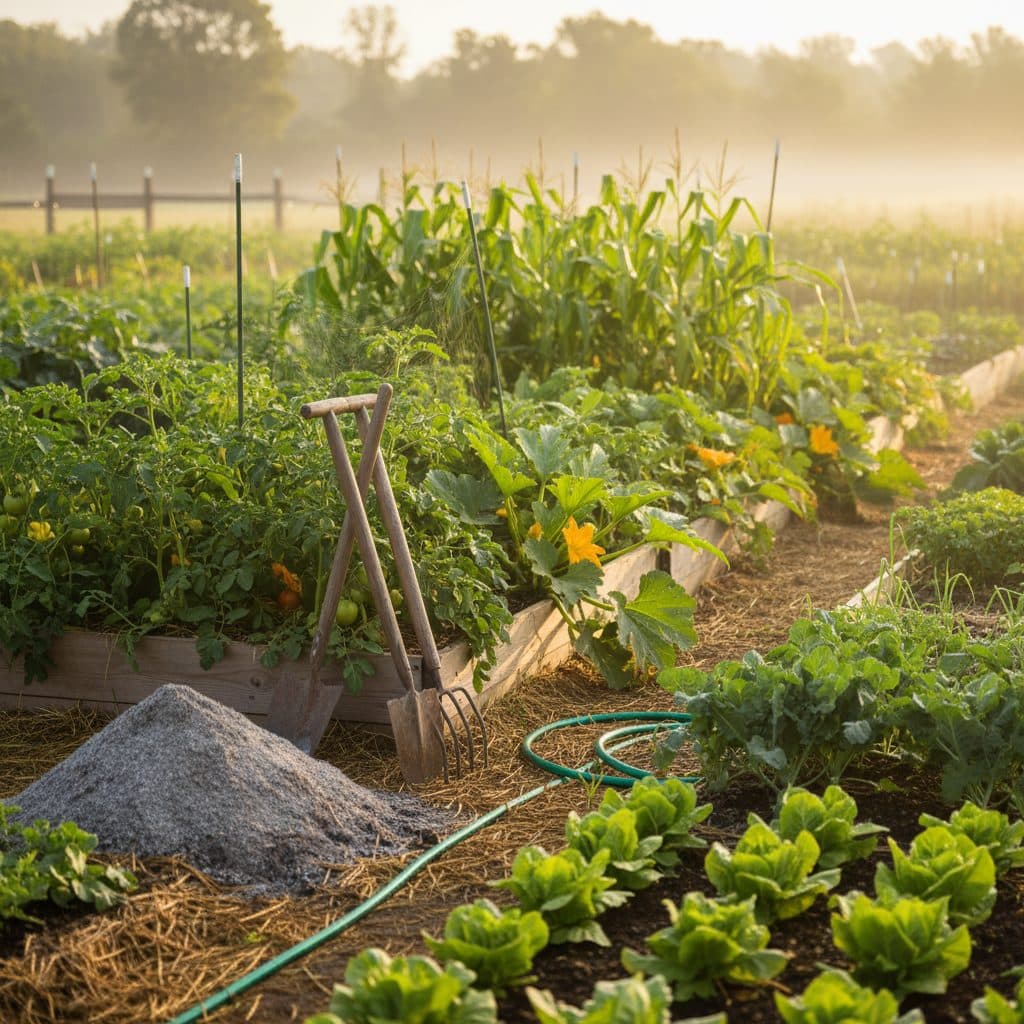
Spread the ash evenly over the soil surface, avoiding piles or thick layers, which can create localized pH spikes and nutrient imbalances. A garden fork or rake can help distribute it. For best results, incorporate the ash into the top 4 to 6 inches of soil. This allows it to interact with soil particles and begin neutralizing acidity more effectively. After application, water the area thoroughly to help the ash settle and start dissolving. It can take several months—typically 3 to 4 months—for the full pH-modifying effect of wood ash to be observed, so avoid re-applying too soon [6]. Re-test your soil after 6 to 12 months to gauge the impact before considering further applications.
- Soil Testing: Always start with a soil test to determine current pH and nutrient levels, guiding precise application.
- Modest Rates: Apply 10 to 20 pounds of ash per 1,000 square feet for a typical pH adjustment, not exceeding 50 pounds annually.
- Even Distribution: Spread ash thinly and uniformly to prevent concentrated areas of high alkalinity.
- Shallow Incorporation: Rake or lightly dig ash into the top 4 to 6 inches of soil for effective integration.
- Watering: Water the treated area well after application to help dissolve minerals and initiate soil interaction.
Integrating ash into compost and vermicompost
Wood ash can play a role in composting, particularly in balancing the pH of a pile that’s rich in acidic materials like pine needles, oak leaves, or fruit scraps. Adding small, measured amounts of ash can help maintain a neutral to slightly alkaline pH (around 6.0 to 7.5), which is optimal for microbial activity and efficient decomposition. For a typical compost pile measuring 3 feet by 3 feet by 3 feet (27 cubic feet), adding 1 to 2 cups of wood ash per layer of organic material, mixed thoroughly, is usually sufficient. This helps prevent the pile from becoming too acidic, which can slow down decomposition and favor undesirable fungi.
Considerations for vermicomposting
When it comes to vermicomposting, the approach to wood ash must be even more cautious. Red wigglers and other composting worms are highly sensitive to sudden changes in pH, preferring a stable environment between 6.0 and 7.0. Even a small amount of highly alkaline wood ash can create hot spots that are detrimental to worms, potentially causing them to flee or die. If you choose to add ash to a worm bin, incorporate no more than a tablespoon per cubic foot of bedding, and mix it in very thoroughly to dilute its effect. Always ensure the ash is completely cool and free of embers before adding it to any compost system, as residual heat can harm beneficial organisms or ignite dry materials.
- pH Balance: Helps neutralize acidity in compost piles high in acidic organic matter like fruit peels or pine needles.
- Mineral Boost: Adds essential minerals like potassium, calcium, and magnesium to the finished compost, enriching its nutrient profile.
- Microbial Activity: Maintains an optimal pH range (6.0-7.5) for beneficial bacteria and fungi, speeding up decomposition.
- Odor Reduction: Can help reduce unpleasant odors in compost by promoting aerobic decomposition and balancing pH.
- Worm Sensitivity: Use sparingly in vermicompost, as worms are sensitive to pH shifts; no more than a tablespoon per cubic foot.
Comparison of Common Soil Amendments
Amendment | Primary Benefit | pH Impact | Application Rate (Approx.) |
|---|---|---|---|
Wood Ash | Potassium, Calcium, pH increase | Raises pH (alkaline) | 10-20 lbs / 1,000 sq ft |
Agricultural Lime | Calcium, pH increase | Raises pH (alkaline) | 20-50 lbs / 1,000 sq ft |
Gypsum | Calcium, Sulfur, soil structure | Neutral (no pH change) | 20-40 lbs / 1,000 sq ft |
Compost | Organic matter, all nutrients | Buffers pH (neutral) | 1-3 inches layer |
High pH Alert: Wood ash has a pH between 10.0 and 12.0, making it highly alkaline and capable of significantly raising soil pH by 1.0 to 2.0 units if over-applied.
Nutrient Content: Clean wood ash typically contains 1% to 10% potassium, 20% to 50% calcium carbonate, and 0.5% to 2% magnesium, useful for plant nutrition.
Frequently asked questions
What is the typical pH of wood ash?
Wood ash is highly alkaline, with a typical pH ranging from 10.0 to 12.0. This high alkalinity is why it’s effective at raising soil pH in acidic conditions, often by 0.5 to 1.0 unit with proper application.
Can I use ash from my fireplace if I burn treated wood?
No, absolutely not. Ash from treated, painted, or stained wood contains harmful chemicals and heavy metals like arsenic, chromium, and copper, which can leach into your garden soil and be toxic to plants and soil organisms for many years [6].
How much wood ash should I apply per square foot?
For a moderate pH increase, a general guideline is 10 to 20 pounds of wood ash per 1,000 square feet, which translates to about 0.1 to 0.2 pounds per 10 square feet. This should be spread thinly and evenly, then incorporated into the top 4 to 6 inches of soil.
Which plants benefit most from wood ash?
Plants that prefer neutral to slightly alkaline soil (pH 6.0-7.5) and have high potassium or calcium needs benefit most. Examples include most vegetables like tomatoes, peppers, beans, peas (`Pisum sativum`), cabbage, and `Salvia officinalis` (Garden Sage), especially in acidic soils.
How often should I apply wood ash to my garden?
It’s generally recommended to apply wood ash no more than once a year, and only after a soil test confirms the need for pH adjustment or potassium. The full effect of ash can take 3 to 4 months to manifest, so re-test after 6 to 12 months before applying more.
Is wood ash good for compost piles?
Yes, in small amounts. Adding 1 to 2 cups of wood ash per cubic yard of compost can help balance acidity, especially if your pile contains many acidic materials. This promotes optimal microbial activity, maintaining a pH between 6.0 and 7.5 for efficient decomposition.
References
- ALICE’S GARDEN IN THE WOOD (2011). ALICE’S GARDEN IN THE WOOD.
- Poets in the Garden (1978). Poets in the Garden.
- Fruitful Sites: Garden Culture in Ming Dynasty China (1997). Fruitful Sites: Garden Culture in Ming Dynasty China.
- THE PRIMROSE GARDEN (2011). THE PRIMROSE GARDEN.
- THE SCENTS OF THE GARDEN (2011). THE SCENTS OF THE GARDEN.
- USDA Natural Resources Conservation Service (2024). USDA Natural Resources Conservation Service.