Key takeaways
- Plan your season around Zone 4 frost dates: typical last spring frost in late May and first fall frost in mid-September.
- Start long-season crops like onions, leeks, and celery indoors under grow lights in early March.
- Direct sow cold-hardy peas, spinach, radishes, and carrots outdoors as soon as soil thaws in late April.
- Wait until late May or early June before transplanting warm-season tomatoes, peppers, and squash into ground beds.
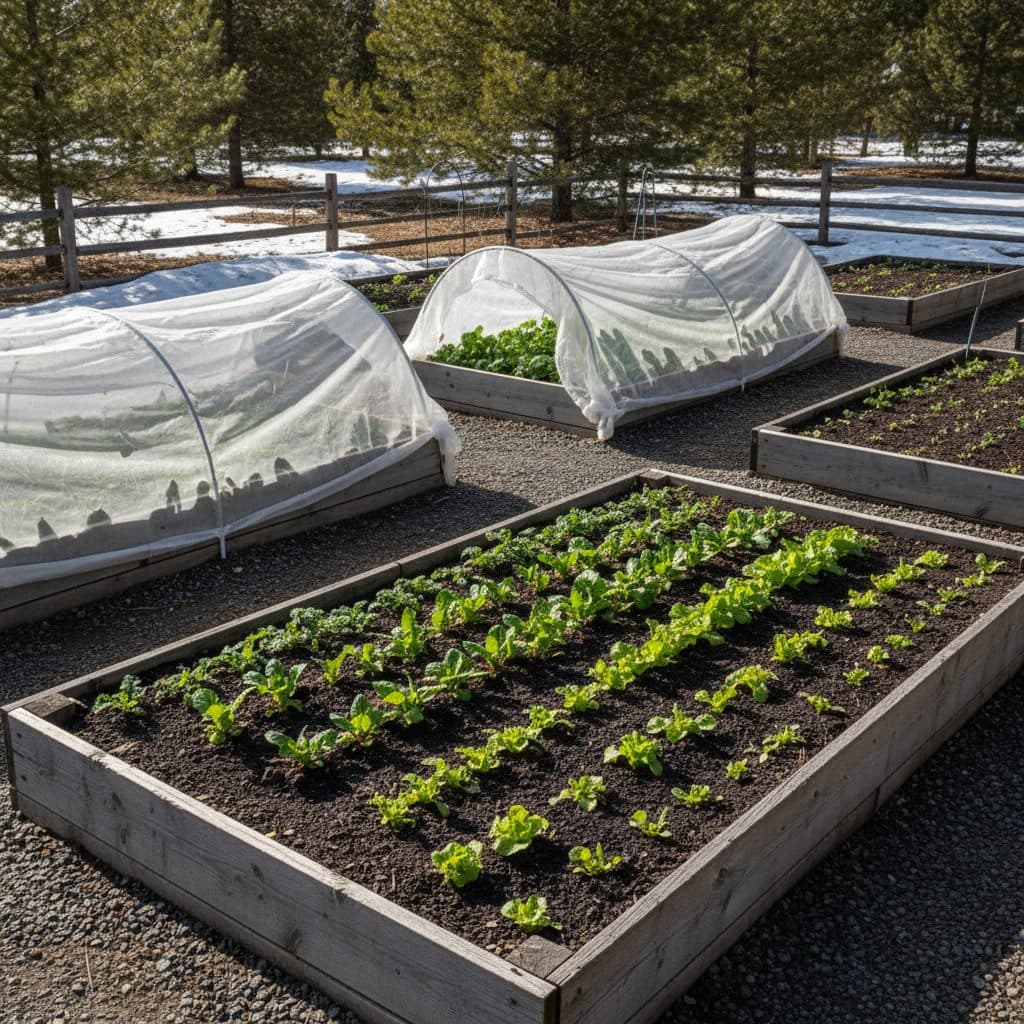
- Utilize low tunnels, cold frames, and heavy row covers to add four to six weeks to your short growing window.
Quick answer: A USDA Zone 4 planting schedule operates within a compressed 100 to 120 day frost-free growing season. Gardeners start seeds indoors under lights from March through April, direct sow cold-tolerant greens and root vegetables outdoors in late April or May, and transplant warm-season crops into garden beds in late May or early June once frost danger has passed.
Gardening in USDA Hardiness Zone 4 (encompassing northern states such as Minnesota, Wisconsin, northern Michigan, North Dakota, Montana, and northern New England) is a rewarding exercise in timing and season extension. With average winter minimum temperatures dropping to -30°F to -40°F (-34°C to -40°C), in bare, snow-free ground frost can penetrate several feet, and Zone 4 presents a short, intense growing window.
Following an accurate Zone 4 planting schedule ensures you do not waste precious weeks of the growing season. The typical last spring frost occurs between May 15 and June 1, while the first fall frost arrives between September 10 and September 25. This leaves a frost-free window of roughly 100 to 120 days.
To harvest bountiful yields of both cool-weather crops and heat-loving summer vegetables, Zone 4 growers rely on indoor seed starting, cold-tolerant cultivar selection, soil warming techniques, and protective season extension covers.
Early spring indoor seed starting schedule (March to April)
Because the outdoor ground remains frozen and blanketed under snow through late March, indoor seed starting under grow lights is critical to gain an eight to ten week head start on the season:
- Early to mid-March (10 to 12 weeks before last frost): Start seeds of slow-growing alliums (bulb onions, leeks, shallots) and celery indoors. Use shallow nursery flats filled with sterile peat-free seed compost, keeping seedlings trimmed to 4 inches tall to encourage thick root bases.
- Late March (8 weeks before last frost): Sow cold-hardy brassicas indoors, including head cabbage, curly kale, kohlrabi, Brussels sprouts, and early broccoli. Brassica seedlings germinate rapidly at 65°F to 70°F (18°C to 21°C) and should be moved under strong lights immediately to prevent leggy growth. For comprehensive brassica cultivation, see our guide on how to grow broccoli.
- Early to mid-April (6 to 8 weeks before last frost): Start warm-season nightshades indoors: indeterminate and determinate tomatoes, sweet bell peppers, hot peppers, and eggplants. Use bottom heat mats set to 75°F (24°C) to accelerate pepper germination.
- Late April (4 weeks before last frost): Sow head lettuce, Swiss chard, culinary herbs (parsley, basil, cilantro), and start outdoor container preparations following methods detailed in our guide to winter sowing in milk jugs.
Outdoor direct sowing for cool-season crops (late April to May)
As soon as the ground thaws and topsoil drains in late April or early May, cold-tolerant crops can be sown directly into garden beds:
- Late April (as soon as soil is workable): Direct sow cold-hardy legumes and greens: shell peas, sugar snap peas, snow peas, spinach, arugula, radishes, and parsnips. Peas benefit from legume inoculant to boost nitrogen fixation in cold spring soil.
- Early May: Direct sow carrots, beets, turnips, Swiss chard, and plant onion sets and seed potatoes 4 inches deep in raised mounds.
- Mid-May: Transplant hardened-off seedlings of cabbage, broccoli, kale, and onions into the garden. These hardy plants easily tolerate light spring frosts down to 28°F (-2°C).
- Mid to late May: Sow fast-growing cucurbits (cucumbers, zucchini, summer squash, pumpkins, and winter squash) in 3-inch biodegradable pots indoors. Starting them just three weeks before final transplanting prevents root-bound shock.
Cover early outdoor seedbeds with floating row covers (0.5 oz/sq yd) to trap solar heat, raise soil temperature by 4°F to 6°F, and protect emerging seedlings from flea beetles and drying spring winds.
Transplanting warm-season vegetables (late May to June)
In Zone 4, rushing warm-season transplants into cold soil before late May frequently results in stunted growth and root rot.
Follow these warm-season planting steps:
- Pre-warm garden beds: Lay black woven landscape fabric or clear plastic over tomato and pepper beds two weeks prior to planting to warm the root zone to at least 60°F (16°C).
- Harden off thoroughly: Transition indoor seedlings to an outdoor sheltered area over seven to ten days, gradually increasing exposure to direct sun and wind.
- Plant after final frost risk (late May to early June): Transplant tomatoes, peppers, and eggplants into pre-warmed soil. Plant tomatoes deeply, burying stems up to the top two sets of leaves to stimulate vigorous adventitious rooting along the buried stem.
- Direct sow warm-season seeds: Choose short-season cultivars (under 75 to 80 days for sweet corn, under 90 to 100 days for winter squash) and direct sow on warm, pre-warmed soil once temperatures exceed 60°F (16°C) in late May or early June.
- Transplant melons and cucumbers (early June): Move squash, cucumber, and melon seedlings into raised mounds topped with organic mulch.
Summer succession and fall crop sowing (July to August)
Zone 4 gardeners must sow their autumn harvest crops in mid-summer while harvesting early spring vegetables:
- Early to mid-July: Start a second round of brassicas (cabbage, broccoli, cauliflower, kohlrabi) indoors or in shaded nursery beds for fall cropping.
- Late July: Direct sow fall root crops directly into garden beds: carrots, beets, rutabagas, turnips, and winter radishes. Crops maturing during crisp autumn weather develop higher sugar concentrations and superior flavor.
- Early August: Sow fast-maturing leafy greens (spinach, leaf lettuce, tatsoi, mizuna, arugula, and cilantro) into beds cleared of early garlic, onions, and spring peas.
- Mid-August: Pinch off the growing tips of indeterminate tomato plants. Stopping upward vegetative growth forces the plant to channel its remaining sugars into ripening existing green tomatoes before frost.
Compare this cold-climate schedule with the contrasting winter-centered rhythm in our zone 10 planting schedule.
Late season harvesting and winter bed care (September to October)
As September arrives, nightly temperatures drop rapidly, signaling the final harvest window:
- Early September: Keep heavy frost blankets ready. Cover tender pepper and tomato beds on cold nights to extend harvest into late September.
- Mid to late September: Harvest all tender crops (tomatoes, peppers, squash, beans) before the first hard freeze (below 28°F / -2°C). Cure winter squash in a warm, dry room for two weeks before cellaring.
- Throughout October: Plant hardneck garlic cloves and shallots 2 inches deep, covering beds with 4 to 6 inches of clean straw mulch to prevent winter frost heaving. A deep snow blanket insulates the ground, keeping root-zone temperatures far above the air temperature and preventing winter-kill in well-mulched garlic and perennial crowns. If your soil tests alkaline, work in elemental sulfur or acidic compost — calculate the rate from your soil test rather than using a flat recommendation, as sulfur requirements depend heavily on soil texture.
- Late October: Harvest cold-hardy root crops (carrots, parsnips, leeks), clean up spent plant debris, and prepare containers following instructions in overwintering container gardens in the north.