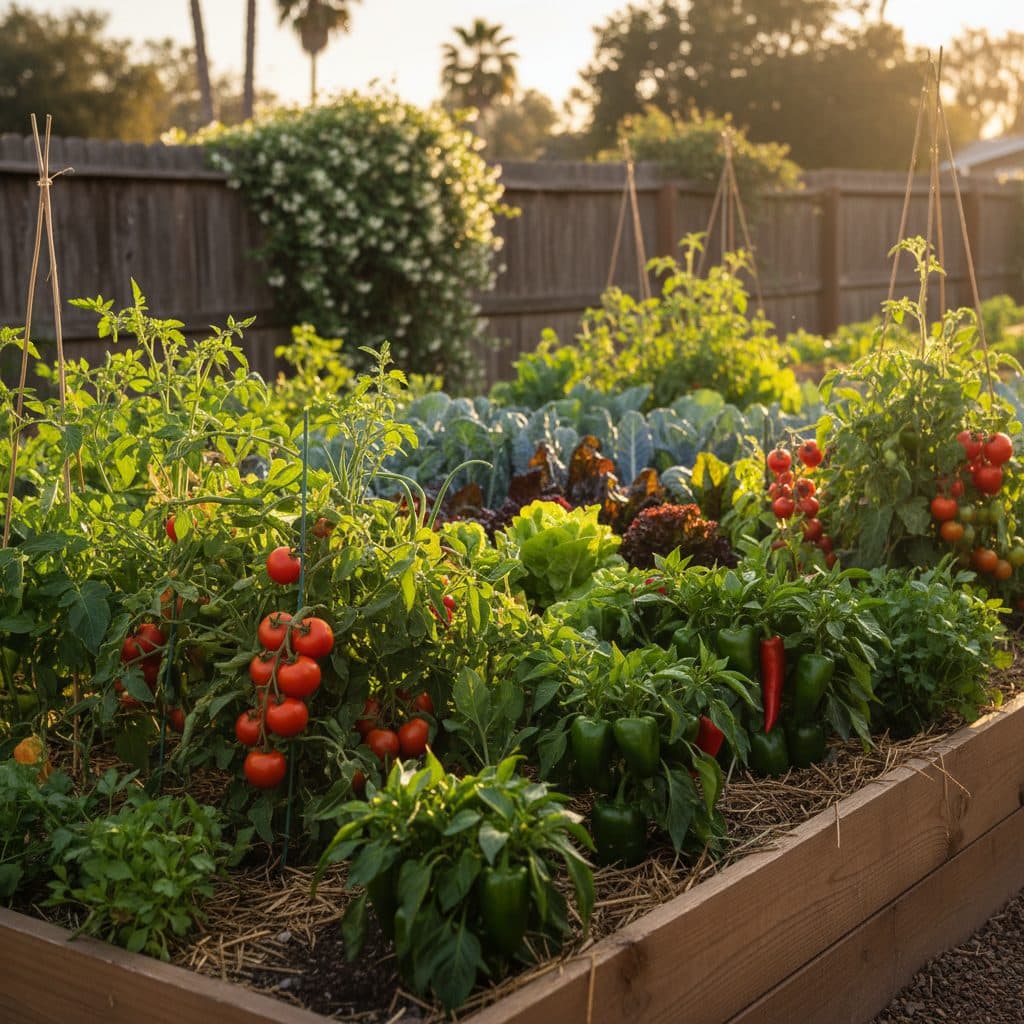
Key takeaways
- Understand the inverted Zone 10 calendar: winter is your primary vegetable season while mid-summer is the off-season.
- Start seeds for cool-season brassicas, root crops, and leafy greens from September through November.
- Plant main-season tomatoes, peppers, and eggplants in autumn for steady winter and early spring harvesting.
- Transition to ultra-heat-tolerant crops like sweet potatoes, okra, and yardlong beans during intense summer heat.
- Deploy 30% to 50% shade netting and heavy organic mulch to protect soil biology from intense summer solar radiation.
Quick answer: The USDA Zone 10 planting schedule operates on an inverted growing calendar compared to northern zones. Gardeners plant their primary vegetable gardens—including tomatoes, peppers, brassicas, and salad greens—during the mild, frost-free autumn and winter months (September through March), while shifting to heat-tolerant tropical crops and cover crops during the extreme heat of mid-summer.
Gardening in USDA Hardiness Zone 10—covering southern Florida, coastal Southern California, the low deserts of Arizona, and the southernmost tip of Texas—offers the extraordinary opportunity for 365-day food production. With minimum winter temperatures rarely dipping below 30°F to 40°F (-1°C to 4°C), killing frosts are virtually non-existent across standard residential gardens.
However, newcomers to Zone 10 often experience crop failures by following traditional northern gardening advice. In Zone 10, summer is the challenging season, characterized by scorching heat, intense UV radiation, high humidity, and pest explosions. Conversely, autumn and winter provide the ideal Mediterranean-like climate for traditional vegetable gardening.
Mastering the Zone 10 planting schedule requires flipping your seasonal expectations: treat September as your spring, grow your heaviest produce through winter, and manage summer through shade cloth, heavy mulching, and heat-adapted tropical crops.
Autumn planting surge: the main vegetable season (September to October)
September marks the official beginning of the primary vegetable growing season in Zone 10 as summer heat gradually eases:
- Indoor and shaded nursery starts: Start seeds of main-season tomatoes, sweet bell peppers, hot peppers, eggplants, broccoli, cauliflower, cabbage, collard greens, kale, and head lettuce in shaded trays. Keeping seedling trays in partial shade protects delicate sprouts from intense afternoon sun.
- Direct sowing cool crops (October): Direct sow root crops and legumes directly into garden beds: carrots, table beets, radishes, turnips, bush snap beans, pole beans, Swiss chard, and culinary herbs (cilantro, parsley, dill).
- Transplanting (late October): Transplant robust tomato and pepper seedlings into raised beds and containers once daytime temperatures drop consistently below 90°F (32°C).
- Soil preparation: Amend garden beds with generous amounts of aged compost and organic matter before planting to replenish soil biology depleted by summer heat. Top-dress beds with organic alfalfa meal, rock dust, and kelp meal to supply slow-release trace minerals essential for vigorous winter fruit development.
Peak winter growing and harvesting window (November to February)
Winter in Zone 10 offers ideal growing conditions—warm sunny days (70°F to 80°F / 21°C to 27°C) and cool, pleasant nights (50°F to 60°F / 10°C to 15°C):
- Continuous salad greens: Direct sow lettuce, spinach, arugula, Asian greens (pak choi, tatsoi, mizuna), and peas (sugar snap and snow peas) every two to three weeks for non-stop fresh harvests.
- Short-day alliums: Plant short-day bulb onion sets, scallions, and garlic cloves in November. Short-day onion cultivars (such as Texas Early Grano and Yellow Granex) bulb properly in response to the 10 to 12 hour daylight cycles of southern latitudes.
- Brassica successions: Transplant second successions of kale, collards, kohlrabi, and broccoli in December.
- Harvesting abundance: Peak harvests of crisp winter salads, broccoli, cauliflower, cabbage, peas, and root vegetables occur throughout January and February.
- Late winter sowings (late January): Direct sow spring successions of bush beans, sweet corn, cucumbers, and summer squash to mature before extreme spring heat arrives.
Spring transitions and warm-season crops (March to May)
As springtime temperatures rise rapidly in March and April, cool-season crops begin to bolt into flower, signaling the transition to heat-adapted plants:
- Harvesting cool crops: Clear spent brassica and lettuce beds; compost disease-free foliage.
- Direct sow warm-season crops: Plant sweet corn, watermelons, cantaloupes, cucumbers, okra, southern peas (cowpeas / black-eyed peas), and pole beans.
- Plant tropical roots and tubers: Plant sweet potato slips, ginger, turmeric, and cassava. To master sweet potato techniques, review our complete guide on how to grow sweet potatoes.
- Shift to heat-tolerant vegetables (May): Standard beefsteak tomatoes stop setting fruit by late spring because pollen becomes sterile and blossom drop occurs once nighttime temperatures stay above 70°F (21°C), ending the main harvest. Shift to heat-tolerant cultivars such as Solar Fire, Phoenix, Everglades currant tomatoes, cherry tomatoes, and eggplant.
- Citrus and fruit tree management: Plant drought-hardy fruit trees like moringa, guava, and pomegranate in spring to establish root systems before summer heat. Note that loquat (*Eriobotrya japonica*) is invasive in parts of Florida (Zone 10); check your regional invasive plant list before planting. Apply a balanced organic citrus fertiliser and maintain steady soil moisture as citrus trees set their main fruit crop during spring blossom.
Summer care, tropical crops and soil protection (June to August)
July and August represent the "deep winter" equivalent for Zone 10 gardeners—a period to protect the garden and build soil fertility:
- Cultivate tropical vegetables: Plant ultra-heat-tolerant crops: okra, yardlong beans (asparagus beans), Seminole pumpkins, chayote, luffa gourds, Malabar spinach, Longevity spinach, and edible amaranth.
- Erect shade netting: Install 30% to 50% woven shade cloth over surviving vegetable beds. Learn specific installation techniques in our reference on shade netting for desert fruit trees.
- Grow green manure cover crops: Cover vacant garden beds with vigorous summer cover crops such as sunn hemp (Crotalaria juncea), velvet bean, or cowpeas. These legumes fix nitrogen, suppress weeds, and produce massive organic biomass to be chopped down before fall.
- Solarize soil: If beds suffer from severe root-knot nematode infestations, lay clear UV-resistant plastic tightly over damp soil for six weeks during peak summer sun to solarize and pasteurize the topsoil.
- Late August prep: Order seeds and prepare fresh potting mixes for the upcoming September fall planting surge.
Contrast this subtropical calendar with our cold-region zone 4 planting schedule.
Year-round water, soil and pest management in Zone 10
To achieve exceptional year-round yields in Zone 10, implement these foundational practices:
- Deploy heavy organic mulches: Apply 4 to 6 inches of coarse woodchips, straw, or grass clippings over all bare soil. Mulch lowers root-zone soil temperatures by up to 15°F during summer and reduces evaporation.
- Master pest prevention: In frost-free zones, insect pests never experience winter die-off. Inspect crops daily for whiteflies, spider mites, aphids, and hornworms, utilizing organic insecticidal soaps and beneficial predators.
- Protect orchard trees during heatwaves: Prolonged extreme heat stresses citrus and subtropical fruits. Review practical strategies in our guide to protecting fruit trees in heatwaves.
- Water early and deeply: High evaporation rates demand drip irrigation systems operating at dawn, delivering deep root-zone moisture before the midday sun.
- Monitor container moisture: Potted vegetables in black plastic containers can suffer root scorch in summer; double-pot or wrap containers in reflective light-colored fabric to shield root balls from direct radiant heat.
- Integrate companion planting: Interplant flowering herbs like sweet alyssum, dill, and marigolds among vegetable rows to attract predatory wasps, hoverflies, and ladybugs that keep pest populations below damaging thresholds naturally.
- Soil mineral & nutrient management: Sandy Zone 10 soils leach soluble fertiliser rapidly; use slow-release organic meals, compost, and split liquid feeds rather than heavy single doses of synthetic soluble granules that leach into groundwater. In acidic sands, dolomitic lime supplies calcium and magnesium — test soil pH first rather than adding a routine dose, especially around acid-loving tropicals like citrus.