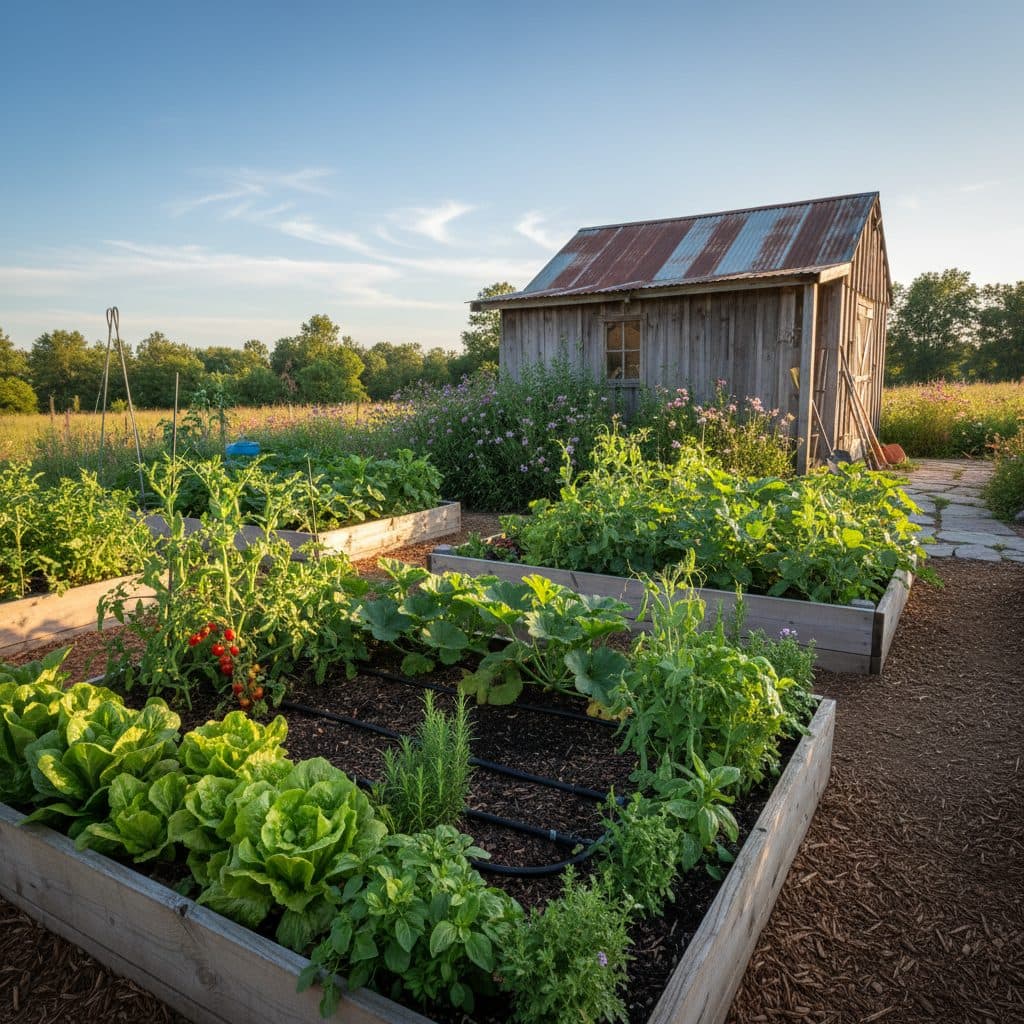
Key takeaways
- Zone 7-8 offers a long growing season, typically 180 to 240 frost-free days annually.
- Succession planting maximizes yields by staggering crop plantings every 2-3 weeks for continuous harvest.
- Crop rotation prevents disease buildup, manages pests, and improves soil health over 3-4 year cycles.
- Regional variations in the Mid-South, Pacific Northwest, and Mid-Atlantic coast significantly impact specific planting times.
- Cool-season crops thrive in spring and fall, while warm-season crops dominate the longer summer months.
- Integrating cover crops during off-seasons protects soil from erosion and adds vital organic matter.
Quick answer: A Zone 7-8 planting calendar helps gardeners in the Mid-South, Pacific Northwest, and Mid-Atlantic maximize yields by integrating succession planting and crop rotation. It accounts for regional climate variations and times cool- and warm-season crops correctly.
Gardeners in USDA zones 7 and 8, spanning diverse regions like the Mid-South, the Pacific Northwest, and parts of the Mid-Atlantic coast, benefit from a long growing season, often extending 180 to 240 days without frost. This extended period allows for multiple harvests and a wide variety of crops, from early spring greens to late fall root vegetables, making careful planning essential for maximizing productivity in your 1,000 square foot plot or larger farm.
This month-by-month sowing calendar provides a framework for these zones, integrating principles of crop rotation and succession planting to ensure a productive garden year. We will explore specific timing for different crops, considering the unique climatic nuances of areas such as the mild, wet Pacific Northwest compared with the humid Mid-South or the coastal Mid-Atlantic, where average minimum winter temperatures run from 0°F to 20°F.
Understanding Zone 7-8 climates and regional variations
USDA Plant Hardiness Zones 7 and 8 are characterized by their average annual extreme minimum winter temperatures. Zone 7 experiences lows between 0°F and 10°F, while Zone 8 sees minimums from 10°F to 20°F. This range allows for a significant diversity of plants, but regional microclimates create important distinctions. For instance, the Pacific Northwest, including major portions of Washington, Oregon, and Idaho, often has milder, wetter winters and cooler summers, with a longer, more gradual spring compared to the Mid-South’s hotter, more humid summers and potentially sharper temperature swings. The Mid-Atlantic coast shares some similarities with the Mid-South but can be influenced by oceanic effects, leading to fewer extreme temperature fluctuations, often with 200 frost-free days.
Key climate factors for successful growing
Understanding these regional differences matters for adjusting planting schedules. For example, while both zones can grow a wide range of vegetables, a gardener in Seattle, Washington, might plant cool-season crops like spinach or kale in late February, whereas a gardener in Nashville, Tennessee, might wait until mid-March to avoid a late frost. Soil temperatures in spring often reach 50°F by April in many Zone 7 and 8 areas, signaling readiness for direct sowing of many seeds. Average last frost dates typically fall in mid-April for Zone 7 and early April for Zone 8, though specific local conditions can shift these by 10 to 14 days.
- Average minimum winter temperature: 0°F to 20°F across zones 7 and 8.
- Average last spring frost: Mid-April for Zone 7, early April for Zone 8.
- Average first fall frost: Late October for Zone 7, mid-November for Zone 8.
- Growing season length: Typically 180 to 240 frost-free days.
- Regional humidity and rainfall: Significant differences between the Pacific Northwest and the Mid-South.
Principles of crop rotation for soil health and pest management
Crop rotation is a fundamental practice for maintaining long-term soil fertility and managing pests and diseases without relying on heavy chemical inputs. It involves planting different crop families in a specific sequence over several years in the same garden bed. A common rotation cycle spans 3 to 4 years. That prevents any single crop family from depleting specific nutrients or encouraging a buildup of specific pathogens in one spot. For example, planting brassicas in a bed where tomatoes grew last year can help break disease cycles that might affect solanaceous crops. Crop rotation is a core soil-health practice, and rotating families rather than repeating one crop helps soil organic matter hold or build rather than decline.
Designing your 3-year rotation plan
A well-designed rotation plan considers the nutrient needs and pest vulnerabilities of different plant families. Legumes such as peas and beans fix atmospheric nitrogen into a form plants can use. A legume grown as a cover crop and turned in before it sets seed returns the most; a pea or bean crop harvested for its pods exports most of the nitrogen it fixed, though the roots and residue still give the following crop a modest boost. Following legumes with heavy feeders like corn or squash can significantly reduce the need for external nitrogen fertilizers. Root crops, like carrots and potatoes, benefit from loose, well-drained soil and can be followed by leafy greens. Consider using living mulches and cover crop legumes to strengthen your rotation. A simple 3-year plan might involve: year 1: heavy feeders (corn, squash), year 2: legumes (beans, peas), year 3: root crops (carrots, beets) or leafy greens (lettuce, spinach).
- Year 1: Heavy feeders (e.g., corn, pumpkins, brassicas like broccoli).
- Year 2: Legumes (e.g., beans, peas, clover) to fix nitrogen.
- Year 3: Root crops (e.g., carrots, potatoes, radishes) or light feeders (e.g., leafy greens).
- Year 4: Fallow or cover crop, or repeat the cycle.
- Avoid: Planting the same crop family in the same spot for at least 3 years.
Maximizing yields with succession planting
Succession planting is a technique that allows gardeners to harvest crops continuously throughout the growing season, rather than having one large harvest followed by empty beds. It involves staggering plantings of the same crop or planting different crops in quick succession as soon as a previous crop is harvested. This method can significantly increase the total yield you get from a given bed over a season. For instance, instead of planting all your lettuce seeds at once in April, you might plant a small batch every 2 to 3 weeks for a steady supply of fresh greens from late spring through early summer and again in the fall.
Staggering your harvests for continuous supply
This strategy is particularly effective with quick-maturing crops that reach harvest readiness in 30 to 60 days. Examples include radishes (ready in 25-30 days), lettuce, spinach, and bush beans. In Zone 7-8, with its long growing season, you can often get 2 to 3 successions of cool-season crops in spring and fall, and 1 to 2 successions of some warm-season crops. When one crop is harvested, immediately prepare the bed for the next planting. This might involve adding a layer of compost, about 1 inch thick, to replenish nutrients. Using a 24-cell seedling propagation tray can help you get seedlings ready indoors for quick transplanting once a bed opens up.
- Stagger plantings: Sow small batches of seeds every 2-3 weeks.
- Choose quick-maturing varieties: Look for crops with a 30-60 day maturity period.
- Follow with different crops: Plant a new crop type after harvesting the first.
- Prepare beds quickly: Amend soil with 1 inch of compost after each harvest.
- Utilize vertical space: Grow vining plants on trellises to free up ground space.
A month-by-month planting guide for Zone 7-8
This calendar provides a general framework for Zone 7-8, but remember to adjust for your specific microclimate and the 10-14 day variations in regional frost dates. The Mid-South might see hotter summers requiring more heat-tolerant varieties, while the Pacific Northwest might have milder springs, allowing earlier cool-season plantings. Always monitor local weather and soil temperatures; soil should be consistently above 45°F for cool-season seeds and above 60°F for warm-season seeds.
January to March: starting strong
January: Focus on indoor seed starting. Sow onions, leeks, and perennial herbs like oregano. In warmer Zone 8 areas, some hardy greens like spinach can be direct sown under row covers if soil is workable, typically above 35°F. Plan your garden layout for the coming season. Perennial edible greens can also be planned this month. February: Continue indoor sowing for broccoli, cabbage, cauliflower, and celery. Direct sow peas, spinach, and lettuce in late February in Zone 8, or early March in Zone 7, especially in the Mid-Atlantic where soil may warm faster. Ensure soil temperatures are consistently above 40°F. March: Direct sow carrots, radishes (ready in 25-30 days), beets, and Swiss chard. Transplant hardy seedlings like cabbage and broccoli outdoors in mid-March, protecting them from any unexpected late frosts below 30°F. Start warm-season crops like tomatoes and peppers indoors.
April to June: warm season abundance
April: This is a busy month. Transplant cool-season crops like lettuce and kale, and continue succession planting of quick-maturing greens every 2 weeks once soil is above 50°F. Hold beans, corn, and squash until the soil is consistently above 60°F, which in most of Zone 7 means May. May: Transplant warm-season crops like tomatoes, peppers, eggplants, and sweet potatoes after all danger of frost has passed, usually by early May. Direct sow melons, cucumbers, and okra. Plant basil and other heat-loving herbs. In the Mid-South, ensure plants have adequate water as temperatures can reach 80°F. June: Continue succession planting of bush beans, cucumbers, and summer squash. Plant a second round of corn. Harvest early summer crops like peas, lettuce, and radishes. Monitor for pests and diseases, especially as humidity rises in the Mid-Atlantic and Mid-South regions.
July to September: fall garden preparation
July: Plan your fall garden. Direct sow heat-tolerant greens like New Zealand spinach and Malabar spinach. Start seeds indoors for fall crops like broccoli, cabbage, and kale, especially in areas like the Pacific Northwest where temperatures remain milder, often below 85°F. Ensure consistent watering for all crops as summer peaks. August: Direct sow fall crops like carrots, beets, and Swiss chard. Transplant fall brassicas (broccoli, cabbage, kale) that were started indoors. Plant a final succession of bush beans. In Zone 8, you can often plant another round of corn or even a quick-maturing tomato variety. September: Direct sow cool-season greens like spinach, lettuce, and arugula for a late fall harvest. Plant garlic and perennial onions for next year’s crop. In Zone 7, aim to get these in by late September for optimal root development before winter. Consider planting nitrogen-fixing trees for long-term soil improvement.
October to December: winding down and planning ahead
October: Harvest remaining warm-season crops before the first hard frost, typically late October for Zone 7. Plant cover crops like rye or clover in empty beds to protect soil over winter. Continue harvesting hardy greens. November: Harvest any remaining root crops and hardy greens. In Zone 8, some cool-season crops can continue to grow under row covers. Clean up garden beds and apply a 2-3 inch layer of mulch to perennial beds. December: Focus on planning for the next season. Review your garden journal, order seeds, and maintain tools. In many Zone 7-8 areas, temperatures can drop below freezing, making outdoor gardening minimal, but indoor seed starting can begin again in late December for early crops.
- January: Indoor sow onions, leeks, perennial herbs.
- March: Direct sow carrots, radishes, beets; transplant hardy greens.
- May: Transplant tomatoes, peppers, eggplants; direct sow melons, cucumbers.
- August: Direct sow fall carrots, beets; transplant fall brassicas.
- October: Harvest warm-season crops; plant cover crops.
Integrating cover crops and perennial edibles
Beyond annual vegetables, a truly productive garden in Zone 7-8 benefits from the integration of cover crops and perennial edibles. Cover crops, planted in beds that would otherwise lie fallow, protect the soil from erosion, suppress weeds, and add organic matter. Leguminous cover crops like clover or vetch can fix 50 to 100 pounds of nitrogen per acre into the soil annually, reducing the need for synthetic fertilizers. Non-leguminous options like winter rye improve soil structure and scavenge excess nutrients. These are typically sown in late fall (October-November) and tilled under or ‘chopped and dropped’ in early spring (March-April), about 3-4 weeks before planting your main crops.
Long-term benefits from perennial plants
Perennial edibles provide continuous harvests with minimal annual effort, contributing significantly to food security. In Zone 7-8, options abound, from asparagus and rhubarb to various berries and fruit trees. Consider planting asparagus crowns in early spring for harvests starting in year 2 or 3. Rhubarb can be planted in fall or early spring. Many perennial leafy greens, like sorrel or wild garlic, also thrive. Integrating these into your garden plan means less work each year and a more resilient food system. For example, a single asparagus bed can produce for 15-20 years.
- Winter rye: Excellent for improving soil structure and scavenging nutrients.
- Crimson clover: A nitrogen-fixing legume, adds 50-100 lbs N/acre.
- Hairy vetch: Another strong nitrogen fixer, good for heavy soils.
- Buckwheat: Quick-growing, suppresses weeds, and attracts beneficial insects.
- Oats: Good for biomass and soil protection, especially in cooler climates.
Cool-Season vs. Warm-Season Crop Planting Windows in Zone 7-8
Crop Type | Optimal Planting Window | Typical Maturity (Days) |
|---|---|---|
Lettuce, Spinach, Radishes | March-April (Spring), August-September (Fall) | 25-50 |
Broccoli, Cabbage, Kale | March-April (Spring), July-August (Fall) | 60-90 |
Carrots, Beets, Peas | March-April (Spring), August-September (Fall) | 55-75 |
Tomatoes, Peppers, Eggplant | May (after last frost) | 60-90 |
Beans (Bush), Corn, Squash | May-June (after last frost) | 50-80 |
Cucumbers, Melons, Okra | May-June (after last frost) | 60-90 |
Growing Season Length: Zone 7-8 typically offers 180 to 240 frost-free days, allowing for multiple crop successions.
Quick Harvests: Many cool-season crops, like radishes, can be harvested in as little as 25-30 days from sowing.
Frequently asked questions
What are the average frost dates for Zone 7 and 8?
For USDA Zone 7, the average last spring frost is typically mid-April, and the first fall frost occurs in late October. In USDA Zone 8, the average last spring frost is usually early April, with the first fall frost in mid-November. These dates can vary by 10-14 days depending on specific local microclimates and elevation.
How often should I rotate my crops?
A 3-year or 4-year crop rotation cycle is generally recommended to effectively manage soil-borne diseases, pests, and nutrient depletion. This means a specific crop family should not be planted in the same bed more frequently than once every three or four years to maintain soil health and prevent pathogen buildup.
What are good choices for succession planting in spring?
Excellent choices for spring succession planting in Zone 7-8 include quick-maturing cool-season crops like lettuce, spinach, radishes, and bush beans. These can be sown every 2-3 weeks from March through May, providing continuous harvests and maximizing bed utilization for up to 60 days.
Can I grow warm-season crops in the Pacific Northwest?
Yes, warm-season crops like tomatoes, peppers, and squash can be grown in the Pacific Northwest, particularly in Zone 8. However, due to cooler summer temperatures and potentially shorter warm spells compared to the Mid-South, selecting early-maturing varieties and providing extra heat (e.g., row covers, raised beds, black plastic mulch) makes a real difference to yield.
When should I plant garlic in Zone 7-8?
Garlic is best planted in Zone 7-8 during the fall, typically from late September through October. This allows the cloves to establish a strong root system before winter dormancy, leading to larger bulbs for harvest the following summer. Aim to plant cloves 2-3 inches deep and 6 inches apart, pointed end up, then mulch.
References
- USDA Natural Resources Conservation Service (2024). USDA Natural Resources Conservation Service.