Key takeaways
- Blood and bone is a classic Australian organic, slow-release fertiliser made from sterilised abattoir by-products.
- Typical NPK analysis provides roughly 4% to 6% nitrogen and 5% to 6% phosphorus (check the label, as analyses vary by brand), with minimal natural potassium.
- Soil microbes break down the insoluble proteins and bone minerals over 6 to 12 weeks, releasing nutrients without scorching plant roots.
- Blood and bone is ideal for tomatoes, brassicas, and fruit trees, but must be supplemented with potash during flowering and fruiting stages.
- Never apply standard blood and bone to phosphorus-sensitive Australian native plants such as Grevilleas, Banksias, and Waratahs.
- Dogs are strongly attracted to the meaty scent; always incorporate powder deeply into the soil, water heavily, and cover with mulch to protect pets.
Quick answer: Blood and bone fertiliser is a traditional Australian organic soil conditioner providing slow-release nitrogen (for leafy growth), phosphorus (for strong root establishment), and calcium. Apply 50 to 100 grams per square metre to veggie patches and planting holes, incorporating it into the top 10 cm of soil and watering thoroughly.
For generations of Australian home gardeners and commercial growers, blood and bone fertiliser has been the foundational organic input for revitalising tired, sandy, or heavy clay soils. Unlike synthetic water-soluble fertilisers that release an immediate surge of chemical salts before leaching away with irrigation, blood and bone feeds the soil biology directly.
Because its nutrients are bound in complex organic proteins and insoluble calcium phosphate, soil microorganisms must actively digest the material to convert it into plant-available nitrates and phosphates. This gentle biological pathway ensures steady feeding over two to three months without risking chemical root burn.
However, using this traditional fertiliser effectively across Australian climate zones requires understanding its nutritional profile, recognising where potassium supplementation is required, and taking necessary safety precautions around household pets and native plants.
+-------------------------------------------------------------+
|              BLOOD AND BONE NUTRIENT PROFILE                |
|                                                             |
|   NUTRIENT                TYPICAL ANALYSIS    PLANT ROLE    |
|   --------                ----------------    ----------    |
|   Nitrogen (N)            4% to 6%            Leaf & stem   |
|   Phosphorus (P)          5% to 6%            Root & flower |
|   Potassium (K)           0% to 1% (Low)      Fruit & stress|
|   Calcium (Ca)            10% to 15%          Cell structure|
|   Organic Matter          60% to 75%          Microbe food  |
+-------------------------------------------------------------+
What is blood and bone fertiliser made from?
Blood and bone is produced by drying, sterilising, and finely milling abattoir processing by-products under high-temperature steam:
- Dried blood (Blood meal): Provides rapidly digestible organic nitrogen and iron. As soil microbes break down proteinaceous blood meal, they release ammonium and nitrate ions that fuel lush, dark-green leafy growth.
- Crushed bone (Bone meal): Consists primarily of tricalcium phosphate. Bone meal breaks down slowly over many months, providing a sustained reservoir of bio-available phosphorus and calcium.
- Enriched commercial blends: Because pure blood and bone contains negligible potassium, many Australian manufacturers add potassium sulphate (sulphate of potash) to create a balanced NPK ratio (often formulated as 6-5-3 or 7-4-4). Check the product label to see whether your brand includes added potassium.
To compare how blood and bone complements broader fertility programs, consult our guide to organic gardening fertilizers.
+-------------------------------------------------------------+
|              ORGANIC FERTILISER RELEASE DYNAMICS            |
|                                                             |
|   [ Application ]  Fine powder mixed into top 10 cm soil    |
|          |                                                  |
|   [ 1 - 2 Weeks ]  Microbes digest blood meal -> Nitrogen   |
|          |                                                  |
|   [ 4 - 8 Weeks ]  Microbial action dissolves bone meal     |
|          |         -> Sustained Phosphorus & Calcium        |
|          |                                                  |
|   [ 8 - 12 Wks ]   Humus improves cation exchange capacity  |
+-------------------------------------------------------------+
How do you apply blood and bone in the veggie patch?
Blood and bone works most effectively when thoroughly mixed into the root zone where soil moisture and microorganisms are active.
+-------------------------------------------------------------+
|              APPLICATION RATES FOR AUSTRALIAN GARDENS       |
|                                                             |
|   PLANTING SITUATION       APPLICATION RATE   METHOD        |
|   ------------------       ----------------   ------        |
|   Veggie Bed Preparation   100 g per sq metre Fork in top10cm|
|   New Fruit Tree Planting  150 to 200 g/hole  Mix in backfill|
|   Established Citrus Trees 100 g/sq m canopy  Broadcast/rake|
|   Potted Plants (20 cm pot)1 to 2 tablespoons Scratch in mix|
|   Lawn Top-Dressing        50 to 75 g/sq m    Water heavily |
+-------------------------------------------------------------+
1. Preparing vegetable garden beds
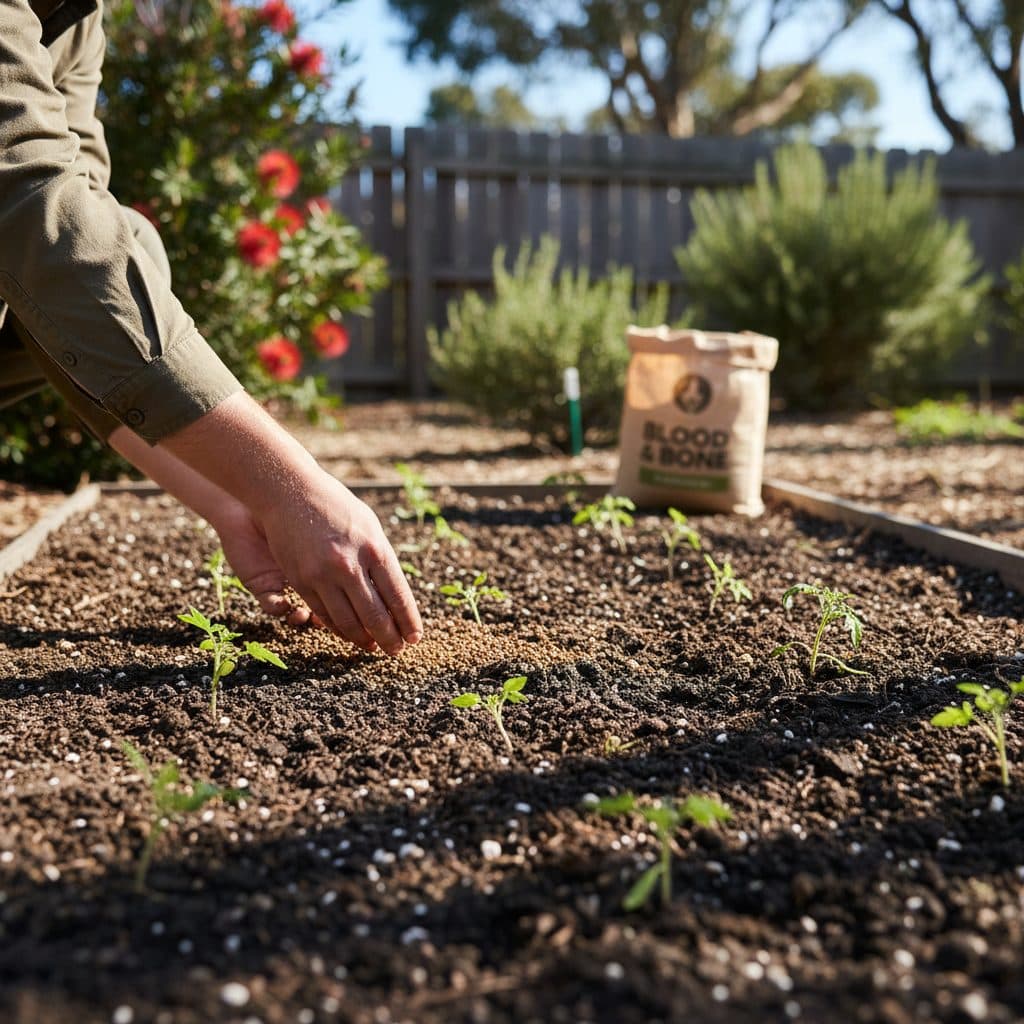
- Two weeks before planting autumn or spring crops, broadcast 100 grams (approximately two generous handfuls) per square metre over the soil surface.
- Fork or rake the powder into the top 10 cm of soil to prevent surface caking and odour.
- Water the bed deeply with a hose to activate microbial digestion before sowing seeds or planting out seedlings like broad beans in Australia.
2. Planting individual trees and shrubs
- Dig your planting hole twice as wide as the root ball.
- Mix 150 to 200 grams of blood and bone into the excavated soil before backfilling around the plant roots.
- The slow-release phosphorus stimulates rapid root branching into the surrounding native soil.
3. Established fruit trees and citrus
- In early spring (September) and late summer (February), broadcast 100 grams per square metre beneath the outer drip line of citrus, stone fruit, and apple trees.
- Rake lightly beneath the mulch layer and water thoroughly.
Is blood and bone good for tomatoes and heavy-fruiting crops?
Blood and bone works well as a starter fertiliser for tomatoes, capsicums, eggplants, and zucchini, but requires careful timing:
- Root establishment and cell strength: The rich combination of phosphorus and calcium makes blood and bone ideal when planting tomato seedlings. Calcium contributes to cell-wall development, but blossom end rot is a calcium transport problem inside the fruit, usually caused by uneven soil moisture rather than a lack of calcium in the soil. Steady watering and mulch prevent it; extra fertiliser does not.
- The potassium shortfall: Tomatoes are heavy potassium feeders. While nitrogen and phosphorus produce tall, leafy vines and strong root networks, fruit swelling, sugar synthesis, and disease resistance require abundant potassium.
- The potash supplement: When growing tomatoes or strawberries in Australia, supplement blood and bone with sulphate of potash (potassium sulphate) or organic seaweed tonic once flowering begins.
+-------------------------------------------------------------+
|              TOMATO FEEDING STRATEGY WITH BLOOD & BONE      |
|                                                             |
|   STAGE               FERTILISER COMBINATION                |
|   -----               ----------------------                |
|   Transplanting       1 handful Blood and Bone in base hole |
|   Early Vegetative    Light dressing + compost around stem  |
|   Flowering & Fruit   Add Sulphate of Potash or Wood Ash    |
+-------------------------------------------------------------+
Which plants should never receive standard blood and bone?
The main rule when using blood and bone in Australia concerns phosphorus-sensitive native plants.
- The Proteaceae family: Australian native plants from the Proteaceae family, including Grevilleas, Banksias, Waratahs (Telopea), Hakeas, and Macadamias, evolved in ancient, severely weathered soils containing almost no available phosphorus.
- Cluster root physiology: These species produce specialized dense root mats (proteoid or cluster roots) designed to scavenge trace phosphorus.
- Phosphorus toxicity: Applying high-phosphorus fertilisers like standard blood and bone (5% to 6% P) overwhelms their root uptake mechanisms, causing leaf tip necrosis, rapid defoliation, and plant death.
- Safe alternatives: For Australian native gardens, use specialized low-phosphorus native fertilisers (P content under 1.5%) or well-rotted native leaf litter.
+-------------------------------------------------------------+
|              PHOSPHORUS SENSITIVITY WARNING                 |
|                                                             |
|   DO NOT APPLY BLOOD & BONE TO:     SAFE TO APPLY TO:       |
|   -----------------------------     -----------------       |
|   - Grevillea species               - Tomatoes & Veggies    |
|   - Banksia species                 - Citrus & Stone Fruit  |
|   - Waratah (Telopea)               - Exotic Ornamentals    |
|   - Hakea & Macadamia               - Brassicas & Greens    |
|   - Phosphorus-sensitive native     - Roses & Gardenias     |
|     peas of south-western Australia                         |
|     (e.g. Gastrolobium, Daviesia)                           |
+-------------------------------------------------------------+
How do you keep dogs and pets safe around blood and bone?
Dogs possess an acute sense of smell and find the rich animal aroma of blood and bone irresistible. Ingesting commercial fertiliser presents significant veterinary hazards:
- Gastrointestinal blockage: Dry blood and bone powder mixes with stomach fluids to form a dense, cement-like mass in a dog's stomach, leading to acute intestinal obstruction.
- Pancreatitis and toxicosis: Rich blood and fat proteins can trigger acute pancreatitis, vomiting, bloody diarrhoea, and severe dehydration.
- Adulterated blends: Some multi-purpose blends combine blood and bone with poultry manure pellets or added mineral fertilisers. Read the label; the pet-hazard advice differs by product.
Safe application checklist
- Never leave bags open: Store fertiliser bags in tightly sealed, heavy plastic bins inside a locked garden shed or garage.
- Always dig in: Never leave blood and bone sitting as a dry powder on top of garden beds or lawn turf. Incorporate it 5 to 10 cm into the soil using a garden fork.
- Water immediately and deeply: Soak the garden bed heavily right after application to dissolve surface residues into the soil.
- Cover with mulch: Spread 5 cm of pea straw, sugarcane mulch, or bark over the treated bed to mask the scent from pets.
- When turning garden soil, check for subterranean pests such as curl grubs in Australian soil to protect developing root systems.
Applying blood and bone at correct rates, supplementing with potassium during fruiting, and observing safety precautions around native species and pets provides steady nutrients without risking toxicity.