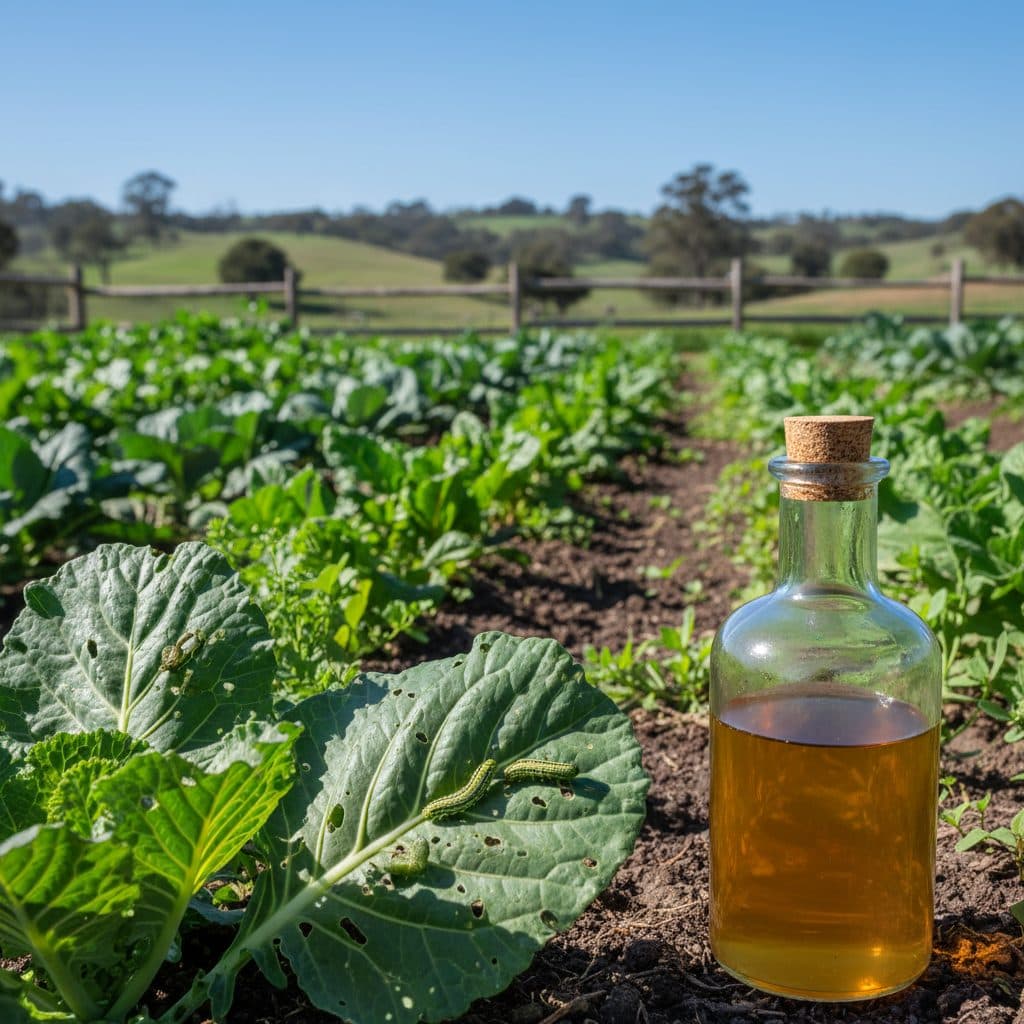
Key takeaways
- Bacillus thuringiensis (Bt) is a soil-dwelling bacterium that produces crystal proteins toxic to specific insect groups, making it a targeted biological control.
- Choosing the correct Bt strain matters; Bt kurstaki (Btk) targets caterpillars, Bt israelensis (Bti) controls mosquitoes and fungus gnats, and Bt tenebrionis (Btt) is for beetles.
- Bt works by producing protein crystals that, when ingested, bind to receptors in the insect’s gut, interrupting digestion and leading to death within 24-72 hours.
- Bt products are generally considered safe for beneficial insects, pollinators, and vertebrates, making them a valuable tool in Integrated Pest Management (IPM) programs.
- Proper application timing, thorough coverage, and understanding the insect’s life cycle are essential for Bt’s effectiveness, especially in regions like the Pacific Northwest.
- Resistance management is important; rotating Bt strains or integrating other control methods can help maintain its long-term efficacy against pest populations.
Quick answer: To choose the right Bacillus thuringiensis (Bt) strain, identify your specific pest: Bt kurstaki (Btk) targets caterpillars, Bt israelensis (Bti) controls mosquitoes and fungus gnats, and Bt tenebrionis (Btt) is for beetles. Apply the chosen strain when pests are young and actively feeding for optimal effectiveness.
In the fertile farmlands of the Midwest, from Ohio to Iowa, growers understand the constant dance with pests. For decades, many have turned to Bacillus thuringiensis (Bt) as a reliable ally in this struggle. This naturally occurring soil bacterium offers a targeted approach to pest management, providing a biological alternative to broad-spectrum chemical sprays. However, Bt isn’t a one-size-fits-all solution; it comes in several distinct varieties, each specialized to combat particular insect groups. Understanding these differences matters for effective pest control, whether you’re managing a 5-acre market garden or a few raised beds in a backyard in USDA zone 6.
Choosing the right Bt variety means you can precisely target pests like the cabbage worm or the Colorado potato beetle, while leaving beneficial insects unharmed. This specificity is a cornerstone of responsible pest management, helping to maintain ecological balance in your growing space. For instance, a study in Eswatini highlighted that Bt cotton varieties could increase yields by up to 30% [0, 1, 2]. Let’s break down the main Bt varieties and how to deploy them effectively against the specific insect threats you face.
understanding bacillus thuringiensis: a natural defense
These takeaways points carry into this section, too.
Bacillus thuringiensis, often shortened to Bt, is a gram-positive bacterium found naturally in soils worldwide. Its power lies in its ability to produce protein crystals, known as delta-endotoxins, during its spore-forming stage. When a susceptible insect ingests these crystals, they dissolve in the alkaline conditions of the insect’s gut, releasing toxic proteins. These proteins then bind to specific receptors on the gut lining, creating pores that interrupt digestion and ultimately lead to the insect’s death, typically within 24 to 72 hours [4]. This mechanism makes Bt highly selective, affecting only insects with the right gut chemistry and receptor sites.
how bt works on pests
The specificity of Bt is one of its greatest advantages. Unlike many synthetic pesticides that can harm a wide range of insects, Bt strains are tailored to specific pest orders. For example, Bt is effective against over 150 insect species globally, but a single strain usually targets only a few closely related species [4]. This means a Bt product designed for caterpillars will not harm beneficial insects like ladybugs or lacewings, which are critical for a healthy garden ecosystem in regions like the Central Valley of California. This targeted action supports organic gardening soil health and overall biodiversity.
- Bt produces protein crystals (delta-endotoxins) during sporulation.
- These crystals are ingested by susceptible insects.
- The alkaline gut environment activates the toxins.
- Toxins bind to specific gut receptors, creating pores.
- Insect gut paralysis and eventual death occur within 1-3 days.
bt kurstaki (btk): the caterpillar specialist
That work on understanding bacillus thuringiensis sets up what follows here.
When you’re battling the leaf-munching hordes of caterpillars in your vegetable patch, Bacillus thuringiensis kurstaki (Btk) is likely your go-to solution. This specific strain is highly effective against lepidopteran larvae—the caterpillars that eventually become moths and butterflies. Common targets include cabbage loopers, imported cabbageworms, tomato hornworms, and gypsy moth caterpillars. In a typical growing season in USDA zone 7, these pests can cause significant damage to brassicas, tomatoes, and fruit trees, potentially reducing yields by 50% or more if left unchecked. A single application of Btk can protect your plants for up to 7-10 days, depending on environmental conditions.
applying btk for optimal control
Btk must be ingested by the caterpillar to be effective, so thorough coverage of plant foliage is critical. Apply it when caterpillars are actively feeding and are still small, ideally less than 0.5 inches long, as younger larvae are more susceptible. For instance, when growing peppers, you might encounter pepper weevils or European corn borer larvae; Btk can be an effective control for the latter. Reapply after heavy rainfall or every 7 days if new feeding damage is observed. Always mix according to label directions, typically 1-2 tablespoons per gallon of water, to ensure proper concentration and efficacy. This targeted approach aligns well with principles of organic gardening fertilizer use, focusing on minimal environmental impact.
- Targets caterpillars (lepidopteran larvae) such as cabbage loopers and tomato hornworms.
- Must be ingested by the pest for efficacy.
- Apply when caterpillars are young and actively feeding.
- Reapply every 7-10 days or after significant rain.
- Typical mixing rates are 1-2 tablespoons per gallon of water.
bt israelensis (bti): controlling aquatic nuisances
This builds directly on bt kurstaki btk.
For growers dealing with flying insect pests that have an aquatic larval stage, such as mosquitoes, black flies, and fungus gnats, Bacillus thuringiensis israelensis (Bti) is the answer. Unlike Btk, Bti targets dipteran larvae. This strain is particularly useful in greenhouses, where high humidity and consistent moisture can lead to significant fungus gnat populations, especially in seed-starting trays or when growing microgreens. A single application can reduce fungus gnat larvae by 90% within 24 hours, making it a powerful tool for early pest intervention.
effective bti application strategies
Bti products are typically applied to standing water or moist soil where larvae are present. For mosquito control, Bti ‘dunks’ or granules can be placed in bird baths, rain barrels, or stagnant ponds, providing control for up to 30 days. For fungus gnats in potted plants or seed trays, mix liquid Bti concentrate at a rate of 0.5 to 2 teaspoons per gallon of water and apply it as a soil drench. This ensures the larvae in the top 1-2 inches of soil ingest the bacteria. In a commercial greenhouse setting in USDA zone 4, regular Bti applications every 10-14 days during peak season can keep populations below economic thresholds, preventing damage to young seedlings.
- Targets mosquito, black fly, and fungus gnat larvae.
- Applied to standing water or moist soil.
- Mosquito dunks provide control for up to 30 days.
- For fungus gnats, use a soil drench at 0.5-2 teaspoons per gallon of water.
- Effective in greenhouse environments with high humidity.
bt tenebrionis (btt) and bt san diego (btsd): beetle control
Those bt israelensis bti habits matter here as well.
While Btk handles caterpillars and Bti tackles aquatic larvae, a different Bt strain is needed for coleopteran pests, specifically beetles. Bacillus thuringiensis tenebrionis (Btt), sometimes referred to as Bacillus thuringiensis san diego (Btsd), is designed to target the larvae of certain leaf-feeding beetles. The most notable target for Btt is the Colorado potato beetle, a pest that can cause 100% defoliation of potato plants if left unchecked, significantly impacting yields in agricultural regions like Idaho and Maine [5]. Other susceptible pests include elm leaf beetle larvae and certain types of flea beetle larvae.
integrating btt into your pest strategy
Similar to Btk, Btt must be ingested by the beetle larvae, so good spray coverage on the plant foliage is essential. Apply Btt when the beetle larvae are small and actively feeding, typically within 7-10 days of hatching. The efficacy of Btt can be reduced by UV light, so applying it in the late afternoon or early evening can extend its activity. For a severe infestation of Colorado potato beetles on a 1-acre potato field, multiple applications every 5-7 days might be necessary during peak larval activity. Integrating Btt into an Integrated Pest Management (IPM) plan, alongside practices like crop rotation and hand-picking, can reduce reliance on synthetic pesticides by up to 50% [6].
- Targets specific beetle larvae, primarily Colorado potato beetle.
- Also effective against elm leaf beetle larvae.
- Requires ingestion by young larvae for optimal results.
- Apply in late afternoon or evening to minimize UV degradation.
- Multiple applications every 5-7 days may be needed for heavy infestations.
application and safety considerations for bt products
These bt tenebrionis btt lessons apply to the steps below, too.
While Bt products are generally recognized for their safety and specificity, proper application is paramount for effectiveness and to maintain their standing as a valuable IPM tool. Always read and follow label instructions carefully, as concentrations and application rates can vary between brands and specific pests. For instance, some liquid formulations might require 2-4 fluid ounces per gallon of water for adequate coverage on dense foliage. Applying Bt during cooler parts of the day, such as early morning or late evening, can improve efficacy by reducing UV degradation and allowing more time for insects to ingest the product before it breaks down. Most Bt products have a shelf life of 1-2 years when stored properly in a cool, dry place.
integrating bt into your ipm strategy
Incorporating Bt into a broader Integrated Pest Management (IPM) strategy is the most effective approach for long-term pest control. This means combining Bt applications with other practices like crop rotation, encouraging beneficial insects, physical barriers, and proper sanitation. For example, in a garden in USDA zone 8, you might use Bt for a caterpillar outbreak, but also employ yellow sticky traps for fungus gnats or introduce predatory mites. Rotating between different classes of pesticides, even biological ones, can help prevent the development of resistance in pest populations, ensuring Bt remains effective for years to come. This holistic approach supports overall garden health, much like using fermented soybean meal for soil enrichment.
- Always follow label instructions for mixing and application rates.
- Apply during cooler periods (early morning/late evening) to minimize UV degradation.
- Store products in a cool, dry place for a shelf life of 1-2 years.
- Integrate Bt with other IPM practices like crop rotation and beneficial insects.
- Rotate Bt strains or use in conjunction with other controls to prevent resistance.
Comparison of Common Bacillus thuringiensis (Bt) Varieties
Bt Variety | Primary Target Pests | Application Method | Common Crops/Environments |
|---|---|---|---|
Bt kurstaki (Btk) | Caterpillars (e.g., cabbage looper, tomato hornworm, gypsy moth) | Foliar spray on plant leaves | Vegetables, fruits, ornamentals, shade trees |
Bt israelensis (Bti) | Mosquito larvae, black fly larvae, fungus gnat larvae | Applied to standing water or as a soil drench | Ponds, bird baths, rain barrels, potted plants, greenhouses |
Bt tenebrionis (Btt) / Bt san diego (Btsd) | Beetle larvae (e.g., Colorado potato beetle, elm leaf beetle) | Foliar spray on plant leaves | Potatoes, tomatoes, eggplants, elm trees |
Bt Efficacy: Bt is effective against over 150 different insect species, but individual strains target specific pest groups with high precision [4].
Yield Benefits: Studies have shown that Bt cotton varieties can increase yields by up to 30% compared to non-Bt varieties in certain agricultural regions [1].
Fungus Gnat Control: A single application of Bt israelensis can reduce fungus gnat larval populations by 90% within 24 hours in moist soil environments.
Frequently asked questions
Is Bacillus thuringiensis (Bt) safe for humans and pets?
Yes, Bt is generally considered safe for humans, pets, and wildlife because its mode of action is highly specific to certain insect gut physiologies. The protein crystals do not bind to mammalian gut cells, and the bacterium is not pathogenic to vertebrates, making it a low-risk option for pest control in your garden and around your home, even for children playing nearby.
How long does Bt remain effective after application?
The effectiveness of Bt typically lasts for 3 to 7 days after application, depending on environmental factors like UV light exposure and rainfall. Direct sunlight can degrade the active proteins, so applying in the late afternoon or evening can extend its efficacy by 1-2 days. Reapplication every 5-7 days or after heavy rain is often recommended for ongoing pest pressure.
Can insects develop resistance to Bt?
Yes, insects can develop resistance to Bt, especially with repeated and exclusive use of a single strain over many generations. This has been observed in some agricultural settings, such as with certain cotton bollworm populations. To mitigate resistance, it helps to rotate Bt strains, integrate other pest control methods, and follow IPM principles, potentially reducing resistance development by 50% over time.
Does Bt harm beneficial insects like bees or ladybugs?
No, Bt is highly selective and does not harm beneficial insects such as bees, ladybugs, or predatory mites. Its toxic proteins only affect insects with specific receptors in their alkaline gut, which beneficial insects do not possess. This specificity makes Bt an excellent tool for integrated pest management, allowing you to control pests without interrupting the natural balance of your garden ecosystem.
What is the shelf life of Bt products?
Most Bt products have a shelf life of 1 to 2 years when stored properly in a cool, dry place, away from direct sunlight and extreme temperatures. Liquid formulations may degrade faster than dry powders or granules once opened. Always check the expiration date on the product label to ensure maximum potency before application, as expired products may only be 50% as effective.
References
- Yield Analysis and Adaptation for Bacillus Thuringiensis (BT) and Non-Bacillus Thuringiensis (BT) Cotton Varieties in the Kingdom of Eswatini (2019). Yield Analysis and Adaptation for Bacillus Thuringiensis (BT) and Non-Bacillus Thuringiensis (BT) Cotton Varieties in the Kingdom of Eswatini.
- Yield Analysis and Adaptation for Bacillus Thuringiensis (BT) and Non-Bacillus Thuringiensis (BT) Cotton Varieties in the Kingdom of Eswatini (2019). Yield Analysis and Adaptation for Bacillus Thuringiensis (BT) and Non-Bacillus Thuringiensis (BT) Cotton Varieties in the Kingdom of Eswatini.
- Yield analysis and adaptation for Bacillus thuringiensis (Bt) and non-Bacillus thuringiensis (Bt) Cotton varieties in the kingdom of Eswatini (2019). Yield analysis and adaptation for Bacillus thuringiensis (Bt) and non-Bacillus thuringiensis (Bt) Cotton varieties in the kingdom of Eswatini.
- Effect of crystals, spores, and exotoxins of six varieties of Bacillus thuringiensis on selected corn insects (2023). Effect of crystals, spores, and exotoxins of six varieties of Bacillus thuringiensis on selected corn insects.
- Bacillus thuringiensis thuringiensis (2019). Bacillus thuringiensis thuringiensis.
- USDA Natural Resources Conservation Service (2024). USDA Natural Resources Conservation Service.