Key takeaways
- Locate compost piles in full shade, especially during the hottest parts of the day, to reduce moisture evaporation by up to 50%.
- Maintain consistent moisture levels between 40% and 60%, using a soil moisture meter and adding 5-10 gallons of water per cubic yard during turning.
- Construct piles with a minimum dimension of 3x3x3 feet to achieve optimal internal temperatures of 130-160°F for active decomposition.
- Incorporate biochar at 5-10% of total volume to significantly improve water retention and nutrient cycling in arid compost.
- Consider vermicomposting with Red Wigglers (Eisenia fetida) in shaded bins, as they thrive in temperatures between 55°F and 77°F.
- Regularly turn the pile every 7-14 days to aerate and redistribute moisture, preventing anaerobic conditions and promoting microbial activity.
Quick answer: Maintaining an active compost pile in USDA zone 8-10 desert climates requires strategic moisture management and shade. Locate piles in full shade to reduce evaporation by up to 50% and consistently maintain 40-60% moisture levels, adding 5-10 gallons of water per cubic yard during turning.
Composting in the arid regions of the US Southwest, from Southern California to Arizona and parts of Texas, presents unique challenges. With ambient temperatures often exceeding 100°F for extended periods and humidity levels consistently below 20%, maintaining a thriving compost pile can feel like an uphill battle against the elements. However, with deliberate strategies for moisture retention and temperature regulation, growers in USDA zones 8-10 can successfully transform organic waste into valuable soil amendments.
The goal remains the same: to create nutrient-rich humus that improves soil structure, water holding capacity, and plant vitality. Achieving this in a desert environment means adapting traditional composting methods to combat rapid dehydration and extreme heat, ensuring the microbial community responsible for decomposition remains active and productive. This guide outlines practical steps to keep your compost pile working efficiently, even when the sun beats down relentlessly.
Understanding the desert composting challenge
The primary hurdles for composting in desert climates are extreme heat and low humidity, which accelerate moisture evaporation from the pile. In regions like Phoenix, Arizona, summer daytime temperatures can easily reach 115°F, directly impacting the internal temperature and microbial activity within a compost pile. While a hot compost pile ideally reaches 130-160°F, external heat can dry out the outer layers too quickly, hindering decomposition. Research from 2018 highlighted the rapid drying effect of hot winds on sun-baked desert surfaces, a phenomenon directly applicable to exposed compost piles [4].
moisture and microbial activity
Microorganisms, the workhorses of composting, require a consistent moisture level, typically between 40% and 60%, to thrive. When moisture drops below 30%, their activity slows dramatically, or even ceases. This rapid drying means a compost pile in a desert environment might need watering several times a week, rather than the bi-weekly or monthly schedule common in more temperate zones. Furthermore, the high ambient temperatures can lead to rapid nutrient volatilization if the pile dries out too much, reducing the quality of the finished product. An active pile also needs a healthy carbon-to-nitrogen ratio, ideally around 25:1 to 30:1, to fuel these microbes effectively.
- Rapid moisture loss due to high temperatures and low humidity.
- Inhibited microbial activity when moisture levels fall below 30%.
- Increased risk of nutrient volatilization in dry, hot conditions.
- Difficulty maintaining optimal internal temperatures without drying.
- Faster decomposition of smaller organic particles, requiring more frequent additions.
Site selection and pile construction for heat and moisture
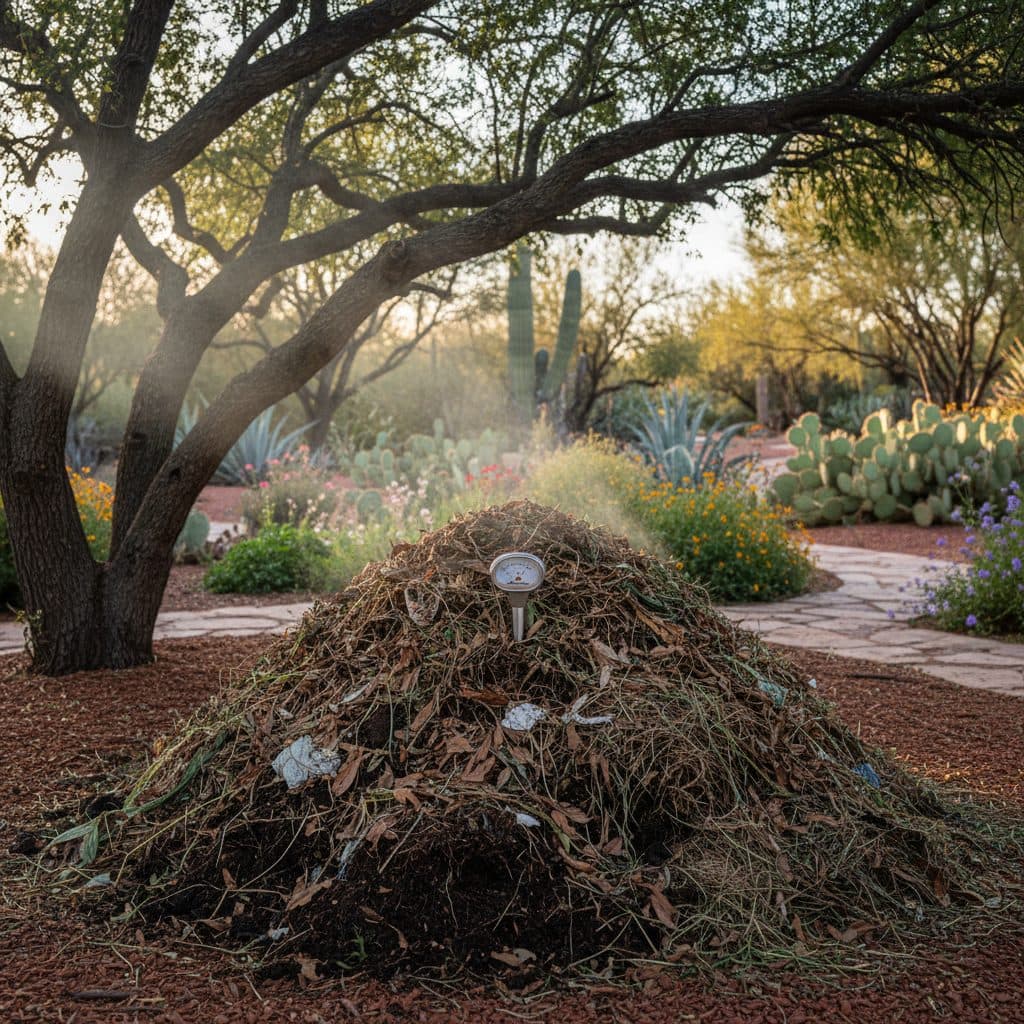
Choosing the right location for your compost pile is perhaps the most critical step in desert climates. Full shade is non-negotiable. Placing your pile under a large tree, against a north-facing wall, or beneath a shade structure can reduce surface temperatures by 20-30°F and cut moisture evaporation by 50% or more. Consider planting fast-growing, drought-tolerant species like Desert Teak or Desert Bunch Grass to create natural shade over time, if permanent structures aren’t feasible. The USDA Natural Resources Conservation Service emphasizes the importance of managing microclimates for soil health, a principle directly applicable to composting [6].
building an insulated pile
For pile construction, aim for a minimum size of 3x3x3 feet (27 cubic feet) to ensure enough mass to generate and retain heat, but avoid excessively large piles that can become difficult to turn and manage. Insulate the sides of the pile using materials like straw bales, old carpet, or even a layer of cardboard. A wire mesh bin lined with burlap or cardboard can help contain the material while allowing some airflow. Covering the top of the pile with a tarp, thick cardboard, or a 6-inch layer of straw or wood chips will further reduce direct sun exposure and prevent rapid moisture loss from the surface.
- Select a location that receives full shade throughout the day.
- Build a pile with minimum dimensions of 3x3x3 feet for thermal mass.
- Insulate the sides of the pile with straw bales, old carpet, or cardboard.
- Cover the top of the pile with a tarp or a 6-inch layer of organic material.
- Consider using a sturdy, enclosed bin design to minimize exposure to hot winds.
Moisture management: the desert composter’s priority
In arid environments, consistent moisture is the single most important factor for an active compost pile. The pile should feel like a wrung-out sponge—damp, but not dripping wet. This often means watering the pile every 2-3 days, or even daily during extreme heat waves exceeding 105°F. When turning the pile, add 5-10 gallons of water per cubic yard of material, so it penetrates deeply into the core. A simple soil moisture meter is a useful tool that gives a quick reading of the pile’s internal moisture percentage.
retaining moisture effectively
Beyond regular watering, employing moisture-retaining techniques is crucial. Incorporate materials that hold water well, such as shredded newspaper, cardboard, or even a layer of finished compost. Covering the pile with a thick tarp or a 6-inch layer of straw or wood chips acts as a physical barrier against evaporation. Some growers even place a shallow tray of water near the pile to increase local humidity slightly, though its impact on a large pile is minimal. For troubleshooting moisture issues, consulting resources like Compost troubleshooting: odor, screening, and finishing a clean pile can provide further guidance.
- Water the pile every 2-3 days, or daily during extreme heat.
- Add 5-10 gallons of water per cubic yard when turning.
- Use a soil moisture meter to maintain 40-60% moisture.
- Cover the pile with a thick tarp or a 6-inch layer of straw.
- Incorporate shredded cardboard or finished compost to improve water retention.
Balancing carbon and nitrogen in arid environments
The ideal carbon-to-nitrogen (C:N) ratio for hot composting is between 25:1 and 30:1. In desert regions, sourcing enough ‘greens’ (nitrogen-rich materials) can sometimes be a challenge due to limited lush vegetation, while ‘browns’ (carbon-rich materials) like dry leaves and wood chips are often abundant. To maintain this balance, actively seek out kitchen scraps, fresh grass clippings (if available), and manure from local farms. Even small additions of green material, like spent coffee grounds or vegetable trimmings, can make a significant difference in a 100-gallon compost bin.
sourcing materials and managing ratios
When greens are scarce, consider purchasing alfalfa meal or cottonseed meal as nitrogen supplements, adding them in small quantities (e.g., 1-2 cups per cubic foot) to boost microbial activity. For browns, shredded cardboard, dry leaves, and wood chips are excellent choices. Ensure all materials are chopped or shredded into pieces no larger than 2 inches to accelerate decomposition. A well-balanced pile will heat up within 24-48 hours, reaching temperatures of 130-160°F, indicating vigorous microbial action. For a detailed breakdown of ratios and materials, refer to resources on Hot composting: the browns-to-greens recipe that finishes in weeks.
- Maintain a C:N ratio between 25:1 and 30:1 for optimal decomposition.
- Prioritize fresh kitchen scraps, coffee grounds, and manure for nitrogen.
- Utilize shredded cardboard, dry leaves, and wood chips for carbon.
- Chop materials into 2-inch pieces or smaller to speed up breakdown.
- Supplement with alfalfa meal or cottonseed meal if ‘greens’ are scarce.
Vermicomposting as an alternative
For those struggling with traditional hot composting in extreme desert heat, vermicomposting offers a viable and often more manageable alternative. Red Wigglers (Eisenia fetida) are the most common composting worms, thriving in temperatures between 55°F and 77°F. While this range is cooler than typical desert ambient temperatures, a well-managed worm bin can be kept active even when external temperatures soar above 100°F. The key is insulation and shade, similar to traditional composting, but with even greater emphasis on maintaining a stable, moderate environment for the worms.
setting up a desert worm bin
Locate worm bins in the coolest, shadiest spot available—a garage, under a dense tree, or even partially buried in the ground in a shaded area. Use sturdy, opaque bins, preferably made of plastic or wood, with good drainage and aeration. Fill the bin with a bedding of shredded newspaper, cardboard, or coir, keeping it consistently moist (around 70-80% moisture) but not waterlogged. Add food scraps in small quantities, burying them to prevent pests and reduce odors. A 10-gallon bin can process approximately 1-2 pounds of food waste per week with a healthy population of 1,000 Red Wigglers. This method produces nutrient-rich worm castings, an excellent soil amendment for arid gardens.
- Use Red Wigglers (Eisenia fetida) as they tolerate a wide range of conditions.
- Place worm bins in a garage, under dense shade, or partially buried.
- Maintain bedding moisture at 70-80% using a 3-in-1 Soil pH, Moisture & Light Meter.
- Feed small quantities of food scraps, burying them beneath the bedding.
- Ensure good ventilation and drainage to prevent anaerobic conditions.
Integrating biochar for enhanced fertility and water retention
Biochar, a charcoal-like material produced from biomass pyrolysis, is an exceptional tool for improving soil fertility and water retention, particularly in arid climates. Its porous structure allows it to hold up to 6 times its weight in water, making it a valuable addition to compost in regions where every drop counts. When mixed into compost, biochar acts as a stable habitat for beneficial microbes, which speeds up decomposition and nutrient cycling. Studies show that biochar can improve soil water holding capacity by 10-20% in sandy soils, a common feature of desert landscapes [2].
applying biochar to compost and soil
To integrate biochar, first ‘charge’ it by soaking it in a nutrient-rich liquid, such as compost tea or diluted liquid fertilizer, for several days. This fills its pores with nutrients and microbes. Then, add the charged biochar to your compost pile at a rate of 5-10% by volume during turning, ensuring it’s evenly distributed. Once the compost is finished, the biochar will be fully inoculated and ready to be incorporated into your garden soil at a rate of 5-15% by volume, depending on soil type and crop needs. This long-lasting amendment can provide benefits for hundreds of years, making it a worthwhile investment for desert growers.
- Charge biochar by soaking it in nutrient-rich liquid for several days.
- Add charged biochar to compost at 5-10% by volume during turning.
- Ensure even distribution throughout the compost pile.
- Incorporate finished biochar-compost into garden soil at 5-15% by volume.
- Utilize biochar to improve water holding capacity by 10-20% in sandy soils.
Composting Methods for Desert Climates
Method | Ideal Temperature Range (°F) | Moisture Management | Key Advantage in Desert |
|---|---|---|---|
Hot Composting | 130-160 | Frequent watering (5-10 gal/cubic yard), heavy cover | Rapid decomposition (weeks), kills pathogens |
Cold Composting | Ambient | Moderate watering, less critical than hot pile | Low maintenance, good for small volumes |
Vermicomposting | 55-77 | Consistent bedding moisture (70-80%), insulated bin | Produces rich castings, works in smaller spaces |
Biochar-Enhanced | N/A (amendment) | Improves water retention (up to 6x its weight) | Long-term soil fertility and water savings |
Shade is Key: Placing your compost pile in full shade can reduce moisture evaporation by up to 50% in desert environments.
Moisture Monitoring: An active compost pile in arid regions requires 40-60% moisture, often needing 5-10 gallons of water per cubic yard during weekly turns.
Biochar Boost: Adding biochar at 5-10% by volume can increase compost’s water holding capacity and microbial habitat for centuries.
Frequently asked questions
How often should I water my compost pile in a desert climate?
In hot, dry desert climates, you should typically water your compost pile every 2-3 days, or even daily during extreme heat waves exceeding 105°F. The goal is to maintain a consistent moisture level between 40% and 60% throughout the pile, often requiring 5-10 gallons of water per cubic yard during turning.
What’s the best location for a compost pile in the desert?
The best location for a compost pile in the desert is in full, constant shade. This could be under a large, established tree, against a north-facing wall, or beneath a purpose-built shade structure. This placement can reduce moisture evaporation by 50% and keep the pile’s surface temperatures 20-30°F cooler.
Can I use biochar to help my compost in a dry climate?
Yes, biochar is highly beneficial for composting in dry climates. Its porous structure allows it to hold up to 6 times its weight in water, significantly improving moisture retention within the compost. Incorporate charged biochar at 5-10% by volume into your compost pile to enhance microbial activity and nutrient cycling.
What size should a desert compost pile be?
For effective hot composting in desert conditions, a pile should be at least 3x3x3 feet (27 cubic feet). This minimum size provides enough thermal mass to generate and retain the internal heat (130-160°F) necessary for rapid decomposition, while also being manageable for regular turning.
Are there specific worms for desert vermicomposting?
While no specific ‘desert worms’ exist, Red Wigglers (Eisenia fetida) are the most common and effective composting worms. They thrive in temperatures between 55°F and 77°F, so successful desert vermicomposting requires placing their bins in well-insulated, heavily shaded areas to protect them from extreme ambient temperatures often exceeding 100°F.
How do I know if my compost pile is too dry?
You can tell if your compost pile is too dry if it feels crumbly, dusty, or doesn’t hold its shape when squeezed. A healthy pile should feel like a wrung-out sponge, damp but not dripping. Using a <a href=”https://agripure.org/shop/soil-moisture-meter-plant-watering-test-soil-humidity-monitor-detector-hygrometer-flower-testing-home-gardening-measuring-tool”>soil moisture meter</a> can give you a precise reading, aiming for 40-60% moisture.
References
- Southwest Desert Nursuries [i.e. Nurseries], collectors of cactus, ferns, novelties, desert plants, desert seeds, mistletoe (1930). [Southwest Desert Nursuries \i.e. Nurseries], collectors of cactus, ferns, novelties, desert plants, desert seeds, mistletoe.
- Perspective (2010). Perspective.
- VI. Propriety and desert (2007). VI. Propriety and desert.
- Hot Winds on a Sun-Baked Desert (2018). Hot Winds on a Sun-Baked Desert.
- 979 compost pile [n] [US] (2010). [979 compost pile [n] \US].
- USDA Natural Resources Conservation Service (2024). USDA Natural Resources Conservation Service.