Key takeaways
- Harvest herbs and aromatics at their peak, typically before flowering, for optimal flavor and potency.
- Air drying is a cost-effective method for many herbs, requiring temperatures between 60-80°F and humidity below 60%.
- Dehydrators offer consistent, controlled drying at 95-120°F, preserving more volatile oils and color.
- Cure alliums like garlic and onions in a warm, dry, shaded area for two to four weeks to extend their storage life to six months or more.
- Store dried herbs in airtight containers in a cool, dark place, maintaining quality for one to three years.
- Proper preservation can reduce grocery costs by 50-75% for common herbs and spices.
Quick answer: To preserve garden herbs for peak flavor, harvest them before flowering, then dry them using methods like air drying or dehydrators to reduce moisture, and store them in airtight containers in a cool, dark place.
From my garden in USDA zone 8, just outside Portland, Oregon, I’ve learned that the satisfaction of growing your own food doesn’t have to end with the harvest. Extending the life of fresh herbs, spices, and aromatics through careful preservation is a cornerstone of self-sufficiency. Over the last 20 years, I’ve seen how a well-stocked pantry of home-dried basil, cured garlic, and preserved chili peppers can transform winter cooking and significantly reduce grocery bills, often by 50% or more for these items.
The process of curing, drying, and storing these garden treasures might seem complex at first, but with a few tried-and-true methods, you can preserve the flavors of summer for months to come. We’ll explore practical techniques that ensure your hard work in the garden translates into delicious, potent ingredients ready for any recipe, whether you’re drying oregano or curing a hundred heads of garlic.
Why preserve your garden’s bounty?
Preserving herbs and aromatics from your garden offers more than just convenience; it’s a strategic move for flavor, health, and your wallet. Store-bought dried herbs often lack the potency and nuanced flavors of their home-grown counterparts, having been harvested and processed months, sometimes years, before reaching your shelf. For example, a teaspoon of home-dried basil can have twice the aromatic intensity of a store-bought version. By taking control of the preservation process, you ensure a higher quality product, often with better retention of beneficial compounds, as noted in recent research on drying impacts [1].
cost savings and culinary advantages
Consider the cost: a small jar of organic dried oregano can easily cost five dollars or more at the grocery store. Growing your own and preserving it can reduce that cost by 75% or more over a year. A single robust oregano plant in USDA zone 7 can yield enough fresh leaves to produce several ounces of dried herb, lasting an entire year for a family of four. Beyond the financial aspect, having dried herbs — from garden sage to pungent rosemary — on hand means you’re always ready to cook with them. This also provides a consistent supply of ingredients that might be seasonal or expensive to buy fresh out of season, like dill or cilantro. The goal is to capture the peak freshness and flavor from your harvest, typically within 24 hours of cutting.
- Flavor intensity: Home-dried herbs retain more volatile oils, offering a richer taste.
- Cost efficiency: Save up to 75% compared to purchasing store-bought dried herbs.
- Ingredient control: Know exactly what goes into your food, free from additives.
- Year-round supply: Enjoy seasonal herbs and aromatics throughout the colder months.
- Reduced waste: Utilize excess harvest that would otherwise spoil.
Harvesting for optimal preservation
The success of your preserved herbs starts with proper harvesting. Timing is critical for maximizing flavor and aromatic compounds. For most leafy herbs like basil, oregano, thyme, and mint, the best time to harvest is in the morning after the dew has dried, but before the sun gets too hot, typically between 8:00 AM and 10:00 AM. This is when their essential oil content is highest. Aim to harvest before the plant flowers, as flowering often signals a reduction in leaf flavor and can divert the plant’s energy away from leaf production. For example, basil harvested pre-flower can have 30% more aromatic compounds than post-flower harvests.
harvesting leafy herbs and aromatics
When harvesting, use sharp scissors or pruners to cut stems, leaving at least one-third of the plant intact to encourage regrowth. For larger plants like rosemary or sage, you can take up to 50% of the plant without stressing it too much, especially in temperate climates like USDA zone 6. For root crops like garlic and onions, harvest when the tops begin to yellow and fall over, usually in mid to late summer. Garlic, specifically, benefits from a two-week drying period in the field before being brought in for curing. Always clean herbs gently with a soft brush or a quick rinse if necessary, then pat them thoroughly dry before proceeding to any preservation method to prevent mold growth, which can occur with even 1% residual moisture.
- Morning harvest: Cut between 8:00 AM and 10:00 AM for peak essential oils.
- Pre-flowering: Harvest leafy herbs before flowers appear to maintain flavor.
- Leave one-third: Ensure plant regrowth by not cutting more than two-thirds of the plant.
- Gentle cleaning: Brush off dirt or rinse quickly and pat completely dry.
- Garlic/Onions: Harvest when tops yellow and cure for two weeks in the field.
Drying methods for herbs and spices
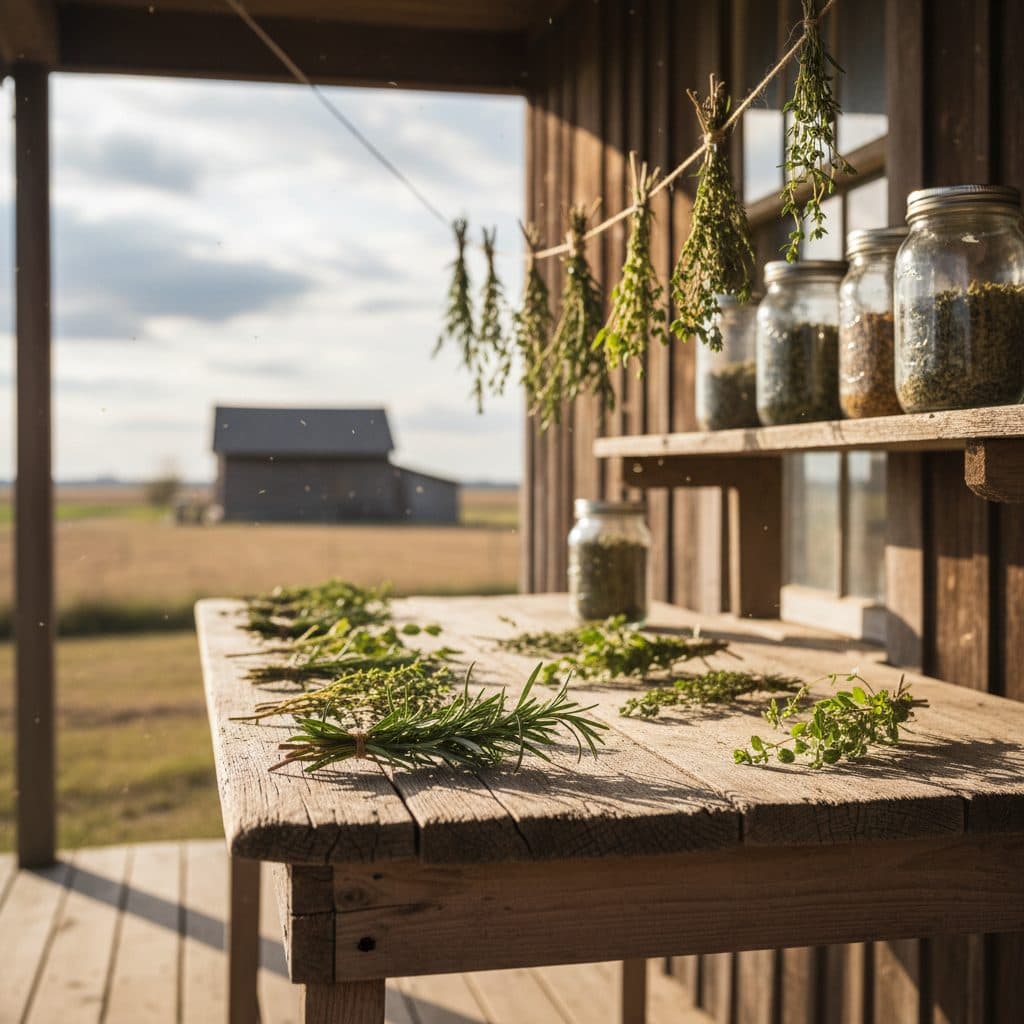
Drying is one of the oldest and most effective ways to preserve herbs, significantly reducing moisture content to inhibit microbial growth. The goal is to remove 80-90% of the plant’s water, leaving a final moisture content of 5-10% [2]. This process can be achieved through various methods, each with its own advantages. Air drying is suitable for herbs with lower moisture content and larger leaves, such as rosemary, thyme, and oregano. For these, simply tie small bundles of stems together and hang them upside down in a warm, dry, well-ventilated area, ideally between 60-80°F and with humidity below 60%. This method can take one to three weeks, depending on the herb and ambient conditions.
dehydrators and oven drying
For more delicate herbs like basil or cilantro, or for larger quantities, a food dehydrator offers precise control over temperature and airflow, leading to more consistent results. Set your dehydrator to a low temperature, typically between 95-120°F, to preserve volatile oils and color [1]. Drying times vary from a few hours to a full day. For example, thin basil leaves might dry in six hours at 110°F, while thicker chili peppers might take 18 hours. Oven drying is another option, though less controlled. Use the lowest possible setting, often around 150-170°F, and prop the oven door open slightly to allow moisture to escape. Check frequently to prevent scorching, as high heat can degrade flavor and color. For more detailed guidance on various drying techniques, consider exploring resources like Dehydrating food: how to dry produce, herbs, and jerky.
- Air drying: Best for sturdy herbs like rosemary, thyme, oregano; 60-80°F, under 60% humidity.
- Dehydrator: Ideal for consistent drying of all herbs; 95-120°F for 6-24 hours.
- Oven drying: Use lowest setting (150-170°F) with door ajar; monitor closely to prevent burning.
- Moisture content: Aim for 5-10% final moisture for long-term storage.
- Avoid direct sunlight: Sunlight degrades color and flavor during drying.
Curing and alternative preservation techniques
While drying is excellent for many herbs, some aromatics benefit more from curing, a process that allows them to develop a protective outer layer and extend their storage life. Garlic and onions are prime examples. After harvesting, these alliums need to cure for two to four weeks in a warm, dry, well-ventilated, and shaded area. Temperatures around 75-85°F are ideal for this process, which toughens the outer skins and seals in moisture, preventing spoilage. For instance, properly cured garlic can last six to eight months in a cool, dark pantry, whereas uncured garlic might only last two months.
salt curing, oil infusions, and freezing
Beyond traditional drying and curing, other methods offer unique ways to preserve flavor. Salt curing, though less common for leafy herbs, is effective for preserving chili peppers or making herb pastes. Pack fresh peppers in coarse salt, ensuring a 1:1 ratio by weight, then store in a cool place. For short-term preservation, infusing herbs in oil can capture their essence, but these infusions must be refrigerated and used within one to two weeks to prevent botulism risk, especially with low-acid herbs like garlic. Freezing is another simple method, particularly good for delicate herbs like basil or cilantro that lose flavor when dried. Chop fresh herbs, pack them tightly into ice cube trays with a little water or olive oil, and freeze. Once solid, transfer the cubes to freezer bags for up to nine months of convenient use. For bulk storage of root crops, consider root cellaring: storing the harvest without electricity, which can extend the life of potatoes and carrots for six months or more at 35-40°F.
- Garlic/Onion curing: Two to four weeks at 75-85°F in a dry, shaded area.
- Salt curing: Effective for chili peppers; use a 1:1 ratio of peppers to coarse salt.
- Oil infusions: Refrigerate and use within one to two weeks to prevent spoilage.
- Freezing herbs: Chop, pack in ice cube trays with water/oil, freeze for up to nine months.
- Root cellaring: Store root crops like potatoes and carrots at 35-40°F for extended periods.
Proper storage for long-term freshness
Once your herbs, spices, and aromatics are properly dried or cured, the final step is correct storage to maintain their quality and potency. Light, heat, and air are the primary enemies of preserved foods, degrading flavor, color, and aromatic compounds over time. Dried herbs should be stored in airtight containers – glass jars with tight-fitting lids are excellent choices – in a cool, dark pantry or cupboard. Temperatures below 70°F are ideal, and consistent darkness is crucial to prevent fading and loss of essential oils. For example, dried basil stored in a clear jar on a sunny shelf can lose 50% of its color and flavor within three months, while the same basil in a dark cupboard can retain 90% of its quality for over a year [1].
shelf life and quality indicators
Most properly dried herbs will retain their peak flavor for one to three years. Whole leaves or seeds generally last longer than ground herbs, as grinding increases the surface area exposed to air, accelerating degradation. For instance, whole dried oregano leaves might last two years, but ground oregano might only be potent for six to twelve months. Label all containers with the herb name and the date of preservation to track freshness. When using stored herbs, check for color and aroma; if they look faded or smell flat, their potency has diminished. While still safe to consume, you might need to use two to three times the amount specified in a recipe to achieve the desired flavor. Cured garlic and onions, stored in mesh bags or open baskets in a cool, dry, dark place (like a basement or root cellar at 45-55°F), can last six to eight months.
- Airtight containers: Use glass jars with tight lids to exclude air.
- Cool, dark storage: Maintain temperatures below 70°F and avoid light exposure.
- Labeling: Include herb name and preservation date for tracking freshness.
- Shelf life: Dried herbs typically last one to three years; whole forms last longer.
- Quality check: Discard if color is faded or aroma is significantly diminished.
Comparison of Common Herb Preservation Methods
Method | Best For | Ideal Conditions | Typical Shelf Life |
|---|---|---|---|
Air Drying | Rosemary, Thyme, Oregano | 60-80°F, <60% humidity, dark | 1-3 years |
Dehydrator | Basil, Parsley, Chili Peppers | 95-120°F, consistent airflow | 1-2 years |
Curing | Garlic, Onions | 75-85°F, dry, shaded, ventilated | 6-8 months |
Freezing | Basil, Cilantro, Chives | 0°F or below, airtight containers | 6-9 months |
Moisture Target: For effective long-term storage, dried herbs should have a final moisture content between 5-10% to prevent spoilage [2].
Temperature Control: Drying herbs at temperatures between 95-120°F in a dehydrator helps retain up to 30% more volatile oils than higher heat methods [1].
Frequently asked questions
How do I know when my herbs are fully dry?
Dried herbs should be brittle and crumble easily between your fingers. If they still feel pliable or bend without breaking, they need more drying time. This typically indicates a moisture content above 10% [2].
Can I dry herbs in a microwave?
While possible, microwave drying is generally not recommended for quality. It can quickly overheat and degrade the delicate essential oils, leading to a significant loss of flavor and aroma, sometimes by as much as 40% compared to air drying [1].
What’s the best way to store cured garlic?
Cured garlic should be stored in a cool, dry, dark place with good air circulation, ideally between 45-55°F. Mesh bags or open baskets are excellent for this, allowing the garlic to last six to eight months [6].
Why do my dried herbs lose their color?
Loss of color in dried herbs is often due to exposure to light and oxygen. Storing them in clear containers in a brightly lit area can cause them to fade quickly, losing up to 50% of their green color within a few weeks [1].
Is it safe to make my own herb-infused oils?
Herb-infused oils can be made, but they carry a risk of botulism if not handled correctly, especially with low-acid ingredients like garlic or fresh herbs. Always refrigerate infused oils and use them within one to two weeks, or consider making vinegar infusions which are safer for longer storage due to their acidity.
How much fresh herb equals dried herb?
As a general rule, one tablespoon of fresh herbs is equivalent to one teaspoon of dried herbs. This 3:1 ratio accounts for the concentrated flavor of dried herbs due to moisture removal, though potency can vary by up to 20% depending on drying method [1].
References
- Impact of Drying on Various Quality Characteristics of Herbs, Spices, and Medicinal Plants (2023). Impact of Drying on Various Quality Characteristics of Herbs, Spices, and Medicinal Plants.
- Drying Characteristics of Herbs, Spices, and Medicinal Plants (2023). Drying Characteristics of Herbs, Spices, and Medicinal Plants.
- Emerging and Advanced Drying Technologies for Herbs, Spices, and Medicinal Plants (2023). Emerging and Advanced Drying Technologies for Herbs, Spices, and Medicinal Plants.
- Techno-Economic Evaluation for Cost-Effective Drying of Herbs, Spices and Medicinal Plants (2023). Techno-Economic Evaluation for Cost-Effective Drying of Herbs, Spices and Medicinal Plants.
- Guideline and Selection of Dryers for Herbs, Spices, and Medicinal Plants (2023). Guideline and Selection of Dryers for Herbs, Spices, and Medicinal Plants.
- USDA Natural Resources Conservation Service (2024). USDA Natural Resources Conservation Service.