Key takeaways
- Curing is a critical two-to-three-week process that dries the outer skins and neck of alliums, preventing disease entry.
- Ideal curing conditions involve temperatures between 75°F and 90°F with 60% to 70% relative humidity and good air circulation.
- Long-term storage requires cool, dark, and dry environments, typically 35°F to 45°F with 60% to 70% humidity.
- Properly cured and stored onions can last six to nine months, while garlic can store for up to eight months.
- Avoid storing alliums in refrigerators, where humid air softens the skins and encourages mold.
- Regularly inspect stored bulbs, removing any soft or diseased ones to prevent spoilage from spreading to healthy produce.
Quick answer: Curing alliums involves drying their outer skins and necks for two to three weeks at 75-90°F with 60-70% humidity and good air circulation, creating a protective barrier against disease and moisture loss. This process significantly extends their storage life, allowing them to last for six to nine months.
In the fertile agricultural regions of the Pacific Northwest, home gardeners routinely lose part of their onion and garlic harvest to rot or premature sprouting. This significant loss, representing hundreds of pounds of potential food for many families, points to a common challenge: preserving alliums after harvest. Whether you’re growing ‘Walla Walla’ onions in Washington or ‘German White’ garlic in Pennsylvania, the principles of successful post-harvest handling remain consistent.
The good news is that with careful attention to curing and storage, you can dramatically extend the shelf life of your onions, garlic, and shallots, often by six months or more. This guide provides practical, research-backed methods to ensure your hard-earned harvest lasts through the winter, reducing waste and providing fresh ingredients for your kitchen long after the growing season ends. By following these steps, you can expect to keep the great majority of your cured alliums sound for extended periods, a substantial improvement for any home or small-scale farm.
Understanding the importance of curing for alliums
Curing is the essential first step after harvesting onions, garlic, and shallots, a process often overlooked by new growers. This two-to-three-week period allows the outer skins to dry and tighten, forming a protective barrier against moisture loss and disease pathogens. Without proper curing, bulbs remain moist and susceptible to fungal infections like neck rot, which can move through a stored harvest within weeks. The goal is to create a dry, papery skin that seals the bulb, much like a natural wrapper.
The science behind curing success
During curing, the neck of the bulb, where the leaves meet the bulb, must dry completely and constrict. This closure prevents moisture from entering or exiting the bulb too rapidly and stops bacteria and fungi from gaining access to the interior fleshy layers. For example, in humid climates like those found in the southeastern US, achieving this neck closure can be challenging without adequate airflow. A well-cured onion withstands environmental stresses far better than an uncured one, and stores for months longer.
- Dries outer layers: Forms a protective, papery skin.
- Seals the neck: Prevents pathogen entry and moisture loss.
- Heals minor wounds: Closes small cuts from harvest.
- Reduces respiration rate: Slows down metabolic activity, preserving energy.
- Concentrates flavors: Improves the taste of the alliums over time.
Optimal environments for successful curing
Achieving the right environmental conditions is paramount for effective curing. The ideal temperature range for curing alliums is between 75°F and 90°F, with a relative humidity of 60% to 70%. These conditions encourage rapid drying of the outer layers without cooking the bulbs. In many parts of the US, such as the Central Valley of California or the arid Southwest, outdoor temperatures during harvest often align perfectly with these requirements. However, in regions with higher humidity, like Florida or the Gulf Coast, supplemental airflow is necessary to prevent mold growth.
Air circulation and protection from elements
Good air circulation is non-negotiable during the curing phase. Spreading bulbs in a single layer on wire racks, old window screens, or slatted shelves allows air to move freely around each bulb. If curing indoors, a fan can provide the necessary airflow, especially in a garage or shed where temperatures might be lower, perhaps 65°F to 70°F. Protecting the bulbs from direct sunlight and rain is also vital; direct sun can scald the bulbs, while rain can reintroduce moisture and encourage rot. Many growers use open-sided sheds or covered porches, keeping the bulbs shaded through the hottest part of the day.
- Temperature control: Aim for 75°F to 90°F for quick drying.
- Humidity management: Keep relative humidity between 60% and 70%.
- Ample airflow: Use fans or open spaces to circulate air effectively.
- Shade protection: Prevent sunscald by avoiding direct sun exposure.
- Rain shelter: Ensure bulbs remain dry throughout the curing period.
Long-term storage strategies for cured alliums
Once properly cured, onions, garlic, and shallots are ready for long-term storage. The key to successful storage is a cool, dark, and dry environment. Temperatures between 35°F and 45°F are generally ideal, with relative humidity maintained at 60% to 70%. For many growers in USDA zones 5 through 7, an unheated basement, garage, or dedicated root cellar provides these conditions naturally. Storing alliums in a refrigerator is generally not recommended, as the humid air inside softens the papery skins and can lead to mold within a few weeks.
Choosing the right storage containers and locations
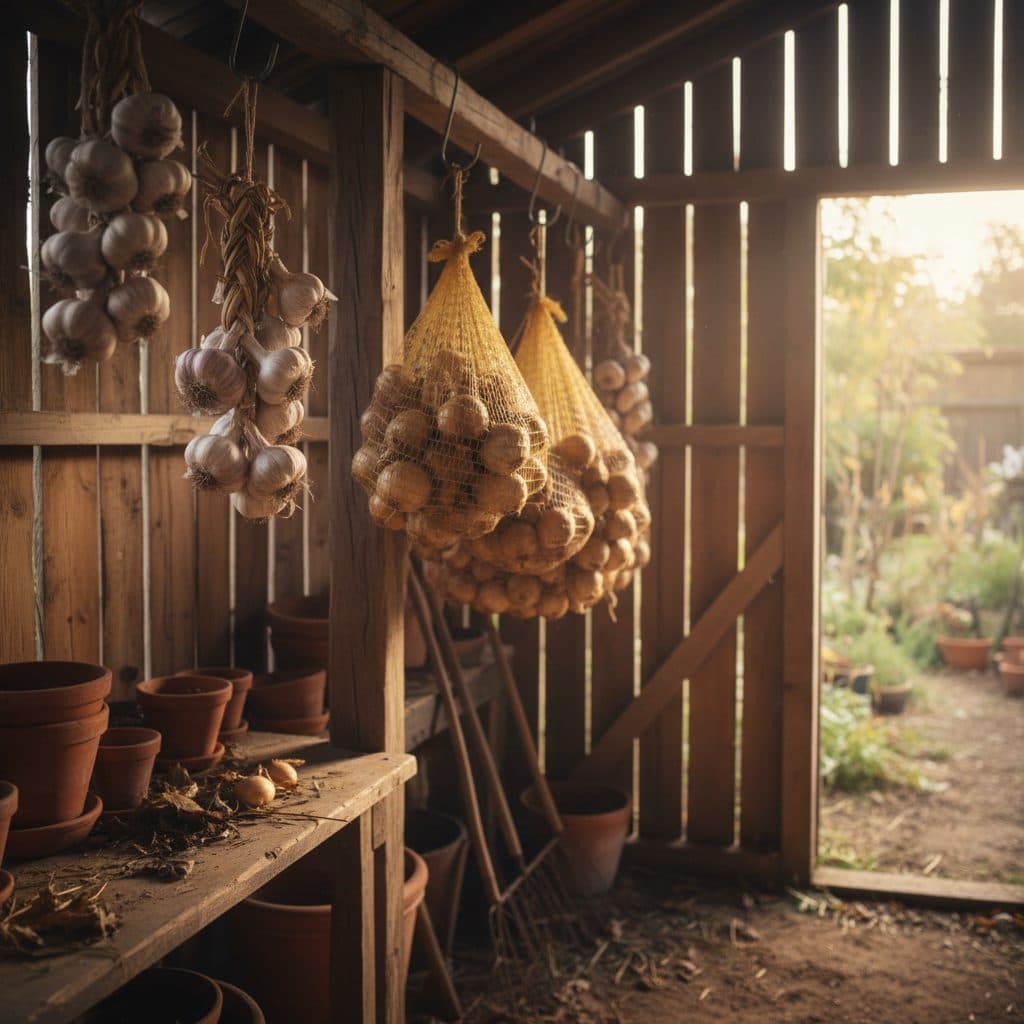
Good air circulation remains important even in storage. Mesh bags, old nylon stockings, or braided strings of garlic (called ‘braids’) are excellent choices because they allow air to flow around each bulb, preventing moisture buildup. Avoid storing alliums in plastic bags or airtight containers, which trap moisture and accelerate spoilage. For instance, onions stored in a mesh sack can last six to nine months under optimal conditions, whereas the same onions in a sealed plastic bin will sweat and rot far sooner. Consider a cool pantry or a dedicated storage area that maintains a consistent temperature and humidity level, away from direct light that can cause sprouting.
- Temperature range: Maintain 35°F to 45°F for extended dormancy.
- Humidity control: Keep relative humidity at 60% to 70% to prevent drying or moisture.
- Darkness: Store in a dark place to inhibit sprouting.
- Air circulation: Use mesh bags or braids to ensure airflow.
- Regular inspection: Check bulbs monthly, removing any showing signs of rot or softness.
Troubleshooting common storage problems
Even with the best curing and storage practices, issues can arise. Sprouting is a common problem, often triggered by inconsistent temperatures or exposure to light. If your garlic starts to sprout green shoots, it indicates a shift from dormancy, often due to temperatures above 50°F or exposure to sunlight. While sprouted garlic is still edible, its flavor can become more bitter, and its texture softer. To mitigate this, ensure your storage area remains consistently cool and dark, ideally below 45°F, a condition achievable in many northern US basements.
Preventing mold, rot, and pest infestations
Mold and rot are typically caused by excessive humidity or damaged bulbs. A single soft or moldy bulb can quickly spread decay to surrounding healthy ones if it is not caught early. Inspect your stored alliums monthly, removing any compromised bulbs immediately. Ensuring good air circulation by not overcrowding storage containers helps significantly. Pests like rodents can also be attracted to stored produce; securing your storage area and using pest-resistant containers can prevent losses. For example, a heavy-duty wire mesh container deters rodents far more effectively than an open basket.
- Monitor temperature: Keep storage below 45°F to prevent sprouting.
- Control humidity: Maintain 60% to 70% relative humidity to deter mold.
- Check for damage: Remove any bruised or cut bulbs before storage.
- Ensure ventilation: Prevent moisture buildup with adequate airflow.
- Pest management: Use secure containers and inspect for signs of rodents or insects.
Storage Characteristics of Common Alliums
Allium Type | Ideal Storage Temp (°F) | Typical Storage Duration |
|---|---|---|
Sweet Onions | 40-45 | 2-3 months |
Storage Onions | 35-45 | 6-9 months |
Hardneck Garlic | 35-45 | 6-8 months |
Softneck Garlic | 35-45 | 8-12 months |
Shallots | 35-45 | 4-6 months |
Curing Temperature: Maintain curing temperatures between 75°F and 90°F for two to three weeks to properly dry allium skins.
Storage Humidity: Optimal long-term storage humidity for alliums is 60% to 70% relative humidity to prevent both drying out and mold.
Garlic Longevity: Softneck garlic varieties, like ‘Inchelium Red’, can store effectively for up to 12 months under ideal conditions.
Frequently asked questions
What is the difference between curing and drying alliums?
Curing is a specific post-harvest process for alliums that involves drying the outer skins and neck at elevated temperatures (75°F-90°F) and moderate humidity (60%-70%) for two to three weeks. This creates a protective outer layer and seals the neck. General drying might simply remove surface moisture, but curing specifically prepares the bulb for long-term dormancy and storage, sharply reducing spoilage.
Can I store onions and garlic in the refrigerator?
Storing onions and garlic in the refrigerator is generally not recommended for long-term preservation. The problem is the moisture rather than the cold: the humid air of a crisper drawer softens the papery skins and encourages mold. Cured alliums keep best in a cold, dry, well-ventilated space such as a cellar, unheated room or dry garage, not in a sealed drawer.
How do I know if my onions or garlic are properly cured?
Properly cured onions and garlic will have dry, papery outer skins that rustle when touched, and their necks will be completely dry and constricted, feeling firm and closed. The roots should also be dry and brittle. This process typically takes two to three weeks, and bulbs should feel solid and heavy for their size, indicating good internal moisture retention and a readiness for storage that can last for many months.
What causes alliums to sprout in storage?
Sprouting in stored alliums is primarily caused by exposure to inconsistent temperatures, especially fluctuations above 50°F, or exposure to light. These conditions signal to the bulb that it’s time to break dormancy and begin growing. To prevent sprouting, store alliums in a consistently cool (35°F-45°F) and dark environment, which can delay sprouting for six to eight months.
What are the best containers for storing cured alliums?
The best containers for storing cured alliums allow for good air circulation to prevent moisture buildup and rot. Options include mesh bags, old nylon stockings, slatted wooden crates, or braided strings of garlic and onions. Avoid plastic bags or airtight containers, which trap moisture and sharply shorten storage life. Ensure containers are elevated off the floor for better airflow.
References
- USDA Natural Resources Conservation Service (2024). USDA Natural Resources Conservation Service.
- SARE — Sustainable Agriculture Research & Education (2023). SARE — Sustainable Agriculture Research & Education.
- ATTRA / NCAT Sustainable Agriculture (2023). ATTRA / NCAT Sustainable Agriculture.
- USDA National Agroforestry Center (2023). USDA National Agroforestry Center.