Key takeaways
- Amend poor desert soils with significant organic matter, aiming for 3-5% content, to improve water retention and nutrient availability.
- Implement efficient irrigation systems like drip lines, which can reduce water usage by 50-70% compared to overhead sprinklers.
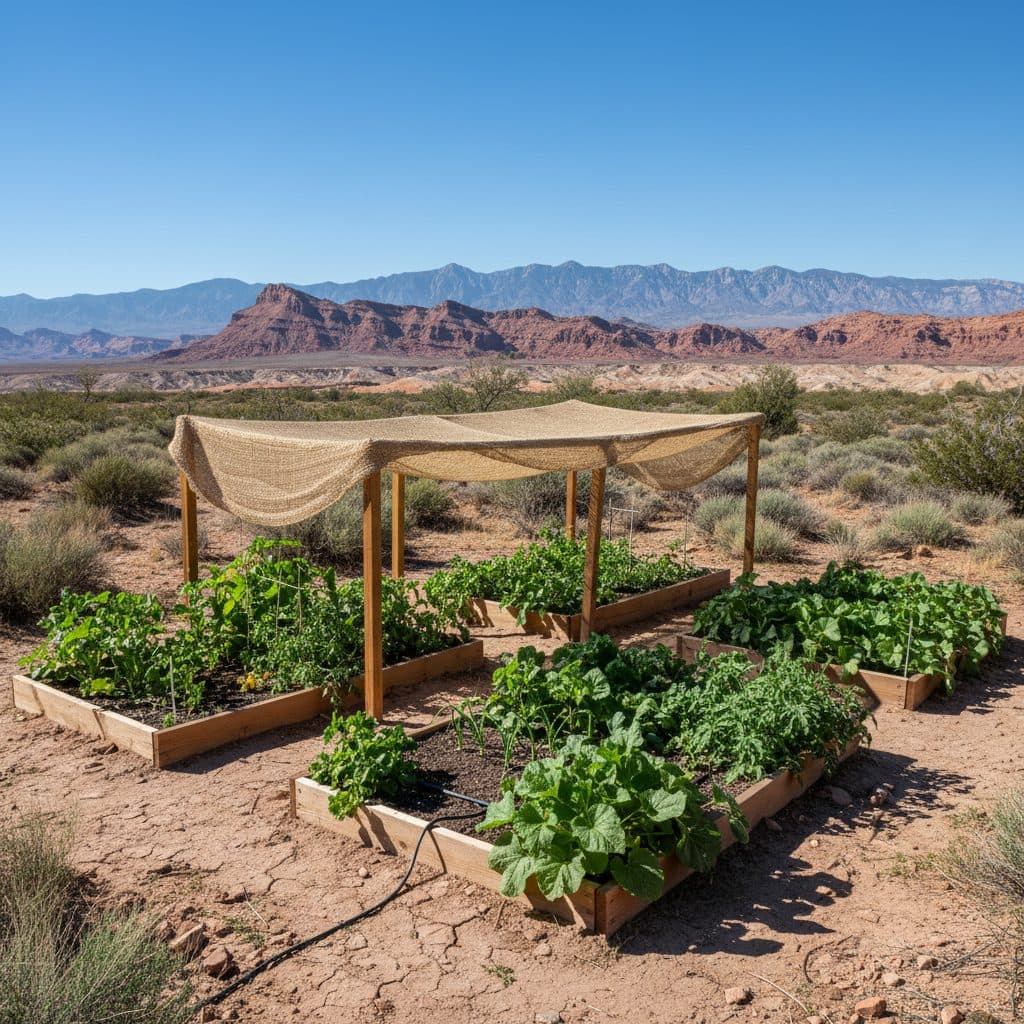
- Utilize shade structures, such as 30-50% shade cloth, to protect heat-sensitive plants during summer months when temperatures exceed 100°F.
- Select heat-tolerant and drought-resilient vegetable varieties like cowpeas, okra, and specific chili peppers for successful harvests in zones 9-10.
- Practice companion planting and integrated pest management to deter common desert pests such as desert cottontails and aphids, reducing crop damage by up to 30%.
- Plan planting schedules around two distinct growing seasons: a warm season from March to June and a cooler season from September to November.
Quick answer: Successful desert gardening in US zones 9-10, like Arizona, Nevada, and New Mexico, requires building healthy, organic-rich soil, implementing efficient water conservation, and selecting heat and drought-tolerant plant varieties.
Gardening in the desert Southwest, specifically USDA zones 9 and 10 across Arizona, Nevada, and New Mexico, presents unique challenges. With annual rainfall often averaging less than 12 inches in many areas, and summer temperatures regularly soaring above 100°F for 90 or more days, traditional gardening methods often fail. However, with careful planning and an understanding of the region’s specific conditions, a productive vegetable garden can thrive, yielding fresh produce even in the harshest conditions.
Success in these arid environments hinges on three core principles: building healthy, resilient soil; conserving every drop of water; and selecting plants genetically suited to extreme heat and drought. This guide will walk you through the practical steps and strategies that experienced growers in the Sonoran and Mojave Deserts use to cultivate vibrant gardens, drawing on decades of local knowledge and scientific research to ensure your efforts bear fruit, or rather, vegetables.
understanding your desert garden environment
Before planting a single seed, it matters to understand the specific environmental conditions of your desert garden in zones 9-10. Desert soils are typically sandy or rocky, with very low organic matter content, often less than one percent, making them poor at retaining water and nutrients [6]. Furthermore, these soils are frequently alkaline, with pH levels ranging from 7.5 to 8.5, which can limit nutrient availability for many common vegetables [3]. The climate itself is defined by intense solar radiation, extremely low humidity, and high evaporation rates, which can exceed 6 feet per year in open water bodies. These factors mean that water applied to the soil quickly evaporates if not managed correctly, challenging even the most resilient plants.
soil composition and pH considerations
Testing your soil is the foundational first step. A simple soil test kit, or a more comprehensive lab analysis, will provide data on your soil’s pH, nutrient levels, and organic matter content. Knowing your soil’s starting point allows for targeted amendments. For instance, if your soil pH is 8.0, you’ll need to focus on adding organic matter to buffer it, rather than relying solely on acidifying agents. Understanding the sun’s path and prevailing winds is also critical; a south-facing garden bed will receive significantly more intense sun exposure than an east-facing one, impacting plant choice and shade requirements. Consider using a 3-in-1 Soil pH, Moisture & Light Meter to monitor these conditions regularly.
- Soil pH: Expect alkaline conditions, often 7.5 to 8.5 [3].
- Organic matter: Typically less than one percent in native desert soils [6].
- Evaporation rates: High, potentially exceeding 6 feet annually.
- Solar intensity: Direct sun can exceed 1000 watts per square meter.
- Water retention: Very low in sandy or rocky desert soils.
building resilient desert soil
Successful desert gardening starts with transforming native, nutrient-poor soil into a rich, water-retaining medium. This process is not a one-time event but an ongoing commitment to adding significant amounts of organic matter. Aim to increase your soil’s organic content to at least 3-5 percent over several seasons. Incorporating well-aged compost, which ideally has a carbon-to-nitrogen ratio of 30:1, is the most effective way to achieve this [1]. For new beds, consider building raised beds 12 to 18 inches deep and filling them with a blend of compost, aged manure, and some native soil to start. This provides an immediate boost to soil quality and allows for better control over the growing medium.
compost and mulch: your desert allies
Beyond compost, integrating other organic materials like wood chips, straw, and shredded leaves will further improve soil structure and microbial activity. These materials break down slowly, releasing nutrients over time and improving the soil’s capacity to hold water, which is critical in areas receiving less than 10 inches of rain annually. Applying a 2- to 4-inch layer of organic mulch on top of your garden beds is equally important. Mulch acts as a protective barrier, reducing soil temperature by 10-15°F and cutting water evaporation by 30-50 percent. This creates a more stable environment for plant roots and significantly decreases the frequency of irrigation, saving resources in zones 9-10.
- Compost: Incorporate 2-4 inches annually to reach 3-5% organic matter.
- Aged manure: Excellent source of nitrogen and beneficial microbes.
- Wood chips: Great for long-term soil improvement and weed suppression.
- Straw: Effective as a mulch, reducing evaporation by up to 50%.
- Cover crops: Plant during cooler months to add biomass and fix nitrogen, like garden peas.
efficient desert water management
Water is the most precious resource in desert gardening, and efficient management is paramount. Drip irrigation systems are by far the most effective method, delivering water directly to the plant’s root zone with up to 90% efficiency, compared to 50-70% for overhead sprinklers [1]. This minimizes evaporation and runoff, so precious water reaches its intended target. For a typical 100 square foot garden bed, a drip system can save hundreds of gallons of water per month during peak summer heat. Consider installing a timer to automate watering, ensuring consistent delivery and preventing over or under-watering, especially during the hottest parts of the day when temperatures can reach 110°F.
strategic watering and water harvesting
Beyond drip systems, understanding when and how much to water is critical. Early morning watering, before 8:00 AM, allows plants to absorb water before intense midday sun causes rapid evaporation. Deep, infrequent watering encourages roots to grow deeper, making plants more resilient to drought periods. For example, instead of watering for 10 minutes daily, try watering for 30 minutes every two or three days, depending on soil type and plant needs. Rainwater harvesting is another valuable strategy; a 1,000 square foot roof can collect approximately 600 gallons of water from just one inch of rain, providing a supplemental source for your garden. This water can be stored in barrels or directed into passive harvesting basins around your plants, significantly reducing reliance on municipal water supplies in zones 9-10.
- Drip irrigation: Delivers water directly to roots, achieving 90%+ efficiency.
- Soaker hoses: A low-cost alternative for direct root zone watering.
- Mulching: Reduces evaporation by 30-50%, keeping soil moist longer.
- Early morning watering: Minimizes evaporative loss during peak heat.
- Rainwater harvesting: Collects hundreds of gallons from a typical roof during rain events.
selecting resilient desert plants and timing
The success of your desert garden largely depends on choosing the right plants and planting them at the optimal time. In zones 9-10, you effectively have two primary growing seasons: a warm season from March to June and a cooler season from September to November. During the intense summer months, when temperatures routinely exceed 100°F, many traditional vegetables will bolt or fail to set fruit. Focus on heat-tolerant varieties like cowpeas, okra, sweet potatoes, and specific types of chilies. These plants are adapted to thrive in conditions that would stress or kill less resilient species. Consulting local nurseries or extension offices can provide specific recommendations for your microclimate, as even within zones 9-10, conditions can vary significantly.
shade and strategic planting
Even with heat-tolerant plants, providing afternoon shade is often essential for optimal production during the hottest periods. Erecting temporary shade structures with 30-50% shade cloth can reduce leaf temperatures by 10-15°F and prevent sunscald on fruits. For example, tomatoes planted in March may need 40% shade cloth by late May to continue producing into June. Consider planting taller, sun-loving plants like corn or sunflowers on the south and west sides of your garden to naturally shade more sensitive crops like lettuce or spinach. This permaculture approach, discussed in A permaculture garden plan, maximizes space and creates beneficial microclimates. Additionally, planting in succession, with new seeds every two to three weeks, ensures a continuous harvest throughout the growing seasons.
- Warm season crops: Okra, sweet potato, cowpeas, chilies, eggplant, specific melon varieties.
- Cool season crops: Lettuce, spinach, carrots, radishes, peas (garden pea), kale.
- Shade cloth: Use 30-50% shade cloth to protect plants from 100°F+ temperatures.
- Native edibles: Explore options like tepary beans or cholla buds, adapted to 8-12 inches of annual rainfall [4].
- Succession planting: Plant every 2-3 weeks for continuous harvest during mild seasons.
desert pest and disease management
Even in the arid desert, pests and diseases can pose significant threats to your vegetable garden. Desert cottontails (Sylvilagus audubonii) are a common nuisance in Arizona, capable of consuming young plants and causing up to 30% crop loss if not deterred [2]. Other common pests include aphids, whiteflies, and spider mites, especially during hot, dry periods. The best defense is a proactive, integrated pest management (IPM) approach that focuses on prevention rather than reaction. This includes regular garden inspections, encouraging beneficial insects, and maintaining plant health to improve natural resistance. For instance, a healthy plant with strong cell walls is less susceptible to aphid infestations than a stressed one.
natural deterrents and barriers
Physical barriers are highly effective against larger pests. A fence at least 24 inches high with a 6-inch buried section can deter most rabbits. For smaller pests, consider row covers made from fine mesh during vulnerable stages of plant growth. Introducing beneficial insects, such as ladybugs for aphid control, can significantly reduce pest populations without chemical intervention. Planting companion plants like marigolds or nasturtiums can also help repel certain pests, while dill and cilantro attract beneficial predators. Regularly monitoring your plants, perhaps weekly, allows you to catch infestations early when they are easier to manage with organic sprays like neem oil or insecticidal soap, which can be applied when temperatures are below 85°F to prevent leaf burn.
- Fencing: Install a 24-inch fence, buried 6 inches, to deter rabbits [2].
- Row covers: Protect young plants from insects and intense sun.
- Beneficial insects: Attract ladybugs, lacewings, and parasitic wasps.
- Companion planting: Use marigolds to deter nematodes, nasturtiums for aphids.
- Neem oil: An organic pesticide effective against many soft-bodied insects.
comparison of desert-resilient vegetable characteristics
vegetable | heat tolerance | water needs | planting season (zones 9-10) |
|---|---|---|---|
okra | high (100°F+) | moderate | spring/early summer |
cowpea | high (100°F+) | low | spring/summer |
sweet potato | high (100°F+) | moderate | spring |
chilies (some varieties) | high (90-100°F) | moderate | spring |
tepary bean | very high (100°F+) | very low | late spring/summer |
garden pea | moderate (up to 80°F) | moderate | fall/winter |
soil pH: Desert soils in Arizona, Nevada, and New Mexico frequently exhibit alkaline pH levels, often ranging from 7.5 to 8.5, which can impact nutrient availability [3].
water savings: Implementing drip irrigation systems can reduce water consumption by 50-70% compared to traditional overhead sprinklers, achieving efficiencies of 90% or more [1].
rabbit damage: Desert cottontails (Sylvilagus audubonii) are a significant pest in Arizona gardens, potentially causing up to 30% crop loss if not adequately managed [2].
browse desert garden essentials
Frequently asked questions
what is the best way to improve desert soil for gardening?
The most effective method is to consistently incorporate large amounts of organic matter, such as well-aged compost, aiming to increase the soil’s organic content to 3-5 percent over several growing seasons. This improves water retention and nutrient availability in soils that often start with less than one percent organic matter [6].
how much water do desert vegetable gardens typically need?
While needs vary by plant, efficient drip irrigation can reduce water usage significantly. A well-mulched desert garden might need deep watering two to three times per week during peak summer, delivering approximately 1-2 gallons per square foot per watering session, depending on soil type and plant maturity.
what are the best vegetables to grow in Arizona, Nevada, or New Mexico’s hot summers?
For summer temperatures often exceeding 100°F, focus on heat-tolerant varieties like okra, sweet potatoes, cowpeas, and specific types of chilies. These plants are bred or adapted to thrive in intense heat, unlike many temperate vegetables that will bolt or cease production [4].
how can I protect my plants from intense desert sun and heat?
Utilize shade structures with 30-50% shade cloth, especially during afternoon hours when temperatures can reach 110°F. This can reduce leaf temperatures by 10-15°F, prevent sunscald on fruits, and support continued plant health and productivity.
are desert cottontails a big problem for gardens in Arizona?
Yes, desert cottontails (Sylvilagus audubonii) are a common pest in Arizona and can cause significant damage, potentially leading to up to 30% crop loss if garden beds are not protected by adequate fencing, such as a 24-inch barrier [2].
what soil pH should I aim for in my desert garden?
While native desert soils are often alkaline with a pH of 7.5 to 8.5, most vegetables prefer a slightly acidic to neutral pH, around 6.0 to 7.0. Amending with organic matter helps buffer the soil, gradually lowering the effective pH and improving nutrient uptake for your plants [3].
References
- Vegetable Garden Basics (2002). Vegetable Garden Basics.
- Status of Desert Cottontails (Sylvilagus audubonii) in Arizona, 1955-2020 (2022). Status of Desert Cottontails (Sylvilagus audubonii) in Arizona, 1955-2020.
- A Microbiome Analysis of Soil Samples from Three Abandoned Lead-Silver Mines in the Arizona Sonoran Desert (2020). A Microbiome Analysis of Soil Samples from Three Abandoned Lead-Silver Mines in the Arizona Sonoran Desert.
- Mojave Desert Wildflowers: A Field Guide to High Desert Wildflowers of California, Nevada, and Arizona (1998). Mojave Desert Wildflowers: A Field Guide to High Desert Wildflowers of California, Nevada, and Arizona.
- Fragmentation Effects on Vegetation and Resulting Vertebrate Species Distributions in the Sonoran Desert (2011). Fragmentation Effects on Vegetation and Resulting Vertebrate Species Distributions in the Sonoran Desert.
- USDA Natural Resources Conservation Service (2024). USDA Natural Resources Conservation Service.