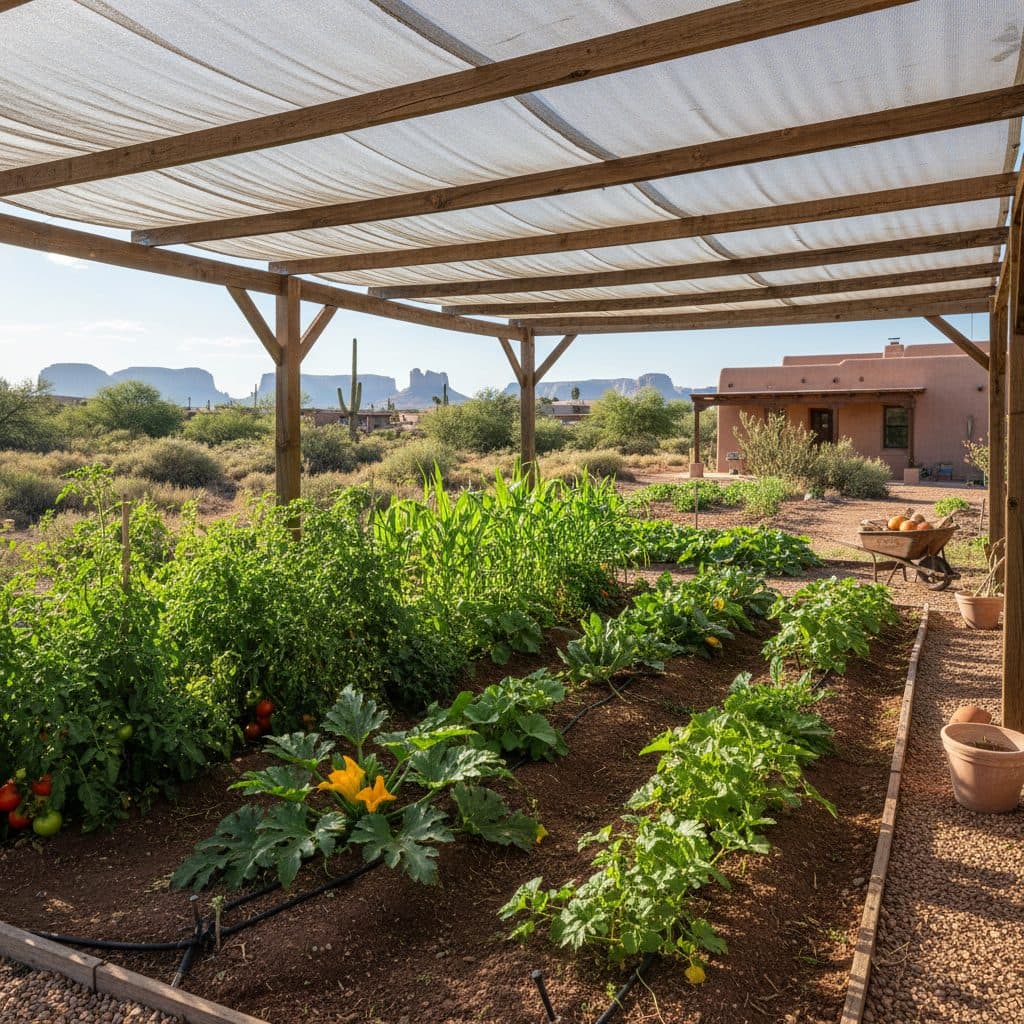
Key takeaways
- Select shade cloth density (30% to 60%) based on crop needs and local sun intensity, potentially reducing temperatures by 10°F to 15°F.
- Simple structures like PVC hoops or rebar frames can be built in a few hours for less than $100, offering quick deployment.
- Incorporate natural construction materials like bamboo or reclaimed wood for lower-cost shade structures, keeping in mind that untreated bamboo left outdoors, especially in ground contact, gives only a few seasons before it splits and fails.
- Proper site orientation and ventilation are essential for effective cooling and plant health, especially in regions with average summer temperatures above 90°F.
- Integrating water harvesting systems into shade structures can reduce irrigation needs by 20% to 40%, conserving precious resources.
- Consider permanent shade structures for USDA zones with consistent high summer temperatures above 95°F for several weeks.
Quick answer: Protecting vegetables from summer heat involves selecting appropriate shade cloth density (30-60%), building simple structures like PVC hoops, and ensuring proper site orientation and ventilation. These methods can reduce temperatures by 10-15°F and significantly increase garden yields, especially in hot climates like Arizona.
In the arid Southwest, where summer temperatures regularly exceed 100°F for weeks, protecting vegetable gardens from intense sun is essential for a harvest. For growers in places like USDA zone 9b in Arizona, a well-planned shade strategy can mean the difference between scorched, unproductive plants and a steady supply of fresh produce. Without shade, delicate crops like lettuce and spinach bolt quickly, and even heat-tolerant tomatoes can suffer blossom drop when daytime air temperatures climb above 90°F or nights stay above 75°F.
Building your own shade structures allows for customization to your specific garden layout and crop rotation, often at a fraction of the cost of commercial options. This approach fits off-grid living principles of resourcefulness and self-sufficiency. From simple temporary coverings to sturdier, semi-permanent designs, understanding shade principles can improve garden yields, making the difference between a stalled, scorched crop and a steady harvest in regions with extreme summer sun.
Selecting the right shade cloth for your crops
Choosing the correct shade cloth density is the first step in protecting your vegetables from summer heat, especially when temperatures consistently reach above 90°F. Shade cloth is typically made from UV-stabilized knitted polyethylene, designed to withstand several years of direct sunlight. These materials are rated by their percentage of light blockage, ranging commonly from 30% to 60%. For instance, heat-loving fruiting crops such as tomatoes, peppers, and eggplants in zones 8 and 9 generally do best under 30% to 40% shade during the hottest part of the day, which takes the edge off without starving fruit set of light. Cool-season crops like lettuce, spinach, and kale in zone 7 or hotter need the heavier cloth, commonly 50% to 60%, because sustained heat instead of light pushes them to bolt. Too much shade can reduce photosynthesis and fruit set.
Understanding shade cloth materials and colors
The color of your shade cloth also plays a role in its effectiveness. While black shade cloth is common and effective at blocking light, white or reflective shade cloth can offer additional cooling by reflecting more solar radiation, potentially lowering temperatures by an extra 2°F to 3°F compared to black. Green shade cloth blends well into the garden aesthetic but offers similar thermal properties to black. When considering greenhouse climate control, shade cloth is a primary tool for managing heat. Ensure your chosen cloth has good air circulation properties to prevent heat buildup underneath. Most quality shade cloths are designed for a lifespan of 5 to 10 years, providing durable protection for multiple growing seasons.
- 30% shade: Suited to fruiting crops like tomatoes and peppers, which still need most of the day's light to set fruit.
- 40% shade: Suitable for a wide range of vegetables including carrots and radishes, offering moderate protection.
- 50% shade: The usual choice for lettuce, spinach, and other leafy greens in intense summer sun, where sustained heat instead of low light triggers bolting.
- 60% shade: Best for extremely hot climates or for plants highly susceptible to sunscald, like certain varieties of squash.
- White shade cloth: Reflects more light, potentially offering an additional 2°F to 3°F of cooling.
Building temporary shade solutions
For many homesteaders, a temporary shade structure offers a practical and cost-effective way to protect crops during peak summer heat. These structures are ideal for seasonal use and can be disassembled when cooler weather returns, typically in late September in USDA zone 6. One popular design involves creating PVC hoops over raised beds or garden rows. You can use 1/2 inch or 3/4 inch Schedule 40 PVC pipe, cut into 10-foot lengths, then bent and anchored into the ground using 18-inch pieces of 3/8 inch rebar pounded 12 inches deep. A typical 4-foot wide raised bed might require hoops spaced every 3 to 4 feet along its 8-foot or 10-foot length. The total material cost for a 4 ft x 8 ft structure can be as low as $50 to $75, and it can be assembled in 2 to 3 hours.
Quick deployment and easy storage
Another simple option is a basic wooden frame, constructed from 1×2 or 2×2 lumber, forming a rectangular box over your plants. The shade cloth can then be draped over this frame and secured with clothespins, bungee cords, or specialty shade cloth clips. This method allows for quick deployment and easy removal, which is beneficial for crops that only need shade during the hottest part of the day, from 11 AM to 4 PM. For instance, in regions like the Central Valley of California, temporary shade can significantly extend the harvest of heat-sensitive greens by several weeks. These structures are designed to be lightweight and portable, making them excellent for gardeners who need flexible solutions or have limited storage space for permanent fixtures. Anchoring matters more than the frame does, because shade cloth acts as a sail; monsoon outflow winds across the desert Southwest run far above anything a lightly staked hoop will hold. Drive the rebar deep, guy the end hoops, and plan to roll the cloth back or pull it off entirely when high wind is in the forecast.
- PVC pipe (1/2 or 3/4 inch Schedule 40): Provides flexible, durable hoops.
- Rebar (3/8 inch x 18 inches): Anchors the PVC hoops firmly into the soil.
- Shade cloth (30% to 50% density): The primary material for sun protection.
- Shade cloth clips or bungee cords: Secure the cloth to the frame for easy adjustment.
- Measuring tape and saw: Essential tools for accurate cutting and assembly.
Designing durable shade for long-term protection
For homesteads in regions with consistently high summer temperatures, such as USDA zone 9 and 10 in the desert Southwest, investing in more permanent shade structures can provide significant benefits over many years. These structures, often built as arbors or pergolas, offer sturdy protection and can become integral parts of your garden’s design. Using pressure-treated 4×4 or 6×6 lumber for posts and 2x4s or 2x6s for crossbeams creates a sturdy framework that can support heavy shade cloth or even DIY solar panel systems. Cut treated lumber outdoors with a dust mask, keep the sawdust out of the beds, and never burn the offcuts. A typical permanent structure might have a 10 ft x 12 ft footprint and an 8 ft height, providing ample room for tall crops like indeterminate tomatoes or pole beans. Such a structure, properly maintained, can have a lifespan of 15 to 20 years, far exceeding temporary options.
Integrating solar and natural cooling
Beyond simply blocking sun, permanent shade structures can be designed for passive cooling and multi-functional use. For example, a south-facing roof section could be angled to support solar panels, generating electricity for your off-grid homestead while simultaneously providing shade below. Each standard solar panel can generate 200 to 400 watts of power, offering substantial energy production. Alternatively, you can incorporate trellis systems into the structure’s design, allowing vining plants like grapes or kiwi to grow over the top, providing natural, living shade. This approach not only protects vegetables but also contributes to the overall aesthetic and productivity of your property. Proper ventilation, allowing warm air to escape from under the canopy, helps maintain a cooler microclimate, potentially reducing temperatures by 10°F to 12°F compared to unshaded areas.
- Treated lumber (4×4, 2×6): Provides structural integrity and resistance to weather and pests.
- Metal conduit or rebar: Can be used for cross-bracing or as an alternative to wood for lighter structures.
- Concrete footings: Ensures stability for posts, especially in areas with high winds or shifting soils.
- Hardware (screws, bolts, joist hangers): Secures connections for long-term durability.
- Shade cloth or living trellises: The primary shading element, chosen for desired light blockage.
Optimizing shade placement and material choices
Effective shade structure design goes beyond simply blocking the sun; it involves thoughtful consideration of your garden’s microclimate, sun path, and prevailing winds. For instance, in the Northern Hemisphere, shade is most needed on the south and west sides of your garden during the afternoon hours, from 1 PM to 5 PM. Orienting your structure to maximize shade during this period can protect plants from the most intense solar radiation. Passive ventilation is also important; allowing warm air to escape from under the shade cloth prevents heat buildup. Raising the shade cloth 6 to 8 inches above the plants allows for better airflow, which can reduce temperatures by an additional 2°F to 4°F. This attention to detail contributes to the overall health and productivity of your garden, especially in environments where summer temperatures routinely exceed 90°F.
Integrating rainwater harvesting and reclaimed materials
For those pursuing off-grid living, incorporating rainwater harvesting into your shade structure design offers a dual benefit. A 10 ft x 12 ft roof can collect approximately 75 gallons of water from 1 inch of rainfall, supplying water for irrigation. The EPA notes that capturing stormwater runoff can reduce strain on municipal systems and provide a sustainable water source [2]. Additionally, utilizing reclaimed materials like old fence posts, barn wood, or salvaged metal conduit can significantly reduce the cost of your project, depending on what you can source locally. These materials often add character and align with a sustainable homesteading ethos. Shade also helps retain soil moisture, cutting evaporative loss from the soil surface in hot, arid climates like USDA zone 9b.
- Sun path analysis: Determine the sun’s trajectory to place shade where it’s most needed, typically south and west.
- Wind direction assessment: Design for cross-ventilation to prevent heat accumulation under the canopy.
- Rainwater catchment: Integrate gutters and barrels to collect water from the shade structure’s roof.
- Local material sourcing: Prioritize reclaimed wood, bamboo, or local stone to reduce environmental impact and cost.
- Soil moisture monitoring: Shaded beds dry more slowly than the beds beside them, so check before you water (push a finger two inches down, or use a meter) and water only when that depth reads dry.
Comparison of Shade Structure Types
Feature | Temporary Hoop | Permanent Arbor |
|---|---|---|
Cost (materials) | $50 – $150 | $300 – $1000+ |
Build Time | 2 – 4 hours | 1 – 3 days |
Lifespan | 2 – 5 years | 15 – 20+ years |
Mobility | Easy to move/store | Fixed location |
Primary Materials | PVC, rebar, light wood | Treated lumber, metal conduit, concrete |
Solar Integration | Not practical | Feasible with proper design |
Temperature Reduction: Shade cloth sharply lowers leaf and soil surface temperatures on days above 90°F, which is what keeps crops functioning even when the air stays hot.
Water Savings: Shade cloth reduces evapotranspiration, so beds under shade generally need watering less often in hot, arid climates like USDA zone 9b.
Frequently asked questions
What percentage shade cloth is best for tomatoes?
For tomatoes in hot summer climates, a 30% to 40% shade cloth is generally recommended. That range takes the edge off afternoon sun and temperatures above 95°F while leaving enough light for fruit set; heavier cloth costs you fruit.
Can I use shade cloth in cooler climates?
Yes, even in cooler climates like USDA zone 6, shade cloth can be beneficial when temperatures consistently exceed 85°F. It helps prevent heat stress, blossom drop in fruiting plants, and bolting in cool-season greens during unexpected heat waves.
How much does a DIY shade structure cost?
A simple DIY temporary shade structure, like a PVC hoop house for a 4 ft x 8 ft bed, can cost between $50 and $150 for materials. More permanent wooden structures will typically range from $300 to over $1000, depending on size and materials.
What materials are best for a temporary structure?
For temporary structures, 1/2 inch or 3/4 inch Schedule 40 PVC pipe, 3/8 inch rebar, and light lumber (like 1x2s) are excellent choices. These materials are affordable, easy to work with, and allow for quick assembly and disassembly in 2 to 4 hours.
Does shade cloth reduce pest problems?
While shade cloth primarily protects from sun and heat, it can indirectly reduce some pest problems by minimizing plant stress. Healthier, less stressed plants are often more resistant to pest infestations. However, it does not act as a physical barrier for most insects.
How long does UV-stabilized shade cloth typically last?
High-quality, UV-stabilized polyethylene shade cloth is designed to withstand prolonged sun exposure and typically lasts for 5 to 10 years. Its durability makes it a cost-effective investment for multiple growing seasons.
References
- USDA Natural Resources Conservation Service (2024). USDA Natural Resources Conservation Service.
- EPA — Soak Up the Rain (2024). EPA — Soak Up the Rain.
- SARE — Sustainable Agriculture Research & Education (2023). SARE — Sustainable Agriculture Research & Education.
- ATTRA / NCAT Sustainable Agriculture (2023). ATTRA / NCAT Sustainable Agriculture.
- USDA National Agroforestry Center (2023). USDA National Agroforestry Center.