Key takeaways
- Sun-drying is a cost-effective method best suited for high-sugar, low-moisture crops in dry, sunny climates like Arizona, potentially reducing energy costs by 100%.
- Electric dehydrators offer precise temperature control (e.g., 120°F-160°F), making them ideal for delicate herbs, jerky, or fruits where consistency is key.
- Oven drying serves as a convenient option for small batches of produce, though it is generally less energy-efficient, consuming 1500-2000 watts per hour.
- The moisture content of a crop, such as tomatoes at 95% water, dictates the most effective drying method and required drying time.
- Proper storage in airtight containers after drying is crucial for extending shelf life by 6 to 12 months, preventing spoilage and maintaining quality.
Quick answer: Common food drying methods include sun-drying for high-sugar, low-moisture crops in dry climates, electric dehydrators for precise control, and oven drying for small batches. Each method removes moisture to prevent spoilage and extend shelf life.
In the heart of the Midwest, a bountiful harvest from a 100-square-foot garden can yield hundreds of pounds of produce annually. Preserving this bounty efficiently is a core skill for any grower aiming for year-round self-sufficiency. Drying is one of the oldest and most effective preservation techniques, capable of reducing food weight by up to 90% by removing water, which inhibits microbial growth and enzyme activity. This process extends the shelf life of fruits, vegetables, and herbs significantly, often by 6 to 12 months, making your hard work last well beyond the growing season.
Choosing the right drying method (sun, electric dehydrator, or oven) depends on several factors: your climate, the type of crop, the batch size, and your available resources. Each method has its own advantages and limitations regarding temperature control, energy consumption, and the quality of the final product. Understanding these differences can help you select the optimal approach for everything from crisp apple slices to savory dried tomatoes, ensuring your preserved foods retain their flavor and nutritional value for months to come.
The science of drying: removing water for preservation
Drying food fundamentally involves removing enough moisture to prevent spoilage. Most fresh fruits and vegetables contain a high percentage of water; for instance, a ripe tomato is about 95% water, while an apple is around 85%. This high water content makes them susceptible to mold, yeast, and bacteria, which thrive in moist environments. The goal of drying is to reduce this moisture content to below 10-20% for most foods, effectively creating an inhospitable environment for these spoilage agents. This process not only preserves the food but also concentrates its flavors and nutrients, making it a compact and potent ingredient for future meals.
Understanding water activity and shelf life
Successful drying depends on reducing water activity in addition to overall moisture content. Water activity is a measure of the free water available for microbial growth, and a level below 0.60 generally prevents most spoilage organisms from multiplying. For example, dried apricots typically have a water activity of 0.55, ensuring a long shelf life when stored properly. In the arid regions of Nevada, where ambient humidity is often below 30%, achieving these low water activity levels through drying can be more straightforward than in humid areas. Properly dried foods, stored in airtight containers at temperatures below 70°F, can remain viable for up to 12 months without refrigeration, significantly extending their usability and cutting the amount of harvest that goes to waste.
- Water removal inhibits microbial growth.
- Concentrates natural flavors and nutrients.
- Reduces food weight by up to 90%.
- Extends shelf life by 6 to 12 months.
- Requires proper storage to maintain quality.
Sun-drying: harnessing natural energy
Sun-drying is the oldest and most energy-independent method of food preservation, relying entirely on direct sunlight and low humidity. It’s particularly effective in regions like Southern California or Arizona, where daytime temperatures consistently reach 90°F to 100°F and relative humidity stays below 35%. This method is ideal for crops with high sugar content and relatively low moisture, such as grapes (for raisins), figs, and certain varieties of tomatoes. For instance, drying a batch of 5 pounds of grapes into raisins can take 3 to 5 days under optimal conditions, requiring consistent sun exposure and protection from pests. This approach eliminates electricity costs entirely, offering a 100% energy saving compared to electric methods.
Best practices for sun-drying success
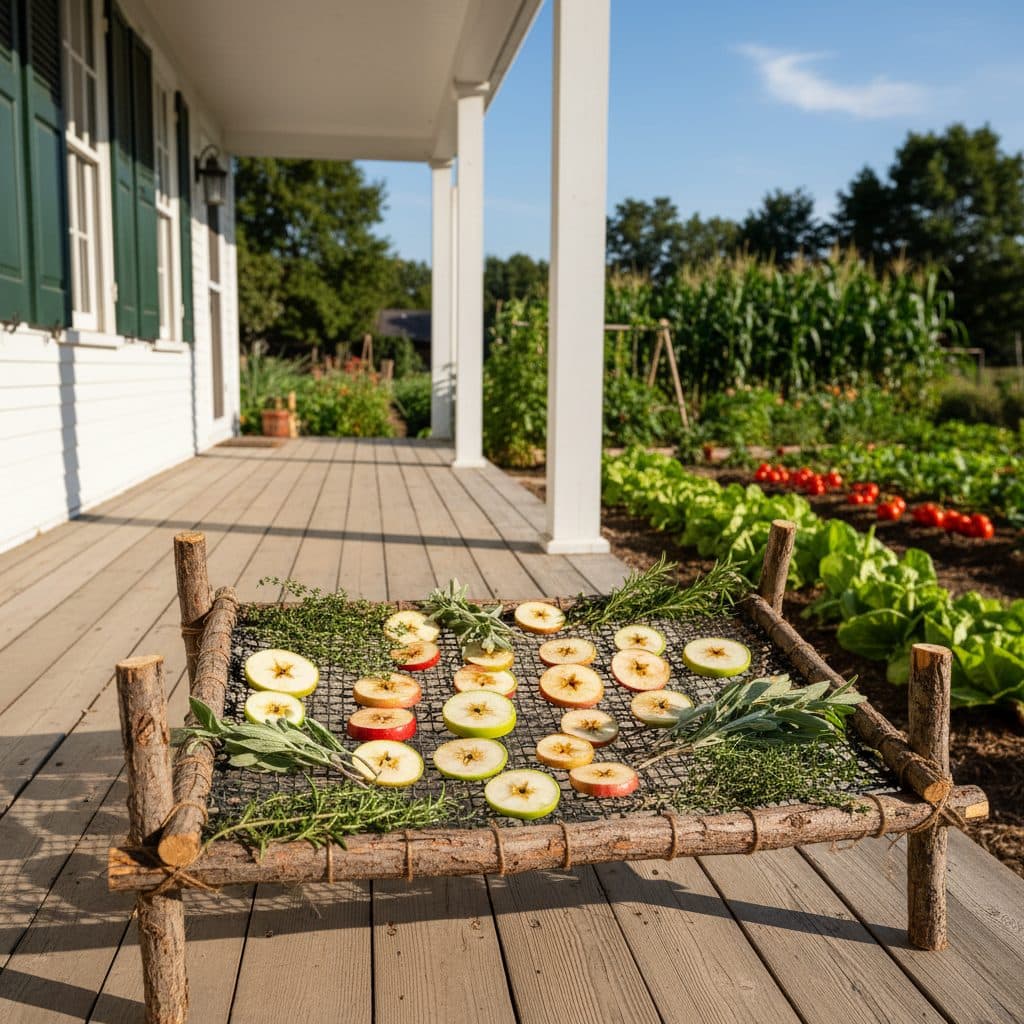
To successfully sun-dry, crops must be thinly sliced or small enough to dry quickly, typically within 2 to 4 days. Tomatoes, especially paste varieties like Roma, are excellent candidates, reducing their moisture content from 95% to below 10% when properly dried. You’ll need drying racks that allow for good air circulation, often elevated 2 to 3 feet off the ground, and covered with cheesecloth or screens to deter insects and birds. Turning the produce 2 to 3 times a day ensures even drying. Because open-air drying leaves food exposed to insects for days, pasteurize sun-dried produce before storing it: freeze it at 0°F for 48 hours, or spread it on a tray and heat it in a 160°F oven for 30 minutes. In USDA Zone 9, where summer days are long and hot, a simple passive solar design dehydrator can significantly speed up the process, reaching internal temperatures of 100°F to 140°F, even on slightly cooler days. However, if humidity rises above 60% or temperatures drop below 85°F, it’s best to bring the food indoors to prevent spoilage.
- Requires consistent temperatures above 85°F.
- Humidity must be below 35%.
- Ideal for high-sugar fruits and tomatoes.
- Takes 2 to 5 days for most crops.
- No electricity costs involved.
Electric dehydrators: precision and versatility
Electric dehydrators offer a controlled environment for drying, making them a reliable choice regardless of external weather conditions. These appliances typically feature an adjustable thermostat, allowing you to set temperatures precisely between 95°F and 160°F, and a fan for consistent air circulation. This precision is invaluable for delicate items like herbs, which can lose flavor or color at higher temperatures, or for making jerky, which must be heat-treated to an internal 160°F before or after drying and then dried at 130°F to 140°F. A typical electric dehydrator consumes between 120 and 1000 watts, with many common models using around 500 watts. Running a 500-watt dehydrator for 10 hours might cost about 75 cents in states with average electricity rates of 15 cents per kilowatt-hour.
Choosing and using an electric dehydrator
When selecting an electric dehydrator, consider its capacity and airflow design. Models with horizontal airflow (fan in the back) tend to dry more evenly than those with vertical airflow (fan at the bottom or top), reducing the need to rotate trays. For a family of four, a dehydrator with 6 to 9 trays and a capacity of 10 to 15 pounds of produce is often sufficient. Drying times vary significantly by crop; thinly sliced apples might take 6 to 12 hours, while beef jerky could require 8 to 14 hours. The consistent temperatures maintained by these devices help ensure that foods like pineapple pieces dry uniformly, as detailed in studies on drying kinetics. This consistency also limits nutrient loss compared with less controlled methods. Explore more about this method on our dehydrating food guide.
- Offers precise temperature control (95°F-160°F).
- Consistent drying regardless of weather.
- Ideal for herbs, jerky, and delicate fruits.
- Energy consumption typically 120-1000 watts.
- Horizontal airflow models dry more evenly.
Oven drying: a convenient alternative for small batches
Those electric dehydrators habits matter here as well.
For those without a dedicated dehydrator or in climates unsuitable for sun-drying, the conventional oven is a practical option for drying small batches of produce. While less energy-efficient than a specialized dehydrator, it’s accessible and uses equipment most homes already possess. Ovens typically operate at much higher temperatures than ideal for drying, so the key is to set the lowest possible temperature, usually around 140°F to 170°F, and prop the oven door open by 2 to 4 inches to allow moisture to escape. An average electric oven can consume between 1500 and 2000 watts per hour, making it a more costly option for extended drying times compared to a 500-watt dehydrator.
Tips for effective oven drying
To prevent cooking instead of drying, use an oven thermometer to monitor the actual temperature, as oven thermostats can be inaccurate at low settings. Arrange thinly sliced produce, such as apple rings or banana chips, in a single layer on parchment-lined baking sheets or on cooling racks placed over baking sheets for better air circulation. Rotate the trays every 1 to 2 hours to ensure even drying. Drying times in an oven can range from 4 to 12 hours for fruits like apples, significantly shorter than sun-drying but often longer than in an electric dehydrator. While not ideal for large harvests, oven drying is perfect for preserving a few pounds of excess garden produce, like a 2-pound batch of zucchini slices, without investing in new equipment. Remember, consistent low heat and good ventilation are paramount to success.
- Uses existing kitchen equipment.
- Best for small batches of produce.
- Set oven to lowest temperature (140°F-170°F).
- Prop oven door open 2-4 inches.
- Rotate trays every 1-2 hours for even drying.
Matching the method to your crop and climate
The optimal drying method largely depends on the specific characteristics of your crop and your local environment. For instance, if you’re growing high-moisture fruits like peaches (89% water) in a humid climate like Florida, an electric dehydrator is almost essential for consistent results and to prevent mold. Sun-drying in such conditions would likely lead to spoilage. Conversely, if you’re in the dry, sunny climate of New Mexico and have a large harvest of chili peppers, sun-drying is a highly efficient and cost-effective method, taking 1 to 2 weeks for full drying. Tomatoes, with their 95% water content, can be successfully dried using all three methods, but the quality and time will vary significantly. Tunnel dehydrators, for example, can reduce tomato moisture content from 95% to below 10% in a controlled environment, offering a balance between speed and quality.
Crop-specific recommendations
For delicate herbs such as basil or parsley, which can scorch easily and lose their aromatic compounds, an electric dehydrator set to a low temperature (around 95°F) is the superior choice for holding on to their volatile aromatic oils. Meats for jerky must reach an internal 160°F (165°F for poultry); heat the strips in their marinade to a boil before drying, or bake the finished jerky at 275°F for 10 minutes, and then dry them at 130°F to 140°F in an electric dehydrator or oven. Root vegetables like carrots, which are about 87% water, can be blanched and then dried effectively in either an electric dehydrator or an oven. For large quantities of apples from a 50-pound harvest, an electric dehydrator offers the most consistent and efficient drying over 10-12 hours, ensuring uniform slices. Consider your specific needs and the volume of your harvest when making your choice; for a small 2-pound batch of apples, the oven might be perfectly adequate. For more comprehensive storage solutions, consider root cellaring for other crops.
- High-moisture fruits in humid areas need electric dehydrators.
- Chili peppers in dry climates suit sun-drying.
- Delicate herbs require low-temperature electric dehydration.
- Meats for jerky need specific high temperatures for safety.
- Root vegetables can use electric dehydrators or ovens.
Post-drying storage and rehydration
These matching method lessons apply to the steps below, too.
Once your produce is thoroughly dried, proper storage is just as critical as the drying process itself. Even a small amount of residual moisture can lead to spoilage over time. The goal is to store dried foods in airtight containers, such as glass jars with tight-fitting lids, vacuum-sealed bags, or Mylar bags with oxygen absorbers. For optimal shelf life, store these containers in a cool, dark, and dry place, ideally below 70°F. For example, dried apples stored in a sealed jar in a pantry at 60°F can last for 9 to 12 months, whereas those stored in a humid environment might only last 3 to 4 months. Labeling containers with the date and contents is essential for inventory management, especially when dealing with a large harvest of 50 or more pounds of various dried goods.
Rehydrating dried foods for use
Most dried fruits and vegetables can be rehydrated before use, bringing them closer to their original texture. This typically involves soaking them in hot water for 15 to 30 minutes, or simmering them gently in a small amount of water until plump. For a cup of dried vegetables, you might use 1.5 to 2 cups of water. Some items, like dried herbs, are often used directly in cooking without rehydration. Dried tomatoes can be rehydrated in warm water or oil for 20 minutes, or simply added directly to stews and soups where they will absorb liquid during cooking. Understanding these rehydration techniques helps maximize the versatility of your preserved foods, allowing you to incorporate them into a wide range of recipes throughout the year, effectively extending your garden’s bounty by up to 12 months.
- Store in airtight containers.
- Keep in a cool, dark, dry place below 70°F.
- Label with date and contents.
- Rehydrate by soaking in hot water (15-30 minutes).
- Some items, like herbs, can be used dry.
Comparison of Food Drying Methods
Feature | Sun-Drying | Electric Dehydrator | Oven Drying |
|---|---|---|---|
Cost | Zero energy cost | Moderate initial cost ($50-$300), low running cost (e.g., $0.75/10 hrs) | No initial cost, higher running cost (e.g., $3.00/10 hrs) |
Temperature Control | Dependent on weather (e.g., 90°F-100°F) | Precise (95°F-160°F) | Limited (140°F-170°F, lowest setting) |
Drying Time | Long (2-5 days) | Medium (6-14 hours) | Medium (4-12 hours) |
Ideal Crops | High-sugar fruits, tomatoes, peppers in dry climates | Herbs, jerky, fruits, vegetables, delicate items | Small batches of fruits, vegetables, quick drying needs |
Energy Efficiency | 100% energy-free | Efficient (120-1000 watts) | Less efficient (1500-2000 watts) |
Climate Dependence | Highly dependent on dry, sunny weather (e.g., <35% humidity) | Not dependent on climate | Not dependent on climate |
Tomato Moisture: Tomatoes, a common garden crop, contain approximately 95% water, which must be reduced to below 10% for stable preservation.
Dehydrator Power: A typical electric dehydrator operates at 500 watts, costing about 75 cents to run for 10 hours in many US states with average electricity rates.
Frequently asked questions
What is the ideal humidity for sun-drying?
For effective sun-drying, the relative humidity should ideally be below 35%. Higher humidity levels, especially above 60%, can significantly slow down drying and increase the risk of mold growth, potentially spoiling your entire 5-pound batch of fruit.
Can I dry meat in my oven?
Yes, you can dry meat for jerky in an oven, but it requires careful temperature control and good ventilation. Heat the meat strips to an internal 160°F first (simmer them in their marinade until it boils, or bake the finished jerky at 275°F for 10 minutes), then dry with the oven at its lowest setting and the door propped open by 2 to 4 inches to allow moisture to escape. This process usually takes 8 to 14 hours for a 1-pound batch of thinly sliced meat.
How long do dried foods last?
Properly dried and stored foods can last for 6 to 12 months, and sometimes even longer, when kept in airtight containers in a cool, dark, and dry place below 70°F. For example, dried apples stored correctly can maintain quality for up to a year, while those exposed to air might only last 3 months.
Is it safe to rehydrate dried vegetables in cold water?
While you can rehydrate dried vegetables in cold water, it typically takes much longer, often several hours or overnight, compared to 15 to 30 minutes in hot water. For best results and quicker preparation, using hot water is recommended, especially for a 2-cup portion of dried mixed vegetables.
What is the average energy consumption of an electric dehydrator?
An average electric dehydrator typically consumes between 120 and 1000 watts, with many popular models operating around 500 watts. Running a 500-watt unit for 10 hours would use 5 kilowatt-hours of electricity, costing approximately 75 cents in areas with a 15-cent per kWh electricity rate.
References
- Lignins. Determination of dry matter content. Oven-drying and freeze-drying methods (2023). Lignins. Determination of dry matter content. Oven-drying and freeze-drying methods.
- Study of Drying Kinetics and Activation Energy for Drying a Pineapple Piece in the Crossflow Dehydrator (2023). Study of Drying Kinetics and Activation Energy for Drying a Pineapple Piece in the Crossflow Dehydrator.
- Lignins. Determination of dry matter content. Oven-drying and freeze-drying methods (2023). Lignins. Determination of dry matter content. Oven-drying and freeze-drying methods.
- STRATEGIES FOR DRYING TOMATOES IN A TUNNEL DEHYDRATOR (2002). STRATEGIES FOR DRYING TOMATOES IN A TUNNEL DEHYDRATOR.
- SOLAR DEHYDRATOR WITH SMART DRYING (2026). SOLAR DEHYDRATOR WITH SMART DRYING.