Key takeaways
- Chives (Allium schoenoprasum) are hardy in USDA zones 3-9, while garlic chives (Allium tuberosum) prefer zones 4-9.
- Both are perennial, cut-and-come-again herbs, providing harvests for 5-10 years from a single planting.
- Plant in full sun, 6 hours daily, with well-draining soil at a pH of 6.0-7.0 for optimal growth.
- Harvest by cutting leaves 1-2 inches above the crown, allowing for regrowth every 3-4 weeks during the growing season.
- Divide established clumps every 3-4 years to maintain vigor and prevent overcrowding, especially in warmer climates.
- Consider indoor growing or cold frames for extending the harvest season into colder months in northern US regions.
Quick answer: Chives and garlic chives can be grown year-round in USDA zones 3-9 by planting in full sun with well-draining soil, harvesting regularly, and dividing clumps. Season extension methods like cold frames can prolong harvests in colder regions.
Across the United States, from the cool Pacific Northwest to the humid Southeast, chives and garlic chives offer home gardeners a reliable, perennial source of fresh flavor. These members of the allium family are remarkably resilient, thriving in a wide range of climates, with chives (Allium schoenoprasum) hardy down to USDA zone 3 and garlic chives (Allium tuberosum) comfortable in USDA zones 4-9. Unlike many annual herbs that require replanting each spring, these two return year after year, providing continuous harvests for five to ten years from a single planting.
Growing chives and garlic chives as cut-and-come-again herbs is a practical approach for any US gardener seeking consistent culinary ingredients. This method ensures a steady supply of their distinct oniony or garlicky notes for dishes, from scrambled eggs in Ohio to stir-fries in California. With minimal effort and proper care, you can establish a productive patch that delivers fresh greens from early spring through late fall, and even into winter with some protection.
Understanding chives and garlic chives
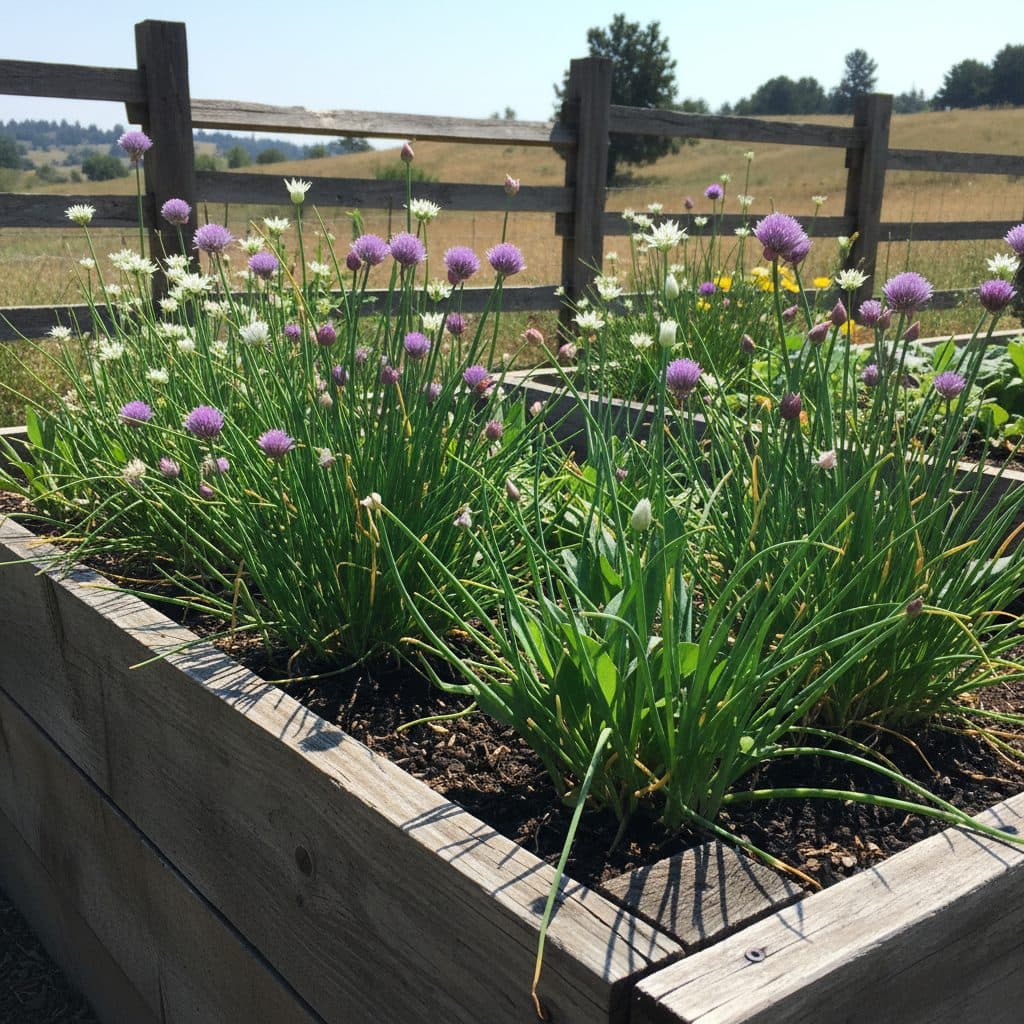
Before planting, it is helpful to understand the subtle differences between chives and garlic chives. Both are perennial members of the Allium genus, but they offer distinct flavors and growth habits. Chives (Allium schoenoprasum) produce slender, hollow, grass-like leaves with a mild onion flavor, and are hardy in USDA zones 3-9 [4]. They typically grow to about 12-18 inches tall and produce attractive purple-pink globe-shaped flowers in late spring or early summer. Their flavor is a classic, delicate onion note, perfect for finishing dishes.
site selection and soil preparation
Garlic chives (Allium tuberosum), also known as Chinese chives, have flat, strap-like leaves and a pronounced garlic flavor. They are generally hardy in USDA zones 4-9, growing to a similar height of 12-20 inches, and bloom with white, star-shaped flowers in late summer or early fall. Those flowers are the catch: garlic chives self-sow freely, and seedlings turn up across the bed and into lawns and paths, which is why the plant has escaped cultivation across much of the eastern US. Cut the flower heads off before the seed ripens unless you want it spreading. Both types prefer a site with full sun exposure (at least six hours of direct sunlight daily) and well-draining soil. An ideal soil pH for both species ranges from 6.0 to 7.0 [4], which is slightly acidic to neutral. Amending heavy clay soils with 2-3 inches of compost can significantly improve drainage and provide essential nutrients for healthy growth.
- Chives offer a mild onion flavor.
- Garlic chives provide a distinct garlic taste.
- Both prefer 6+ hours of full sun daily.
- Optimal soil pH is between 6.0 and 7.0.
- Improve drainage with 2-3 inches of compost.
Planting for perennial success
Establishing a strong patch of chives or garlic chives starts with proper planting. You can begin with seeds, small plants, or divisions from existing clumps. If starting from seed, sow them about 0.25 inches deep, either indoors 6-8 weeks before the last frost in northern states like Minnesota, or directly outdoors after the danger of frost has passed in warmer regions like Texas. Seeds can take 10-14 days to germinate, and it’s best to plant them in clusters of 5-10 seeds for a fuller clump. For quicker establishment, consider purchasing young plants from a local nursery or obtaining divisions from a fellow gardener.
spacing and initial watering
When transplanting, space individual plants or seed clusters 6-12 inches apart to allow for mature growth and air circulation. Dig a hole slightly larger than the root ball, place the plant, and backfill with soil, gently firming around the base. After planting, water thoroughly to settle the soil and eliminate air pockets. For the first few weeks, ensure the soil remains consistently moist, providing about 1 inch of water per week, either from rainfall or irrigation. A 1-2 inch layer of mulch, such as straw or shredded leaves, can help retain soil moisture and suppress weeds around your newly planted herbs. For more general guidance on starting a herb garden, you can refer to our starting a herb garden article.
- Sow seeds 0.25 inches deep.
- Plant in clusters of 5-10 seeds.
- Space plants 6-12 inches apart.
- Water 1 inch per week after planting.
- Apply 1-2 inches of mulch for moisture retention.
Maintaining vigor and managing challenges
Once established, chives and garlic chives require relatively low maintenance, but a few practices can ensure continuous, healthy growth for years. Fertilize lightly in early spring with a balanced granular fertilizer, such as a 10-10-10 blend, at a rate of about one tablespoon per square foot of planting area. Avoid over-fertilizing, as this can lead to excessive leafy growth at the expense of flavor intensity. Water regularly during dry spells, especially in regions like the arid Southwest to ensure the plants receive about 1 inch of water weekly.
division and pest management
To maintain plant vigor and prevent overcrowding, it is beneficial to divide clumps every 3-4 years. This practice rejuvenates older plants and provides new starts for other areas of your garden or to share. The best time to divide is in early spring or fall. Dig up the entire clump, separate it into smaller sections with 3-5 bulbs each, and replant them at the recommended spacing. While generally pest-resistant, chives and garlic chives can occasionally encounter aphids or thrips. A strong spray of water can dislodge most pests, or you can use an insecticidal soap for more persistent infestations, following product instructions carefully to avoid plant damage. This perennial care is similar to other familiar garden staples, like those discussed in our how to grow kale guide.
- Fertilize with a 10-10-10 blend in spring.
- Water 1 inch per week during dry periods.
- Divide clumps every 3-4 years for rejuvenation.
- Separate into sections with 3-5 bulbs each.
- Use water spray or insecticidal soap for pests.
Continuous harvests and season extension
The cut-and-come-again method is key to maximizing your chive and garlic chive yield. Once plants are at least 6 inches tall, you can begin harvesting. Using sharp scissors or a knife, cut the leaves about 1-2 inches above the crown of the plant [4]. This technique encourages new growth from the base, allowing for continuous harvests. You can typically harvest every 3-4 weeks during the active growing season, from spring through fall in most US regions. Avoid cutting more than one-third of the plant at once to ensure it has enough foliage for photosynthesis and regrowth.
winterizing and indoor growing
In colder USDA zones (3-6), chives and garlic chives will die back to the ground in winter, returning in spring. Applying a 2-4 inch layer of mulch over the dormant plants can provide extra insulation. For year-round harvests, consider potting up a clump in late fall and bringing it indoors. Keep the pot where cats and dogs cannot reach it — chives and garlic chives, like all alliums, are toxic to both and can cause hemolytic anemia if chewed. Place the pot in a sunny window or under a grow light, providing 12-16 hours of light daily. Indoor growing allows for fresh herbs even when outdoor temperatures drop below freezing. A reflective indoor grow tent can optimize light for these plants, as detailed on our Reflective Indoor Grow Tent product page.
- Cut leaves 1-2 inches above the crown.
- Harvest every 3-4 weeks during growth.
- Never cut more than one-third of the plant.
- Apply 2-4 inches of mulch for winter protection.
- Provide 12-16 hours of light for indoor plants.
Key Differences Between Chives and Garlic Chives
Characteristic | Chives (Allium schoenoprasum) | Garlic Chives (Allium tuberosum) |
|---|---|---|
Leaf Shape | Hollow, slender, grass-like | Flat, strap-like |
Flavor Profile | Mild onion | Distinct garlic |
Flower Color | Purple-pink | White |
Hardiness (USDA Zones) | 3-9 | 4-9 |
Bloom Time | Late spring/early summer | Late summer/early fall |
Hardiness Zones: Chives thrive in USDA zones 3-9, while garlic chives prefer zones 4-9 for perennial growth, covering most of the US.
Harvest Frequency: Expect new growth every 3-4 weeks during the active growing season, yielding multiple harvests annually from a single plant.
Soil pH Range: Both chives and garlic chives perform best in well-draining soil with a pH between 6.0 and 7.0, a common range in many garden soils.
Frequently asked questions
What is the primary difference between chives and garlic chives?
The primary difference lies in their flavor profile and leaf shape. Chives have a mild onion flavor and hollow, grass-like leaves, while garlic chives offer a distinct garlic taste with flat, strap-like leaves. Both are perennial, but chives are hardy to USDA zone 3, and garlic chives to zone 4.
How often can I harvest chives and garlic chives using the cut-and-come-again method?
You can typically harvest chives and garlic chives every 3-4 weeks during their active growing season, from spring through fall. It is important to cut the leaves about 1-2 inches above the crown and never remove more than one-third of the plant at a time to ensure vigorous regrowth.
Can I grow chives and garlic chives indoors during winter?
Yes, you can grow chives and garlic chives indoors to extend your harvest into winter. Pot up a clump in late fall and place it in a sunny window or under a grow light, providing 12-16 hours of light daily. This allows for fresh herbs even in USDA zones 3-6 when outdoor growth ceases.
Do chives and garlic chives need full sun to thrive?
Yes, both chives and garlic chives perform best in full sun, meaning they require at least six hours of direct sunlight per day. While they can tolerate some partial shade, especially in hotter climates like the American Southwest, full sun promotes the most robust growth and flavor development.
When should I divide my established chive plants?
It is beneficial to divide established chive and garlic chive clumps every 3-4 years to maintain their vigor and prevent overcrowding. The best times for division are in early spring as new growth emerges, or in the fall after the summer heat subsides, particularly in USDA zones 6-9.
References
- The<i>Allium</i>Species (Onions, Garlic, Leeks, Chives, and Shallots) (2000). The<i>Allium</i>Species (Onions, Garlic, Leeks, Chives, and Shallots).
- Optimization of Hydroponic Growing Media Using Eco-Enzyme and Fish Waste for the Growth of Garlic Chives (Allium tuberosum) (2024). Optimization of Hydroponic Growing Media Using Eco-Enzyme and Fish Waste for the Growth of Garlic Chives (Allium tuberosum).
- Postmeiotic Mitosis in Chives (1990). Postmeiotic Mitosis in Chives.
- Chives (2019). Chives.