Key takeaways
- Assess plant damage carefully, distinguishing between dead tissue and recoverable stress, before taking action.
- Prioritize immediate, deep watering to rehydrate roots, aiming for 10-12 inches of moist soil depth.
- Prune only truly dead or severely damaged branches, removing no more than 20-30% of the plant’s canopy in the first year.
- Apply slow-release, balanced organic fertilizers or compost to replenish nutrients without overstressing recovering plants.
- Improve long-term soil health with organic matter to enhance water retention and nutrient availability, reducing future heat stress.
- Select heat-tolerant plant varieties and incorporate shade solutions for sustained resilience in changing climates.
Quick answer: To restore heat-damaged plants, assess damage carefully, prioritize deep watering, prune only truly dead tissue, and apply balanced organic fertilizers. This multi-step approach can significantly improve plant vigor and resilience.
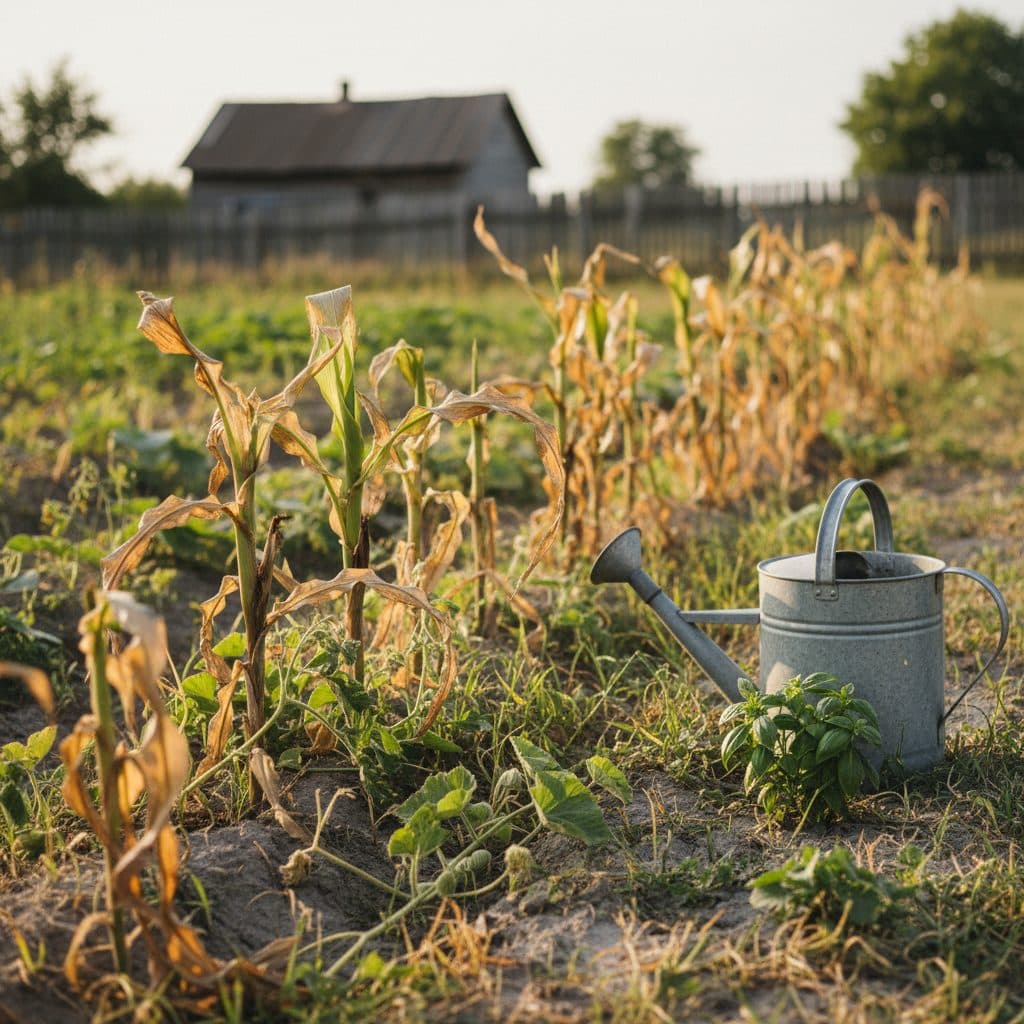
In 2023, many US regions, from Arizona to the Mid-Atlantic, experienced record heatwaves, with temperatures exceeding 100°F for weeks on end. This extreme weather left countless garden plants, from fruit trees in California’s Central Valley to perennials in USDA zone 6, looking scorched and struggling. While some damage might seem terminal, many plants possess a remarkable capacity for recovery if given the right care. Cellular systems, like those in plants, demonstrate a capacity for recovery after heat exposure, with metabolic activities resuming over time, as observed in studies on biological recovery [1].
As an experienced US grower, I’ve seen my share of plant distress and recovery. Bouncing back after severe heat damage requires careful assessment, judicious pruning, and targeted feeding. This approach can help your garden recover significant vigor, potentially restoring 70% or more of a plant’s health within one to two growing seasons, even after sustained temperatures above 95°F.
Assessing the true extent of heat damage
When a heatwave passes, the first step is a thorough assessment of your plants. Don’t rush to prune or fertilize immediately. Look for signs of life: green tissue under scratched bark, flexible stems, or new growth emerging from the base. For example, a blueberry bush in a Georgia garden might have 75% of its leaves scorched brown, but the main stems could still be viable, indicating potential for recovery. Plants in USDA zones 8 and 9, accustomed to some heat, often show more resilience than those in cooler zones like 5 or 6 when hit by unexpected extreme temperatures above 105°F.
Identifying recoverable plants
Focus on identifying truly dead tissue versus stressed but viable parts. Dead leaves will be brittle and crumble, while severely stressed leaves might be brown but still somewhat pliable. Check stems by gently scratching the bark with a fingernail; green tissue underneath indicates life. If 50% or more of a plant’s canopy is completely dead and brittle, especially on woody plants, its recovery will be a long process, potentially taking two to three years for full vigor. For annuals, if 80% of the plant is brown and crispy, replacement is often more practical than recovery efforts. Always use a soil moisture meter to check root zone hydration, as surface appearance can be deceiving. The USDA Natural Resources Conservation Service provides guidance on soil health practices across US regions, noting that root health supports plant survival [6].
- Scratch Test: Gently scrape bark; green indicates life.
- Stem Flexibility: Brittle stems are dead; flexible ones may recover.
- New Growth: Look for tiny buds or shoots at the base or along stems.
- Root Health: Check for firm, light-colored roots if possible.
- Overall Percentage: Estimate the percentage of dead versus living tissue.
Immediate care and rehydration strategies
Once you’ve assessed the damage, the immediate priority is proper hydration. Heat-stressed plants have often lost significant water through transpiration, and their roots may be struggling to absorb moisture from dry, compacted soil. For a large shrub or small tree in a Texas garden, this might mean applying 10-15 gallons of water slowly over several hours, ensuring it penetrates 10-12 inches deep into the soil. Avoid frequent, shallow watering, which encourages surface roots and makes plants more vulnerable to future stress. A 3-in-1 soil pH, moisture & light meter can help you confirm adequate moisture depth.
Deep watering techniques
Water deeply and infrequently, allowing the top 1-2 inches of soil to dry out between waterings. This encourages roots to grow deeper, making the plant more drought-tolerant. For container plants, ensure excellent drainage and water until it flows freely from the bottom, then allow excess to drain completely. Consider temporary shade for severely stressed plants, especially those in full sun during the hottest parts of the day. A simple shade cloth providing 30-50% shade can reduce leaf temperatures by 10-15°F, giving the plant a much-needed reprieve. Recovery processes, whether biological or ecological, often involve a multi-stage approach to restore function and stability [4].
- Slow Drip Irrigation: Use a soaker hose for 2-4 hours to ensure deep penetration.
- Watering Basins: Create a small berm around the plant to hold water over the root zone.
- Mulch Application: Apply 2-4 inches of organic mulch to conserve soil moisture.
- Morning Watering: Water early in the day to minimize evaporation and allow leaves to dry.
Strategic pruning for recovery and regrowth
Once a plant has been rehydrated and shows clear signs of recovery, pruning helps direct new growth. The goal is not to remove all damaged tissue immediately, but to encourage new, healthy growth while minimizing further stress. For instance, after freeze damage in Texas, strategic pruning of Rio Red grapefruit trees led to significant yield recovery within one to two seasons [3]. Wait at least 3-4 weeks after the heat event, or until new growth begins, before making any major cuts. Removing too much foliage too soon can shock the plant further, especially if it has less than 50% healthy leaves remaining.
The ‘less is more’ approach to pruning
Focus on removing only truly dead, brittle branches and stems. Make clean cuts into healthy wood, just above a node or side branch. For a rose bush in a Kansas garden, this might mean removing 10-15 dead canes, but leaving any with even a small amount of green. Never remove more than 20-30% of the plant’s total canopy in a single pruning session during the recovery phase, as this can severely limit its ability to photosynthesize and rebuild energy reserves. The ability of biological systems to recover from damage often involves the adaptive reorganization of functions, a principle applicable to plant physiological recovery [5]. Pruning tools should be sharp and sanitized with a 10% bleach solution to prevent disease transmission. For larger branches, use loppers or a pruning saw, ensuring cuts are clean and don’t tear the bark.
- Remove Dead Wood First: Cut back to healthy tissue, indicated by green.
- Avoid Over-Pruning: Never remove more than 20-30% of the plant’s canopy.
- Sanitize Tools: Clean pruners with a 10% bleach solution between plants.
- Shape for Airflow: Prune to improve air circulation, reducing disease risk.
Targeted feeding for sustained regrowth
Once pruning is complete and new growth begins to emerge, it’s time to support the plant with targeted nutrition. However, resist the urge to over-fertilize, as this can burn delicate new roots and cause further stress. Instead, opt for slow-release organic fertilizers or well-rotted compost. Similar to how nerve growth factors aid in the recovery of feeding mechanisms in animals, targeted nutrient delivery can support plant recovery after stress [2]. For a struggling tomato plant in a California garden, a light application of a balanced organic fertilizer, like a 5-5-5 NPK, or a top-dressing of 1-2 inches of compost, can provide essential nutrients without overwhelming the plant.
Balancing nutrient needs
Focus on replenishing soil nutrients gradually. Fermented soybean meal, with its 7% nitrogen content, is an excellent slow-release option that also feeds soil microbes. Apply it at a rate of 1-2 pounds per 100 square feet for garden beds or 1-2 tablespoons for individual container plants. Avoid high-nitrogen quick-release fertilizers, which can force lush but weak growth, making the plant more susceptible to pests and diseases. Instead, prioritize soil health by incorporating 2-3 inches of organic matter annually, which improves soil structure, water retention, and nutrient availability. This creates a more resilient growing environment for plants in USDA zones 6-10.
- Slow-Release Organics: Choose fertilizers with low NPK numbers, like 4-4-4 or 5-5-5.
- Compost Top-Dressing: Apply 1-2 inches of aged compost around the plant’s drip line.
- Micronutrient Support: Consider a liquid seaweed or fish emulsion spray for quick absorption.
- Avoid High Nitrogen: Excess nitrogen can stress recovering roots and foliage.
Building long-term resilience and prevention
Beyond immediate recovery, the best strategy is to build long-term resilience against future heat and drought events. This starts with soil. Healthy soil, rich in organic matter, can hold significantly more water and nutrients than poor soil. For example, soil with 5% organic matter can hold 20-30% more water by weight than soil with 1% organic matter. In regions like the arid Southwest, where temperatures regularly exceed 100°F, improving soil structure helps retain moisture. Consider adding 3-4 inches of compost or other organic amendments annually to garden beds, especially for plants in USDA zones 7-10.
Proactive measures for future heatwaves
Selecting plants suited to your specific microclimate also helps prevent damage. Opt for heat-tolerant and drought-resistant varieties that are well-suited to your USDA zone and local conditions. For instance, planting desert willow (Chilopsis linearis) in Arizona or coneflowers (Echinacea purpurea) in the Mid-Atlantic can offer better performance during heatwaves than less adapted species. Incorporating shade structures, like temporary shade cloths or strategically planted taller, heat-tolerant trees, can protect sensitive plants during peak summer temperatures, reducing leaf temperatures by 10-20°F. Also, consider cold-hardy nitrogen fixers for soil improvement, as healthy soil is the foundation of resilience.
- Increase Organic Matter: Amend soil with 2-4 inches of compost annually.
- Select Native Plants: Choose species adapted to local climate extremes.
- Mulch Heavily: Maintain 3-6 inches of mulch to regulate soil temperature and moisture.
- Provide Shade: Use shade cloth or taller plants to protect sensitive species during peak heat.
Recovery approaches for heat-damaged plants
Approach | Immediate action | Long-term benefit |
|---|---|---|
Deep watering | Rehydrates roots and soil to 12 inches depth | Promotes deeper root growth and drought tolerance |
Strategic pruning | Removes dead tissue, redirects energy to viable parts | Encourages strong, healthy new growth and better plant structure |
Targeted feeding | Provides essential nutrients for recovery without overload | Builds plant vigor and resilience against future stress |
Soil amendment | Improves soil structure and water holding capacity by 20% | Enhances overall plant health and reduces watering needs by 30% |
Water Deeply: Apply 10-15 gallons of water per shrub or small tree to penetrate 10-12 inches into the soil.
Prune Conservatively: Remove no more than 20-30% of a plant’s canopy during initial recovery to avoid further stress.
Amend with Compost: Adding 2-3 inches of organic compost annually can increase soil water retention by 25%.
Frequently asked questions
How long does it take for plants to recover from severe heat damage?
Recovery time varies significantly by plant species and damage severity. Annuals might recover within 2-4 weeks with proper care, while woody shrubs and trees could take one to two full growing seasons to regain 70% of their vigor, especially if more than 50% of their foliage was affected.
Can I fertilize my heat-stressed plants immediately?
No, it’s best to wait. Fertilizing immediately can further stress a plant’s compromised root system. Wait until new growth begins to emerge, typically 3-6 weeks after the heat event, then apply a slow-release organic fertilizer at half the recommended rate.
What is the most important thing to do for a heat-damaged plant?
The most critical immediate action is deep, thorough watering. Ensure the soil is moist 10-12 inches deep to rehydrate roots. After that, strategic pruning of only dead tissue and careful, slow feeding are essential for recovery.
How much water should I give a heat-stressed tree?
For a medium-sized tree (10-15 ft tall), apply 15-20 gallons of water slowly over several hours, ensuring deep penetration. Use a soaker hose or drip system to deliver water directly to the root zone, checking moisture depth with a meter.
Should I remove all brown leaves from a heat-damaged plant?
Only remove leaves that are completely crispy and dead. If leaves are brown but still somewhat pliable, they might still be contributing some energy to the plant. Focus on removing truly dead tissue and allow the plant to shed what it no longer needs naturally over 2-3 weeks.
References
- RECOVERY OF MELANOMA CELLS, AND POLYMERASE ACTIVITY, AFTER HEAT DAMAGE (1991). RECOVERY OF MELANOMA CELLS, AND POLYMERASE ACTIVITY, AFTER HEAT DAMAGE.
- Nerve Growth Factor: Enhanced Recovery of Feeding after Hypothalamic Damage (1973). Nerve Growth Factor: Enhanced Recovery of Feeding after Hypothalamic Damage.
- FREEZE DAMAGE, PRUNING, AND YIELD RECOVERY OF RIO RED GRAPEFRUIT IN TEXAS (1993). FREEZE DAMAGE, PRUNING, AND YIELD RECOVERY OF RIO RED GRAPEFRUIT IN TEXAS.
- Damage and Recovery after the Wenchuan Earthquake (2023). Damage and Recovery after the Wenchuan Earthquake.
- Recovery after Brain Damage and the Concept of Localization of Function (1978). Recovery after Brain Damage and the Concept of Localization of Function.
- USDA Natural Resources Conservation Service (2024). USDA Natural Resources Conservation Service.