Key takeaways
- A well-organized pantry cuts food waste substantially and ensures a consistent supply of ingredients.
- Effective dehydration methods, including air-drying or using a dehydrator at the right temperature for the crop, are crucial for long-term storage.
- Proper labeling with harvest date, contents, and best-by date is essential for a functional ‘first-in, first-out’ (FIFO) system.
- Glass jars, Mylar bags, and food-grade buckets offer varying levels of protection against light, air, and pests for up to 5 years.
- Maintaining a cool, dark, and dry pantry environment, ideally below 68°F and 60% humidity, prevents spoilage and pests.
- Regular inventory checks every 3-6 months help identify items nearing their expiration and prevent significant losses.
Quick answer: To maintain a pantry for year-round spice and dried-goods access, ensure a cool, dark, and dry environment below 68°F and 60% humidity. Utilize effective dehydration, proper labeling, and airtight containers to prevent spoilage and reduce food waste.
In the United States, an estimated 30-40% of the food supply is wasted, costing the average family over $1,500 annually. For home growers, this figure can feel even more personal, representing hours of labor and care lost. Building a well-organized, labeled, and rotated pantry for spices and dried goods is a practical step toward reducing this waste and ensuring a consistent supply of ingredients harvested from your garden or sourced responsibly.
From the arid plains of eastern Washington to the humid lowlands of Florida, the principles of proper food preservation remain consistent. A functional pantry acts as a buffer against seasonal shortages and price fluctuations, allowing you to enjoy the flavors of your harvest long after the growing season has passed. With careful planning and consistent management, you can create a reliable system that serves your household for years, potentially saving hundreds of dollars annually on grocery bills.
The value of a structured pantry for home growers
For many homesteads across USDA zones 4 through 9, a structured pantry supports food independence. By preserving your own herbs, fruits, and vegetables, you gain control over the quality and origin of your food. A well-stocked pantry cuts grocery trips and lets you buy in bulk at seasonal lows, which adds up over a full year.
Planning your pantry space
Before you begin filling shelves, assess your available space. A cool, dark, and dry area is ideal, with temperatures consistently below 68°F and humidity levels under 60%. In regions like the Pacific Northwest, where humidity can be high, a dehumidifier might be necessary to maintain optimal conditions. Consider shelving that can support substantial weight; a 3-foot shelf holding jars of dried apples and herbs can weigh 50 pounds or more. Investing in sturdy, adjustable shelving units, often found for under $100, allows for flexible organization as your inventory grows.
- Less food lost to spoilage and forgotten stock.
- Consistent access to seasonal produce year-round.
- Meaningful savings on grocery bills over a full year.
- Greater control over food quality and ingredients.
- Emergency preparedness for unexpected events.
Drying and preparing your harvest for storage
Effective drying is the first line of defense against spoilage for many pantry staples. Whether you’re preserving herbs from a garden in USDA zone 7 or fruits from an orchard in California, the goal is to remove 80-95% of the moisture content. Air-drying works well for many herbs like oregano and thyme, especially in environments with less than 50% humidity. For fruits and vegetables, a food dehydrator set between 120°F and 140°F is often more reliable, reducing drying time from several days to 6-12 hours. For detailed guidance on various methods, refer to Dehydrating food: how to dry produce, herbs, and jerky.
Optimal drying techniques
When drying fruits such as apples or peaches, slicing them to a uniform 1/4-inch thickness ensures even drying and prevents mold. Blanching vegetables like green beans for 2-3 minutes before drying can help preserve color and nutrients, though it adds a step. For spices like chili peppers, drying whole or halved at 130°F for 8-10 hours yields excellent results. A 1943 bulletin on home-dried fruit stressed that thorough drying and pre-treatment are what keep insects out of stored fruit [1]. Always ensure items are brittle, not leathery, before storage to prevent moisture-related issues.
- Herbs: air-dry in bundles or use a dehydrator at 95-110°F.
- Fruits: slice 1/4 inch thick, dehydrate at 135°F for 6-10 hours.
- Vegetables: blanch first, then dehydrate at 125°F for 8-12 hours.
- Mushrooms: slice 1/4-1/2 inch thick, dehydrate at 110-120°F for 4-8 hours.
- Spices (e.g., peppers): dry whole or halved at 130°F for 8-10 hours.
Containers, labels, and the art of organization
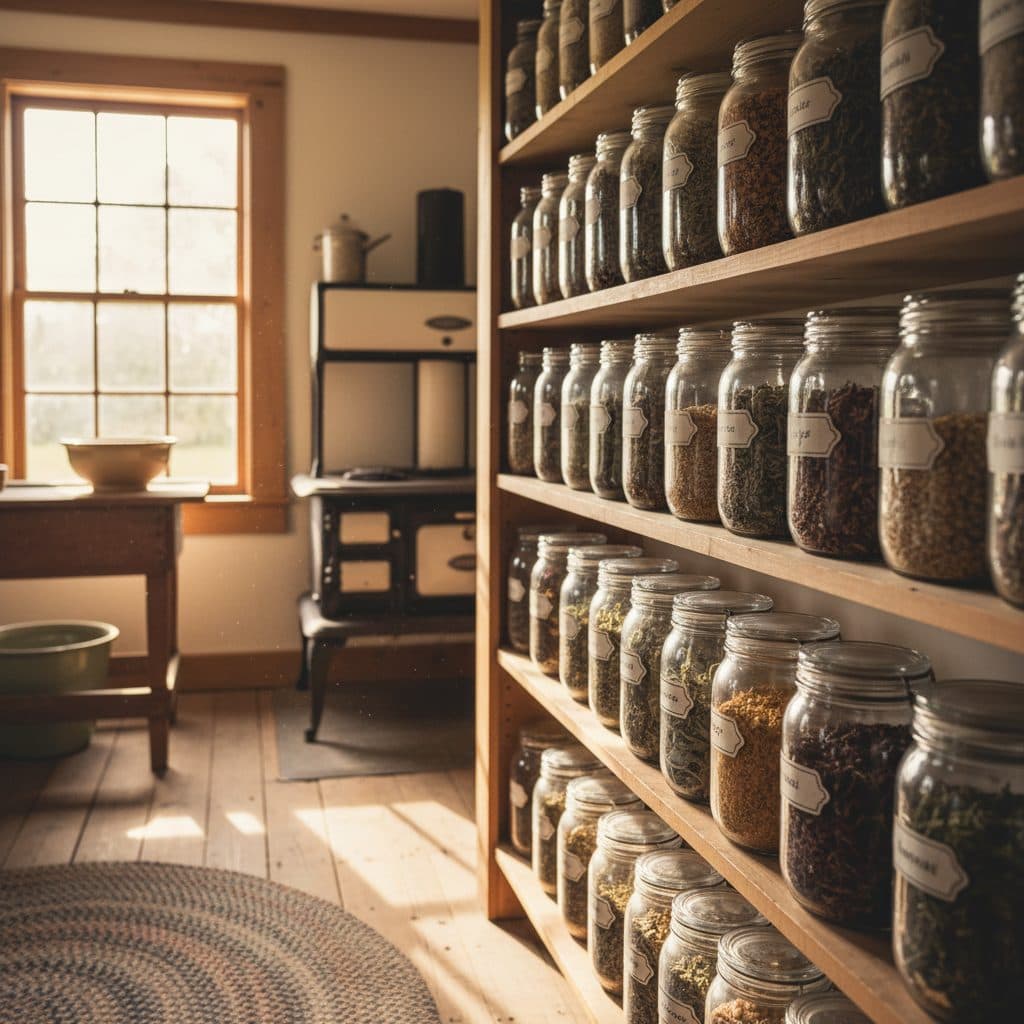
The right container is paramount for preserving the quality of your dried goods and spices. Glass jars with airtight lids are a popular choice, offering visibility and protection from air, though they do allow light penetration. For items sensitive to light, such as paprika or dried basil, opaque containers or foil-laminated Mylar bags are superior, since they block light entirely — note that clear Mylar does not. Food-grade buckets with gamma seal lids can store larger quantities, like dried beans or grains, for up to 5 years, protecting against moisture and pests. Always ensure containers are clean and completely dry before filling to prevent mold growth.
Creating an effective labeling system
A clear and consistent labeling system is the backbone of an organized pantry. Each container should have a label indicating the contents, the date of harvest or purchase, and a ‘best by’ date. Using a permanent marker on masking tape or printable labels works well. For example, a jar might read: “Dried Rosemary – Harvested 07/15/2023 – Best by 07/15/2025.” This detailed information supports a ‘first-in, first-out’ (FIFO) rotation system, so older items are used before newer ones.
- Contents: clearly state what is inside.
- Date of harvest/purchase: important for tracking freshness.
- Best-by date: helps prioritize usage.
- Weight or volume: useful for inventory management.
- Source: optional, but helpful for home growers.
Implementing a rotation system and inventory tracking
A ‘first-in, first-out’ (FIFO) system is fundamental to preventing spoilage and waste in your pantry. When stocking new items, always place them behind older ones of the same type. This ensures that items harvested in July 2023 are used before those harvested in July 2024. For frequently used items, a simple visual check might suffice, but for larger quantities or less common ingredients, a detailed inventory sheet is invaluable. This sheet can be a physical notebook or a digital spreadsheet, tracking item, quantity, and expiration dates. Regular checks, perhaps every 3-6 months, allow you to identify items nearing their ‘best by’ date and plan meals accordingly.
Maintaining an accurate inventory
An accurate inventory helps you avoid over-purchasing and ensures you have what you need when you need it. For a medium-sized pantry, tracking 50-100 unique items is common. Consider organizing your inventory by category (spices, dried fruits, grains, and so on) to simplify searches. When an item is used, update its quantity on your sheet. This system not only reduces waste but also provides a clear picture of your food security.
- Use a physical notebook or digital spreadsheet.
- Organize by category (spices, grains, legumes).
- Record item name, quantity, and expiration date.
- Update inventory after each use or restock.
- Conduct full inventory audits every 3-6 months.
Safeguarding your stored goods from pests and spoilage
Pest prevention is a critical aspect of long-term food storage. Common pantry pests like weevils, flour beetles, and Indian meal moths can quickly infest dried grains, flours, and even some spices. Maintaining a cool, dry environment is your best defense; temperatures above 70°F and humidity over 65% create ideal breeding conditions for many insects. Storing susceptible items in airtight containers, such as glass jars or thick plastic bins, prevents pests from entering. For added protection, consider freezing newly acquired grains or flours for at least four days at 0°F to kill any latent eggs or larvae before transferring them to pantry storage. More comprehensive strategies for preserving food are discussed in Home canning 101: water-bath and pressure canning safely.
Natural pest deterrents and monitoring
While chemical solutions are generally avoided in home food storage, natural deterrents can be effective. Bay leaves placed in containers of grains or flour are reported to repel weevils, though their effectiveness varies. Regularly inspect your pantry shelves for signs of infestation, such as small holes in packaging, webbing, or live insects. Cleaning spills immediately and vacuuming shelves every 2-3 months removes food sources and potential breeding grounds. If an infestation occurs, identify and discard contaminated items, then thoroughly clean the area with hot, soapy water.
- Store susceptible items in airtight containers.
- Freeze new grains/flours at 0°F for at least four days.
- Maintain pantry temperature below 68°F and humidity below 60%.
- Use bay leaves as a natural deterrent in grain containers.
- Inspect pantry shelves every 1-2 months for signs of pests.
Beyond the pantry: using your preserved bounty
A well-stocked pantry is only truly valuable if its contents are used. Integrating your home-dried spices and goods into daily cooking is the ultimate goal. Dried herbs, for instance, are generally 3-4 times more potent than fresh herbs, so adjust recipes accordingly – if a recipe calls for one tablespoon of fresh parsley, use one teaspoon of dried. Experiment with different combinations of your dried vegetables in soups, stews, and casseroles. A handful of dried carrots and celery can add depth to a winter stew, especially when fresh options are limited in USDA zone 4 during colder months. Dried fruits make excellent snacks, additions to oatmeal, or ingredients in baked goods.
Creative culinary applications
Consider making your own spice blends from your dried herbs and peppers. A homemade Italian seasoning blend, for example, might combine dried oregano, basil, thyme, and rosemary from your garden, offering a flavor profile superior to store-bought versions. Dried mushrooms, rehydrated in warm water for 20-30 minutes, can add an earthy umami to risottos and sauces. The hospitality industry has long recognized the efficiency and flavor consistency of dried spices [4], a lesson home cooks can readily apply. Don’t forget the broader world of food preservation; explore Fermenting and pickling vegetables: sauerkraut, kimchi, and brines for more ways to extend your harvest.
- Rehydrate dried vegetables for soups and stews.
- Use dried fruits in oatmeal, trail mix, or baked goods.
- Create custom spice blends from your dried herbs.
- Grind dried peppers for homemade chili powder.
- Infuse oils or vinegars with dried herbs for flavor.
Comparison of Common Spice and Dried Goods Storage Containers
Container Type | Pros | Cons | Typical Lifespan (Dried Herbs/Spices) |
|---|---|---|---|
Glass Jar | Airtight, visible contents, reusable | Light exposure, fragile, heavier | 1-3 years |
Mylar Bag | Excellent light and oxygen barrier, durable | Not reusable, contents not visible, requires oxygen absorber | 3-5 years |
Food-Grade Plastic Bucket | Large capacity, durable, stackable | Less aesthetic, can be bulky, requires gamma seal lid | 3-5 years |
Metal Tin | Blocks light, durable, lightweight | Not always airtight, can dent, some metals react | 1-2 years |
Optimal Temperature: Keeping a pantry below 68°F meaningfully extends the shelf life of dried goods and slows pest activity.
Moisture Content: Properly dried foods should have a moisture content of 5-10% to prevent mold and bacterial growth.
Container Savings: Good airtight containers pay for themselves quickly by preventing spoiled and pest-infested stock.
Frequently asked questions
How long do dried herbs and spices typically last?
Properly stored, most dried herbs and ground spices maintain their flavor and potency for one to three years. Whole spices, like peppercorns or cinnamon sticks, can last even longer, often retaining quality for up to four years in airtight containers.
What is the ideal temperature and humidity for a food pantry?
An ideal pantry should be cool, dark, and dry. Aim for a temperature consistently below 68°F (20°C) and a relative humidity level under 60%. These conditions significantly slow down spoilage and inhibit pest activity.
How can I prevent pests like weevils in my dried goods?
To prevent pantry pests, store all grains and flours in airtight containers. Freezing new purchases of grains for at least four days at 0°F (-18°C) can kill any hidden insect eggs. Regularly clean your pantry shelves every 2-3 months, removing any crumbs or spills.
Is it better to store whole or ground spices?
Whole spices generally retain their flavor and potency for a longer period, often up to twice as long as their ground counterparts. Grinding spices just before use releases their volatile oils, providing a fresher and more intense flavor in your cooking. Consider storing whole and grinding as needed.
How often should I rotate my pantry stock?
For optimal freshness and to prevent waste, you should implement a ‘first-in, first-out’ (FIFO) system, always using older items first. Conduct a thorough visual inspection and rotation of your entire pantry every 3-6 months to identify items nearing their ‘best by’ dates and plan their use.
References
- Preventing insect damage in home-dried fruits (1943). Preventing insect damage in home-dried fruits.
- Variety Is the Spice of Home Care Nursing (1997). Variety Is the Spice of Home Care Nursing.
- Spice (1902). Spice.
- Dried Spice Technology Improves Effeciency in the Hospitality Industry (2017). Dried Spice Technology Improves Effeciency in the Hospitality Industry.
- USDA Natural Resources Conservation Service (2024). USDA Natural Resources Conservation Service.