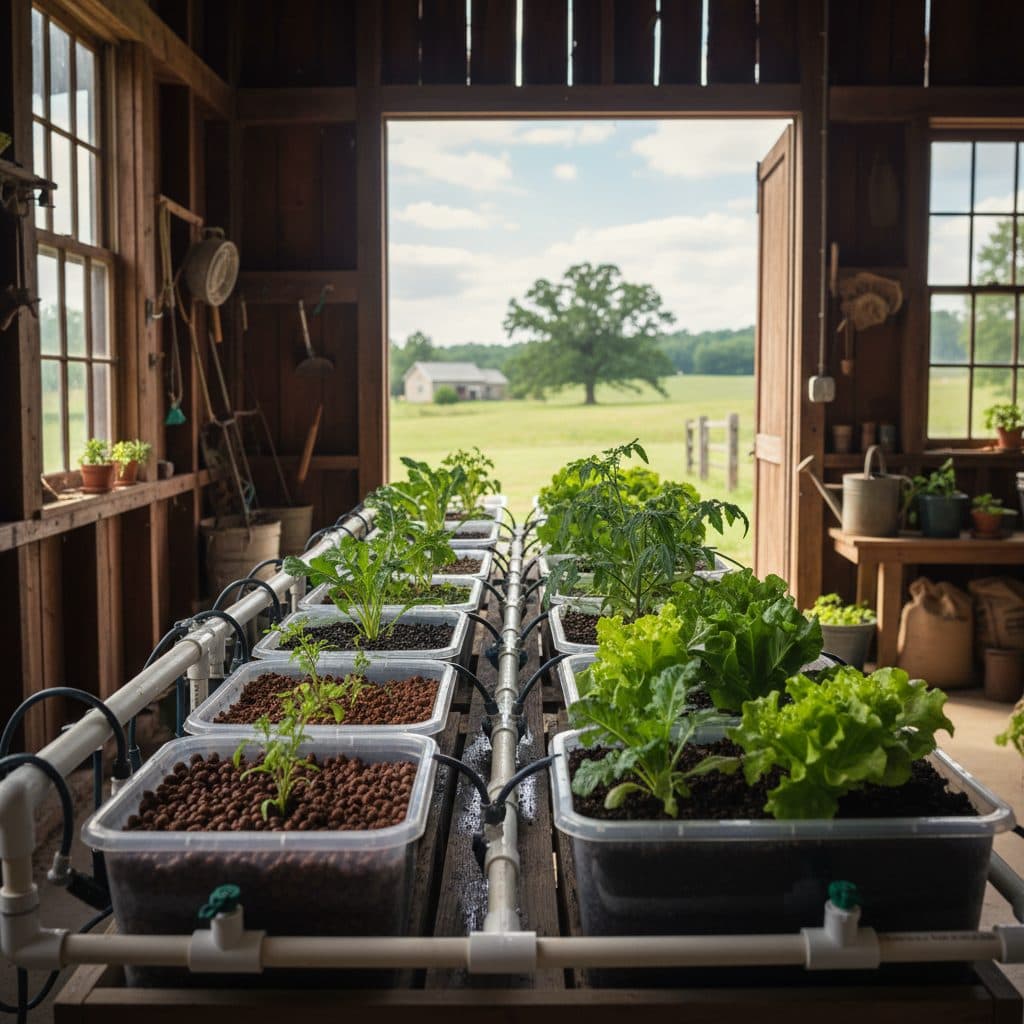
Key takeaways
- Optimal hydroponic growing media balance water retention and aeration, providing 10-20% air-filled porosity for root health.
- Perlite offers excellent aeration and drainage at a low cost, often blended with other media for better water holding capacity.
- LECA (Lightweight Expanded Clay Aggregate) is highly reusable and pH-neutral, making it a good long-term investment despite higher initial costs.
- Rockwool provides consistent structure and high water retention, but requires pH adjustment to its initial 8.0-8.5 range.
- Coco coir is a sustainable option with good water retention and aeration, but needs careful buffering to prevent nutrient lock-out.
- The best medium depends on your hydroponic system type, crop requirements, budget, and reusability preferences for long-term operations.
Quick answer: Choosing the right hydroponic growing media involves balancing water retention and aeration, considering factors like pH stability, cost, and reusability. Common options include perlite, LECA, rockwool, and coco coir, each with unique properties suited for different systems and crops.
In the arid regions of the American Southwest, where water conservation is paramount, hydroponic farming can reduce water usage by up to 90% compared to traditional soil agriculture. This water efficiency depends directly on the growing medium. For growers in places like Arizona or California, substrate choice matters as much as nutrient solutions or light cycles. The medium provides physical support, retains moisture, and supplies root oxygen to maintain plant health and yields.
Selecting the ideal hydroponic growing media is a decision that affects everything from nutrient delivery to root respiration and overall plant vigor. With options ranging from volcanic rock to coconut husks, each medium brings a unique set of properties to your system. Four common choices (perlite, LECA, rockwool, and coco coir) suit different system designs, from small indoor grow tents to commercial greenhouse benches.
The foundation: what makes a good hydroponic medium?
When you’re setting up a hydroponic system, whether it’s a small ebb and flow system for herbs or a large-scale drip system for tomatoes, the growing medium is one of your most critical choices. Beyond holding the plant upright, a good medium supports root development and oxygen uptake. Researchers in Indonesia found that the presence of oxygen in hydroponic media significantly impacts vegetable growth, showing the necessity of proper aeration [2]. Ideally, your chosen medium should offer a balance of water retention and aeration, typically aiming for 10-20% air-filled porosity after drainage.
key characteristics of effective media
Beyond physical support, the medium’s chemical properties are also vital. It should be relatively inert, meaning it doesn’t react with the nutrient solution or significantly alter its pH. While some media, like rockwool, require initial pH conditioning, their long-term stability is a major benefit. Furthermore, the medium needs to be free of pathogens, pests, and weed seeds to provide a clean start for crops. For commercial operations, cost-effectiveness and ease of disposal or reusability are also significant factors, impacting your operational budget over a growing season that can span 6-9 months for crops like tomatoes [1].
- Physical Support: Holds plants upright, preventing collapse.
- Water Retention: Stores nutrient solution for root uptake.
- Aeration: Provides oxygen to roots for respiration.
- pH Stability: Does not significantly alter nutrient solution pH.
- Inertness: Free from harmful chemicals or pathogens.
Perlite: the lightweight aerator
Perlite is a volcanic glass that, when heated rapidly to temperatures around 1,600°F (870°C), expands to many times its original volume, much like popcorn. This process creates a lightweight, porous material with a highly irregular surface, making it an excellent choice for hydroponic systems requiring superior drainage and aeration. In a typical hydroponic setup, perlite can contribute significantly to a root zone’s oxygen levels, often increasing air-filled porosity by 20-30% when mixed with other substrates. It’s often used in drip systems or as a top layer in deep water culture (DWC) to prevent algae growth.
advantages and considerations for perlite
One of perlite’s major advantages is its neutral pH, typically ranging from 6.5 to 7.5, which means it won’t significantly alter the pH of your nutrient solution. It’s also relatively inexpensive, costing around $20-$30 for a 4 cubic foot bag, making it a budget-friendly option for large-scale operations in states like Florida, where commercial hydroponics is growing. However, perlite’s light weight can be a disadvantage in some systems, as it can float in DWC setups or be washed away in flood-and-drain systems. It also has a low water retention capacity compared to other media, often holding only 30-40% of its volume in water, necessitating more frequent irrigation.
- Excellent Aeration: Provides high oxygen levels to roots.
- Neutral pH: Does not interfere with nutrient solution pH.
- Lightweight: Easy to handle and transport.
- Low Cost: Economical for large volumes, often less than $1 per gallon.
- Non-Degrading: Does not decompose over time.
LECA: the reusable clay balls
LECA, or Lightweight Expanded Clay Aggregate, consists of small, porous clay pebbles that are fired in a rotary kiln at temperatures exceeding 2,000°F (1,100°C). This process causes the clay to expand and form a hard, shell-like outer layer with a honeycomb interior, creating a medium that is both durable and highly porous. LECA balls typically range from 0.4 to 0.6 in (1 to 1.5 cm) in diameter, providing excellent drainage and aeration while also retaining a significant amount of water. Their smooth, rounded shape minimizes root damage, making them a popular choice for systems like ebb and flow or deep water culture, especially when growing crops such as lettuce or strawberries.
benefits of LECA in hydroponic systems
A main practical advantage of LECA is its reusability. Unlike some other media, LECA can be thoroughly cleaned, sterilized, and used for multiple growing cycles, potentially for several years, which reduces waste and long-term costs. While the initial investment for LECA is higher than perlite, its reusability makes it cost-effective over several growing cycles. It’s also pH-neutral, typically ranging from 6.0 to 7.0, and provides good capillary action, wicking water upward to plant roots. For growers interested in sustainable practices and long-term system stability, especially in a turning a fish tank into an aquaponics garden, LECA is a strong contender due to its inert nature and ease of cleaning.
- Highly Reusable: Can be cleaned and sterilized for multiple cycles.
- Excellent Aeration: Porous structure ensures good oxygen supply.
- Moderate Water Retention: Holds some solution inside its pores, but less than perlite or coco coir.
- pH Neutral: Does not affect the nutrient solution’s pH.
- Durable: Resists degradation over time, maintaining structural integrity.
Rockwool: the industrial standard
Rockwool, also known as mineral wool, is a fibrous material made by melting basalt rock and spinning it into fine fibers, similar to cotton candy. These fibers are then compressed into cubes, blocks, or slabs, making it a highly versatile medium for various hydroponic systems. Its uniform structure and excellent capillary action allow it to hold a large volume of water while still retaining sufficient air space for roots. This combination makes it a favorite among commercial growers, particularly for starting seedlings and clones, and then transplanting them into larger blocks for mature plants in systems like nutrient film technique (NFT) or drip irrigation.
handling and pH considerations for rockwool
While rockwool offers high water retention (holding 80-90% of its volume in water) and a consistent structure, its natural pH is high, typically between 8.0 and 8.5. Growers must presoak it in a pH-adjusted solution (around 4.5-5.5) for at least 24 hours before use. This buffering step prevents nutrient lockout. Additionally, handling rockwool can release fine fibers, so wearing gloves and a mask is recommended. Despite these minor drawbacks, its reliability and consistent performance have made it a staple in large-scale hydroponic operations across the US, from California’s Central Valley to greenhouses in Ohio, often costing around $0.75-$1.50 per 4 in cube.
- High Water Retention: Holds a large volume of nutrient solution.
- Excellent Aeration: Provides good oxygen to roots despite high water content.
- Consistent Structure: Uniform density and porosity.
- Sterile: Free from pathogens and pests.
- Versatile: Available in various sizes for different growth stages.
Coco coir: the fibrous alternative
Coco coir, derived from the fibrous husk of coconuts, is a byproduct of the coconut industry that has gained significant traction in hydroponics. It’s often considered a more sustainable option than some mined or manufactured media because it’s a renewable resource. Available in various forms (ranging from fine dust to coarse chips), coco coir balances water retention and aeration, holding 60-70% of its volume in water while providing 20-30% air porosity. This makes it suitable for drip irrigation, ebb and flow, and wick systems, promoting root development for crops like peppers and cucumbers.
buffering and sourcing coco coir
While coco coir is generally pH-neutral (around 6.0-6.8), it naturally contains high levels of sodium and potassium, which can lead to nutrient imbalances if not properly prepared. High-quality coco coir is typically pre-buffered and rinsed to leach out excess salts and stabilize its cation exchange capacity, preventing nutrient lockout. Always look for buffered coco coir to avoid issues. Unbuffered coco coir can cost as little as $15 for a 5 kg brick that expands to 15 gallons, but buffered options may be 20-30% more. For growers in regions like Hawaii or Florida, where coconut products are more readily available, coco coir presents a viable and effective growing medium option. You might even find it in kits for growing gourmet mushrooms at home as a substrate component.
- Good Water Retention: Balances moisture and drainage effectively.
- Excellent Aeration: Provides ample oxygen to root systems.
- Renewable Resource: A byproduct of the coconut industry.
- pH Neutral: Generally stable, but buffering is necessary.
- Versatile: Available in various textures for different applications.
Choosing the right medium for your system
Choosing a hydroponic growing medium depends on the system type, crop requirements, and operational budget. For instance, in a deep water culture (DWC) system, a medium like LECA or rockwool cubes that offer good support and don’t float excessively are preferred. For drip systems, which are common for larger plants like hydroponic tomatoes, a blend of coco coir and perlite (often a 70:30 ratio) provides an excellent balance of water retention and drainage, as demonstrated in various studies on tomato production [1].
matching media to crop and budget
Consider the growth habits of your plants. Root crops like carrots or potatoes, while less common in hydroponics, would benefit from a looser medium like perlite or coco coir, as suggested by research on potato growth in soilless systems [4]. Leafy greens and herbs, often grown in NFT or ebb and flow systems, can thrive in rockwool cubes or LECA. Budget also determines the choice: while rockwool and LECA have higher initial costs, reusability or consistent performance can offset the expense over multiple seasons. For indoor growers using a reflective indoor grow tent, the volume of media needed is smaller, making initial cost less of a barrier. Ultimately, experimenting with small batches is the reliable way to find the optimal medium for your specific environment and goals.
- System Type: DWC, NFT, Drip, Ebb and Flow all have different media needs.
- Crop Type: Leafy greens, fruiting plants, or root crops have varying root structures.
- Budget: Initial cost vs. long-term reusability and operational expenses.
- Reusability: Some media can be cleaned and reused for multiple cycles.
- Local Availability: Sourcing can impact cost and environmental footprint.
Hydroponic Growing Media Comparison
Media Type | Water Retention | Aeration | Initial pH | Reusability | Cost (per cubic foot) |
|---|---|---|---|---|---|
Perlite | Low (30-40%) | Excellent (30-50%) | Neutral (6.5-7.5) | Limited (dusty, floats) | $5-$8 |
LECA | Good (20-30%) | Excellent (30-40%) | Neutral (6.0-7.0) | High (multiple cycles) | $10-$15 |
Rockwool | Excellent (80-90%) | Good (10-20%) | High (8.0-8.5) | Limited (degrades over time) | $15-$25 |
Coco Coir | Good (60-70%) | Good (20-30%) | Neutral (6.0-6.8) | Moderate (1-2 cycles) | $8-$12 |
Water Savings: Because hydroponic systems recirculate their solution instead of losing it to soil drainage and evaporation, they use substantially less water than the same crop grown in the ground.
Frequently asked questions
Can I mix different hydroponic growing media?
Yes, mixing media is a common practice to combine their beneficial properties. For example, a 70:30 blend of coco coir and perlite offers excellent water retention and aeration, which is ideal for many fruiting crops like tomatoes.
How often should I replace my hydroponic media?
The replacement frequency depends on the media type. LECA can be cleaned and reused for 5 or more years, while coco coir is typically replaced every 1-2 cycles. Rockwool is often single-use for optimal hygiene, especially in commercial settings to prevent disease transmission.
Do I need to clean hydroponic media before use?
Most media benefit from some preparation. Rockwool requires pre-soaking in a pH-adjusted solution (around 4.5-5.5) for 24 hours to lower its initial high pH. Coco coir should be buffered and rinsed to remove excess salts, which can otherwise cause nutrient lockout.
Which medium is best for starting seeds?
Rockwool cubes or small coco coir pellets are excellent for seed starting due to their consistent moisture retention and fine structure, which support delicate seedlings. These media ensure a high germination rate, often exceeding 90% in controlled environments.
What is the most cost-effective hydroponic medium?
Perlite is generally the most cost-effective per volume, often priced at $5-$8 per cubic foot. However, LECA can be more cost-effective in the long run due to its reusability over many years, potentially saving 50% on media costs over a 5-year period compared to single-use options.
References
- HYDROPONIC TOMATO PRODUCTION: GROWING MEDIA REQUIREMENTS (1999). HYDROPONIC TOMATO PRODUCTION: GROWING MEDIA REQUIREMENTS.
- Keberadaan Oksigen Pada Media Tanam Hidroponik terhadap Pertumbuhan Tanaman Sayuran (Presence of Oxygen At Hydroponic Growing Media on the Growth of Vegetables (2016). Keberadaan Oksigen Pada Media Tanam Hidroponik terhadap Pertumbuhan Tanaman Sayuran (Presence of Oxygen At Hydroponic Growing Media on the Growth of Vegetables.
- DESIGN AND IMPLEMENTATION OF A MICROCONTROLLER-BASED TEMPERATURE, HUMIDITY, AND PH MONITORING SYSTEM FOR HYDROPONIC GROWING MEDIA (2023). DESIGN AND IMPLEMENTATION OF A MICROCONTROLLER-BASED TEMPERATURE, HUMIDITY, AND PH MONITORING SYSTEM FOR HYDROPONIC GROWING MEDIA.
- Effects of Growing Media on Growth and Yield of Potato (Solanum tuberosum L.) under a Hydroponic Drip System (2026). Effects of Growing Media on Growth and Yield of Potato (Solanum tuberosum L.) under a Hydroponic Drip System.
- USDA Natural Resources Conservation Service (2024). USDA Natural Resources Conservation Service.