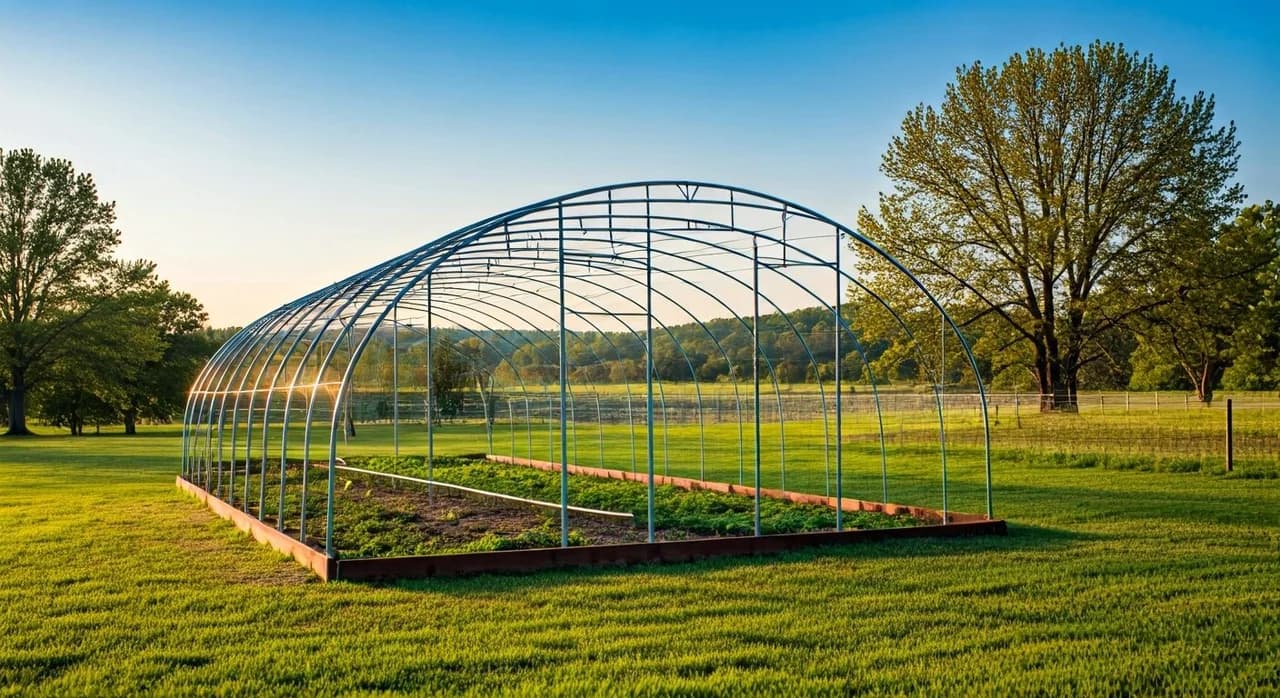
Key takeaways
- True installed budgets run 30%–45% above bare kit prices once grading, treated hip boards, wiggle-wire channel, roll-up cranks, end walls, and LTL freight are tallied.
- 13- to 14-gauge triple-galvanized steel wins 20-year durability; Schedule 40 PVC embrittles in 3–6 years and folds under >6 inches of wet snow.
- Gothic pointed-arch roofs with 4-foot bow spacing shed snow automatically and resist winter collapse far better than round Quonset hoops at 6-foot centers.
- Plan $0.06–$0.12/sq ft of film ($600–$1,200 materials on a 30×72 ft tunnel) every 4–6 years to replace 6-mil 4-year UV greenhouse polyethylene.
- USDA NRCS EQIP Practice Standard 325 covers 75%–90% of qualifying high tunnel costs if crops grow in native ground soil and construction starts only after contract signing.
- Fabric hoop barns ($15–$30/sq ft installed; 15–25 yr PVC covers) undercut corrugated steel Quonset huts ($17–$35+/sq ft) and finished pole barns ($15–$45+/sq ft) for bright, clear-span livestock or hay storage.
Quick answer: Installed 2026 hoop house costs run $1.50–$3.50/sq ft for DIY PVC, EMT conduit, or cattle-panel frames, $3–$6/sq ft for steel caterpillar tunnels, $8–$16/sq ft for permanent Gothic high tunnels with roll-up sides and framed end walls, and $15–$30/sq ft for commercial fabric hoop barns built for livestock or machinery. For long-term value, 13- to 14-gauge galvanized steel in a pointed Gothic arch lasts 15–25+ years (re-skinning 6-mil UV poly every 4–6 years) and qualifies eligible farms for 75%–90% USDA NRCS EQIP funding.
Hoop house cost per square foot in 2026: four structural tiers
Hoop-building quotes look chaotic until you split two categories sharing arched frames. Horticultural hoop houses (high tunnels) use translucent 6-mil UV polyethylene for passive-solar crops like spinach, winter lettuce, overwintered carrots, and early tomatoes. Agricultural hoop barns stretch heavy 12- to 30-ounce woven polyethylene or architectural PVC fabric over engineered steel trusses to shelter cattle, hay, and tractors.
In every tier, cost per square foot drops as footprint grows because fixed expenses—end walls, doors, roll-up gear, and freight—spread across more square footage.
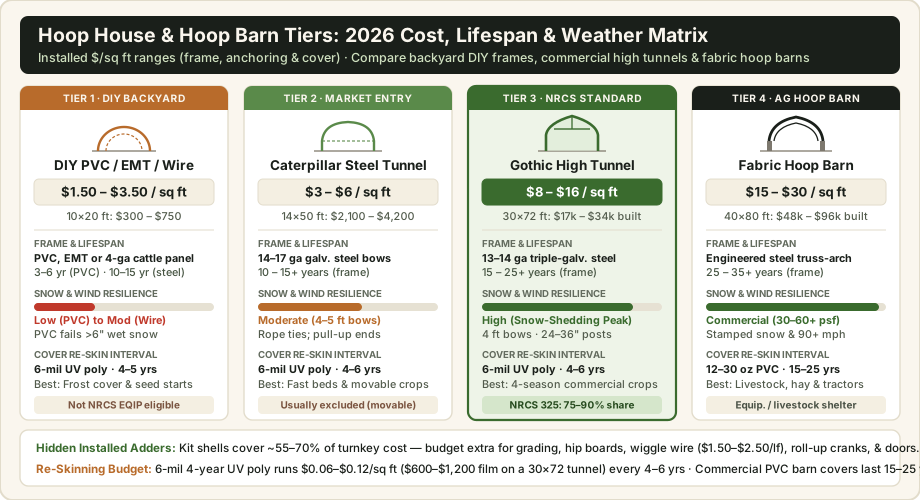
2026 Installed Hoop House & Hoop Barn Cost Tiers
Tier & Benchmark Size | Shell Kit ($/sq ft) | Installed ($/sq ft) | Turnkey Total | Frame Life | Re-Skin Cycle |
|---|---|---|---|---|---|
Tier 1: DIY PVC / Wire / EMT (10×20 ft) | $1.25–$2.75 | $1.50–$3.50 | $300–$750 | 3–6 yr PVC; 10–15 yr steel | 4–5 yrs (6-mil poly) |
Tier 2: Steel Caterpillar Tunnel (14×50 ft) | $2.25–$4.50 | $3.00–$6.00 | $2,100–$4,200 | 10–15+ yrs | 4–6 yrs (6-mil poly) |
Tier 3: Gothic High Tunnel (30×72 ft) | $4.50–$9.50 | $8.00–$16.00 | $17,000–$34,500 | 15–25+ yrs | 4–6 yrs (single/double poly) |
Tier 4: Commercial Hoop Barn (40×80 ft) | $8.00–$16.00 | $15.00–$30.00 | $48,000–$96,000 | 25–35+ yrs | 15–25 yrs (21–30 oz PVC) |
Which hoop building material is best? PVC vs. cattle panel vs. EMT vs. structural steel
Schedule 40 PVC pipe (1-inch to 1.25-inch)
White PVC wins on weekend simplicity and upfront price ($1.50–$2.50/sq ft), slipping over rebar stakes with basic hand tools. Outdoors, UV rays turn PVC chalky and brittle in 3 to 6 years. Plasticizers in bare PVC also chemically degrade greenhouse polyethylene at contact points unless hoops are wrapped in white batten tape or painted with white water-based latex. Flexible PVC bows flex badly in 35–40 mph wind gusts and buckle under 4 to 6 inches of wet snow, limiting them to mild-climate frost tunnels.
Galvanized 4-gauge cattle panels (16 ft × 50 in)
For 8×16 to 10×20-foot backyard builds ($2.00–$3.50/sq ft), arched welded-wire cattle panels outperform PVC dramatically. The grid behaves like a continuous truss, carrying heavy snow and lasting 10 to 15+ years. Width tops out near 10 feet for comfortable headroom, and sharp cut wire ends must be cushioned with split foam or felt tape before skinning—detailed in our DIY hoop house guide.
EMT conduit (3/4-inch to 1-inch) and fence top rail
Thin-wall electrical metallic tubing (EMT) bent on a handheld bender ($2.25–$4.00/sq ft) avoids UV decay and lasts 8 to 12 years on 10- to 12-foot spans, though thin 16–18 gauge walls kink easily and rust at damp soil contact. For 14- to 20-foot DIY arches, stepping up to 1-3/8-inch galvanized chain-link top rail (16–17 ga) adds real stiffness—covered in our Northeast caterpillar tunnel guide.
13- to 14-gauge triple-galvanized structural steel tubing
Hot-dip or Flo-Coat triple-galvanized structural tubing (1.315-inch to 2.375-inch OD) is the decisive winner for permanent high tunnels and hoop barns. It shrugs off interior condensation rust for 15 to 30+ years, bolts cleanly to purlins and wind braces, meets USDA NRCS standards, and costs less per year of service than rebuilding a failed PVC frame twice.
Comparing real hoop house kits and agricultural hoop barn systems
Compare kit quotes carefully: some list bare bows and ground posts while excluding end walls, roll-up cranks, and LTL freight, whereas others ship all-metal turnkey bundles with contiguous US shipping included.
2026 Named Hoop House & Hoop Barn Systems Compared
Brand / System | Widths & Steel Spec | Base Kit Range | Strengths | Trade-Offs |
|---|---|---|---|---|
Bootstrap Farmer DIY Conduit Kit | 10–20 ft; local top rail / EMT | $495–$1,900 | Free US freight; pro lock channel & wiggle wire without paying freight on long poles | Buyer sources steel poles and builds lumber end walls locally |
Farmers Friend Caterpillar Tunnels | 14–21 × 50–100 ft; 14–17 ga steel | $1,392–$3,400+ | 1-day setup; relocatable across beds; lowest commercial $/sq ft entry | Rope-tied poly and curtain ends seal less tightly than rigid doors |
Johnny's Selected Seeds Gothic Kits | 16 × 48 ft (Standard/Pro); 4-ft bows | $3,800–$6,500+ | Proven market-garden snow-shedding Gothic geometry and clear manuals | Limited width catalog vs. full commercial greenhouse makers |
Bootstrap Farmer All-Metal Kits | 16–30 × 32–96 ft; 13-ga US steel | $4,500–$18,500+ | Free US shipping; rot-free all-metal end walls; NRCS-eligible options | Heavy steel needs 2–4 builders and ladders/lifts on 30-ft spans |
Rimol Bobcat / Eastpoint / Nor'Easter | 16', 20', 30' wide; 13–14 ga steel | $1,745–$14,000+ | Built for harsh New England snow loads; wide NRCS grant track record | Roll-up sides ($720–$1,490+), end walls, and LTL freight add extra |
Growers Supply / FarmTek GrowSpan | 14–42 ft wide; triple-galv. steel | $3,600–$35,000+ | Widest span range and deep accessory catalog for fans and vents | Modular a-la-carte quoting hides turnkey cost until fully itemized |
ShelterLogic / ShelterTech Shelters | 12–30 ft; powder-coat / galv. tube | $800–$9,500+ | Low-cost hay, tractor, or seasonal livestock cover; fast bolt-up | Economy PE skins fade in 3–7 yrs; opaque covers are not for crops |
ClearSpan Commercial Hoop Barns | 26–100+ ft; hot-dip steel truss | $18,000–$95,000+ | Clear-span interior; 21–30 oz PVC covers rated 15–25+ yrs; bright daylight | $15–$30/sq ft installed once gravel pads, helical anchors, or pony walls add in |
Hidden installation costs and 10-year poly re-skinning math
The bare metal kit typically represents just 55% to 70% of turnkey cost. Account for six supporting line items before ordering:
- Site grading and drip-line drainage ($300–$2,500): Roof runoff concentrates along sidewalls; grade a slight crown or cut gravel trenches to keep interior beds dry.
- Treated baseboards and hip boards ($1.00–$2.00/linear ft): Pressure-treated 2×6 or 2×8 boards anchor roof poly separately from roll-up curtains at 4–5 feet high.
- Aluminum lock channel and wiggle wire ($1.50–$2.50/linear ft): A 30×72 ft house uses 350–450 linear feet along hip boards, end bows, and doors.
- Roll-up sidewall kits ($150–$400 per side): Gear cranks, roll poles, guide pipes, and anti-billow ropes keep open curtains from whipping in gusts.
- End walls and doors ($600–$2,500): Site-built treated 2×4 frames with twin-wall polycarbonate cost less upfront than factory steel end walls.
- LTL freight ($400–$1,500): Confirm unloading equipment (forks or liftgate) for 10–16 ft steel crates unless shipping is bundled.
Budgeting for 6-mil UV polyethylene re-skinning every 4 to 6 years
Standard 6-mil 4-year UV-stabilized anti-drip polyethylene lasts 4 to 5 years in high-UV southern or mountain states and 5 to 6 years in cloudier northern climates. Film runs $0.06–$0.12/sq ft of plastic (curved roof area is roughly 1.4–1.6× floor area). Plan $300–$600 in DIY materials for a 14×24 tunnel, $800–$1,500 for a 20×48 house, and $2,000–$3,500 for a 30×96 house—or roughly double if hiring a crew. Pull new poly only on a calm morning below 5–8 mph wind. Woven reinforced poly stretches cycles to 7–10 years with slightly lower light transmission, while double-layer inflated poly adds insulation and snow stiffness. See our hoop house anchoring and skinning guide and greenhouse climate control guide.
Snow load, wind bracing, and climate durability engineering
Cornell, Penn State, and University of Missouri high-tunnel trials show four engineering specs separate storm-proof frames from winter collapses:
- Gothic pointed-arch vs. Quonset round-arch: Round Quonset crowns flatten at the top and hold heavy wet snow until steel bows kink. Pointed Gothic peaks shed wet snow automatically and add sidewall height for trellised tomatoes.
- Bow spacing (4 ft vs. 6 ft): Specify 4-foot centers anywhere plastic stays on through winter snow (USDA Zones 3–6)—adding 50% more steel ribs and cutting unsupported poly spans. Reserve 6-foot spacing for mild Zones 7–9 or summer-only skins.
- Ground posts and wind bracing: Drive galvanized ground posts 24–36 inches deep (set in concrete collars in sandy or high-wind soils), run 3–5 continuous steel purlins, and bolt diagonal wind braces on all four corners.
- Ventilation and orientation: Aim end walls into prevailing winter winds where slope allows, and size roll-up sidewalls plus gable vents to at least 20%–25% of floor area so sunny spring days never cook crops past 100°F.
Cold-belt growers can review collar-tie placement and wind bracing diagrams in our greenhouse snow and wind bracing guide.
How USDA NRCS EQIP High Tunnel funding cuts upfront cost by 75% to 90%
Under EQIP Conservation Practice Standard 325 (High Tunnel System), USDA NRCS helps agricultural producers install permanent steel-framed hoop houses to extend harvests, cut pesticide use, and protect soil quality. Payments follow state fixed schedules—commonly a ~$5,400–$6,500 base plus ~$4.80–$5.80/sq ft for enclosed tunnels, often totaling $8,000–$22,000+. Standard producers receive roughly 75% cost-share, while Historically Underserved producers (beginning, veteran, limited-resource, or socially disadvantaged farmers) qualify for up to 90% cost-share and an optional 50% upfront advance payment.
- FSA registration: Obtain a USDA Farm Service Agency farm number before filing NRCS Form CPA-1200.
- In-ground growing only: Crops must root directly in native soil—hydroponics, benches, and potted crops are ineligible under Practice 325.
- Kit and cover specs: Requires a manufactured metal or structural wood frame ≥6 ft peak height, state wind/snow compliance, and ≥6-mil 4-year UV agricultural poly (excluding low tunnels and most lightweight caterpillar frames).
Note: Ordering materials or breaking ground before your NRCS EQIP contract is formally signed automatically voids Practice 325 eligibility.
Hoop house vs. fabric hoop barn vs. pole barn vs. Quonset hut vs. greenhouse
Rural landowners often compare translucent hoop houses and commercial fabric hoop barns directly against corrugated steel Quonset huts, wood pole barns, and rigid greenhouses. Match the building shell to light needs, foundation budget, and intended use:
2026 Structure Showdown: Hoop House vs. Hoop Barn vs. Pole Barn vs. Quonset Hut vs. Greenhouse
Structure | Installed $/sq ft | Foundation | Lifespan | Light & Climate | Best Use |
|---|---|---|---|---|---|
Horticultural Hoop House | $3–$16 | Driven steel posts (24–36 in) | 15–25+ yr steel; 4–6 yr poly | 85–90% PAR light; passive solar; unheated | In-ground 3- to 4-season crops |
Fabric Hoop Barn | $15–$30 (economy $7–$14) | Helical anchors, gravel, or pony wall | 25–35+ yr truss; 15–25 yr PVC | Bright diffused daylight; strong natural airflow | Livestock barns, dry hay, tractors |
Corrugated Quonset Hut | $17–$35+ | Concrete slab or perimeter footer | 40–50+ yr galvalume steel | Dark interior; top storm rating; drips unless insulated | Blizzard/hurricane equipment storage |
Wood Pole Barn | $15–$45+ | Buried posts or concrete piers | 40–60+ yr wood & metal | Opaque; easiest to insulate, wire, and finish | Heated workshops, garages, stables |
Polycarbonate / Glass Greenhouse | $25–$65+ | Timber, stem wall, or slab | 20–40+ yr frame; 10–30+ yr glazing | High light + R-1.5 to R-2.5 insulation for active heat | Heated propagation & winter growing |
If heated rigid glazing fits better than passive polyethylene, compare kits in our greenhouse kits and installed cost guide, explore winter thermal design in four-season greenhouse design, or weigh smaller backyard options in polytunnel vs. greenhouse.