Key takeaways
- Drought-tolerant perennials can reduce garden water needs by 30% to 70% compared to annual crops.
- Figs (Ficus carica) thrive in USDA zones 6-10, requiring minimal water once established after two to three years.
- Pomegranates (Punica granatum) are resilient in zones 7-10, producing fruit even in poor, alkaline soils.
- Prickly pear (Opuntia spp.) offers edible pads and fruit, suitable for diverse climates from USDA zones 4-10.
- Mediterranean herbs like rosemary and thyme provide flavor and adapt to dry conditions across many zones with little irrigation.
- Designing a food forest with diverse perennials and soil health practices enhances drought resilience and yields.
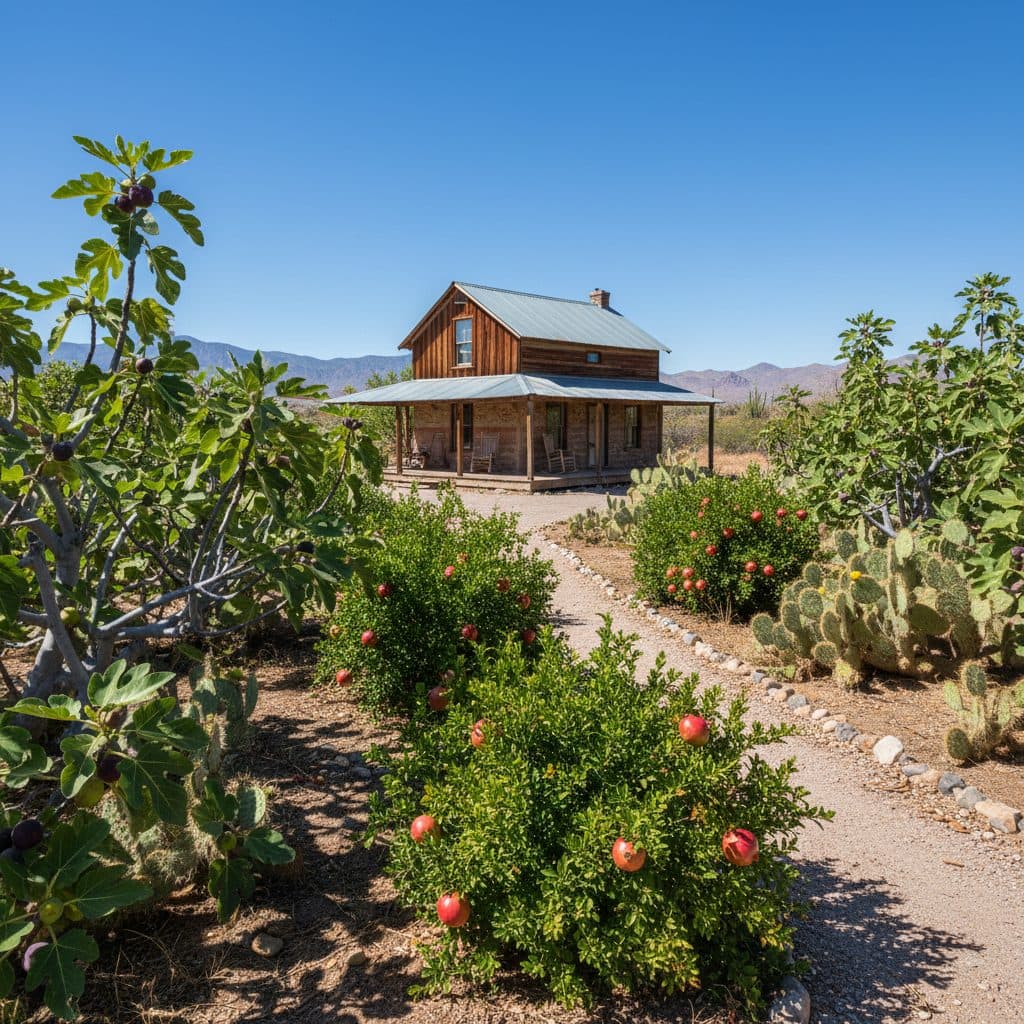
Quick answer: Growing drought-tolerant perennials such as figs, pomegranates, and prickly pear creates resilient plantings in dry climates, significantly reducing water needs compared to annual crops. These plants thrive in USDA zones 7-10, producing reliable harvests with minimal irrigation once established.
In the arid and semi-arid regions of the United States, particularly across the Southwest and parts of the Great Plains, water scarcity is a growing concern. States like California and Arizona have faced severe drought conditions for over two decades, impacting agricultural practices and home gardens alike. Shifting our approach to food production towards drought-tolerant edible perennials offers a practical and resilient solution for gardeners and homesteaders facing these environmental shifts.
These plants, once established, require significantly less irrigation than traditional annual crops, often reducing water consumption by 30% to 50%. By selecting species adapted to dry conditions and poor soils, gardeners can establish productive plantings that yield with minimal inputs, even when rainfall is scarce. This strategy conserves water while building a dependable food supply.
The science of drought tolerance in edible plants
Plants adapt to drought in various ways, from deep root systems that tap into lower soil moisture to specialized leaf structures that reduce water loss. Research, such as studies on chlorophyll fluorescence conducted in 2002, helps identify woody perennials with inherent drought tolerance, providing useful data for selection [1]. These plants often exhibit mechanisms like stomatal control, osmotic adjustment, and efficient water use, allowing them to maintain metabolic functions even when soil moisture drops below 20%. For instance, some desert plants can reduce their water loss by up to 90% during peak heat. Polyculture systems, where diverse perennials are grown together, can further increase resilience by supporting a healthy soil food web that retains moisture and nutrients, making the planting more resistant to drought stress, as projected by 2025 research [3]. Understanding these biological adaptations helps in selecting suitable species, potentially reducing water bills by hundreds of dollars annually for a medium-sized garden in arid regions.
Established drought-tolerant traits
When planning your garden, consider plants with established drought-tolerant traits for your specific USDA zone. Many native species in arid regions, for example, have evolved over millennia to survive on minimal rainfall, often less than 15 inches annually. This natural resilience means they require little to no supplemental irrigation once their root systems are fully developed, typically after one to three years. For more detailed guidance on selecting plants, explore our guide on drought tolerant plants: how to choose them by zone and water them right. By choosing plants that thrive on 75% less water than conventional annuals, you create a more sustainable and less labor-intensive garden.
- Deep taproots for accessing subsurface water.
- Thick, waxy leaves or small, needle-like foliage to reduce transpiration.
- Succulent tissues for water storage, like in cacti.
- Early dormancy during peak dry periods.
- Efficient stomatal control to minimize water vapor loss.
Figs: a sweet and adaptable fruit for many zones
Figs (Ficus carica) are remarkably adaptable fruit trees, thriving across a wide range of USDA zones, typically from zone 6 to 10. Once established, usually after two to three years, mature fig trees are exceptionally drought tolerant, requiring minimal supplemental water. In regions with at least 25 inches of annual rainfall, they may need no irrigation at all. However, during fruit development in drier climates like Central California, providing 10 to 15 gallons of water per week can significantly improve fruit size and yield, often increasing individual fruit weight by 20%. Varieties like ‘Brown Turkey’ and ‘Celeste’ are popular for their cold hardiness, surviving temperatures down to 10°F with some protection, making them viable even in parts of the Pacific Northwest.
Figs prefer well-drained soil but are not particularly fussy about soil fertility, producing abundant crops even in marginal conditions. A mature fig tree, after about five years, can yield 20 to 50 pounds of fruit annually, providing a substantial harvest for fresh eating, drying, or preserving. Some well-established trees in the Southern US have been known to produce over 100 pounds. For those looking to establish low-maintenance perennials that offer both shade and food, figs are an excellent choice. Their relatively compact size, often growing 10 to 20 feet tall, makes them suitable for many backyard gardens, even those with limited space, and they can live for 30 years or more.
- ‘Brown Turkey’ for cold hardiness (USDA zone 6).
- ‘Celeste’ known for sweet, small fruits.
- ‘Black Mission’ for rich flavor and productivity.
- ‘Kadota’ for drying and preserves.
- ‘Chicago Hardy’ for resilience in cooler climates.
Pomegranates: ancient fruit, modern resilience for arid climates
Pomegranates (Punica granatum) are another excellent choice for low-water plantings, particularly in USDA zones 7 through 10, prevalent across the American Southwest and parts of the Southeast. These shrubs or small trees tolerate a wide range of soil types, including poor, sandy, or alkaline soils with pH levels up to 8.5, and thrive in hot, dry conditions. Once established, a pomegranate tree can survive on as little as 15 inches of annual rainfall, though supplemental irrigation (around 20 to 30 gallons every two to four weeks during dry spells) will boost fruit production and quality, potentially increasing fruit size by 30%. Varieties such as ‘Wonderful’ are widely grown for their large, juicy fruits, while ‘Eversweet’ offers a sweeter, less tart option, both producing well in temperatures exceeding 100°F.
Beyond their fruit, pomegranates offer ornamental value with orange-red flowers in spring and dense foliage. They typically grow to a height of 10 to 15 feet, making them versatile for various garden designs, from hedges to specimen trees. A well-maintained pomegranate can produce 20 to 40 pounds of fruit per year, with some older trees yielding over 50 pounds after 10 years of growth. Their resilience makes them a practical choice for climate-resilient growing, particularly in regions like the American Southwest where water resources are strained, offering a reliable harvest for decades. For more options, consider exploring drought-tolerant trees and shrubs by USDA zone: a hardiness-keyed selection guide.
- ‘Wonderful’ for large, tart fruits.
- ‘Eversweet’ for sweeter, seedless arils.
- ‘Desertnyi’ known for soft seeds.
- ‘Parfianka’ for excellent flavor and juiciness.
- ‘Angel Red’ for early ripening and high yields.
Prickly pear: a desert delicacy with edible pads and fruit
Prickly pear cacti (Opuntia spp.) are perhaps the epitome of drought-tolerant edible plants, perfectly suited for arid and semi-arid regions of the United States, from USDA zone 4 through 10 depending on the species. These remarkable plants offer two distinct edible parts: the young, tender pads (nopales) and the sweet, juicy fruits (tunas). Once established, prickly pear requires virtually no supplemental irrigation, thriving on natural rainfall that can be as low as 8 to 10 inches annually in states like Arizona and New Mexico. They are incredibly resilient, tolerating poor, rocky soils and extreme heat, with some species enduring temperatures over 100°F for extended periods, and even surviving winter lows down to -20°F for the hardiest varieties.
The pads are harvested in spring and early summer, offering a vegetable that can be grilled, sautéed, or added to stews, providing up to 20 pounds of edible material per mature plant annually. The fruits ripen from late summer into fall, providing a sweet harvest, with a single plant potentially yielding 30 to 50 fruits. For those homesteading in Texas or other dry regions, planting prickly pear provides a reliable food source with minimal input, often less than 5 gallons of water per year once established. Their ability to survive and produce in harsh conditions makes them an effective part of resilient food systems and a dependable addition to any low-water garden.
- Opuntia ficus-indica for large pads and fruit.
- Opuntia engelmannii for cold hardiness (USDA zone 7).
- Opuntia humifusa (Eastern Prickly Pear) for zone 4-5 resilience.
- Opuntia santa-rita for purple pads and ornamental value.
- Opuntia microdasys (Bunny Ears) for smaller, ornamental pads.
Drought-tolerant herbs: flavor, function, and low water use
Many Mediterranean herbs are naturally adapted to dry, sunny conditions and poor soils, making them well-suited for low-water gardens. Rosemary (Rosmarinus officinalis), for instance, thrives in USDA zones 7 through 10, requiring very little water once established (often less than 0.5 inches per week, or about 2-3 gallons for a mature plant). Thyme (Thymus vulgaris) is similarly resilient, hardy in zones 5 through 9, and can survive on minimal rainfall, typically needing only occasional watering during prolonged dry spells, perhaps once every two to three weeks in summer. These herbs provide culinary flavor while offering aromatic foliage and flowers that support local pollinators, increasing biodiversity in your garden by up to 25%.
Other excellent choices include oregano (Origanum vulgare), hardy in zones 4 through 10, lavender (Lavandula spp.), thriving in zones 5 through 9, and sage (Salvia officinalis), hardy in zones 4 through 8. All are well-suited to dry, sunny spots and require minimal care, often producing for five to ten years. They are generally pest-resistant and can live for many years, providing continuous harvests with little intervention. Incorporating these herbs into your garden can significantly reduce your overall water usage by 60% to 80% compared to growing annual leafy greens, while adding diverse flavors to your kitchen. For those interested in preserving their harvest, learning about dehydrating food: how to dry produce, herbs, and jerky can extend the utility of these resilient plants for months.
- Rosemary (Rosmarinus officinalis) for zones 7-10.
- Thyme (Thymus vulgaris) for zones 5-9.
- Oregano (Origanum vulgare) for zones 4-10.
- Lavender (Lavandula spp.) for zones 5-9.
- Sage (Salvia officinalis) for zones 4-8.
Designing a resilient low-water food garden
Creating a low-water food garden goes beyond simply choosing drought-tolerant plants; it involves thoughtful design and management. Adopting principles from permaculture and food forest design can maximize resilience and productivity. Start by understanding your local climate, including average rainfall (e.g., 18 inches annually in parts of the Great Plains) and typical summer temperatures (e.g., often exceeding 95°F in the Southwest). Group plants with similar water and sun requirements together to optimize irrigation efficiency. For instance, place figs and pomegranates in sunnier, slightly moister areas, while prickly pear and many herbs can handle the driest, hottest spots, often requiring 50% less water than other perennials.
Improving soil health directly increases water retention. Incorporating organic matter, such as compost, can increase the soil’s water-holding capacity by 20% to 30%, reducing the need for irrigation by up to 40%. Mulching heavily around plants with wood chips or straw helps suppress weeds, moderate soil temperature by several degrees, and conserve soil moisture by up to 50%. Consider passive water harvesting techniques, like swales or rain gardens, to capture and slowly infiltrate rainwater into the soil, potentially collecting hundreds of gallons from a single storm. For more on creating such systems, explore what is a food forest? A beginner’s guide to perennial edible ecosystems. These strategies collectively reduce water consumption by 60% or more over a typical growing season.
- Zone plants by water needs and sun exposure.
- Integrate diverse species for ecological balance.
- Utilize passive water harvesting techniques.
- Apply thick layers of organic mulch.
- Incorporate nitrogen-fixing support plants.
US Drought Impact: Over 40% of the contiguous United States experiences drought conditions in any given year, impacting water availability for agriculture and gardens.
Perennial Water Savings: Once established, drought-tolerant edible perennials can reduce garden water consumption by 30% to 70% compared to annual crops.
Frequently asked questions
What defines a drought-tolerant edible perennial?
A drought-tolerant edible perennial is a plant that lives for more than two years, produces food, and can survive and thrive with minimal water once established. These plants often have adaptations like deep roots or succulent leaves, allowing them to endure periods with less than 15 inches of annual rainfall.
How much water do these plants save?
Once mature, drought-tolerant perennials can reduce the need for supplemental irrigation by 30% to 70% compared to traditional annual vegetable gardens. For example, a mature fig tree might only need 10 gallons of water per week during fruiting, whereas a row of tomatoes could require 20 gallons.
Can I grow these in colder zones?
Yes, many drought-tolerant edibles have cold-hardy varieties. For instance, ‘Chicago Hardy’ figs can survive in USDA zone 5 with winter protection, and certain prickly pear species are hardy down to USDA zone 4. Always check the specific variety’s hardiness for your region before planting.
What about soil requirements for these plants?
Most drought-tolerant edibles are not particular about soil fertility and often thrive in poor, well-drained soils, including sandy or rocky types. However, improving soil structure with 2 to 4 inches of compost can improve water retention and nutrient availability, boosting plant vigor by 15%.
How long until these perennials produce fruit?
The time to fruit production varies by species. Figs and pomegranates typically begin producing a significant harvest within two to three years of planting. Prickly pear can offer edible pads within one year and fruits within two to three years, with full production often reached by year five.
Are there any pest issues with these resilient plants?
Generally, drought-tolerant perennials are quite resilient to pests and diseases due to their hardiness and often aromatic properties. However, occasional issues like fig rust or pomegranate aphids can occur, usually manageable with organic sprays or beneficial insects, impacting less than 5% of the crop.
References
- Identification of Drought-Tolerant Woody Perennials Using Chlorophyll Fluorescence (2002). Identification of Drought-Tolerant Woody Perennials Using Chlorophyll Fluorescence.
- Effect of Reclaimed Water and Drought on Salt-sensitive Perennials (2005). Effect of Reclaimed Water and Drought on Salt-sensitive Perennials.
- Polyculture Perennials Foster Soil Food Web Resistance and Resilience to Drought Stress in Agroecosystems (2025). Polyculture Perennials Foster Soil Food Web Resistance and Resilience to Drought Stress in Agroecosystems.
- In-vitro selection of drought tolerant peanut embryogenic calli on medium containing polyethylene glycol and regeneration of drought tolerant plants (2015). In-vitro selection of drought tolerant peanut embryogenic calli on medium containing polyethylene glycol and regeneration of drought tolerant plants.
- Exploiting drought-inducible genes encoding transcription factors for drought tolerant crops (2013). Exploiting drought-inducible genes encoding transcription factors for drought tolerant crops.
- USDA Natural Resources Conservation Service (2024). USDA Natural Resources Conservation Service.