Key takeaways
- Identify the specific pest and crop to establish relevant thresholds for your region.
- Implement consistent scouting and sampling methods to accurately assess pest populations.
- Understand the economic injury level — the point where pest damage equals treatment cost.
- Consider the presence of beneficial insects and natural predators before intervening.
- Adjust thresholds based on crop value, growth stage, and environmental conditions.
- Document observations and treatment outcomes to refine future pest management decisions.
Quick answer: For aphids on tomatoes, an action threshold might be 5-10 aphids per leaf on 20% of sampled plants, triggering control measures before economic injury occurs. This threshold is adjusted based on crop value, growth stage, and beneficial insect presence.
Out here in the fields of northern Ohio, USDA zone 6, we know that every decision impacts the bottom line and the health of our soil. One of the toughest calls we make as growers is deciding when a pest population has crossed the line from a minor annoyance to a genuine threat that warrants intervention. We aim to manage pest populations effectively, not eliminate every bug. This is where the concept of an action threshold comes in — a specific point where the pest population, or the damage it causes, justifies the cost and effort of a control measure.
Ignoring pests can lead to significant crop losses, sometimes as high as 25% for a tomato crop heavily infested with aphids [2]. On the other hand, treating too early or unnecessarily wastes resources, can harm beneficial insects, and might even encourage pest resistance. My goal is to share how we approach these decisions, grounded in observation and data, to ensure our efforts are both effective and responsible.
Understanding action thresholds and economic injury levels
For us growers, an action threshold isn’t just a number; it’s a critical decision point. It represents the pest population density or the extent of damage at which control measures should be applied to prevent an increasing pest population from reaching the economic injury level (EIL). The EIL is the point where the cost of pest damage equals the cost of treatment. For example, if treating an acre of peppers for cucumber beetles costs $75, and the projected yield loss from those beetles would be $300, then the EIL would be reached well before that $300 loss occurs, prompting action at a lower pest density.
the difference between EIL and action threshold
The economic injury level (EIL) is the lowest pest population density that will cause economic damage. It’s about the money — when the cost of the damage is equal to or greater than the cost of controlling the pest. The action threshold (AT), however, is a slightly lower pest density than the EIL. It’s the trigger point, giving us enough time to apply a control measure before the pest population reaches the EIL and causes unacceptable losses. For many crops, an action threshold for aphids might be 5-10 aphids per leaf on 20% of sampled plants before treatment is recommended [1]. This buffer gives enough time to act.
- Economic Injury Level: When pest damage costs equal treatment costs.
- Action Threshold: The pest density that triggers control measures.
- Buffer Zone: The difference between AT and EIL, allowing for intervention time.
- Cost-Benefit Analysis: Essential for determining both levels.
Scouting and sampling: getting accurate numbers
You can’t set an effective threshold if you don’t know what’s actually out there. That’s why consistent and accurate scouting is the backbone of any sound pest management strategy. We walk our fields and gardens regularly, often several times a week during peak growing season, to monitor pest populations. For a 10-acre field, we might establish 15-20 random sampling points, checking 5-10 plants at each point. This systematic approach helps us get a representative picture of the pest pressure across the entire area [1].
effective sampling methods
Different pests require different sampling methods. For aphids on tomatoes, we might visually inspect the undersides of 10-15 leaves per plant, focusing on new growth. For cutworms, we might dig around the base of 5-10 plants per row. The key is consistency and knowing what to look for. Sticky traps can monitor flying insects like whiteflies or fungus gnats, while sweep nets are useful for general insect populations in cover crops. Counting beneficial insects is just as important; if we see a lot of ladybugs or lacewing larvae, they might handle a low-level aphid problem for us. The USDA Natural Resources Conservation Service provides resources that help farmers implement conservation practices, including those that support beneficial insects, reducing pest pressure by 15-20% [5].
- Random Sampling: Ensures representative data across your entire growing area.
- Visual Inspection: Direct observation of plants for pests and damage.
- Sticky Traps: Effective for monitoring flying insect populations.
- Sweep Nets: Useful for broad-spectrum insect collection in larger areas.
- Beneficial Insect Counts: Crucial for understanding natural pest control.
Factors influencing threshold decisions
Setting a universal action threshold is impossible because so many variables come into play. What’s acceptable for a mature corn crop in Iowa might be catastrophic for young lettuce in California. The crop’s growth stage is a major factor; young seedlings are far more vulnerable to a small pest population than a plant nearing harvest. A few aphids on a 6-inch tall pepper plant can cause significant stunting, whereas the same number on a mature plant might be tolerated. Companion planting for peppers can also influence pest pressure by attracting beneficials or deterring pests.
considering crop value and beneficials
The value of the crop also matters. High-value specialty crops, like organic berries, will have much lower action thresholds than a field of feed corn. We also heavily weigh the presence of beneficial insects. If we see a healthy population of ladybugs, lacewings, or parasitic wasps, we might tolerate a higher aphid count, knowing nature is working for us. Applying a broad-spectrum treatment too early could wipe out these natural allies, leading to a resurgence of pests later. Prioritizing pest control actions based on economic impact and environmental safety, similar to strategic planning in other complex operations, can reduce unnecessary pesticide applications by 30% [4]. This approach supports long-term success, especially in regions like the Pacific Northwest where diverse ecosystems support many natural predators.
- Crop Growth Stage: Young plants are often more susceptible to damage.
- Crop Value: High-value crops warrant lower thresholds.
- Beneficial Insects: Their presence can raise acceptable pest levels.
- Environmental Conditions: Stress from drought or heat can increase plant vulnerability.
- Pest Type: Some pests cause more damage than others at lower populations.
Making the treatment decision: an escalation ladder
Once our scouting reveals that a pest population has reached or exceeded the action threshold, we don’t just grab the sprayer. We follow an escalation ladder, starting with the least impactful methods. This aligns with the principles of Integrated Pest Management (IPM), which has been a cornerstone of effective farming since the 1970s, benefiting from collaborative efforts among growers [3]. For aphids on tomatoes, for example, our first step might be a strong jet of water to dislodge them, which can reduce populations by 50% on small infestations. If that’s not enough, we might consider Neem oil for plants, applied according to label instructions, usually at a 1% solution.
integrating organic controls
Chemical treatments, even organic-approved ones, are typically our last resort. We always consider the impact on beneficial insects, pollinators, and water quality. Implementing water management strategies, such as improving soil health to increase water infiltration by 1 inch per hour, can reduce plant stress and make crops more resilient to pest attacks [6]. For persistent issues like powdery mildew, we might adjust our watering schedule or improve air circulation before applying a treatment like potassium bicarbonate. The cost of treatment versus potential crop loss is a critical factor, where a treatment costing $50 per acre might be justified if projected losses exceed $200 per acre [2]. This careful consideration ensures we’re not just reacting, but strategically managing our farm’s health.
- Cultural Controls: Adjusting irrigation, improving air flow, or crop rotation.
- Physical Controls: Hand-picking pests or using row covers.
- Biological Controls: Introducing or conserving natural enemies.
- Organic-Approved Sprays: Using products like Neem oil or insecticidal soaps.
- Chemical Controls: Last resort, even with organic options, due to broader impacts.
Case study: managing aphids on tomatoes
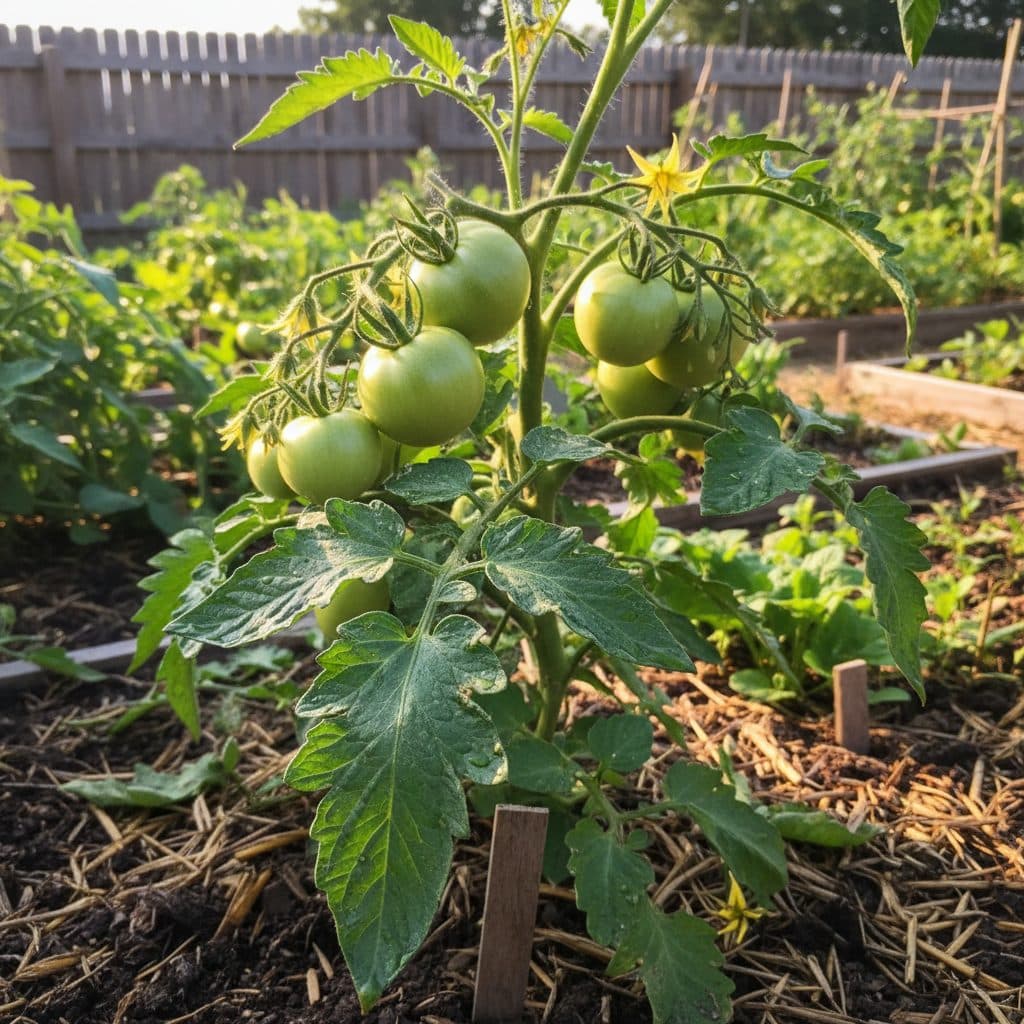
Let’s consider a practical example: aphids on a tomato crop in a high tunnel in central Pennsylvania, USDA zone 6b. Aphids can reproduce quickly, with a single female producing 50-100 offspring in her lifetime, leading to exponential growth in just a week. Our action threshold for aphids on young tomato plants (up to 12 inches tall) might be 3-5 aphids per leaf on 10% of sampled plants. For mature plants, we might tolerate 8-10 aphids per leaf on up to 25% of plants, especially if we observe beneficials like ladybug larvae.
documenting and refining your thresholds
When scouting, we look for clusters of aphids, sticky honeydew, or distorted new growth. If we hit our threshold on young plants, our first step is often to spray with a strong stream of water, which can dislodge up to 70% of the aphids. If that doesn’t control the population within 2-3 days, we might apply an insecticidal soap solution (2 tablespoons per gallon of water) in the late evening to minimize impact on beneficials. We document the date, pest count, treatment applied, and the outcome. This data helps us refine our thresholds year after year. For instance, if we consistently find that 5 aphids per leaf on young plants leads to a 10% yield reduction, we might adjust our threshold down to 2-3 aphids per leaf. This iterative process is how we learn and adapt, making our pest management more effective and less reliant on reactive measures. For more detailed strategies, how to get rid of aphids provides an in-depth look at control options.
- Early Stage Threshold: 3-5 aphids per leaf on 10% of young plants.
- Mature Stage Threshold: 8-10 aphids per leaf on 25% of mature plants.
- First Response: Strong water spray to dislodge pests.
- Second Response: Insecticidal soap or Neem oil application.
- Documentation: Record counts, treatments, and results for future reference.
Yield Protection: Setting economic thresholds for pests like aphids on a tomato crop in a USDA zone 6 garden can prevent yield losses of up to 25% if treatments are applied correctly [2].
Reduced Pesticide Use: Prioritizing pest control actions based on economic impact and environmental safety can reduce unnecessary pesticide applications by 30% [4].
Frequently asked questions
What is an action threshold in pest management?
An action threshold is the specific pest population density or level of damage at which control measures should be applied to prevent economic injury. For instance, it might be 5 aphids per leaf on 20% of your plants before you decide to spray.
How is an action threshold different from an economic injury level?
The economic injury level (EIL) is the point where the cost of pest damage equals the cost of treatment. The action threshold (AT) is a lower pest density than the EIL, providing a buffer to initiate control measures before significant economic loss, such as a 15% yield reduction, occurs.
Why is regular scouting important for setting thresholds?
Regular scouting provides accurate data on pest populations and damage, which is essential for determining if an action threshold has been met. Without consistent monitoring, like checking 10-15 plants per acre, you risk treating too early, too late, or unnecessarily.
Can action thresholds change for the same pest and crop?
Yes, action thresholds are dynamic and can change based on factors like the crop’s growth stage, its market value, and the presence of beneficial insects. A young tomato plant might have a threshold of 3 aphids per leaf, while a mature plant could tolerate 8-10 aphids per leaf.
What are some common organic treatments used after a threshold is met?
After an action threshold is met, common organic treatments include cultural practices like hand-picking, physical controls like strong water sprays (which can dislodge 70% of aphids), or biological controls. If those aren’t enough, organic-approved sprays like Neem oil or insecticidal soaps are considered.
References
- Sampling Techniques and Setting Thresholds (2020). Sampling Techniques and Setting Thresholds.
- Problems in Setting Thresholds (2023). Problems in Setting Thresholds.
- On the Crossroads: Inter-Action Bus Tours 1973 (2018). On the Crossroads: Inter-Action Bus Tours 1973.
- 3 Priority-setting in mine action (2018). 3 Priority-setting in mine action.
- USDA Natural Resources Conservation Service (2024). USDA Natural Resources Conservation Service.
- EPA — Soak Up the Rain (2024). EPA — Soak Up the Rain.