Key takeaways
- Identify the specific pest by tunnel shape, size, and feeding damage before acting.
- Exclusion methods like buried wire mesh barriers are highly effective for protecting high-value plants and beds.
- Trapping, particularly with specific trap types for each pest, offers a direct and often rapid control method.
- Habitat modification, such as removing dense ground cover, can significantly reduce vole populations in garden areas.
- Regular monitoring of garden beds, especially in USDA zones 3 through 9, helps catch infestations early.
- Organic soil amendments and healthy soil practices support plant resilience against root damage.
Quick answer: Managing subterranean pests like voles, moles, and gophers in US gardens involves a 3-step approach: accurate identification, physical exclusion with barriers, and strategic trapping or habitat modification.
In many US gardens, from the fertile Willamette Valley in Oregon to the humid plains of Georgia, subterranean pests like voles, moles, and gophers present a significant challenge. These burrowing animals can devastate root systems, consume bulbs, and create unsightly tunnels that trip up gardeners. For instance, in Oregon, early observations from 1893 noted the extensive damage caused by gophers and moles to crops, emphasizing their persistent nature in agricultural lands [2]. Understanding these pests and implementing targeted, organic strategies matters for protecting your harvest and maintaining soil health.
Successfully managing these underground invaders requires a clear identification of the culprit, followed by a strategic combination of exclusion, trapping, and habitat modification. Relying on a single method often proves insufficient against populations that can reproduce rapidly, with some vole species producing up to 5 litters a year, each with 3 to 6 young. This article outlines practical, grower-tested methods to defend your garden, focusing on techniques that support a healthy ecosystem rather than introducing harmful chemicals.
Identifying the underground culprit: voles, moles, or gophers?
Before you can effectively manage a subterranean pest, you need to know exactly what you are dealing with. Misidentification can lead to wasted effort and continued damage. In the United States, particularly across agricultural regions from California to the Midwest, these three animals are the primary suspects. Moles, for example, are insectivores, primarily feeding on earthworms and grubs, while voles and gophers are herbivores that consume plant material, often causing significant root and bulb damage [1].
Tunnels and feeding habits reveal the pest
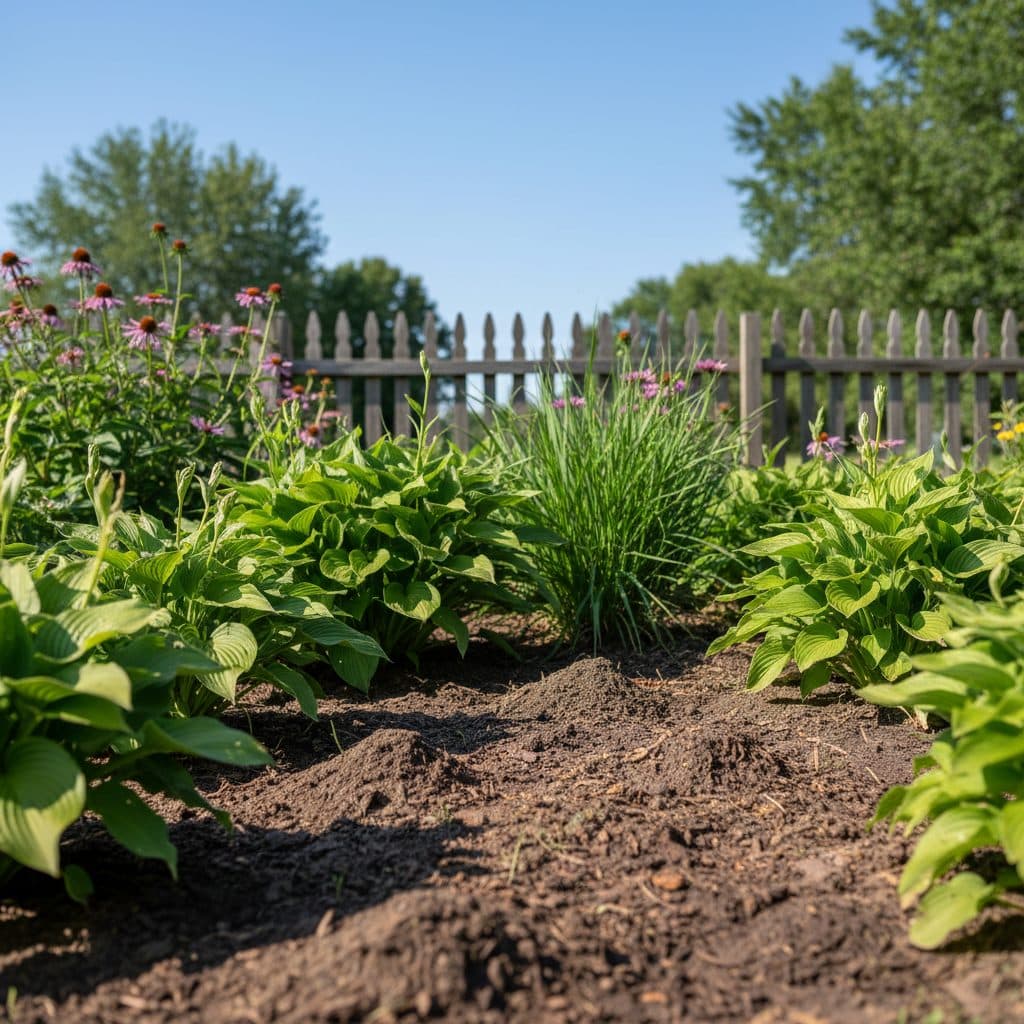
Mole tunnels are typically characterized by raised ridges or ‘mole runs’ on the surface, often forming an intricate network across lawns and garden beds. They also create conical mounds of soil, often 6 to 12 inches in diameter, which are pushed up from below as they excavate. These mounds usually lack a visible entrance hole. Their diet, consisting of up to 80% earthworms, means they do not directly eat plant roots, but their tunneling can still interrupt root systems and expose them to air, causing plants to wilt. In contrast, gophers create crescent-shaped or fan-shaped mounds, often 10 to 24 inches wide, with a distinct plugged entrance hole on one side. They pull plants into their burrows from below, leaving clean-cut stems at the soil line. Voles, smaller rodents sometimes called ‘meadow mice,’ create numerous small, 1 to 2 inch wide surface runways through grass or mulch, and small, inconspicuous burrow entrances. They girdle the bark of young trees and shrubs, especially in winter, and consume bulbs and roots, causing plants to die back suddenly. In a tallgrass prairie study, pocket gophers were observed to influence meadow vole populations [5].
- Moles create raised surface tunnels and volcano-shaped mounds.
- Gophers produce crescent-shaped mounds with a plugged hole.
- Voles make small, 1 to 2 inch wide surface runways and tiny burrows.
- Mole damage is indirect, interrupting roots; gophers and voles eat roots and bulbs.
- Check for gnaw marks on bulbs and roots to confirm vole or gopher activity.
Exclusion strategies: building barriers against burrowers
The most effective long-term strategy for protecting high-value plants and garden beds from voles, moles, and gophers is physical exclusion. This involves creating barriers that prevent these animals from accessing your plants. While it requires an initial investment of time and materials, a well-installed barrier can provide protection for many years, significantly reducing ongoing pest management efforts. For example, in USDA zones 5 through 9, where gopher populations can be particularly dense, exclusion is often the first line of defense for new plantings.
Installing wire mesh and raised beds
For individual plants, especially trees and shrubs, create a cylindrical cage of hardware cloth with a mesh size of 1/2 inch or smaller. Bury the cylinder at least 18 to 24 inches deep, with 6 inches extending above the soil line to prevent voles from climbing over. The bottom of the cage should be bent outwards in an ‘L’ shape for about 6 inches to deter burrowing underneath. For vegetable beds, consider building raised beds and lining the bottom with hardware cloth before filling with soil. This creates a complete underground barrier. Ensure the mesh extends up the sides of the bed to prevent entry from the perimeter. In USDA zone 7, a gardener might protect a new garlic crop by lining the bed with hardware cloth before planting, ensuring the mesh is buried at least 18 inches deep [6]. For protecting a carrot patch, a similar barrier can be installed, ensuring the mesh is fine enough to deter even small voles from squeezing through. Learn more about how to grow carrots effectively with such protection.
- Use hardware cloth with 1/2 inch or smaller mesh size.
- Bury barriers at least 18 to 24 inches deep.
- Extend barriers 6 inches above ground for voles.
- Bend the bottom of wire cages outwards in an ‘L’ shape.
- Line raised beds completely with hardware cloth before filling with soil.
Trapping techniques: direct control for active infestations
When exclusion isn’t feasible for an entire area, or if you have an active infestation, trapping offers a direct and often rapid method of control. Different traps are designed for different pests, and using the correct type matters for success. Early observations from the late 19th century in Oregon showed the effectiveness of trapping as a primary method for reducing gopher populations, noting that a single trapper could catch dozens of gophers in a day with proper technique [4].
Choosing and setting the right traps
For gophers, specialized gopher traps (like the Macabee or Cinch trap) are highly effective. Locate an active tunnel by probing the ground between fresh mounds. Once a main runway is found, dig a small hole to expose the tunnel, then set two traps facing opposite directions within the tunnel, securing them with wire to a stake. Cover the opening with plywood or sod to create darkness, as gophers prefer to work in the dark. Check traps daily, as gophers can be caught within hours. For moles, scissor-jaw or harpoon-style traps are best. These traps are designed to be set over active surface runs. Flatten a section of a mole run, and if it’s raised again within 12 to 24 hours, it’s an active run. Set the trap according to manufacturer instructions, ensuring it’s firmly placed over the tunnel. For voles, common snap traps (like those used for mice) baited with peanut butter, apple slices, or oats can be effective. Place these traps near burrow entrances or along active runways, covering them with a small box or bucket to protect non-target animals and provide a sense of security for the vole. In a garden in USDA zone 6, a diligent gardener might set 4 to 6 snap traps near a cluster of vole burrows, checking them every morning.
- Use specialized gopher traps (Macabee, Cinch) in main runways.
- Set two gopher traps facing opposite directions in an exposed tunnel.
- Employ scissor-jaw or harpoon traps for moles over active surface runs.
- Use baited snap traps for voles near burrow entrances or runways.
- Check all traps daily for activity and re-set as needed.
Habitat modification and cultural controls: long-term prevention
Beyond immediate control measures, modifying the garden environment can make it less appealing to voles, moles, and gophers, reducing the likelihood of future infestations. These cultural controls are often overlooked but are essential for a holistic, organic pest management plan. For instance, maintaining a clean garden with reduced dense ground cover can significantly decrease areas where voles feel safe to nest and forage, especially in regions like the Pacific Northwest where voles are common.
Managing garden environment and plant choices
Voles thrive in areas with dense vegetation, tall grass, and heavy mulch layers, which provide cover from predators. Keep grass mowed short around garden beds, and maintain a 6 to 12 inch vegetation-free zone around valuable plants. While mulch is beneficial for soil health, consider using thinner layers (1 to 2 inches) or opting for coarser materials like gravel near vulnerable plants if vole pressure is high. Moles are attracted to areas with abundant insect populations, particularly grubs and earthworms. While earthworms are beneficial, excessive grub populations can attract moles. Addressing grub issues with beneficial nematodes (e.g., Heterorhabditis bacteriophora) in late summer or early fall can reduce their food source. Gophers prefer areas with easily accessible roots and tubers. Cultivating a healthy soil structure, perhaps by incorporating fermented soybean meal, can help plants develop strong root systems less susceptible to damage. Some plants are also less palatable to these pests. For example, daffodils and castor beans are generally avoided by voles and gophers due to their toxicity. Consider planting these around vulnerable areas. However, castor beans are toxic to humans and pets, so plant with caution. For more on feeding your soil, see our guide on organic gardening fertilizer.
- Keep grass mowed short around garden beds, maintaining a 6 to 12 inch clear zone.
- Reduce dense ground cover and thick mulch layers to deter voles.
- Address grub populations with beneficial nematodes in late summer.
- Incorporate plants unpalatable to pests, like daffodils or fritillaria bulbs.
- Promote healthy soil structure to support strong root systems.
Integrated pest management: combining strategies for success
The most effective approach to managing voles, moles, and gophers is an integrated pest management (IPM) strategy that combines several techniques. Relying on a single method, such as trapping alone, often provides only temporary relief, as new pests can quickly move into vacated territories. A comprehensive plan, tailored to your specific garden and the identified pest, yields the best long-term results. For example, a gardener in USDA zone 8 dealing with both gophers and voles might implement exclusion around a new fruit tree planting, set gopher traps in active tunnels, and reduce ground cover in surrounding perennial beds.
Monitoring and ongoing adjustments
Regular monitoring is central to successful IPM. Walk through your garden weekly, especially during spring and fall, looking for fresh mounds, new tunnels, or signs of plant damage. Early detection allows for quicker intervention, preventing small problems from escalating into major infestations. Keep records of where and when you observe activity, which methods you used, and their effectiveness. This data will help you refine your strategy over time. For instance, if you notice new vole runways appearing despite reduced ground cover, you might increase the number of snap traps in that area or consider adding more repellent plants. Remember that pest pressure can fluctuate seasonally and year-to-year; a strategy that worked perfectly last year might need adjustments this year. The USDA Natural Resources Conservation Service emphasizes the importance of understanding pest biology and behavior for effective management, recommending a multi-faceted approach [6]. This includes understanding how pests like gophers and voles interact, as studied in prairies where gopher activity can influence vole populations [5].
- Combine exclusion, trapping, and habitat modification for best results.
- Monitor your garden weekly for new signs of pest activity.
- Keep detailed records of pest sightings and control method effectiveness.
- Adjust your IPM plan seasonally and based on observed pest pressure.
- Consider natural predators like owls and hawks by providing suitable habitat.
Comparison of Vole, Mole, and Gopher Characteristics
Characteristic | Vole | Mole | Gopher |
|---|---|---|---|
Primary Diet | Roots, bulbs, bark, seeds, grass | Earthworms, grubs, insects | Roots, tubers, vegetation |
Tunnel Type | Small surface runways (1-2 in), inconspicuous burrows | Raised surface ridges, volcano-shaped mounds (6-12 in) | Fan/crescent-shaped mounds (10-24 in) with plugged hole |
Damage to Plants | Girdling bark, eating roots/bulbs, sudden plant death | Indirect root disturbance, wilting plants | Pulling whole plants underground, root consumption |
Size (Adult) | 4-7 inches (body + tail) | 6-8 inches (body + tail) | 6-14 inches (body + tail) |
Reproduction Rate | Up to 5 litters/year, 3-6 young/litter | 1 litter/year, 2-5 young/litter | 1-3 litters/year, 3-7 young/litter |
Burrow Depth: Gopher tunnels can extend up to 6 feet deep, allowing them to access a wide range of root systems in some US regions.
Vole Damage: Voles can girdle the bark of young trees and shrubs up to 12 inches above the ground, especially during winter months.
Mole Diet: Moles consume up to 80% of their body weight in insects daily, with earthworms making up a significant portion of their diet.
Frequently asked questions
What is the best organic deterrent for gophers?
The best organic deterrent for gophers is physical exclusion using buried hardware cloth. Installing a 1/2 inch mesh barrier at least 18 inches deep around vulnerable plants can prevent 95% of gopher damage. Trapping is also highly effective for active infestations.
How can I tell if I have voles or moles?
You can distinguish between voles and moles by their tunnels and feeding habits. Moles create raised surface ridges and volcano-shaped mounds, 6 to 12 inches wide, while voles make small, 1 to 2 inch wide surface runways and inconspicuous burrows. Moles eat insects, but voles eat roots and bark.
Are there any plants that repel these pests?
Yes, some plants are known to be unpalatable to these pests. Daffodils, castor beans, and plants from the allium family (like <a href=”https://agripure.org/articles/how-to-grow-garlic”>garlic</a>) are generally avoided by voles and gophers. Planting these around vulnerable areas can offer a degree of protection, especially in USDA zones 3 to 9.
How deep should a gopher barrier be buried?
A gopher barrier made of hardware cloth should be buried at least 18 to 24 inches deep to effectively prevent gophers from burrowing underneath. Additionally, extend the mesh 6 inches above the soil line to deter surface entry and ensure a complete barrier.
Can moles damage plants even if they don’t eat roots?
Yes, moles can damage plants indirectly. Their extensive tunneling, which can cover up to 100 feet in a single day, interrupts root systems, causing plants to wilt or die due to lack of soil contact and exposure to air. This can be particularly problematic for young plants in USDA zone 6 gardens.
What is the most humane way to deal with voles?
For voles, live trapping can be considered a humane option, though it requires relocating the animals at least 1 mile away to prevent their return. Snap traps are also effective and quick. Habitat modification, such as reducing dense ground cover, can also deter them from your garden, reducing the need for direct intervention by 30%.
References
- Gophers and Moles (1893). Gophers and Moles.
- OBSERVATIONS ON GOPHERS AND MOLES IN OREGON (1893). OBSERVATIONS ON GOPHERS AND MOLES IN OREGON.
- Gophers and Moles (1893). Gophers and Moles.
- Observations on Gophers and Moles in Oregon (1893). Observations on Gophers and Moles in Oregon.
- Influence of Pocket Gophers on Meadow Voles in a Tallgrass Prairie (1998). Influence of Pocket Gophers on Meadow Voles in a Tallgrass Prairie.
- USDA Natural Resources Conservation Service (2024). USDA Natural Resources Conservation Service.