Key takeaways
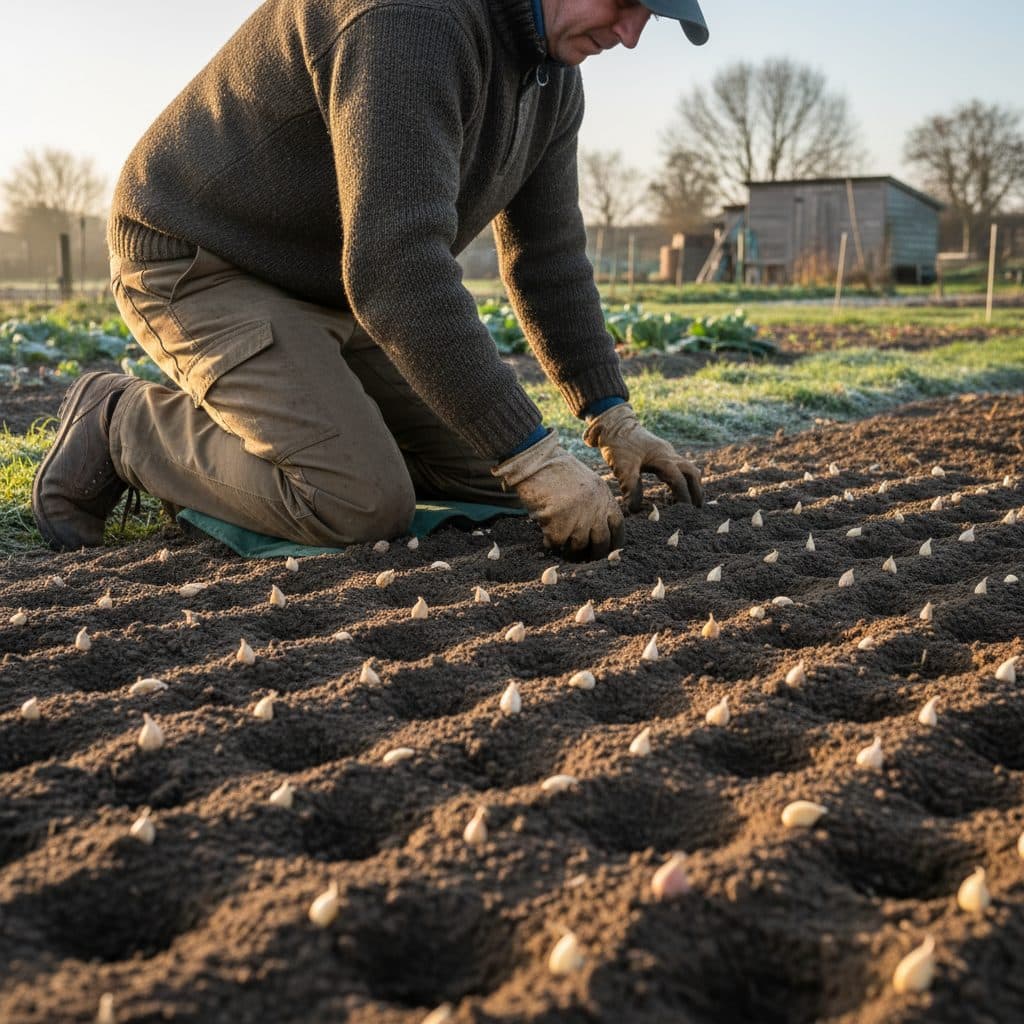
- Plant garlic cloves 5 cm deep in well-drained soil during October to ensure cold stratification.
- Push autumn-planting onion and shallot sets into prepared ground, keeping tips just visible.
- Direct sow hardy Aquadulce broad beans for an early, aphid-free crop the following May.
- Transplant spring cabbages (sown in August) into their final positions before cold weather halts root growth.
- Protect winter salad beds with cloches or fleece to maintain steady leaf production through frost.
Quick answer: What to plant in October in the UK focuses on hardy crops that establish strong root systems over autumn and winter to yield early next year. The primary plantings are hardneck and softneck garlic cloves, autumn onion and shallot sets, overwintering broad beans, and cold-hardy salad greens protected under cloches or cold frames.
October is one of the most rewarding planting windows in the British gardening calendar. While autumn brings falling leaves and cooler nights, the soil retains substantial summer warmth. This warmth, combined with reliable autumn rainfall, creates ideal conditions for root establishment without the drying stress of summer heat.
Knowing what to plant in October in the UK allows you to set up your allotment or garden beds for an early, productive start to the following spring. Crops established during October develop deep, extensive root networks while top growth remains modest and compact. When spring temperatures rise in March, these well-rooted plants surge ahead weeks before any spring-sown seed can emerge.
Taking full advantage of October planting requires choosing cultivars specifically bred to withstand British winter wet and cold. Prepare the ground with compost, keep drainage sharp, and net against autumn birds to keep survival rates high across your beds.
Planting garlic in October for large summer bulbs
October is the premier month for planting garlic across the United Kingdom. Garlic requires a period of cold temperatures (vernalisation), typically below 10°C for several weeks, to trigger the clove to split and form a multi-clobed bulb rather than a single large round.
Both hardneck and softneck garlic varieties thrive when planted in October:
- Hardneck varieties (such as Picardy Wight, Early Purple Wight, and Lautrec Wight) produce distinct central flower stems (scapes) and large, pungent cloves. They are exceptionally winter-hardy and well-suited to northern UK gardens.
- Softneck varieties (such as Germidour, Marco, and Solent Wight) produce more cloves per bulb, store exceptionally well into the following winter, and tolerate milder southern conditions.
To plant garlic, choose a sunny position with free-draining soil. Split the bulb into individual cloves just before planting, selecting the largest outer cloves for the best results. Plant each clove pointed end up, roughly 5 cm below the soil surface, with 15 cm spacing between cloves and 20 cm between rows. Mulch with well-rotted garden compost or leaf mould — use only compost from clean, allium-disease-free heaps to avoid spreading pathogens. In heavy clay soil that stays wet in winter, plant garlic into raised beds or start cloves in modular trays of gritty compost for planting out in late winter. For detailed variety selection and care, consult our guide on how to grow garlic.
Autumn-planting onion and shallot sets
Planting autumn sets in October is an efficient way to secure an early onion harvest by June or July, well ahead of spring-sown varieties.
Autumn-planted onion sets (such as Radar, Senshyu Yellow, and Electric) are dormant, immature bulbs grown the previous season. They establish roots quickly in October soil, sit through winter frosts, and resume rapid vegetative growth in early spring. Shallot sets like Jermor and Longor can be planted using the same schedule.
Prepare the bed by clearing summer weeds and raking the soil to a fine tilth. Push each set gently into the soil so that only the small papery tip remains visible above the surface. Space sets 10 cm apart in rows 25 cm apart.
Birds, especially pigeons and blackbirds, often mistake newly planted onion tips for worms and pull them out of the ground. Net your beds with horticultural netting or cover them with lightweight fleece until the roots anchor the sets firmly within three to four weeks. To explore broader allium management, see our complete instructions on how to grow onions.
Sowing overwintering broad beans and peas for early pods
Direct sowing broad beans in October delivers two major advantages: harvests arrive three to four weeks earlier in May and June, and the plants flower and pod before black bean aphid (blackfly) populations explode in early summer.
The gold standard variety for autumn sowing is Aquadulce Claudia (Vicia faba). It withstands freezing temperatures down to -10°C, provided the soil does not become waterlogged. Plants grow to 10–15 cm tall before hard frosts arrive, pause during midwinter, and recommence strong growth in February.
Sow seeds 5 cm deep and 20 cm apart in double rows spaced 25 cm apart, leaving 60 cm between pairs of rows. In areas prone to heavy winter rains and waterlogging, start seeds in deep root trainers or 9 cm pots in an unheated cold frame or greenhouse, then transplant seedlings into the allotment in late autumn.
Overwintering peas (Meteor, Douce Provence): Sow in late October for early May crops. In wet soil or hard frost, mice, pigeons and rot can cause heavy losses, so consider starting them in module trays or gutters under glass for planting out in late winter. Avoid Kelvedon Wonder for autumn sowing as it is a second-early suited to spring.
As plants grow tall in spring, stake them securely with stout timber stakes and twine to protect them from strong winds. Compare this autumn strategy with our what to plant in August in the UK guide to plan a full succession across the seasons.
Winter salad greens and cold-frame sowings
October is your final opportunity to sow ultra-hardy winter salads under cloches, cold frames, or fleece tunnels to provide fresh picking greens through the coldest months.
Lamb's lettuce (corn salad) can be direct-sown in early October under glass or clear plastic covers. The seeds germinate in cool soil, forming compact, dark green rosettes that can be harvested leaf-by-leaf all winter. Winter purslane (miner's lettuce) produces succulent, heart-shaped leaves high in vitamin C, thriving in damp, cool autumn beds.
American land cress provides a sharp, peppery flavor similar to watercress and endures hard frost without damage. Mustard greens, such as Green in Snow and Red Giant, also germinate reliably in October when given the protection of a simple fleece cloche.
Keep the soil around salad greens weed-free and check regularly under covers for slugs, which remain active during mild, wet autumn spells.
Autumn soil care and bed preparation before frosts
Any beds not dedicated to overwintering vegetables should be prepared in October to protect soil structure and fertility over winter.
Leaving soil bare over winter exposes it to pounding rain, which causes surface capping, soil compaction, and nutrient leaching. Instead, practice regenerative soil protection:
- Top-dress with organic matter: Apply a 5 cm layer of well-rotted garden compost or well-rotted manure over bed surfaces. Earthworms and soil microbes will incorporate this organic matter down into the soil profile during winter.
- Sheet mulch vacant areas: Cover cleared beds with cardboard topped with woodchips or fallen leaves to suppress winter weed germination, following methods outlined in sheet mulching leaves and cardboard.
- Sow winter green manures: In early October, sow field beans or Hungarian grazing rye on beds left empty until spring. They protect soil structure and scavenge nutrients through winter rain. Avoid Italian ryegrass on allotments — it sets seed fast in spring and becomes a persistent weed.
Taking time in October to plant your alliums, sow hardy legumes, and protect your soil ensures your garden remains healthy, fertile, and productive throughout the coming year.