Key takeaways
- Sow spring cabbage in early August to produce robust seedlings for autumn transplanting.
- Direct sow quick-maturing crops like radishes, rocket, and spinach into beds vacated by summer harvests.
- Start cold-hardy winter salads such as lamb's lettuce, winter purslane, and land cress for cropping through frost.
- Sow overwintering bulb onions in late August to establish root systems before winter dormancy.
- Protect all young brassica seedlings immediately with fine insect netting against cabbage white butterflies.
Quick answer: What to plant in August in the UK centers on two goals: sowing fast-maturing crops for autumn harvests and establishing cold-hardy brassicas and winter salads for cold-season cropping. Direct sow spinach, winter salads, turnips, and radishes into vacant summer beds, while starting spring cabbage and pak choi in module trays for autumn transplanting.
August is a major turning point across British allotments and kitchen gardens. As early potatoes, broad beans, garlic, and courgettes wind down, bare patches of soil begin to open up across your plots. Leaving this soil empty invites weeds and allows late-summer rains to leach valuable nutrients from the topsoil.
Knowing what to plant in August in the UK enables you to maintain continuous production, transforming vacant space into productive autumn and winter beds. High soil temperatures throughout August ensure rapid seed germination, often within three to five days for brassicas and leafy greens.
To get the best results, you must balance fast-growing vegetables that mature before the first frosts with cold-hardy crops destined to sit in the ground through winter. Establishing these plants now provides fresh greens through the cold months and helps bridge the notorious spring hungry gap.
Fast-maturing vegetables for autumn harvests
Several vegetable crops thrive when sown during the warm days of August, providing generous yields throughout October and November. Because day length shortens rapidly through late summer, choosing varieties with short maturity windows is critical.
Turnips, particularly fast white varieties such as Snowball or Tokyo Cross, develop tender roots within six to eight weeks. Sow them directly into shallow drills 1 cm deep, keeping the seedbed moist until emergence. Thin the seedlings to 10 cm apart to allow proper root swelling. The greens can be harvested as tender pot herbs while the roots mature.
Spinach is another reliable late-summer crop. Summer-sown annual spinach often bolts in long daylight, but August sowings settle into vegetative growth without flowering. Choose hardy varieties like Medania or Giant Winter. Direct sow in rows spaced 30 cm apart, and harvest outer leaves continuously once plants reach 15 cm in height.
Radishes provide the quickest turnaround of any August sowing, maturing in three to four weeks. French Breakfast and Sparkler varieties make excellent catch crops between slower-growing plants. For winter storage, sow Asian daikon radishes or Black Spanish Round in early August. These develop large, dense taproots that store well in boxes of damp sand through winter.
Oriental greens including pak choi, tatsoi, and mizuna perform exceptionally well when sown from August onwards. The cooling autumn temperatures prevent them from bolting into flower prematurely. Sow them in module trays or directly into fertile soil, harvesting young leaves for salads or allowing whole heads to mature for stir-fries.
Sowing for winter crops and the spring hungry gap
The most valuable August sowings are those that survive British winters outdoors or under minimal cover. These crops grow steadily until growth slows in November, standing hardy through frost to provide harvests from January to May.
Spring cabbage is the cornerstone of August brassica sowing. Varieties like Durham Early, April, and Wheelers Imperial need sowing in early August in module trays. This timing produces sturdy, stocky plants ready for planting out in late September. They will overwinter as compact rosettes and form sweet, pointed hearts from April onwards, exactly when fresh allotment produce is scarce. Plant out well-grown purple sprouting broccoli transplants (sown in May or June) by early August; August is far too late to sow PSB from seed. For full timing, review our purple sprouting broccoli growing guide.
Winter salads require little maintenance and withstand cold conditions under basic protection. Lamb's lettuce (corn salad), winter purslane (miner's lettuce / Claytonia perfoliata), and American land cress should be sown in mid to late August. Lamb's lettuce forms dense rosettes of nutty, tender leaves that remain undamaged by sub-zero temperatures. Winter purslane is a hardy winter salad green that crops through mild winters unprotected; give it a cloche or fleece in hard frost or snow. Land cress is a peppery substitute for watercress throughout winter.
Chard and perpetual spinach sown in the first fortnight of August establish deep taproots before winter. While leaf production slows during December and January, the crowns remain vigorous and produce an abundance of succulent stems and leaves at the first hint of spring warmth.
Overwintering alliums to start in late August
Late August offers a prime window for starting Japanese overwintering bulb onions and winter-hardy spring onions from seed.
Overwintering onions, such as Senshyu Yellow and Radar, are sown in seedbeds or module trays between mid and late August. Sowing at this precise moment allows seedlings to reach pencil-thickness before winter dormancy. If sown too early, they grow too large and bolt in spring; if sown too late, they enter winter too weak and succumb to frost heave. Transplanted in autumn, these onions mature in June, four to six weeks ahead of spring-sown crops.
Spring onions like White Lisbon Winter Hardy should also be direct-sown in late August. Sow thinly in drills 1.5 cm deep. They will establish modest root systems and provide fresh salad onions from March through May.
When growing any allium crops on an allotment, monitoring for soil-borne diseases is essential. Practising proper crop rotation and keeping watch for allium diseases ensures your autumn-sown onions remain healthy throughout their long growing period.
Direct sowing vs module starting in August heat
Deciding whether to sow directly into the soil or into module trays depends on soil moisture, soil temperature, and pest pressure.
Direct sowing works well for taproot vegetables like turnips and radishes, which resent root disturbance. Note that August is too late for parsnips (which need a full season from spring) and maincrop carrots; sow only fast-maturing early carrot cultivars (such as 'Nantes' or 'Amsterdam Forcing') in the first week of August for a late-autumn finger-carrot pull. To ensure reliable germination:
- Water the drill thoroughly before dropping in seeds, rather than watering only after covering.
- Sow seeds slightly deeper (up to 1.5 cm) where moisture levels remain consistent.
- Cover drills with a light dusting of fine compost or vermiculite to prevent soil crusting.
- Implement a stale seedbed weed control routine prior to sowing to eliminate weed competition.
Module trays offer distinct advantages for brassicas, salads, and oriental greens during late summer. Starting seeds in modular cell trays filled with seed compost allows you to control moisture precisely and keep trays in light shade during hot spells. Most importantly, module-grown plants can be grown to strong, multi-leafed specimens before being planted out into plots, making them far more resilient against slug damage.
Essential August allotment jobs to protect new seedlings
A successful August sowing campaign requires active protection against pests and summer weather extremes.
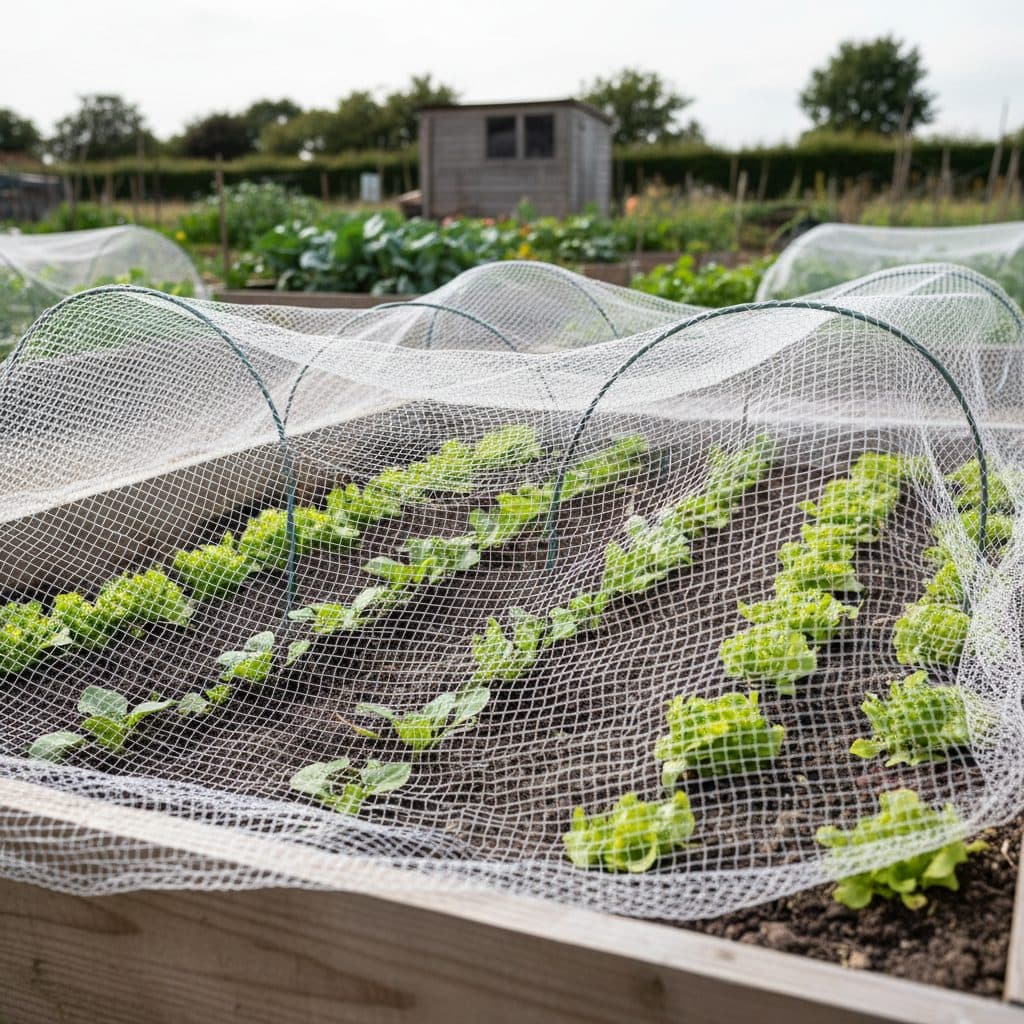
First, protect all brassica seedlings immediately upon sowing. August is the peak flight period for Large and Small White butterflies (cabbage whites). Cover your nursery beds and module trays with 7 mm butterfly netting or fine insect mesh (0.8 mm to 1.3 mm aperture) supported on hoops. Ensure the mesh does not touch the foliage, as butterflies can lay eggs through the netting. Reviewing integrated cabbage pest management strategies will help keep caterpillars from stripping young leaves.
Second, manage soil moisture carefully. High summer evaporation can desiccate emerging seedlings within hours. Apply water in the early morning or evening directly to the soil rather than overhead. Once seedlings are established, apply organic mulches such as straw or clean compost around rows to conserve moisture, following proven principles for soil moisture management.
Finally, clear spent summer crops promptly. Remove spent pea and bean haulms, composting disease-free material in your compost heap. On cleared beds not being planted with autumn vegetables, sow winter green manures like phacelia, Hungarian grazing rye, or field beans to protect soil structure through winter rain. Phacelia scavenges and holds residual nitrogen that would otherwise leach through winter rain (it does not fix atmospheric nitrogen like legumes do), and builds topsoil. Italian ryegrass is a persistent agricultural and allotment weed if allowed to head, so stick to annual covers unless you have a reliable way to terminate it. Aerate the soil lightly with a garden fork without inverting the subsoil, rake in a light dressing of balanced organic fertiliser, and plant your August seeds immediately to keep your soil active and protected.