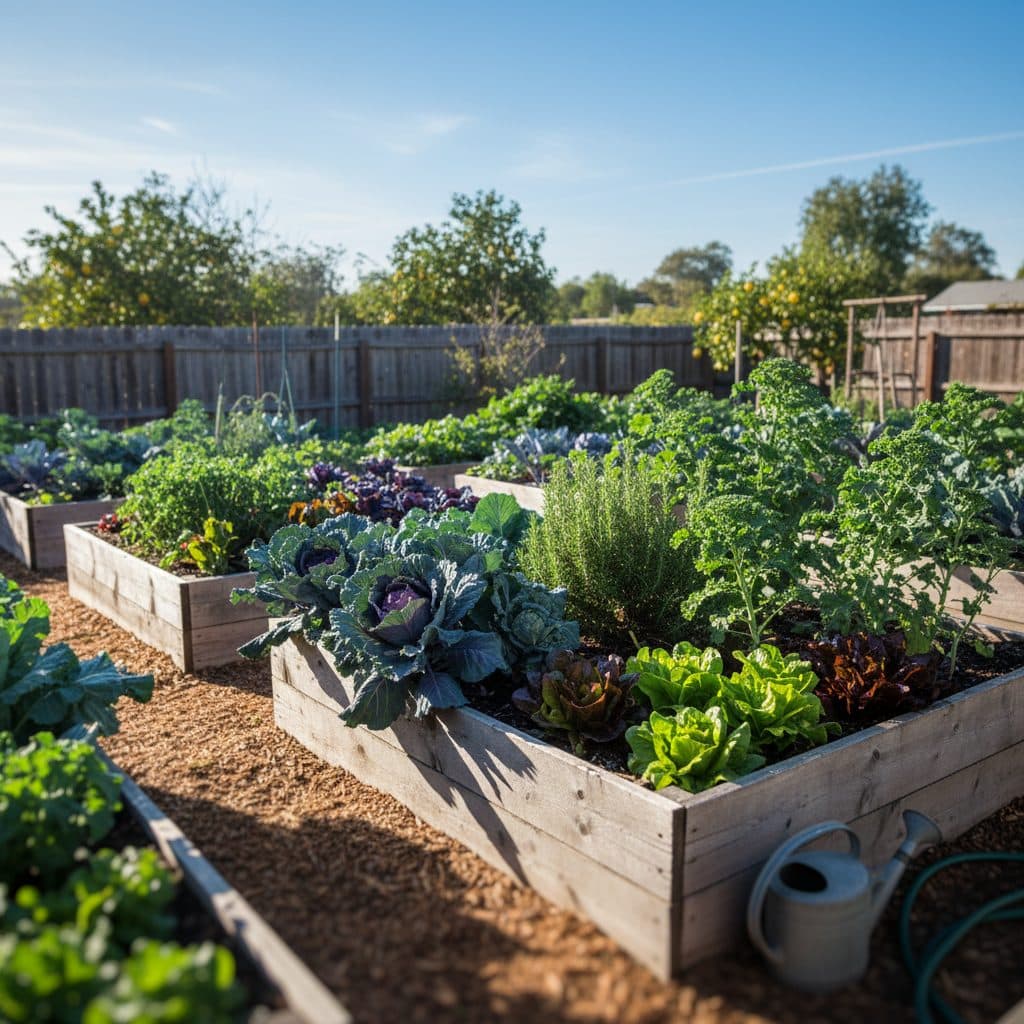
Key takeaways
- USDA Zone 9 has a long 9 to 10 month growing season with two distinct primary planting windows: early spring and late summer/fall.
- The average last spring frost occurs between February 15 and March 1, while the average first fall frost arrives around December 1 to 15 (with coastal 9b microclimates experiencing virtually frost-free winters).
- Intense mid-summer heat (above 95°F / 35°C) from July through August causes blossom drop on standard tomatoes and beans; use this period for heat-hardy crops or soil solarization.
- Fall planting (August to October) is the most productive window of the year, allowing brassicas, root crops, greens, and alliums to crop continuously through mild winters.
- Start spring warm-season seeds indoors in January for transplanting in late February to beat peak summer heat.
- Implement drip irrigation, 3 to 4 inches (7 to 10 cm) of organic mulch, and 30% to 50% shade cloth to manage extreme summer solar radiation.
Quick answer: In USDA Zone 9, garden on a two-season calendar: start warm-season crops (tomatoes, peppers, squash, corn) indoors in January and transplant in late February to early March for a spring harvest, take a summer heat break with cover crops or okra, and plant cool-season crops (broccoli, kale, carrots, garlic) from September to October for winter harvesting.
Gardening in USDA Zone 9 (spanning Central Florida, the Texas Gulf Coast, parts of the Desert Southwest, and California's Central Valley and coastal valleys) offers immense food-growing potential. With average annual minimum winter temperatures between 20°F and 30°F (-6.7°C to -1.1°C), killing freezes are rare and short-lived.
Following a Zone 9 planting schedule requires different timing from traditional four-season northern gardens. In Zone 9, the prolonged heat and humidity of mid-summer halts pollination and scorches temperate vegetables, while winter cold is rarely a limiting factor.
By organizing your garden into two primary production windows (a rapid spring cycle and a productive fall-to-winter season), you can harvest fresh food twelve months a year.
+-------------------------------------------------------------+
|               ZONE 9 TWO-SEASON GROWING TIMELINE            |
|                                                             |
|   SEASON               MONTHS         PRIMARY CROPS         |
|   ------               ------         -------------         |
|   Spring / Early Summer Feb - June    Tomatoes, peppers,    |
|                                       squash, melons, corn  |
|   Summer Heat Break    July - August  Okra, cowpeas, sweet  |
|                                       potato, solarization  |
|   Fall / Winter Garden Sept - Feb     Broccoli, kale,       |
|                                       cabbage, carrots, peas|
+-------------------------------------------------------------+
When are the frost dates and seasonal windows in Zone 9?
Understanding the seasonal rhythm of Zone 9 prevents the common mistake of planting warm-season nightshades too late in spring.
+-------------------------------------------------------------+
|                 ZONE 9 FROST & CLIMATE METRICS              |
|                                                             |
|   METRIC                            ESTIMATED VALUE         |
|   ------                            ---------------         |
|   Average Last Spring Frost         Feb 15 - March 1        |
|   Average First Fall Frost          Dec 1 - Dec 15          |
|   Frost-Free Growing Days           275 - 310 Days          |
|   Average Annual Minimum Temp       20°F to 30°F (-6 to -1°C|
+-------------------------------------------------------------+- Spring planting window: Start warm-season seeds indoors in January under grow lights. Transplant hardened seedlings into outdoor beds in late February or early March as soon as soil temperatures reach 60°F to 65°F (15.5°C to 18.3°C).
- The mid-summer cutoff: By late June and July, daytime temperatures consistently surpass 90°F to 95°F (32°C to 35°C), and warm night temperatures prevent tomato pollen from setting fruit. Spring crops should be harvested and cleared before July.
- Fall planting window: Start fall brassicas and nightshade seedlings indoors or in partial shade in August, transplanting into the garden during September and October.
To benchmark these timelines against broader national zones, consult our USDA zone vegetable calendar.
What is the month-by-month planting calendar for Zone 9?
A structured monthly calendar ensures beds remain continuously productive:
+-------------------------------------------------------------+
|                 ZONE 9 MONTHLY PLANTING CALENDAR            |
|                                                             |
|   MONTH        INDOOR SEEDS         DIRECT SOW / TRANSPLANT |
|   -----        ------------         ----------------------- |
|   January      Tomatoes, peppers    Direct sow carrots, peas|
|   February     Cucumbers, squash    Transplant tomatoes, pot|
|   March        Melons, sweet potato Direct sow beans, corn  |
|   April        Southern peas        Transplant okra, melon  |
|   May          Cover crops          Sow sweet potato slips  |
|   June         -                    Harvest spring crops    |
|   July         Fall tomatoes (pot)  Solarize beds / Cowpeas |
|   August       Fall brassicas       Direct sow southern peas|
|   September    Lettuce, greens      Transplant fall tomatoes|
|   October      -                    Plant garlic, brassicas |
|   November     -                    Direct sow winter roots |
|   December     -                    Harvest winter greens   |
+-------------------------------------------------------------+
January through March (spring launch)
- January: Start seeds of slicing tomatoes, paste tomatoes, sweet bell peppers, and eggplants indoors. Direct sow cool-season roots like carrots, radishes, and sugar snap peas outdoors.
- February: Direct sow seed potatoes in trenches. In late February, transplant hardened tomato and pepper seedlings into raised beds. Direct sow bush beans and summer squash.
- March: Direct sow sweetcorn in blocks, along with watermelons, cantaloupes, and cucumbers.
April through June (summer transition)
- April: Plant okra, yardlong beans, and sweet potato slips. Keep heavy mulch over tomato root zones.
- May to June: Peak harvest of spring tomatoes, peppers, and squash. Clear declining spring vines as high heat arrives.
July and August (the mid-summer break)
- Protect bare soil from solar baking by sowing cover crops like iron and clay cowpeas or sunn hemp (Crotalaria juncea), which fix nitrogen and suppress root-knot nematodes.
- Alternatively, cover empty beds with clear UV-stabilized polyethylene plastic for four to six weeks to solarize soil and eradicate weed seeds and fungal spores.
September through December (the prime winter garden)
- September: Transplant second-season fall tomatoes and peppers. Direct sow bush beans, cucumbers, and summer squash for a fast fall harvest before December.
- October: The primary month for direct sowing and transplanting cool-season crops: broccoli, cauliflower, cabbage, Brussels sprouts, kale, collard greens, Swiss chard, beets, carrots, and turnips. Plant garlic cloves (softneck varieties like 'California Early' or low-chill artichoke types) and multiplier onions.
- November & December: Continue succession sowing salad greens, spinach, and radishes. Harvest crisp winter brassicas and root vegetables all winter long.
To track soil temperature benchmarks before direct sowing, read soil temperature for planting.
Which crop varieties thrive in Zone 9 heat and humidity?
Standard heirloom varieties bred for northern summers often fail in southern Zone 9 conditions due to disease pressure and extreme heat. Selecting climate-adapted genetics is essential:
+-------------------------------------------------------------+
|              ZONE 9 HEAT-TOLERANT CULTIVARS                 |
|                                                             |
|   CROP             CULTIVAR RECOMMENDATIONS                 |
|   ----             ------------------------                 |
|   Tomatoes         'Solar Fire', 'Heatwave II', 'Everglades'|
|   Green Beans      'Rattlesnake', 'Contender', Yardlong     |
|   Sweetcorn        'Silver Queen', 'Bodacious'              |
|   Squash           'Tatume', 'Seminole Pumpkin', 'Costata'  |
|   Southern Greens  Collards, Longevity Spinach, Malabar     |
+-------------------------------------------------------------+- Heat-set tomatoes: Cultivars such as 'Solar Fire', 'Phoenix', and 'Florida 91' are bred to set fruit at higher night-time temperatures. Tiny 'Everglades' currant tomatoes produce sweet fruit right through 95°F summer heat.
- Seminole pumpkin (Cucurbita moschata): A native Florida heritage squash with remarkable resistance to powdery mildew, squash vine borers, and extreme humidity.
- Southern peas (Cowpeas / Black-eyed peas): Excel in poor, sandy soils and thrive in blistering summer heat where French beans perish.
To control pests organically without chemical sprays, review trap cropping with nasturtiums, squash, and mustard.
How should you manage soil, mulch, and watering in Zone 9?
High soil temperatures accelerate the decomposition of organic matter, depleting humus rapidly:
+-------------------------------------------------------------+
|                 ZONE 9 SOIL & WATER STRATEGY                |
|                                                             |
|   PRACTICE          SPECIFICATION                           |
|   --------          -------------                           |
|   Organic Matter    Apply 2 to 3 inches compost twice yearly|
|   Mulch Depth       3 to 4 inches clean straw or pine straw |
|   Irrigation        Drip tubing under mulch (early morning) |
|   Shade Protection  30% to 40% black shade cloth in summer  |
+-------------------------------------------------------------+- Amending sandy soils: In Florida and coastal regions with rapid-draining sandy soils, add heavy additions of compost, aged manure, and biochar to improve cation exchange capacity and water holding.
- Heavy mulching: Maintain a 3 to 4 inch (7.5 to 10 cm) layer of pine straw, chopped leaves, or clean coastal hay over all beds. Mulch reduces soil surface temperatures by up to 15°F (8°C) and prevents rapid evaporation.
- Drip irrigation: Install pressure-compensating drip emitters beneath the mulch. Overhead watering in humid Zone 9 climates encourages fungal leaf blight and powdery mildew.
For commercial small-scale growers planning beds and revenue streams, explore how to start a market garden and reliable off-grid water systems.