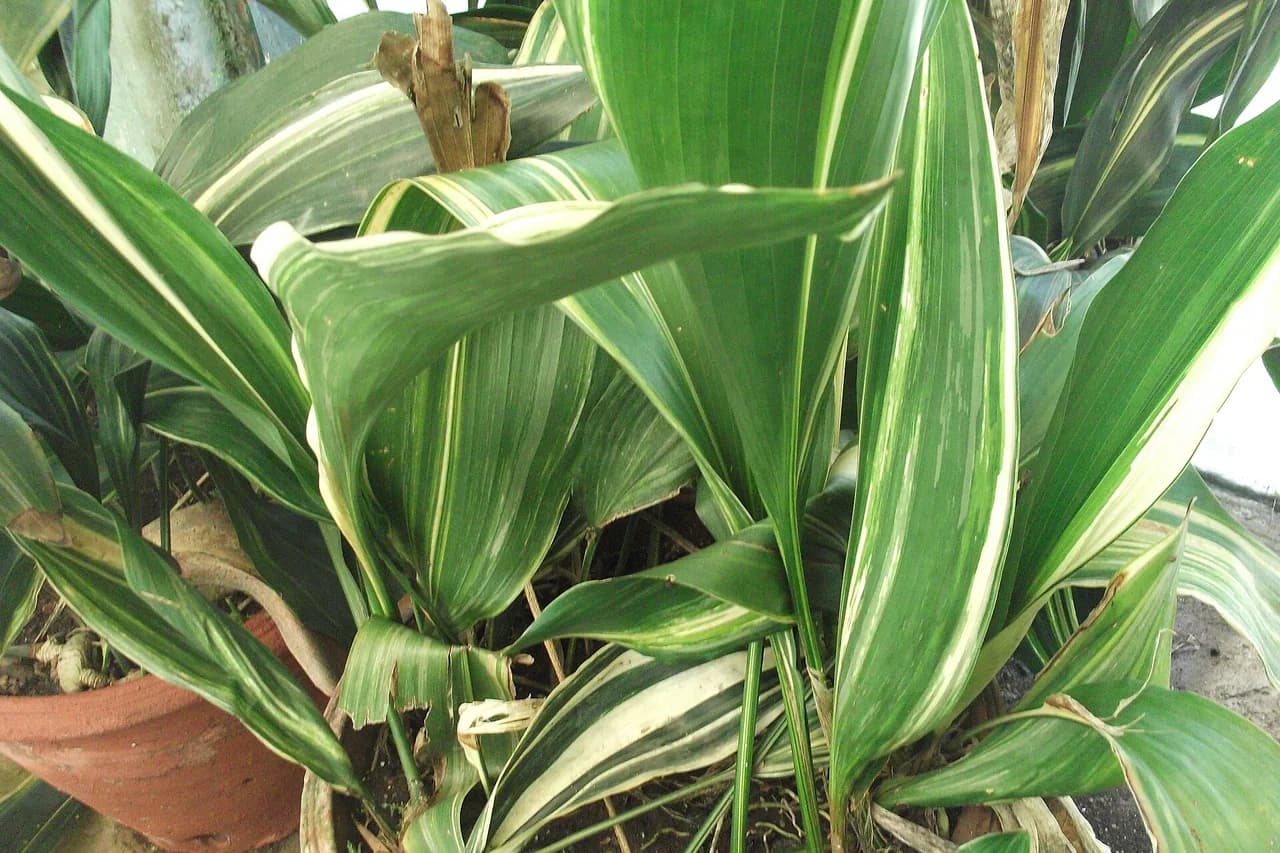
Image: Yercaud-elango (CC BY-SA 4.0) · Source
support
Cast iron plant
Aspidistra elatior
Also known as Barroom plant (United States), Victorian parlor plant (UK & Ireland).
- pothohar
- punjab plains
International hardiness
- USDA 7-11
- RHS H4
- AU: temperate, Subtropical, Tropical
Where it grows — regional guide
Best kept out of direct afternoon glass in all regions; intense sun bleaches glossy chlorophyll blades into papery tan scorch patches.
| Zones / rating | Regional notes |
|---|---|
USDA 7-11 | Outdoor hardy evergreen groundcover in shaded beds across USDA Zones 7b–11; grown indoors across Zones 3–7 at 25–100 fc and 20–35% winter relative humidity. |
| Zones / rating | Regional notes |
|---|---|
H4 (-10 to -5C) | RHS H4 hardy in sheltered woodland walls down to -10°C; classically grown on cool, dim hallways and stair landings. |
| Zones / rating | Regional notes |
|---|---|
temperate, Subtropical, Tropical | Reliable dry-shade clump beneath eucalyptus or courtyard awnings across temperate Sydney, Melbourne, and humid Brisbane suburbs without supplementary irrigation. |
| Zones / rating | Regional notes |
|---|---|
USDA 7-11 (USDA scale) Canada uses its own zone system; Canadian zones run roughly one lower than USDA. | No region-specific data yet |
| Zones / rating | Regional notes |
|---|---|
Pothohar, Punjab plains | No region-specific data yet |
Grows alongside
Species that appear with Cast iron plant in 3 of our published guides — a starting list for a guild, not a planting plan.
Growing conditions and light
Cast iron plant (Aspidistra elatior) earned its steel-framed reputation inside unheated Victorian parlors lit only by coal gas and tall north windows. According to University of Florida IFAS Extension publication FP053, this slow-growing herbaceous perennial handles 25–100 foot-candles (fc) indoors while developing dark, glossy leaves 24–36 in tall across a 24 in clump.
Indoors, maintain 55–85°F (13–29°C) and avoid direct midday sun hitting window glass, which yellows and scorches thick blades rapidly. Outdoors in mild climates (USDA Zones 7–11, RHS H4), rhizomes tolerate cold dips near 20–23°F (-5°C) under tree canopy. Ideal soil pH sits at 5.5–6.8 in a chunky, well-drained loam. See how it stacks up against 15 dim-corner peers in our best indoor plants for low light guide.
Watering, soil, and propagation
Thick horizontal rhizomes buffer irregular watering far better than standing wet peat. Let the top 2 in of potting mix dry completely between deep soakings — typically every 10–14 days in dim interior rooms, and closer to 18 days during cool northern winters.
Pot cast iron plant into two parts loose houseplant mix amended with one part coarse perlite or pine bark fines inside a breathable container with generous drainage holes. Fertilize once or twice during April through July at one-quarter label strength, and propagate effortlessly in spring by sawing congested creeping rhizomes into sections carrying three or more healthy leaves per division.
Pests and common issues
Cast iron plant attracts surprisingly few pests, though brown armored scale and twospotted spider mites occasionally colonize dusty petioles in heated winter rooms. Wipe broad leaf blades monthly with lukewarm water using a soft cloth to remove light-blocking dust and inspect midribs closely; treat isolated crawlers early following our home pest quarantine guide.
Split brown leaf tips or mushy yellowing petioles near the soil surface point nearly always to overwatering or stagnant saucer puddles rather than dry air — pause irrigation until the rootball dries cleanly down several inches.
Safety and toxicity
According to ASPCA Animal Poison Control, Aspidistra elatior is non-toxic to cats and dogs, making it the toughest deep-shade floor plant for multi-pet apartments and nurseries. Check full pet-safe comparisons across palms and trailing vines in our pet-safe houseplants guide for cats and dogs.
Sourcing notes
Widely stocked in US, UK, Australian, and European garden centers as standard green Aspidistra elatior and speckled 'Milky Way' or 'Variegata' rhizome divisions; inspect leaf undersides for scale before bringing home.
Frequently asked questions
How low a light level can cast iron plant survive indoors?
Cast iron plant endures down to 25–50 foot-candles in dim hallways or 6–10 feet back from a north window, with steady seasonal new leaves appearing around 75–100 fc. Keep it strictly out of harsh direct sun that bleaches foliage.
Is cast iron plant non-toxic to cats and dogs?
Yes. ASPCA Animal Poison Control classifies Aspidistra elatior as non-toxic to both cats and dogs, unlike snake plant, ZZ plant, or pothos. Wide leathery leaves also resist casual batting far better than feathery palm fronds.
Why are my cast iron plant leaves turning yellow or developing brown tips?
Yellow basal leaves nearly always signal soggy cold soil from watering too often under low light. Allow the top 2 inches of potting mix to dry thoroughly before watering again, empty drain saucers promptly, and move pots out of direct afternoon rays.
How fast does Aspidistra elatior grow, and when should I repot it?
Cast iron plant grows slowly, unfurling roughly three to six sturdy new leaves per mature clump each spring and summer. Leave plants snug in their containers and repot or divide creeping rhizomes only every three to five years.
References
- UF/IFAS Gardening Solutions — Houseplants Selection & Deep-Shade Aspidistra Guidance
- University of Georgia Cooperative Extension Bulletin 1318 — Growing Indoor Plants with Success
- University of Illinois Extension — Houseplant Care & Low-Light Requirements
- ASPCA Animal Poison Control — Toxic & Non-Toxic Plants Database (Aspidistra elatior)