Key takeaways
- Banana circles are permaculture features that efficiently recycle greywater and build soil fertility.
- They create beneficial microclimates suitable for heat-loving crops like bananas in USDA Zones 8-10.
- Proper siting, including 6-8 hours of direct sun and good drainage, is what determines success in the US South.
- A central pit, typically 4-5 feet wide and 2-3 feet deep, collects greywater and organic matter for decomposition.
- Planting a diverse guild of bananas and companion plants enhances fertility, suppresses weeds, and deters pests.
- Careful greywater integration, avoiding harsh chemicals, ensures plant health and system longevity.
Quick answer: A banana circle is a permaculture design that recycles greywater and builds soil fertility, creating a microclimate for heat-loving plants like bananas. It features a central pit for organic matter and greywater, surrounded by plants.
In the humid summers of central Florida, where afternoon thunderstorms often bring heavy rain followed by intense sun, managing water effectively is a constant challenge for growers. Many southern states, from coastal North Carolina to the Texas Gulf Coast, experience periods of both abundant rainfall and significant drought, making water conservation a priority for resilient food systems. A well-designed permaculture feature, the banana circle, offers a practical solution by integrating greywater recycling with the cultivation of productive, heat-loving plants.
This design, often seen in tropical climates, is highly adaptable to the warm temperate and subtropical regions of the US South, specifically USDA Zones 8 through 10. It creates a localized system that efficiently uses household greywater, cuts how much you have to irrigate, and builds soil fertility, all while producing a bounty of fruits and supporting plants. Understanding the specific needs of your site, from soil type to sun exposure, is the first step in establishing a thriving banana circle that contributes to your home food production.
The banana circle: a permaculture water sink
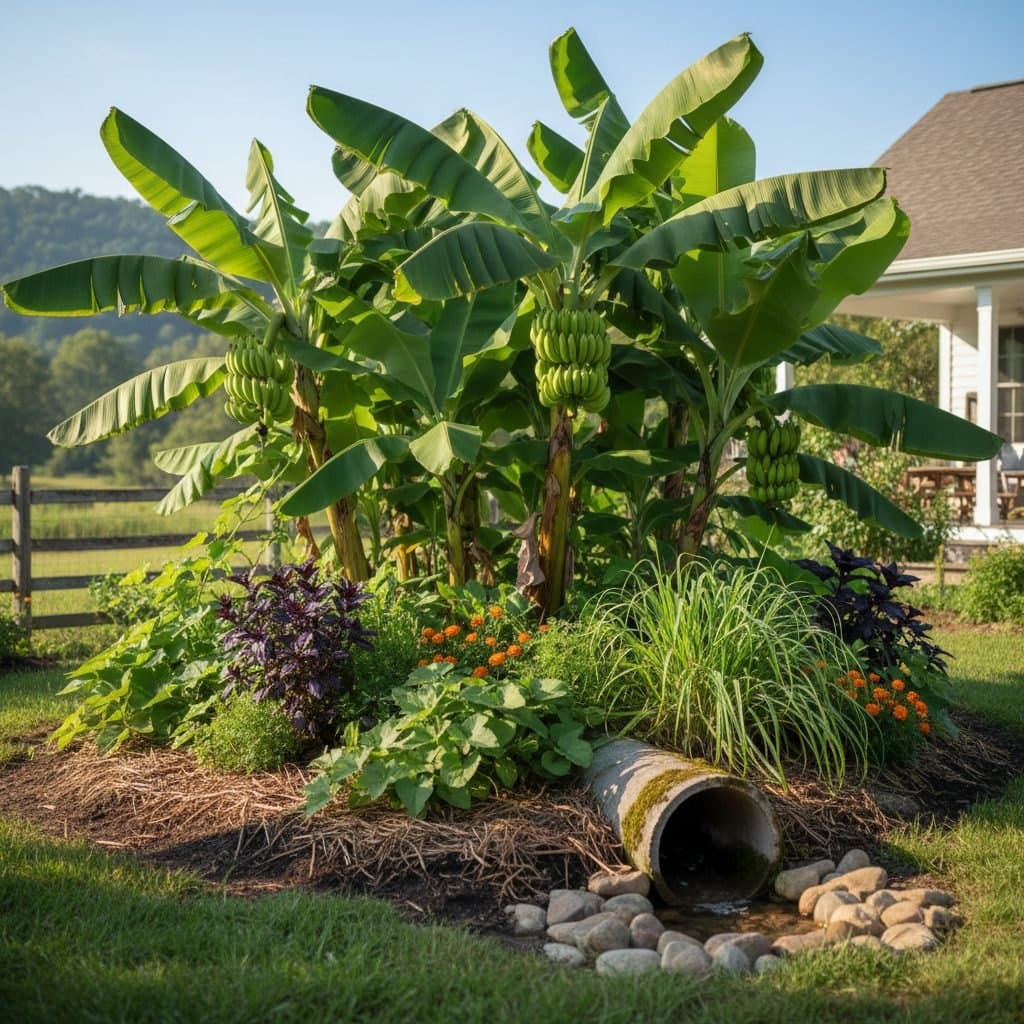
A banana circle is a permaculture design that centers around a depression or pit, typically 4 to 5 feet in diameter and 2 to 3 feet deep, filled with organic matter. This pit acts as a compost system and a greywater infiltration basin, providing continuous moisture and nutrients to heat-loving plants, primarily bananas, planted around its perimeter. This design is particularly effective in the US South, where high temperatures and variable rainfall patterns make water management a key concern for gardeners in USDA Zones 8 through 10. Research indicates that banana circles can serve as a nature-based solution for sustainable greywater management, effectively treating and utilizing household wastewater.
Key benefits of this design
Beyond water recycling, a banana circle creates a localized microclimate that benefits its inhabitants. The decomposing organic matter in the central pit generates warmth and humidity, which tropical plants like bananas thrive on, even in the cooler edges of their hardiness range. This continuous nutrient supply supports vigorous growth and high yields, often exceeding 50 pounds of fruit per mat per year in established circles. By implementing permaculture principles like stacking functions and plant guilds, as discussed in permaculture gardening guides, you can maximize the productivity and resilience of your system.
- Efficient greywater recycling, putting shower and laundry water to work in the garden instead of sending it to the septic tank or sewer.
- Continuous nutrient supply from composting organic matter.
- Creation of a humid microclimate, ideal for tropical plants.
- High yields of bananas and other heat-loving companion crops.
- Reduced irrigation needs, since the pit keeps moisture in the root zone.
Site selection and preparation in the warm US climate
Choosing the right location is paramount for a successful banana circle, especially within the diverse climates of the US South. Bananas require a minimum of 6 to 8 hours of direct sunlight daily to produce fruit effectively, so select a spot that receives ample sun exposure throughout the growing season. While they love water, good drainage is also critical; avoid areas where water tends to pool after heavy rains, as this can lead to root rot. If your soil is heavy clay, consider amending it with 4-6 inches of organic matter to improve permeability. Sandy soils, common in coastal Georgia and Florida, will also benefit from organic amendments to increase water retention.
Considering your USDA zone
For growers in USDA Zones 8a and 8b, winter protection for bananas will be a significant consideration, whereas those in Zones 9 and 10 may experience year-round growth. Proximity to your greywater source, such as a laundry room or bathroom, is also a practical concern, as you’ll want to minimize the length and complexity of plumbing runs. Before you plumb anything, check the rules where you live: greywater reuse is regulated state by state and often county by county, and requirements range from a permit-exempt laundry-to-landscape allowance through to full plumbing permits, setbacks from property lines and wells, and a requirement that greywater discharge below the surface or under mulch rather than pond openly. Your county health or building department is the place to confirm before you dig. Before you dig, observe your site for a full day to confirm sun patterns and consider how water moves across the landscape, which is a core principle of permaculture design. The USDA Natural Resources Conservation Service provides excellent resources for understanding local soil types and water patterns [1].
- Minimum 6-8 hours of direct sunlight daily.
- Well-draining soil to prevent root rot.
- Proximity to a greywater source for efficient plumbing.
- Protection from strong winds, which can shred banana leaves.
- Consideration of winter temperatures for USDA Zones 8a and 8b.
Constructing your greywater-fed banana circle
Building a banana circle involves a few key steps to ensure its long-term functionality. First, mark out a circular area, typically 10 to 12 feet in diameter, for the entire system. Within this, dig a central pit that is 4 to 5 feet wide and 2 to 3 feet deep. The soil excavated from this pit should be used to form a raised berm around the perimeter of the larger 10-12 foot circle. This berm will help contain water and create a planting area for your bananas and companion plants. For example, a 4-foot wide pit 2 feet deep holds about 25 cubic feet, or roughly 190 gallons, of organic material and water.
Filling the pit and setting up greywater
Once the pit is dug, begin filling it with coarse organic materials such as logs, branches, and wood chips, followed by finer materials like leaves, grass clippings, and kitchen scraps. This layering creates a slow-release compost system. At the base of the pit, or slightly above, install a perforated pipe or a simple gravel bed to act as your greywater inlet, directing water into the decomposing organic matter. This design, as detailed in recent studies on banana tree circles, optimizes greywater distribution and nutrient cycling. Ensure the greywater pipe has a slight downward slope, about 1/8 inch per foot, to facilitate flow from your home to the circle.
- Shovel or digging tools for excavation.
- Organic materials: logs, branches, leaves, grass clippings, kitchen scraps.
- Perforated pipe or gravel for greywater inlet.
- Measuring tape and string for layout.
- Wheelbarrow for moving soil.
Planting a productive guild for the US South
The success of a banana circle in the US South relies heavily on selecting appropriate banana varieties and establishing a diverse plant guild. For USDA Zones 8-10, cold-hardy and heat-tolerant banana cultivars are key. Varieties like ‘Raja Puri’, ‘Orinoco’ (also known as ‘Burro’ or ‘Bluggoe’), and ‘Ice Cream’ (‘Blue Java’) perform well, often tolerating temperatures down to 20°F to 25°F with some protection. Plant these banana ‘pups’ or suckers directly into the berm, typically 2 to 3 feet from the edge of the central pit, allowing 3 to 5 banana plants per circle to form a ‘mat’.
Companion plants for enhanced growth
Around the bananas, establish a diverse guild of companion plants that provide various functions, a core concept in permaculture garden planning. Sweet potatoes (Ipomoea batatas) can act as a living mulch and give you an edible crop, but keep root and tuber crops out of the zone the greywater actually wets. US greywater rules commonly prohibit contact between greywater and the edible portion of a root crop, and bananas, whose fruit hangs well clear of the soil, are the safer thing to feed with it. Taro (Colocasia esculenta) thrives in moist conditions near the pit, but three warnings apply. It is listed as invasive across Florida and the Gulf states, where it has escaped into wetlands and drainage ditches; check your state’s list before planting. Every part of it is loaded with calcium oxalate raphides, so it is an irritant poison until thoroughly cooked and must never be eaten raw. And like sweet potato it is a corm crop, so keep it clear of the zone the greywater wets. Comfrey makes heavy leaf growth you can cut several times a season for chop-and-drop mulch, but plant only the sterile Bocking 14 cultivar (Symphytum × uplandicum). Never plant seed-setting common comfrey, which will seed itself through a warm, wet, greywater-fed bed and cannot practically be dug out once its brittle roots have broken up. Comfrey is mulch only: its pyrrolizidine alkaloids are hepatotoxic, so do not eat it or feed it to stock. Lemongrass (Cymbopogon citratus) can deter pests, while nitrogen-fixing plants like pigeon pea (Cajanus cajan) or perennial peanuts (Arachis glabrata) enrich the soil. Aim for 5-7 different species in your guild to maximize diversity and resilience.
- ‘Raja Puri’ banana: cold-tolerant, sweet fruit.
- ‘Orinoco’ banana: sturdy, cooking banana, good cold tolerance.
- Sweet potato: groundcover, edible tubers.
- Taro: thrives in moist conditions; corms are edible only after thorough cooking (raw taro is an oxalate irritant), and the plant is listed as invasive in Florida and the Gulf states.
- Comfrey (Bocking 14 only — the sterile cultivar): mulch producer, not food or fodder.
- Lemongrass: pest deterrent, culinary herb.
Integrating and managing greywater
The primary function of a banana circle is to safely and effectively recycle household greywater. Greywater typically comes from showers, bathtubs, washing machines, and bathroom sinks. It’s important to differentiate this from ‘blackwater,’ which contains human waste from toilets and should never be used in a banana circle. Studies confirm the efficacy of banana circles in treating greywater, making it a viable option for water reuse in landscapes. A typical household in the US South can generate 30 to 40 gallons of greywater per person per day, a significant resource that can be diverted from septic systems or municipal treatment.
Safe greywater practices
When using greywater, be mindful of the products you use in your home. Avoid harsh chemicals, bleach, and detergents high in sodium, boron, or chlorine, as these can harm your plants and soil microbiology. Opt for plant-friendly, biodegradable soaps and detergents. A simple filtration system, such as a mesh screen over the greywater inlet to catch lint from laundry, can prevent clogging. Regularly inspect your greywater system for blockages and ensure the water is infiltrating properly into the central pit, preventing surface pooling. If you notice any odors or stagnant water, adjust the flow rate or add more carbon-rich organic matter to the pit to aid decomposition. A soil moisture meter can help monitor moisture levels around the circle.
- Shower and bath water.
- Washing machine water (from rinse cycles, with biodegradable detergents).
- Bathroom sink water.
- Never kitchen sink or dishwasher water — food solids, grease, and pathogen load put it outside the greywater definition most US state codes use, and it fouls an infiltration pit fast.
- Never use toilet water or water containing harsh chemicals.
Ongoing care, harvest, and expansion
Maintaining your banana circle ensures its continued productivity and health. Regularly add fresh organic matter to the central pit — kitchen scraps, leaves, and garden trimmings are ideal. This replenishes nutrients and keeps the composting process active. You can also supplement with a slow-release organic fertilizer like fermented soybean meal, applying 1 to 2 pounds per banana mat every 2-3 months during the growing season. Prune excess banana suckers, leaving 2-3 strong ones per mat to ensure good fruit production and prevent overcrowding. Remove any dead or damaged leaves to improve air circulation and reduce disease risk. In USDA Zone 8a and 8b, consider mulching heavily around the base of the bananas with 12-18 inches of wood chips or straw in late fall to protect them from winter freezes below 25°F.
Harvesting and expanding your system
Bananas typically take 9 to 15 months from planting to harvest, depending on the variety and climate. Once a stalk has fruited, cut the entire stalk down, as it will not produce again. The remaining ‘mat’ will send up new suckers to continue the cycle. You can harvest these suckers (pups) to expand your banana circle system or share with other growers. Monitor for common pests like slugs or nematodes; healthy soil and a diverse plant guild, as well as beneficial insects, can help manage these naturally. For instance, a 10-foot diameter circle can produce 50-100 pounds of bananas annually, along with significant yields of companion crops like sweet potatoes, which typically give a few pounds of tubers per plant.
- Regularly add organic matter to the central pit.
- Prune excess banana suckers, leaving 2-3 per mat.
- Remove dead or damaged banana leaves for air circulation.
- Monitor for pests and diseases, addressing issues promptly.
- Apply organic fertilizers as needed, 1-2 pounds every 2-3 months.
Banana Circle vs. Traditional Row Gardening (100 sq ft Plot in USDA Zone 9a)
Feature | Banana Circle | Traditional Row Garden |
|---|---|---|
Water Use | Low; runs on recycled greywater, reduced irrigation | High; relies on irrigation or rainfall |
Soil Fertility | Continuously built by composting pit, high organic matter | Requires external amendments, can deplete over time |
Yield Potential | High (50-100 lbs bananas/mat, plus companion crops) | Moderate to high (depending on crop and management) |
Microclimate Effect | Creates humid, warm zone, extending growing season | Minimal; exposed to ambient conditions |
Maintenance | Regular organic matter addition, sucker pruning | Weeding, watering, fertilizing, pest control |
Water Savings: A well-established banana circle runs largely on greywater you were sending to the septic tank or sewer anyway, so it needs far less irrigation than a conventional bed in the US South.
Banana Yield: A single mature banana mat in a productive circle can yield 50 to 100 pounds of fruit annually in warm climates like USDA Zone 9b, providing a substantial food source.
Frequently asked questions
Can I use greywater from my washing machine?
Yes, washing machine greywater is generally suitable, provided you use plant-friendly, biodegradable detergents low in sodium and boron. Always avoid using water from loads containing harsh chemicals like bleach, which can harm your plants and soil microbes.
What banana varieties grow best in the US South?
For the US South, especially USDA Zones 8-10, cold-hardy varieties like ‘Raja Puri’, ‘Orinoco’ (also known as ‘Burro’), and ‘Ice Cream’ (‘Blue Java’) are recommended. These varieties can tolerate temperatures down to 20°F to 25°F with proper winter protection, offering reliable fruit production.
How much space does a banana circle require?
A typical banana circle, including the central pit and surrounding berm, usually requires a circular area 10 to 12 feet in diameter. This allows for a central composting pit of 4-5 feet wide and sufficient space for 3-5 banana plants and their companion guild.
How often do I need to water a banana circle?
Once established and actively receiving greywater, a banana circle’s irrigation needs drop sharply. You may only need supplemental watering during extended dry periods or when greywater input is low, especially during the first 6-12 months of establishment.
What if I live in USDA Zone 8a?
In USDA Zone 8a, bananas will require significant winter protection, as temperatures can drop below 20°F. Mulch heavily with 12-18 inches of wood chips or straw, or build a temporary structure around the plants, to protect the corms from freezing and ensure regrowth in spring. Be realistic about fruit, though. A hard freeze kills the pseudostem, and since a stalk needs 9 to 15 months of unbroken growth before it flowers, a banana cut to the ground each winter will rarely if ever fruit in 8a. Grow the circle there for its leaves, biomass, and greywater function, and treat any fruit as a bonus.
How long until I see fruit from my banana circle?
Banana plants typically take 9 to 15 months from planting to produce their first fruit stalk, depending on the variety, climate conditions, and overall health of the plant. Optimal conditions in USDA Zone 9b and 10 can sometimes yield fruit in as little as 9 months.
References
- The banana tree circle as a nature-based solution for sustainable greywater management: A new design model. (2024). The banana tree circle as a nature-based solution for sustainable greywater management: A new design model..
- USDA Natural Resources Conservation Service (2024). USDA Natural Resources Conservation Service.