Key takeaways
- Tomatoes, especially indeterminate varieties, require large containers, ideally 10-gallon or more, for optimal yields.
- Bell peppers thrive in pots of at least 3 gallons, with 5-gallon containers offering better stability and moisture retention.
- Leafy greens like lettuce and spinach can be grown in shallow containers, often needing only 6 inches of soil depth.
- Root vegetables such as carrots and radishes demand specific pot depths, typically 8-12 inches, to develop properly.
- Proper drainage, consistent watering, and adequate soil volume are critical factors for successful container gardening.
- Larger pots generally provide more insulation against temperature fluctuations and reduce the frequency of watering.
Quick answer: For optimal yields, indeterminate tomatoes require 10-gallon pots or more, bell peppers thrive in at least 3-gallon pots (5-gallon recommended), and leafy greens need shallow containers with 6 inches of soil depth.
Container gardening offers a flexible way to grow fresh produce, whether you’re in a compact urban setting like Brooklyn, New York, or a suburban backyard in USDA zone 6. It allows you to cultivate vegetables on balconies, patios, or even rooftops, bringing the garden closer to home. However, one of the most common pitfalls for new and experienced growers alike is selecting the wrong pot size for their chosen crops. A container that is too small will restrict root growth, limit nutrient uptake, and cut your harvest sharply.
Understanding the specific needs of each plant, from its root structure to its overall mature size, is important for success. This guide provides a practical cheat sheet for determining the ideal container dimensions for popular vegetables like tomatoes, peppers, leafy greens, and root crops. We’ll ground these recommendations in real-world observations and agricultural principles, even for a 10-gallon pot on a city balcony.
Tomatoes: big plants need big homes
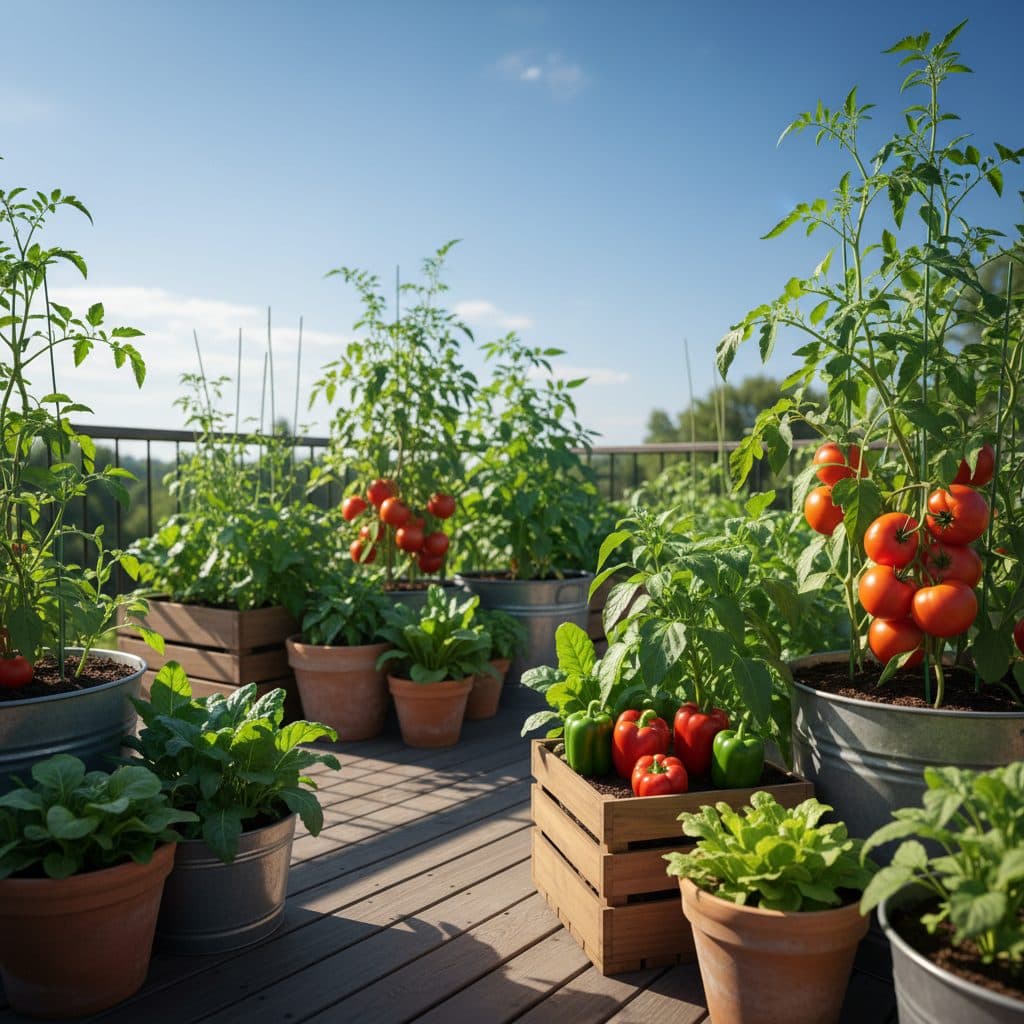
Tomatoes are arguably the most popular vegetable for home gardeners, and they are also one of the most demanding when it comes to container size. A common mistake is planting a tomato seedling in a 2-gallon pot, expecting it to produce a full harvest. For determinate varieties, which typically grow to a compact size of 3-4 feet, a minimum 5-gallon container is essential. This translates to roughly 0.67 cubic feet of soil, providing enough space for a healthy root system. However, for indeterminate varieties, which can grow 6-10 feet tall and produce fruit all season, a 10-gallon pot or larger is strongly recommended. Many experienced growers in regions like the Pacific Northwest, where summers are mild, opt for 15-20 gallon containers to support these vigorous plants through a long growing season.
Container considerations for tomatoes
- Drainage holes: Ensure pots have at least three large drainage holes, each 0.5 inches in diameter, to prevent waterlogging.
- Material matters: Terracotta pots dry out faster than plastic or glazed ceramic, requiring more frequent watering, sometimes twice a day in peak summer in USDA zone 8.
- Staking and support: Taller varieties will need a sturdy stake or cage from the start, as a mature plant laden with fruit can weigh 15-20 pounds.
- Consistent moisture: Tomatoes are prone to blossom end rot if watering is inconsistent. A soil moisture meter can help maintain optimal levels.
The optimal container size directly impacts the plant’s ability to develop a robust root system, which in turn supports vigorous top growth and fruit production. In a 10-gallon container, a well-fed indeterminate tomato can crop steadily right through a long, warm season, though the same variety planted in the ground will usually out-produce it.
Peppers: a moderate thirst for space
Peppers, including bell peppers, jalapeños, and chili varieties, are slightly less demanding than tomatoes but still require ample space for healthy growth and fruit set. For most pepper plants, a 3-gallon container is the absolute minimum. However, a 5-gallon pot (approximately 10 inches in diameter and 12 inches deep) provides a much better environment, allowing for a stronger root system, better moisture retention, and ultimately, a more productive plant. In warmer climates, like Florida or Texas, where plants can grow larger, some gardeners even use 7-gallon containers to prevent plants from becoming root-bound prematurely.
Optimizing pepper growth in containers
- Sunlight: Peppers need at least 6-8 hours of direct sunlight daily to produce well, especially in northern states like Michigan.
- Fertilization: Container-grown peppers benefit from consistent feeding with a balanced liquid fertilizer every 2-3 weeks.
- Pest monitoring: Regularly check for pests like aphids, which can quickly multiply on stressed plants in smaller containers.
- Watering frequency: During hot periods, 5-gallon pots may need watering daily, while 3-gallon pots might require it twice a day.
Adequate pot size ensures that the root system can support the extensive leaf canopy needed for photosynthesis, which powers fruit production. A pepper plant in a 5-gallon container can yield 10-15 bell peppers or dozens of smaller chili peppers over a season in a temperate climate like USDA zone 7. For those looking to maximize yields in limited space, consider square-foot gardening principles, adapting them to larger containers where possible.
Leafy greens: wide and shallow is the way
Unlike tomatoes and peppers, leafy greens such as lettuce, spinach, arugula, and mustard greens (Brassica juncea) do not require deep containers. Their root systems are relatively shallow, often extending only 4-6 inches into the soil. The key for greens is width, allowing for multiple plants to be grown efficiently. A container that is 6-8 inches deep and 10-12 inches wide can comfortably accommodate 3-5 lettuce plants or a dense planting of spinach. Window boxes, shallow tubs, or even repurposed storage containers with adequate drainage are excellent choices for these crops. In a cool spring in USDA zone 5, you can get multiple harvests from a single container of cut-and-come-again greens.
Maximizing your greens harvest
- Succession planting: Plant small batches every 2-3 weeks to ensure a continuous supply of fresh greens.
- Partial shade: In hot summer regions like Arizona, providing afternoon shade can prevent bolting and extend the harvest season.
- Watering technique: Use a gentle watering can or a fine hose setting to avoid washing out shallow-rooted seedlings.
- Nutrient-rich soil: Greens are heavy feeders of nitrogen. Incorporate compost or a balanced organic fertilizer at planting.
The ability to grow multiple plants in a single container makes greens highly efficient for small spaces. A 24-inch window box, 8 inches deep, will keep a household in cut-and-come-again salad for a few pickings, and succession sowing a second box keeps it going. For beginners, starting with greens is a great way to build confidence before tackling more demanding crops. You can find more tips on vegetable gardening for beginners.
Root vegetables: depth is non-negotiable
Growing root vegetables in containers requires a different approach, as their primary edible part develops beneath the soil surface. For crops like carrots, radishes, and parsnips, container depth is the most critical factor. Radishes need only about 6 inches of depth; shorter carrot varieties need 8-10 inches, allowing their roots to fully develop without becoming stunted or forking. For longer varieties of carrots (e.g., ‘Danvers Half Long’) or parsnips, a container at least 12-15 inches deep is ideal. Without sufficient depth, these plants will produce small, misshapen, or inedible roots. In a cool New England spring, a 12-inch deep container can yield a dozen full-sized carrots.
Successful root crop container growing
- Loose soil mix: Use a light, well-draining potting mix without large chunks of bark or compost that could impede root growth.
- Even moisture: Consistent watering is vital; fluctuations can cause root splitting. Consider using a soil moisture meter.
- Thinning seedlings: Thin carrot and radish seedlings to 1-2 inches apart once they are 1 inch tall to give each plant room to grow.
- Drainage: As with all containers, ensure excellent drainage to prevent root rot, which can destroy an entire crop in a matter of days.
Potatoes, another popular root crop, also thrive in containers, though they require even more volume. For a decent potato harvest, a 15-20 gallon container (like a large grow bag or half whiskey barrel) is recommended per plant, providing sufficient space for tuber development. The USDA Natural Resources Conservation Service emphasizes the importance of healthy soil structure for root development, a principle that applies equally to container gardening [5]. You can expect 3-5 pounds of potatoes from a single plant in a 20-gallon grow bag in a typical growing season in states like Idaho.
Container Size Recommendations for Popular Vegetables
Crop | Minimum Pot Size (Gallons) | Ideal Pot Size (Gallons) | Minimum Depth (Inches) | Notes |
|---|---|---|---|---|
Determinate Tomato | 5 | 7-10 | 12 | Compact growth, good for smaller spaces. Expect 5-10 lbs per plant. |
Indeterminate Tomato | 10 | 15-20 | 18 | Vigorous growth, requires strong support. Can yield 15-25 lbs per plant. |
Bell Pepper | 3 | 5 | 10 | Consistent watering is key. Yields 10-15 peppers per plant. |
Chili Pepper | 2 | 3-5 | 8 | Smaller varieties can tolerate 2 gallons. Yields dozens of small peppers. |
Lettuce/Spinach | N/A (width/depth) | N/A (width/depth) | 6-8 | Shallow, wide containers (e.g., 10×12 inches) for multiple plants. |
Carrots (short) | N/A (depth) | N/A (depth) | 8-10 | Loose, stone-free soil. Yields 1-2 dozen per 12-inch container. |
Carrots (long) | N/A (depth) | N/A (depth) | 12-15 | Requires deep, uniform soil. Yields 1-2 dozen per 12-inch container. |
Radishes | N/A (depth) | N/A (depth) | 6-8 | Fast-growing, succession plant. Harvest in 3-4 weeks. |
Bush Beans | 3 | 5 | 8 | Can plant 3-5 plants per 5-gallon pot. Yields 1-2 lbs per plant. |
Potatoes | 10 | 15-20 | 18-24 | Use grow bags or large barrels. Expect 3-5 lbs per plant. |
Tomato Yield Boost: Moving an indeterminate tomato from a 5-gallon to a 15-gallon pot gives it enough root volume and moisture buffer to crop through the whole season rather than stalling in midsummer heat.
Watering Frequency: A 3-gallon container may require watering twice daily in peak summer heat (90°F+), while a 7-gallon pot might only need it once a day.
Root Crop Depth: Short and half-long carrots need 8-10 inches of unobstructed, stone-free soil; full-length varieties need 12-15 inches.
Frequently asked questions
What happens if I use a pot that is too small for my plant?
Using a pot that is too small will restrict root growth, leading to a stunted plant, reduced nutrient uptake, and significantly lower yields. The plant will also dry out much faster, requiring more frequent watering, sometimes multiple times a day in temperatures over 85°F.
Can I grow multiple plants in one large container?
Yes, you can grow multiple plants in one large container, provided there’s enough space for each plant’s root system and canopy. For example, a 15-gallon container could support two bush bean plants or 3-4 leafy greens, but typically only one large tomato or pepper plant for optimal yield.
How do I know if my container has enough drainage?
A container has enough drainage if water flows freely from the bottom holes within 30-60 seconds after watering. Pots should have at least three drainage holes, each 0.5 inches in diameter, or a single larger hole, to prevent waterlogging and root rot, especially important in humid climates like the Southeast US.
What kind of soil should I use for container vegetables?
For container vegetables, use a high-quality potting mix specifically formulated for containers, not garden soil. Potting mixes are lighter, drain better, and retain moisture more effectively, with perlite or vermiculite added to keep the mix open and airy.
Do container plants need more fertilizer than in-ground plants?
Yes, container plants generally need more frequent fertilization because nutrients leach out of the soil more quickly with regular watering. A balanced liquid fertilizer applied every 2-3 weeks is often recommended, especially for heavy feeders like tomatoes and peppers, which can show nutrient deficiencies within 4-6 weeks without supplementation.
References
- Relationship of Phloem Size to Leaf Size and Position<sup>1</sup> (1978). Relationship of Phloem Size to Leaf Size and Position<sup>1</sup>.
- Crop protection equipment � Droplet-size spectra from atomizers � Measurement and classification (2023). Crop protection equipment � Droplet-size spectra from atomizers � Measurement and classification.
- Crop protection equipment � Droplet-size spectra from atomizers � Measurement and classification (2023). Crop protection equipment � Droplet-size spectra from atomizers � Measurement and classification.
- Figure 4: Subgroup discovery from image features using 256 × 256 pixel crop size. (2023). Figure 4: Subgroup discovery from image features using 256 × 256 pixel crop size..
- USDA Natural Resources Conservation Service (2024). USDA Natural Resources Conservation Service.