Key takeaways
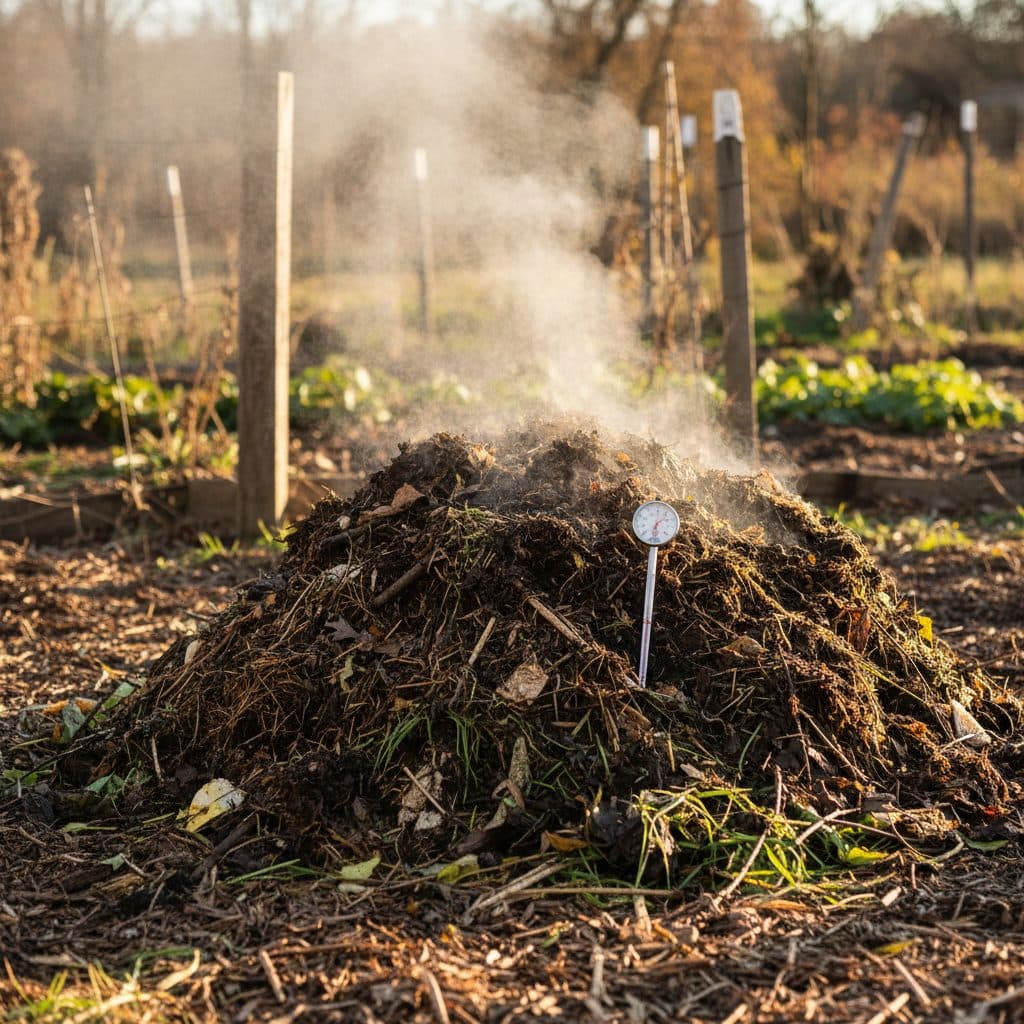
- Hot composting manure requires maintaining temperatures between 131°F and 160°F for at least 15 days to kill pathogens and weed seeds.
- A carbon-to-nitrogen ratio of 25:1 to 30:1 is ideal for efficient decomposition in a compost pile.
- Aging manure for 6 to 12 months after composting further stabilizes nutrients and reduces ammonia loss.
- Vermicomposting, using specific earthworm species, can process horse manure into nutrient-dense castings in 60 to 90 days.
- Manure from animals treated with persistent herbicides can contaminate compost and harm garden plants for up to 3 years.
- Proper manure management can reduce nutrient runoff by 30% and improve water quality in agricultural areas.
Quick answer: Hot composting cow and horse manure involves maintaining temperatures between 131°F and 160°F for at least 15 days, with regular turning, to kill pathogens and weed seeds. This process transforms raw manure into a stable, nutrient-rich soil amendment, improving garden health.
In the agricultural heartland of Iowa, many growers understand the value of animal waste for building healthy soil. Cow and horse manure, when managed correctly, provide a rich source of organic matter and essential plant nutrients. However, simply spreading fresh manure can introduce weed seeds, pathogens, and excess nitrogen that might harm young plants, leading to potential crop losses of 10% or more.
Hot composting and aging turn raw manure into a stable, nutrient-rich amendment, reducing risks and improving soil structure. A well-managed compost pile can reach temperatures of 140°F, effectively neutralizing many undesirable elements before they reach your garden beds.
Why fresh manure isn’t always best for your garden
Applying raw, uncomposted manure directly to garden beds can introduce several problems that undermine soil health and crop yields. One significant concern is the presence of weed seeds; a single ton of horse manure can contain over 1 million viable weed seeds, ready to sprout in your carefully prepared soil [1]. These seeds can quickly outcompete desirable plants, requiring extensive weeding efforts that consume valuable time and resources.
Beyond weeds, fresh manure can harbor harmful pathogens like E. coli and Salmonella, posing health risks if it comes into contact with edible crops, especially those consumed raw. While these pathogens typically die off over time, hot composting accelerates this process, requiring temperatures above 131°F for effective neutralization. Furthermore, fresh manure often has a high nitrogen content, sometimes exceeding 15% in its raw form, which can cause ‘nitrogen burn’ in young plants, leading to stunted growth or even death if applied in large quantities. The ideal carbon-to-nitrogen (C:N) ratio for healthy soil is closer to 25:1 or 30:1, which is achieved through proper composting.
risks of using fresh manure
- Introduction of millions of weed seeds per ton.
- Potential for harmful pathogens like E. coli and Salmonella.
- High ammonia content causing nitrogen burn in plants.
- Imbalanced nutrient profiles, particularly a low C:N ratio.
- Odor issues and attraction of flies, especially in residential areas.
Getting started with a hot compost pile
Building an effective hot compost pile for cow and horse manure begins with careful site selection and proper material layering. Choose a location that is well-drained, easily accessible, and at least 50 feet from any water sources or structures in USDA zone 5 or higher. The pile should be at least 3 feet by 3 feet by 3 feet (27 cubic feet) to generate and retain sufficient heat for thermophilic composting. Many successful growers in the Pacific Northwest build piles closer to 5 feet by 5 feet by 5 feet for optimal heat retention.
The key to hot composting is achieving the correct carbon-to-nitrogen ratio, ideally between 25:1 and 30:1. Horse and cow manure are considered ‘greens’ due to their high nitrogen content, so they need to be balanced with ‘brown’ materials like straw, wood chips, or dried leaves. A common ratio is two parts brown material to one part manure by volume. Aim for a moisture content similar to a wrung-out sponge, around 40% to 60%. Layering these materials, perhaps 6 inches of browns followed by 3 inches of manure, then wetting each layer, helps kickstart the microbial activity. For a detailed guide on ratios, consult our Hot composting: the browns-to-greens recipe that finishes in weeks article.
essential materials for a hot compost pile
- Fresh or aged cow and horse manure (nitrogen source).
- Straw, wood chips, dried leaves, or shredded cardboard (carbon source).
- Water for maintaining optimal moisture levels.
- A sturdy pitchfork or compost turner for aeration.
- A reliable compost thermometer, preferably with a 24-inch stem.
Keeping your compost cooking: temperature, moisture, and turning
Once your hot compost pile is built, consistent monitoring and maintenance matter for successful decomposition. The goal is to maintain internal temperatures between 131°F and 160°F for at least 15 days, with a minimum of five turnings during this period [1]. Use a long-stemmed compost thermometer, inserted 18 to 24 inches into the pile, to check temperatures daily. If the temperature drops below 131°F, it indicates a need for turning and possibly adding more nitrogen or moisture.
Turning the pile every 3 to 5 days aerates the material, redistributes moisture, and exposes all parts of the pile to the high temperatures necessary to kill weed seeds and pathogens. When turning, aim to move the outer, cooler material to the center of the pile. Simultaneously, check the moisture content; the pile should feel like a damp sponge, not soaking wet or bone dry. If it’s too dry, add water as you turn. If it’s too wet, incorporate more dry, carbon-rich materials. A soil moisture meter can help you accurately gauge the moisture level, ensuring it stays within the optimal 50% range for microbial activity.
key steps for compost maintenance
- Monitor internal temperature daily with a compost thermometer.
- Turn the pile every 3 to 5 days to aerate and mix materials.
- Maintain moisture levels at 40% to 60%, like a damp sponge.
- Add water if dry, or more browns if too wet during turning.
- Ensure all material reaches the hot core of the pile over time.
Aging manure: the final step for stability
After the active hot composting phase, where temperatures have peaked and then subsided, the composted manure benefits significantly from an aging or curing period. This stage, typically lasting an additional 6 to 12 months, allows the material to further stabilize, ensuring that any remaining ammonia volatilizes and complex organic compounds break down into stable humus. Without proper aging, composted manure, though safer than fresh, might still release ammonia, potentially causing nitrogen loss of up to 50% if left exposed [1].
Aging transforms the compost into a more refined, nutrient-stable soil amendment. During this period, beneficial fungi and bacteria continue their work at lower temperatures, converting raw organic matter into humic substances that improve soil structure, water retention, and nutrient availability. The finished product will have a uniform dark brown color, an earthy smell, and a crumbly texture, indicating its readiness for garden application. Storing aged manure in a covered pile or bin, particularly in regions like the arid Southwest, prevents nutrient leaching from rain and helps maintain optimal moisture levels. Crops grown with stable compost can see a 10% increase in yield.
benefits of properly aged manure
- Reduces ammonia volatilization, preserving nitrogen content.
- Stabilizes nutrients, making them more slowly available to plants.
- Improves soil structure and water holding capacity.
- Enhances microbial diversity and activity in the soil.
- Eliminates any lingering odors from the composting process.
Vermicomposting horse manure: a different approach
For those seeking an alternative to traditional hot composting, vermicomposting offers a method to process horse manure efficiently, particularly for smaller operations or specific needs. This process utilizes specialized earthworms, primarily Eisenia fetida (red wigglers), to consume organic matter and excrete nutrient-rich castings. Unlike hot composting, vermicomposting operates at ambient temperatures, typically between 55°F and 77°F, making it suitable for year-round indoor or shaded outdoor use, especially in milder climates like USDA zone 9 in California.
Vermicomposting can transform horse manure into valuable worm castings in a relatively short period, often 60 to 90 days [2]. The worms break down organic material, reducing its volume by up to 50% and concentrating nutrients into a highly bioavailable form. To set up a successful vermicompost bin, provide a bedding material such as shredded newspaper or straw, maintain a consistent moisture level of 70% to 80%, and add horse manure in manageable quantities. A good rule of thumb is to start with 1 pound of worms for every 1-2 pounds of manure added daily. The resulting castings are a potent soil amendment, improving soil structure and providing a slow-release source of nutrients for plants, potentially boosting growth by 20%.
requirements for successful vermicomposting
- Appropriate worm species, such as Eisenia fetida (red wigglers).
- A well-ventilated bin or container with drainage.
- Moist bedding material like shredded paper or coco coir.
- Consistent moisture levels, ideally 70% to 80%.
- Regular feeding with horse manure and other organic scraps.
Avoiding pitfalls: herbicides, antibiotics, and water quality
While manure is a valuable resource, growers must be aware of potential contaminants, particularly persistent herbicides. Certain herbicides, such as aminopyralid and clopyralid, can pass through an animal’s digestive system and remain active in manure even after composting, sometimes for up to 3 years [1]. These herbicides can severely damage sensitive broadleaf plants like tomatoes, beans, and peas, even at very low concentrations. Always inquire about the feed and pasture management practices of the manure source to avoid introducing these chemicals into your garden. Our Natural weed killers that actually work article discusses herbicide impacts in more detail.
Another consideration is the presence of antibiotics and hormones in manure, which can impact soil microbiology, though their long-term effects are still being studied. Beyond chemical concerns, proper manure management is critical for environmental protection. Runoff from manure piles can carry excess nutrients and pathogens into local waterways, degrading water quality and harming aquatic ecosystems. Implementing best management practices, such as locating piles at least 100 feet from water bodies and using covered storage, can reduce nutrient runoff by 30% and prevent erosion, as recommended by the USDA Natural Resources Conservation Service [2, 3, 5].
potential contaminants and risks
- Persistent herbicides (e.g., aminopyralid) harming sensitive crops for years.
- Antibiotics and hormones impacting soil microbial communities.
- Pathogens like E. coli and Salmonella if not properly composted.
- Excess nutrients from runoff polluting local water sources.
- Heavy metals, depending on animal feed and supplements.
Comparison of Cow and Horse Manure Properties
Property | Cow Manure | Horse Manure |
|---|---|---|
C:N Ratio (Fresh) | 15:1 to 25:1 | 20:1 to 30:1 |
Moisture Content | 80% to 85% | 70% to 75% |
Weed Seed Content | Moderate | High (up to 1 million per ton) [1] |
Texture | More liquid, less fibrous | More fibrous, drier |
Decomposition Rate | Faster | Slower (due to fiber) |
Compost Temperature: Maintain your hot compost pile between 131°F and 160°F for at least 15 days to effectively eliminate weed seeds and pathogens [1].
C:N Ratio: An ideal carbon-to-nitrogen ratio of 25:1 to 30:1 is crucial for efficient microbial activity and rapid decomposition in your compost pile.
Manure Runoff: Properly managing manure storage can reduce nutrient runoff into waterways by up to 30%, protecting local ecosystems [2, 3].
Frequently asked questions
How long does hot composting manure typically take?
The active hot composting phase for manure usually takes 6 to 8 weeks, provided you maintain temperatures between 131°F and 160°F for at least 15 days with regular turning. After this, an additional 6 to 12 months of aging is recommended for optimal stability.
Can I use fresh horse manure directly on my garden?
Using fresh horse manure directly is generally not recommended due to high weed seed content, potential pathogens, and high ammonia levels that can burn plants. It’s best to hot compost it for at least 6 weeks or age it for 6 to 12 months to mitigate these risks.
What is the ideal carbon-to-nitrogen ratio for composting manure?
The ideal carbon-to-nitrogen (C:N) ratio for composting manure is between 25:1 and 30:1. Horse and cow manure are high in nitrogen, so they need to be balanced with carbon-rich materials like straw or wood chips, often at a 2:1 ratio of browns to greens by volume.
How do I know if my compost pile is hot enough?
You can determine if your compost pile is hot enough by inserting a long-stemmed compost thermometer 18 to 24 inches into the pile. The temperature should consistently read between 131°F and 160°F. If it’s below 131°F, the pile may need turning, more moisture, or additional nitrogen-rich materials.
Are there any concerns about herbicides in manure?
Yes, persistent herbicides like aminopyralid can pass through animals and remain active in manure for up to 3 years, harming sensitive garden plants like tomatoes and beans. Always ask your manure source about their pasture and feed management practices to avoid contamination.
What is the benefit of aging manure after composting?
Aging manure for 6 to 12 months after hot composting further stabilizes nutrients, particularly nitrogen, reducing ammonia loss by up to 50%. It also allows for the development of stable humus, which greatly improves soil structure, water retention, and nutrient availability for plants.
References
- How to Properly Manage Horse Manure (2025). How to Properly Manage Horse Manure.
- Recycling of horse manure by vermicomposting (2023). Recycling of horse manure by vermicomposting.
- Managing manure, erosion, and water quality in and around horse pastures (2025). Managing manure, erosion, and water quality in and around horse pastures.
- Managing Manure, Erosion, and Water Quality in and Around Horse Pastures (2019). Managing Manure, Erosion, and Water Quality in and Around Horse Pastures.
- Horse manure after Rio (1992). [Horse manure after Rio](https://doi.org/10.1016/0140-6736(92)91272-a).
- USDA Natural Resources Conservation Service (2024). USDA Natural Resources Conservation Service.