Key takeaways
- Shade structures can reduce soil temperatures by 10-15°F and conserve up to 30% more soil moisture in raised beds.
- PVC hoop houses offer an affordable solution, costing around $50-$100 for a 4 ft x 8 ft bed, and can be built in under two hours.
- Cattle panel arches provide sturdy, long-lasting shade, often reusing 16 ft panels for about $30-$50 each.
- Lattice frames deliver a more aesthetic, modular option, costing $75-$150 for an 8 ft section, suitable for permanent installations.
- Selecting the right shade cloth (typically 30-50% for vegetables) protects plants and supports growth in zones like USDA 8.
- Properly secured shade structures can extend the growing season by several weeks in both spring and fall, especially in southern US states.
Quick answer: DIY shade structures protect summer crops in USDA Zone 7 from extreme heat. They reduce soil temperatures by 10-15°F, conserve moisture, and prevent sunscald, improving yields.
In regions like USDA zone 7, where summer temperatures can regularly exceed 95°F, protecting garden crops from intense sun has become a top priority for many US growers. Raised garden beds, while offering excellent drainage and soil control, can also heat up faster than in-ground gardens, sometimes by 5-10°F, making plants vulnerable to heat stress and excessive water loss [2]. This increased heat can lead to issues such as sunscald on fruits, wilting foliage, and reduced yields, particularly for heat-sensitive varieties like lettuce, spinach, and even some tomatoes.
Fortunately, building DIY shade structures is a straightforward and cost-effective way to mitigate these challenges. These structures can significantly reduce soil surface temperatures by 10-15°F and decrease water evaporation by up to 30%, making a substantial difference for plants like tomatoes and peppers [4, 5]. From simple PVC hoops to durable cattle panel arches and framed lattice panels, these practical options fit various garden sizes and budgets when summer temperatures climb above 90°F.
The need for shade in a changing climate
Across the US, many regions are experiencing longer and hotter summers, with average temperatures in states like Arizona and Texas frequently surpassing 100°F for extended periods. This extreme heat poses a significant threat to garden productivity, often causing plants to bolt prematurely, flowers to drop without setting fruit, and leaves to develop sunscald. For instance, studies show that sustained temperatures above 90°F can reduce tomato yields by as much as 20%.
Raised beds, while excellent for soil improvement and drainage, can exacerbate heat issues because their exposed sides absorb more solar radiation, leading to faster soil warming and quicker moisture evaporation. Soil in raised beds, especially those with high organic matter content (e.g., 30% organic matter as seen in some research [1]), can dry out 15-20% faster than in-ground beds if left uncovered. Implementing shade structures is not just about comfort for the plants; it is a critical strategy for maintaining soil health and ensuring a productive harvest in increasingly challenging conditions, particularly in arid regions like California’s Central Valley where water conservation is paramount. You can monitor soil moisture levels effectively with a soil moisture meter to inform your watering schedule.
Understanding heat stress in plants
Heat stress manifests in several ways, from wilting leaves to stunted growth and poor fruit development. When temperatures consistently exceed 85°F, many common vegetables struggle to photosynthesize efficiently, leading to a reduction in overall plant vigor and yield. For example, bell peppers can experience flower drop when daytime temperatures are above 90°F, significantly reducing their fruit set. Shade structures can help maintain optimal growing conditions by lowering ambient temperatures around the plants by 10-15°F and reducing direct solar radiation by 30-50%, depending on the shade cloth used. This protection allows plants to continue productive growth even during the hottest parts of the day, which maintains steady yields. In regions like Florida, where humidity is also high, shade can prevent fungal issues exacerbated by heat.
- Reduced water evaporation: Shade can cut water loss from soil by up to 30%, saving gallons of irrigation water.
- Lower soil temperatures: Keeps soil 10-15°F cooler, protecting delicate root systems.
- Prevented sunscald: Protects fruits and leaves from direct sun damage, especially in 90°F+ weather.
- Improved fruit set: Encourages better pollination and fruit development by reducing heat stress.
- Extended growing season: Allows for earlier planting and later harvesting by moderating temperatures by several weeks.
PVC hoop houses: flexible and affordable
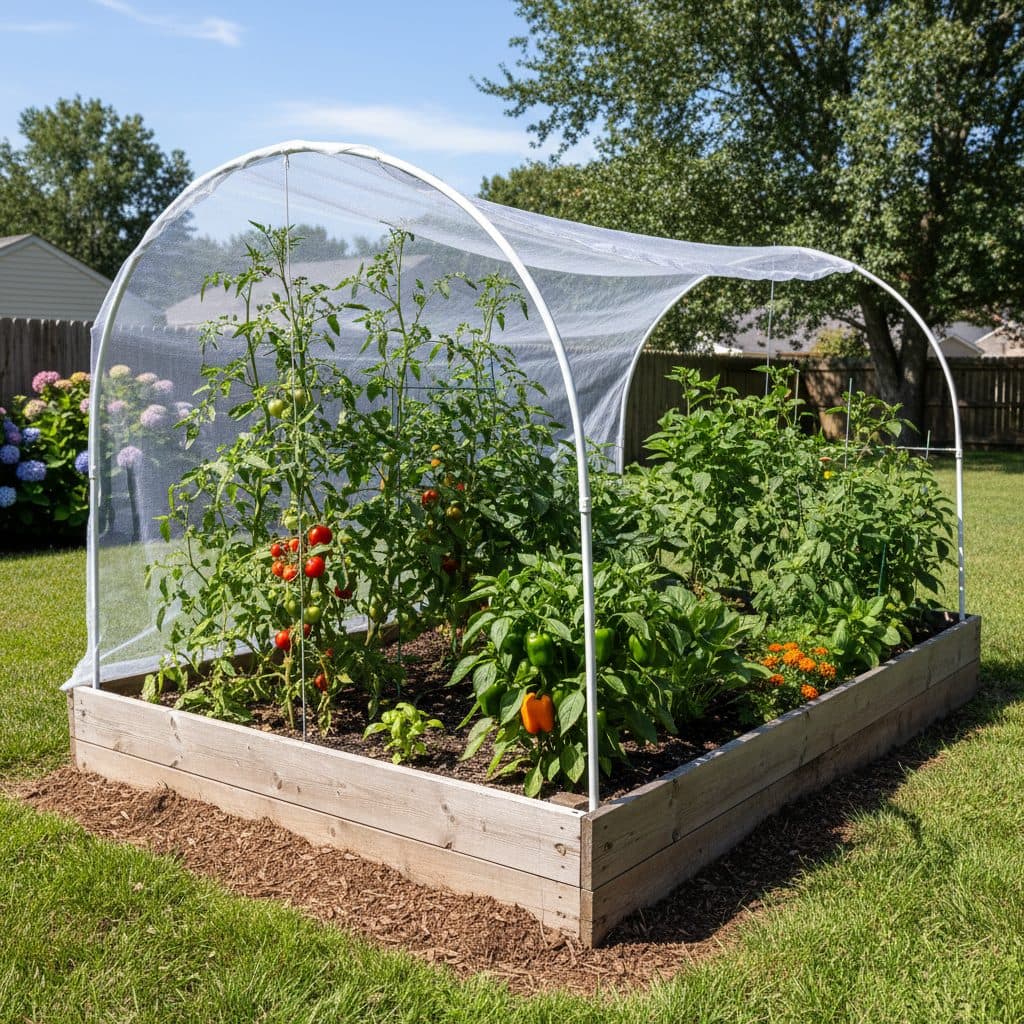
PVC hoop houses are a popular choice for raised bed shade structures due to their low cost and ease of construction. For a standard 4 ft x 8 ft raised bed, you will typically need four to six 1/2 in or 3/4 in diameter PVC pipes, each 10 ft long. These pipes cost about $5-$10 each, making the framework very affordable [3]. To anchor the hoops, you will also need eight to twelve pieces of 2 ft long rebar, driven 1 ft into the ground along the inside edges of the raised bed. The PVC pipes then simply slide over the exposed 1 ft of rebar, creating sturdy arches.
Once the hoops are in place, you can drape a 30-50% shade cloth over them, securing it with spring clamps, bungee cords, or zip ties. The entire structure for a 4 ft x 8 ft bed can often be assembled in under two hours, with a total material cost ranging from $50-$100, including the shade cloth. This makes PVC hoops an excellent option for growers in USDA zones 6-9 who need temporary or seasonal shade. For more advanced temperature control, consider exploring greenhouse climate control strategies, which often build on similar principles.
Building a basic PVC hoop structure
The simplicity of PVC hoop structures allows for quick deployment and removal, which is ideal for crops that only need shade during the hottest parts of the summer. For instance, if you’re growing lettuce in USDA zone 6, you might only need shade from mid-June through August when daily temperatures consistently hit 85°F. The flexibility of PVC also means you can easily adjust the height of the hoops by cutting the pipes to different lengths, accommodating taller plants like indeterminate tomatoes that can reach 6-8 ft in height. Ensure the rebar is driven deep enough to provide a stable base, especially if your region experiences winds exceeding 20 mph.
- Cost-effective: Materials for a 4 ft x 8 ft bed typically cost $50-$100.
- Easy to assemble: Can be set up in 1-2 hours with basic tools.
- Flexible and portable: Easily moved or stored when not in use.
- Customizable: PVC pipes can be cut to various lengths to adjust height.
- Good for temporary shade: Ideal for seasonal use in regions like the Midwest.
Cattle panel arches: sturdy and versatile
For gardeners seeking a more robust and permanent shade solution, cattle panel arches are an excellent choice. These heavy-gauge wire panels, typically 16 ft long and 50 in wide, are incredibly strong and durable, often costing $30-$50 per panel [3]. To create an arch, you simply bend a panel over your raised bed, securing the ends into the ground with 2-4 ft rebar stakes driven 1.5-2 ft deep. For a 4 ft wide raised bed, a 16 ft panel will create a comfortable arch approximately 6-7 ft tall at its peak, providing ample headroom for taller crops like pole beans or cucumbers.
Cattle panels are particularly well-suited for regions that experience strong winds, such as the open plains of Kansas or Oklahoma, as their sturdy construction can withstand gusts up to 40 mph when properly anchored. Once the arch is in place, a 40-50% shade cloth can be attached using heavy-duty zip ties or UV-resistant clips. This method offers a long-lasting structure that can remain in place year-round, serving as a trellis in cooler months and a shade support in summer. For metal raised beds, this method fits the existing frame and provides durable support. You can learn more about these at metal raised garden beds.
Advantages of cattle panel arches
The strength of cattle panels allows them to support shade cloth alongside climbing plants, serving a dual role in the garden. This can be especially beneficial for maximizing space in smaller gardens or for growing vining crops that require vertical support. The initial investment in cattle panels may be slightly higher than PVC, but their longevity (often 10-15 years or more) makes them cost-effective over time. Many growers in the Pacific Northwest use them to extend the season for heat-loving crops, providing protection from intense afternoon sun that can still occur even in cooler climates. Ensure the panel ends are secured with at least two rebar stakes per side for optimal stability.
- High durability: Made from heavy-gauge wire, lasting 10-15 years or more.
- Wind resistant: Can withstand winds up to 40 mph when properly anchored.
- Dual purpose: Works as both shade support and a trellis for climbing plants.
- Ample height: Provides 6-7 ft of clearance for tall crops.
- Low maintenance: Requires minimal upkeep once installed.
Lattice frames: aesthetic and modular
For gardeners who prioritize aesthetics and a more integrated look, lattice frames offer a stylish and effective shade solution. These structures are typically built using 2×2 or 2×4 lumber to create a sturdy frame, over which lattice panels or shade cloth can be attached. A common design involves building an A-frame or a simple rectangular frame that rests directly on the raised bed. For an 8 ft long raised bed, you might construct two end frames and a few cross supports, costing $75-$150 for materials per 8 ft section, depending on lumber prices and the type of lattice chosen.
Lattice frames are particularly popular in suburban gardens in states like Virginia or North Carolina, where a neat and tidy appearance is often desired. The modular nature of these frames means they can be easily disassembled for winter storage or moved between beds. Exterior-grade cedar or treated pine provides longevity, lasting 5-10 years even with weather exposure. These frames provide excellent support for 50% shade cloth, which can be stapled or screwed directly to the wooden frame.
Designing a custom lattice frame
The beauty of lattice frames lies in their customizability. You can design them to match the height and width of your raised beds precisely, creating a seamless look. For example, a 4 ft wide bed might have a frame that stands 5 ft tall, providing enough clearance for most vegetable plants. Hinges can be incorporated to create hinged panels that allow for easy access to the plants for watering, harvesting, and pest control. This design is especially useful for gardeners in USDA zone 8 who need consistent shade but also require frequent access to their crops. Use 1/2 in exterior grade plywood for corner braces to improve structural rigidity, particularly if the frame is over 6 ft long.
- Aesthetically pleasing: Offers a neat, integrated look for the garden.
- Customizable: Can be designed to fit specific bed dimensions and heights.
- Modular design: Easy to disassemble and store, or move between locations.
- Sturdy support: Provides a rigid frame for shade cloth or lattice panels.
- Semi-permanent: Can remain in place for several seasons with durable materials.
Choosing and installing shade cloth
The effectiveness of any shade structure hinges on selecting the right shade cloth. Shade cloth is typically rated by the percentage of sunlight it blocks, ranging from 30% to 90%. For most heat-sensitive vegetables like lettuce, spinach, and even some tomatoes and peppers, a 30-50% shade cloth is ideal [5]. This range allows sufficient light for photosynthesis while significantly reducing heat and UV radiation. For example, lettuce thrives under 30% shade, while peppers often benefit from 40-50% shade in regions where summer temperatures consistently exceed 90°F.
Shade cloth comes in various colors, with black and green being the most common. Black shade cloth absorbs more heat, which can be beneficial in cooler climates, but green or white options may be better for hotter regions like the desert Southwest, as they reflect more light and keep temperatures slightly cooler, often by an additional 2-3°F. When installing, ensure the cloth is taut to prevent flapping in winds up to 20 mph, which can damage both the cloth and the plants. Use UV-resistant clips, bungee cords, or zip ties spaced every 18-24 inches to secure the cloth firmly to your chosen frame.
Optimizing shade for specific crops
Different crops have varying light requirements, so shade setups should match specific crop tolerances. For instance, leafy greens like kale and Swiss chard, which can bolt in intense heat, perform exceptionally well under 30-40% shade, extending their harvest by several weeks in USDA zone 7. Fruiting plants like tomatoes and eggplants, while sun-lovers, can suffer from sunscald and flower drop above 90°F, making 40-50% shade beneficial during peak summer. Conversely, root crops like carrots and radishes might only need 20-30% shade to prevent soil from overheating, which can cause them to become woody or bitter. Many quality shade cloths include a 10-year UV protection guarantee for long-term use.
- Percentage selection: 30-50% for most vegetables, 70% for extreme heat or delicate plants.
- Color choice: Green or white for hotter climates, black for cooler regions or early season.
- UV resistance: Look for cloths with a 5-10 year UV protection rating.
- Attachment methods: Use clips, bungee cords, or zip ties for secure fastening.
- Proper tension: Ensure the cloth is taut to prevent wind damage and provide even shade.
Comparison of DIY Shade Structure Options for Raised Beds
Method | Cost (4×8 ft bed) | Durability | Ease of Build | Aesthetics |
|---|---|---|---|---|
PVC Hoops | $50-$100 | Moderate (3-5 years) | Very Easy (1-2 hours) | Functional |
Cattle Panels | $100-$200 | High (10-15+ years) | Moderate (2-4 hours) | Rustic/Industrial |
Lattice Frames | $75-$150 | Moderate-High (5-10 years) | Moderate (3-6 hours) | High (Customizable) |
Water Savings: Shade structures can reduce the need for irrigation by up to 30% in raised beds during peak summer months, saving gallons of water for a 4 ft x 8 ft bed.
Soil Temperature Drop: In USDA zone 9, soil temperatures under 50% shade cloth can be 12°F cooler than exposed soil, preventing root damage when ambient temperatures hit 95°F.
Frequently asked questions
What percentage shade cloth is best for most vegetables?
For most heat-sensitive vegetables like tomatoes, peppers, and leafy greens, a 40-50% shade cloth is generally suitable in hot climates. This allows enough light for photosynthesis while reducing temperatures by 10-15°F, preventing sunscald and bolting.
Can shade structures extend the growing season?
Yes, by protecting plants from early summer heat and late summer sunscald, shade structures can extend the harvest by 2-4 weeks in regions like USDA zone 8. They also help moderate temperatures during unexpected heatwaves, preserving crop health.
How much do these DIY structures typically cost?
Costs vary widely based on materials and size. A PVC hoop structure for a 4 ft x 8 ft bed might cost $50-$100, while a cattle panel arch could be $100-$200 depending on the number of panels used. Lattice frames tend to be $75-$150 per 8 ft section.
Do I need to remove shade cloth in cooler weather?
Yes, once daily temperatures consistently drop below 80°F, removing the shade cloth allows plants to receive full sun. This is important for fruit ripening, overall vigor, and preventing excessive humidity which can lead to fungal issues.
How do shade structures help with water conservation?
By lowering soil surface temperatures by 10-15°F, shade cloth significantly reduces evaporation from the soil. This can potentially cut irrigation needs by 25-30% during hot periods, saving dozens of gallons of water per week for a typical raised bed.
Are these structures wind-resistant?
Properly anchored structures, especially cattle panel arches secured with 2 ft rebar stakes, can withstand winds up to 40 mph. However, extreme weather events or sustained winds over 30 mph may require temporary removal of the shade cloth to prevent damage.
References
- Table 2: Soil texture in the two raised beds. (2023). Table 2: Soil texture in the two raised beds..
- Gardening in Raised Beds (2013). Gardening in Raised Beds.
- Backyard Vegetables: The Tennessee Vegetable Garden – Building and Using Raised Beds (2016). Backyard Vegetables: The Tennessee Vegetable Garden – Building and Using Raised Beds.
- Genotypic, physiological and morphological variation for rice grown under a raised beds system (2023). Genotypic, physiological and morphological variation for rice grown under a raised beds system.
- Raised Beds (2019). Raised Beds.
- USDA Natural Resources Conservation Service (2024). USDA Natural Resources Conservation Service.