Key takeaways
- Harvest herbs at their peak potency, typically before flowering, to maximize beneficial compounds.
- Choose appropriate harvesting times, often in the morning after dew has dried, for optimal quality.
- Employ gentle drying methods like air drying or dehydrators to preserve volatile oils and active constituents.
- Ensure dried herbs have a moisture content below 10% to prevent mold and spoilage.
- Store dried herbs in airtight, opaque containers in a cool, dark place for 12 to 18 months.
- Regularly inspect stored herbs for signs of degradation and refresh your supply annually for best results.
Quick answer: To preserve medicinal herb potency, harvest at peak times (often before flowering), use gentle drying methods to remove moisture below 10%, and store in airtight, opaque containers in a cool, dark place for 12-18 months.
In many parts of the United States, from the fertile valleys of California to the humid summers of the Southeast, growing medicinal herbs has become a practical pursuit for home apothecaries. A well-tended herb garden, even one as small as 100 square feet, can yield a substantial amount of plant material for personal use throughout the year. However, the true value of these efforts lies in the effective preservation of the harvest. Without proper techniques, up to 75% of the beneficial compounds in fresh herbs can be lost within a few weeks.
This article will guide you through the critical steps of harvesting, drying, and storing your medicinal herbs to maintain their potency and extend their usability for 12 months or more. We will cover methods suitable for various climates, from the dry air of Arizona to the damp conditions of the Pacific Northwest, so your efforts in the garden translate into a reliable supply for your home. Understanding these processes can mean the difference between a fleeting summer bounty and a year-round resource, saving you money and providing peace of mind.
When to harvest for peak potency
Timing is perhaps the most critical factor in harvesting medicinal herbs, directly influencing the concentration of their active compounds. Many herbs, such as peppermint (Mentha piperita) and lemon balm (Melissa officinalis), reach their peak potency just before flowering, when their volatile oils are most abundant. For root crops like dandelion (Taraxacum officinale) or burdock (Arctium lappa), the optimal time is typically in the fall after the plant’s energy has returned to the roots, or in early spring before significant new growth begins. Generally, harvesting in the morning after the dew has dried, but before the sun is too high and hot, helps preserve delicate compounds that can evaporate in intense heat.
Observing plant cycles for best results
Understanding the life cycle of your specific herbs matters. For example, leafy herbs like garden sage (Salvia officinalis), which thrives in USDA zones 4 through 9, are often harvested multiple times throughout the growing season. You can find more details on growing these types of herbs at agripure.org/plants/salvia-officinalis. Annual herbs, such as calendula (Calendula officinalis), can be harvested continuously for their flowers, encouraging more blooms. Biennials, like mullein (Verbascum thapsus), offer leaves in their first year and flowers in their second. For seeds, wait until they are fully mature and dry on the plant, which might be late summer or early fall, before collecting them. This careful timing can increase the yield of active compounds by 10% to 30% compared to haphazard harvesting.
- Harvest leafy herbs before flowering for maximum volatile oils.
- Collect roots in fall or early spring when energy is concentrated below ground.
- Gather flowers when they are fully open, typically in mid-morning.
- Harvest seeds when they are dry and mature on the plant.
- Avoid harvesting during periods of extreme heat or drought for best quality.
Harvesting techniques and tools
The way you harvest your herbs can significantly impact their quality and the plant’s future growth. Always use clean, sharp tools, such as pruning shears or a sharp knife, to make clean cuts that minimize damage to the plant. This prevents disease and encourages vigorous regrowth, potentially increasing your yield by 20% over the season. For leafy herbs, harvest about one-third to one-half of the plant at a time, leaving enough foliage for photosynthesis. When harvesting flowers, snip the flower heads or entire stalks, depending on the herb and your intended use. For root crops, a sturdy garden fork is essential for careful excavation, especially in compacted soils found in many urban gardens.
Best practices for a healthy harvest
When collecting herbs, avoid harvesting from plants that show signs of disease or pest infestation. Inspect your plants carefully; a 3-in-1 Soil pH, Moisture & Light Meter can help ensure plants are healthy and thriving before harvest. Always harvest into clean baskets or cloth bags, never plastic, as plastic can trap moisture and cause the herbs to sweat and degrade rapidly. For delicate herbs, such as chamomile, handle them gently to avoid bruising, which can release enzymes that break down active compounds. After harvesting, process your herbs within 1-2 hours to prevent spoilage and maintain their fresh quality. This quick turnaround is particularly important for herbs with high moisture content, which can begin to decompose within 24 hours if not properly handled.
- Use sharp, clean tools for precise cuts.
- Harvest no more than 50% of a plant at one time.
- Avoid harvesting diseased or pest-ridden plant material.
- Transport herbs in breathable containers like baskets or cloth bags.
- Process harvested herbs quickly, ideally within two hours.
Effective drying methods for preservation
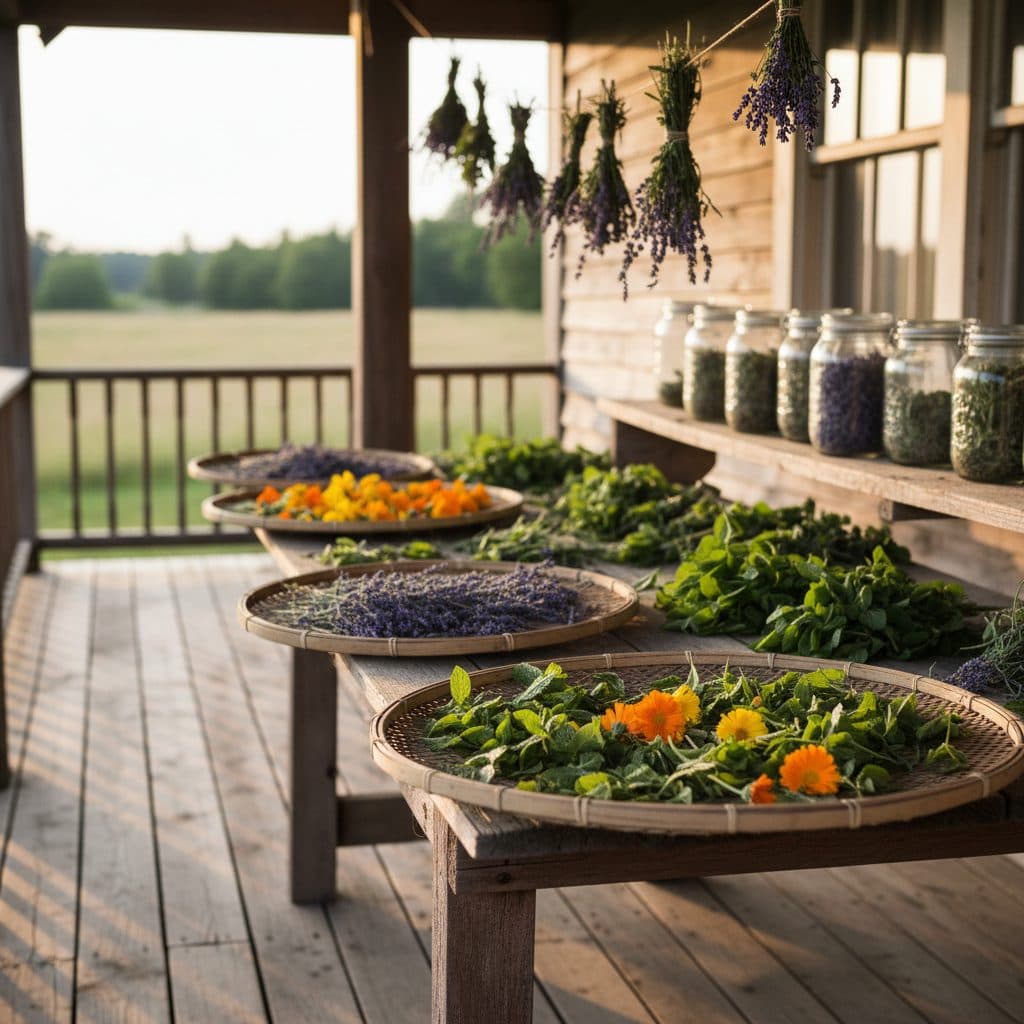
Drying is the process of removing moisture from herbs to prevent mold growth and bacterial spoilage, thereby concentrating their active compounds. The goal is to dry herbs quickly but gently, maintaining their color, aroma, and medicinal properties. Air drying is a simple and cost-effective method suitable for many herbs, especially those with lower moisture content and sturdy stems, like rosemary or thyme. This method requires a warm, dark, well-ventilated area with consistent air circulation and humidity below 60%. Temperatures between 68°F and 86°F are ideal for this process, which can take one to three weeks depending on the herb and ambient conditions.
Controlled drying with dehydrators
For herbs with higher moisture content, or in humid climates common in the Southeastern US, a food dehydrator offers a more controlled and efficient drying environment. Dehydrators typically operate at low temperatures, often between 95°F and 110°F, which is gentle enough to preserve volatile oils. This method can reduce drying time by up to 50% compared to air drying, often completing the process in 12 to 24 hours. Spread herbs in a single layer on dehydrator trays, ensuring good airflow around each piece. Avoid oven drying at high temperatures, as this can degrade delicate compounds and essential oils, reducing the herb’s potency by up to 40% [1]. While solar drying is another option, it requires careful monitoring to prevent sun bleaching and overheating, which can also reduce quality [2].
- Air dry herbs in a warm, dark, well-ventilated space with 60% or less humidity.
- Use a food dehydrator for faster, more controlled drying, especially for moist herbs.
- Maintain low drying temperatures, ideally below 110°F, to preserve active compounds.
- Avoid direct sunlight or high oven temperatures which can degrade herb quality.
- Ensure herbs are completely dry, crumbling easily, before storage.
Storing dried herbs for year-round supply
Once your herbs are thoroughly dry, proper storage is paramount to maintaining their potency and extending their shelf life. The primary enemies of dried herbs are light, air, heat, and moisture. Exposure to these elements can rapidly degrade active compounds, reducing the herb’s effectiveness by 25% or more within a few months. Store dried herbs in airtight containers, such as glass jars with tight-fitting lids, or vacuum-sealed bags. Opaque containers are preferable to clear ones, or store clear jars in a dark cabinet to block light exposure. For example, a 16 oz mason jar can typically hold about 1/4 to 1/2 cup of dried, crushed leaves.
Optimal storage conditions and shelf life
Keep stored herbs in a cool, dark, and dry place. A pantry or cupboard away from heat sources like stoves or direct sunlight is ideal. Consistent temperatures below 70°F are best. Avoid storing herbs in areas with fluctuating temperatures or high humidity, such as above a refrigerator or near a window. Under these optimal conditions, most dried herbs can retain their potency for 12 to 18 months [1]. Roots and barks may last longer, up to two to three years, while delicate flowers and leaves might begin to lose potency after 12 months. Label each container with the herb’s name and the date of harvest to keep track of its freshness. Regularly check your stored herbs for any signs of mold or loss of aroma; if an herb has lost its characteristic scent, it has likely lost much of its medicinal value and should be replaced. For those interested in starting a herb garden to ensure a fresh supply, resources like agripure.org/articles/starting-a-herb-garden offer guidance on getting started.
- Use airtight, opaque containers to protect herbs from air and light.
- Store herbs in a cool, dark, and dry location, ideally below 70°F.
- Label all containers with the herb name and drying date.
- Most dried herbs maintain potency for 12 to 18 months.
- Discard herbs that have lost their aroma or show signs of mold.
Maintaining quality and maximizing shelf life
The effectiveness of your home apothecary hinges on the quality of your stored herbs. Even with the best drying and storage practices, herbs will gradually lose potency over time. Volatile oils, which contribute significantly to an herb’s aroma and therapeutic action, are particularly susceptible to degradation. For example, some delicate flower petals, like those of chamomile, may lose up to 30% of their active compounds within six months if not stored perfectly. Regularly assessing your stored herbs is a practical step to ensure you are using potent material. A simple sniff test is often the first indicator: if an herb no longer has its characteristic scent, its medicinal value has likely diminished significantly. This is especially true for herbs rich in aromatic compounds.
Indicators of degradation and rotation practices
Beyond aroma, look for changes in color or texture. Dried herbs should retain much of their original color; significant fading or browning can indicate oxidation or light damage. They should also be brittle and crumble easily, indicating proper dryness. If herbs feel soft or pliable, they may have reabsorbed moisture and could be prone to mold. While a small amount of loss is inevitable, proper methods can ensure that 80% to 90% of the initial potency is retained for at least one year [1]. Consider a rotation system for your herbal stores, using the oldest batches first. Aim to replenish your supply annually, especially for frequently used herbs, to ensure you always have the freshest and most potent material available. This approach helps maintain a reliable home apothecary, supporting your wellness goals throughout the year, even in challenging climates like those in USDA zone 3 where growing seasons are short.
- Regularly check dried herbs for strong aroma, indicating potency.
- Observe color and texture; faded color or softness suggests degradation.
- Ensure herbs remain brittle and crumble easily, confirming low moisture content.
- Rotate your stock, using older herbs first to maintain freshness.
- Plan to replenish your herb supply annually for optimal potency.
Comparison of Common Drying Methods for Medicinal Herbs
Method | Typical Temperature | Drying Time | Best For | Energy Cost |
|---|---|---|---|---|
Air Drying | 68-86°F | 1-3 weeks | Leafy herbs, low moisture content | Very Low |
Dehydrator | 95-110°F | 12-24 hours | Most herbs, humid climates | Moderate |
Oven Drying (Low) | 100-150°F (door ajar) | 2-6 hours | Small batches, urgent needs | High |
Solar Drying | Ambient (variable) | 2-7 days | Roots, barks, sunny climates | Very Low |
Peak Potency Harvest: Harvesting herbs before flowering can increase their active compound concentration by 10% to 30%.
Moisture Content Goal: Dried herbs must achieve a moisture content below 10% to prevent mold and ensure long-term preservation for 12 months or more [5].
Storage Longevity: Properly stored dried herbs can retain 80% to 90% of their medicinal potency for 12 to 18 months [1].
Frequently asked questions
How do I know when my herbs are completely dry?
Dried herbs are ready for storage when they are brittle and crumble easily between your fingers. Leaves should snap rather than bend, and stems should break cleanly. This indicates a moisture content of less than 10%, which prevents mold growth during storage.
Can I dry herbs in a microwave?
While possible, microwave drying is generally not recommended for medicinal herbs. The rapid, intense heat can degrade delicate volatile oils and active compounds, significantly reducing the herb’s potency by up to 50% compared to slower, gentler methods like air drying or dehydrating.
What is the best type of container for storing dried herbs?
Airtight, opaque glass jars are considered the best for storing dried herbs. They protect herbs from air and light, which are primary causes of degradation. If using clear jars, ensure they are stored in a dark cabinet or pantry to block out light, maintaining potency for 12 to 18 months.
How long do dried medicinal herbs remain potent?
Most properly dried and stored medicinal herbs will retain significant potency for 12 to 18 months. Delicate flowers and leaves may start to lose potency after 6-12 months, while roots and barks can last for two to three years. Always label with the harvest date to track freshness.
Should I wash herbs before drying them?
Generally, it’s best to avoid washing herbs unless they are visibly dirty with soil or debris. Washing adds moisture, which prolongs drying time and can increase the risk of mold. If you must wash them, do so gently and pat them thoroughly dry with a clean cloth before beginning the drying process to remove at least 90% of surface water.
References
- Impact of Drying on Various Quality Characteristics of Herbs, Spices, and Medicinal Plants (2023). Impact of Drying on Various Quality Characteristics of Herbs, Spices, and Medicinal Plants.
- Drying Characteristics of Herbs, Spices, and Medicinal Plants (2023). Drying Characteristics of Herbs, Spices, and Medicinal Plants.
- Emerging and Advanced Drying Technologies for Herbs, Spices, and Medicinal Plants (2023). Emerging and Advanced Drying Technologies for Herbs, Spices, and Medicinal Plants.
- Techno-Economic Evaluation for Cost-Effective Drying of Herbs, Spices and Medicinal Plants (2023). Techno-Economic Evaluation for Cost-Effective Drying of Herbs, Spices and Medicinal Plants.
- Tennessee Soybean Production Handbook: Chapter 10, Harvesting, Drying, Handling and Storing Soybeans (2023). Tennessee Soybean Production Handbook: Chapter 10, Harvesting, Drying, Handling and Storing Soybeans.
- USDA Natural Resources Conservation Service (2024). USDA Natural Resources Conservation Service.