Key takeaways
- Prioritize deep watering to 6-12 inches to encourage robust root systems, especially during heatwaves.
- Water in the early morning, between 4:00 AM and 8:00 AM, to minimize evaporation and maximize absorption.
- Use soil moisture meters to accurately assess soil hydration at root depth, preventing over or under-watering.
- Improve soil health with 2-3 inches of organic matter to boost water retention by up to 20 times its weight.
- Adjust watering frequency based on plant type, soil composition, and local heatwave intensity, not just a calendar.
- Consider drip irrigation systems for up to 90% water efficiency, delivering water directly to the plant’s root zone.
Quick answer: During a heatwave, prioritize deep watering to 6-12 inches in the early morning (4-8 AM) to encourage robust root systems and minimize evaporation. Improve soil health with organic matter and consider drip irrigation for efficiency.
In recent years, gardeners across the United States, from the arid Southwest to the humid Southeast, have faced increasingly intense and prolonged heatwaves. For instance, parts of the Pacific Northwest, typically cooler, experienced temperatures over 115°F in 2021, while the average summer temperature in the contiguous U.S. has risen by about 2.5°F since 1895. These extreme conditions stress our plants, making proper watering a critical survival strategy for a successful harvest or landscape.
Understanding how and when to water during these periods of intense heat is paramount. It comes down to precision, timing, and encouraging plant resilience. This article will cut through common misconceptions and provide practical, data-driven advice for maintaining your garden through the toughest summer days even when the mercury climbs above 90°F for days on end.
Understanding heat stress and plant needs
When temperatures consistently climb above 90°F, plants enter a state of stress. This isn’t just about wilting leaves; it is a physiological shutdown where photosynthesis slows, and water loss through transpiration accelerates. In regions like USDA zone 8 in Texas, where summer highs regularly exceed 100°F, plants can lose significant amounts of water daily. Research indicates that heatwave characteristics, including duration and intensity, profoundly affect plant responses [4]. For example, a three-day heatwave can deplete soil moisture by 30% more than average conditions.
Different plants have varying tolerances. Drought-tolerant species, such as lavender or coneflowers, might cope better with less water than thirsty vegetables like tomatoes or squash, which can require up to 1.5 inches of water per week during peak growth. The fundamental goal during a heatwave is to ensure the root zone remains consistently moist, but not waterlogged. A soil moisture meter is an indispensable tool here, providing real-time data on soil hydration at various depths, typically down to 6 or 8 inches. Without this insight, you are essentially guessing, which can lead to both under-watering and over-watering, both detrimental in extreme heat.
recognizing signs of heat stress
- Wilting leaves: Often the first sign, leaves droop to reduce surface area exposed to the sun, common in peppers and beans.
- Scorched leaf edges: Browning or crisping on the leaf margins, particularly noticeable on delicate plants like lettuce or basil.
- Stunted growth: Plants may stop growing or produce smaller fruits, a common issue for cucumbers in prolonged heat.
- Flower or fruit drop: Plants abort flowers or young fruits to conserve energy, affecting yields in tomatoes and squash.
- Yellowing foliage: Can indicate nutrient deficiencies exacerbated by stress, or simply too much sun exposure on plants like hostas.
The deep watering principle: encouraging strong roots
Deep watering is perhaps the single most important strategy for heatwave resilience. Instead of frequent, shallow sprinkles that only moisten the top inch or two of soil, the goal is to saturate the soil to a depth of 6 to 12 inches, where the majority of a plant’s feeder roots reside. This encourages roots to grow deeper, making the plant more resilient to dry spells and less dependent on surface moisture. For example, a mature tomato plant in USDA zone 6 can develop roots up to 3 feet deep, but only if encouraged to do so.
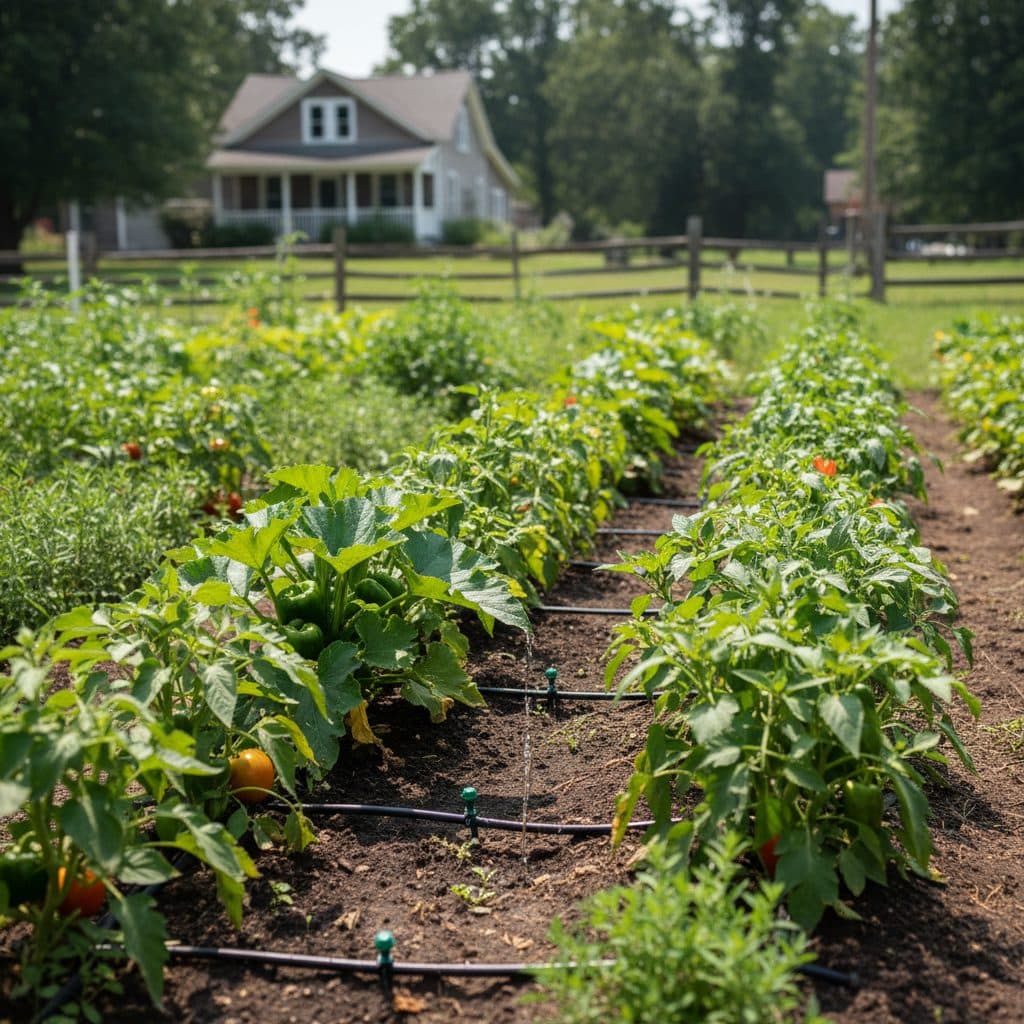
A good rule of thumb is to apply about one inch of water per week, adjusted for heat. During a heatwave, this might increase to 1.5 or even 2 inches for thirsty plants in sandy soils, which drain faster than clay. You can measure this by placing an empty tuna can in your garden while watering; when it collects one inch of water, you have applied approximately 0.62 gallons per square foot. The USDA Natural Resources Conservation Service emphasizes soil health practices that support deep root growth and water infiltration [6]. Utilizing a garden PE irrigation hose with a slow drip can achieve this deep saturation efficiently, minimizing runoff and evaporation.
how to achieve deep watering
- Slow application: Water slowly over a period of 30 minutes to one hour, allowing water to penetrate deeply without runoff.
- Check depth: After watering, use a trowel or a 3-in-1 soil meter to verify water has reached 6-12 inches.
- Frequency over volume: Water less frequently but more thoroughly; perhaps every three to five days instead of daily, depending on soil type.
- Mulch heavily: Apply 2-4 inches of organic mulch to reduce evaporation by up to 70% and regulate soil temperature.
- Consider drip irrigation: These systems deliver water directly to the root zone with up to 90% efficiency, reducing waste.
Morning vs. evening watering: debunking the myths
The debate over morning versus evening watering is a persistent one, but the science is clear: early morning is almost always the optimal time. Watering between 4:00 AM and 8:00 AM allows plants to absorb water before the intense heat of the day causes rapid evaporation. In Arizona, for instance, midday evaporation rates can exceed 0.25 inches per hour when temperatures hit 110°F, meaning much of your water simply disappears into the atmosphere before it can benefit your plants. Watering in the morning ensures that the water reaches the roots and is available for the plant’s daily needs as temperatures rise.
Evening watering, while seemingly logical to avoid midday heat, carries significant risks. When leaves remain wet overnight, especially in humid climates like Florida or Louisiana, it creates an ideal environment for fungal diseases such as powdery mildew or blight. These diseases thrive in prolonged moisture and can quickly devastate a garden. While some studies, like those using watering schedule algorithms, explore various timings [1], the practical consensus for home gardeners in heat-prone areas leans heavily towards morning. The goal is to get water to the roots, not to leave foliage damp for eight hours, potentially inviting pathogens that can reduce yields by 20% or more.
why morning watering wins
- Reduced evaporation: Cooler morning temperatures and lower wind speeds mean up to 50% less water loss than midday watering.
- Optimal absorption: Plants have the entire day to utilize the water before stress sets in, maximizing hydration.
- Disease prevention: Foliage dries quickly in the morning sun, significantly reducing the risk of fungal and bacterial diseases by 75%.
- Pest deterrence: Some pests, like slugs, prefer moist conditions and are less active on dry foliage.
- Water pressure: Municipal water pressure is often higher in the early morning hours, allowing for more efficient irrigation.
Soil health and moisture retention: long-term resilience
Beyond timing and depth, the foundation of heatwave resilience lies in healthy soil. Rich, organic soil acts like a sponge, holding significantly more water than compacted, depleted soil. Adding 2-3 inches of organic matter, such as compost or well-rotted manure, can improve your soil’s water holding capacity by up to 20 times its weight. This means your plants in USDA zone 5, for example, will need less frequent watering, potentially reducing your weekly water usage by 25%. The USDA Natural Resources Conservation Service champions these soil health principles for drought mitigation [6].
Mulching is another critical component. A 2-4 inch layer of organic mulch—like wood chips, straw, or shredded leaves—around your plants does several things: it reduces soil temperature by 10-15°F, suppresses weeds that compete for water, and most importantly, cuts down on evaporation from the soil surface by 50-70%. This keeps moisture locked in where plant roots can access it. For intensive growing, consider a four-season greenhouse design or a reflective indoor grow tent to better control environmental conditions during extreme heat, though outdoor gardens benefit immensely from these basic soil practices.
building water-wise soil
- Incorporate compost: Mix 2-3 inches of compost into the top 6-8 inches of soil annually to boost organic matter.
- Use organic mulches: Apply a 2-4 inch layer of wood chips or straw around plants to conserve moisture and regulate temperature.
- Avoid compaction: Minimize walking on garden beds to maintain soil structure and allow for better water infiltration, reducing runoff by 40%.
- Cover cropping: Plant cover crops in off-seasons to add organic matter and protect soil from erosion, improving water retention by 15%.
- Fertilize wisely: Use slow-release organic fertilizers, like fermented soybean meal, to support healthy root growth without encouraging excessive, thirsty foliage.
Advanced techniques and tools for precision watering
While basic principles are vital, incorporating advanced techniques and tools can refine your heatwave watering strategy, especially for larger gardens or those in extreme climates. Drip irrigation systems, for instance, deliver water directly to the plant’s root zone through emitters, achieving up to 90% water efficiency compared to overhead sprinklers, which can lose 30-50% to evaporation and wind drift. These systems are particularly beneficial in arid regions like California’s Central Valley, where water conservation is critical and summer temperatures often exceed 105°F for extended periods.
Automated watering systems, when properly calibrated, can provide consistent moisture without daily manual effort. Some systems integrate with local weather data, adjusting schedules based on rainfall or predicted heat, much like the field datalogger systems used for mandarin oranges [2]. For the home gardener, a simple timer combined with a soil moisture meter offers a robust solution. Regularly check your soil moisture at 6-inch depths; if it reads below 30% for most plants, it is time to water. This data-driven approach removes guesswork. Your plants get exactly what they need, when they need it, even during a week-long heatwave with temperatures consistently above 95°F.
smart watering solutions
- Drip irrigation: Installs easily and delivers water precisely, saving up to 60% compared to traditional methods.
- Soaker hoses: Provide slow, deep watering along rows, suitable for vegetable gardens and reducing water waste by 30%.
- Smart controllers: Connect to local weather stations to adjust watering schedules automatically, saving 15-20% water.
- Rain barrels: Collect rainwater, providing a free, chlorine-free water source for your garden, potentially saving 500 gallons or more per season.
- Wicking beds: Utilize a water reservoir below the soil, allowing plants to draw water as needed, reducing watering frequency by 70%.
Watering methods for heatwave conditions
Method | Pros | Cons | Efficiency (approx.) |
|---|---|---|---|
Hand Watering (Hose/Can) | Precise targeting, direct observation of plants | Time-consuming, inconsistent depth, high evaporation if done improperly | 40-60% |
Overhead Sprinklers | Covers large areas quickly, mimics rain | High evaporation, leaf wetness, uneven distribution, high water waste | 50-70% |
Drip Irrigation | Highly efficient, direct root delivery, low evaporation, automated | Higher initial cost, potential for clogging, requires setup | 85-95% |
Soaker Hoses | Slow, deep watering, minimal evaporation, inexpensive | Can be slow, less precise than drip, not ideal for all layouts | 70-85% |
Evaporation Rate: During peak summer heat above 95°F, up to 70% of water applied by overhead sprinklers can be lost to evaporation before reaching plant roots.
Soil Temperature: A 3-inch layer of organic mulch can reduce soil surface temperatures by 10-15°F, protecting delicate feeder roots from heat stress.
Frequently asked questions
How often should I water during a heatwave?
During a heatwave, aim to water deeply every two to four days, rather than daily, depending on your soil type and plant needs. Use a soil moisture meter to check moisture levels at a 6-inch depth; water when it drops below 40% for most plants.
Is it better to water in the morning or evening during hot weather?
Watering in the early morning, between 4:00 AM and 8:00 AM, is generally best. This minimizes water loss to evaporation by up to 50% and allows plant foliage to dry before nightfall, reducing the risk of fungal diseases by 75%.
How deep should I water my plants?
You should aim to water deeply enough to moisten the soil to a depth of 6 to 12 inches. This encourages plants to develop strong, deep root systems that are more resilient to drought conditions, potentially increasing their water access by 30%.
What is the best way to check if my plants need water?
The most accurate way is to use a soil moisture meter, inserting it to a depth of 6 inches. Alternatively, you can stick your finger into the soil; if it feels dry at 2-3 inches down, most plants will benefit from watering. Visual cues like wilting leaves can also indicate a need for water, but by then, plants are already stressed.
Can I overwater my plants during a heatwave?
Yes, overwatering can be just as detrimental as underwatering, even during a heatwave. Excess water can drown roots, leading to root rot and oxygen deprivation, which can kill plants within a few days. Always ensure proper drainage and check soil moisture before watering to prevent this, aiming for a moisture level between 40% and 70%.
Does mulch help with heatwave watering?
Absolutely. A 2-4 inch layer of organic mulch significantly helps by reducing soil temperature by 10-15°F and cutting down on water evaporation from the soil surface by 50-70%. This keeps the soil moist longer, reducing the frequency of watering needed by up to 25%.
References
- Plants Watering Schedule Algorithm Using the Edge Coloring Graph Technique (2017). Plants Watering Schedule Algorithm Using the Edge Coloring Graph Technique.
- Field Datalogger System Using Mobile Phones and a Web-Based Interface to Allow the Local Community to Determine the Watering Schedule for Mandarin Orange (2011). Field Datalogger System Using Mobile Phones and a Web-Based Interface to Allow the Local Community to Determine the Watering Schedule for Mandarin Orange.
- The extraordinary March 2022 East Antarctica heatwave (2023). The extraordinary March 2022 East Antarctica heatwave.
- INVESTIGATING HEATWAVE EFFECTS THROUGH MULTI-LEVEL MODELING: THE ROLES OF HEATWAVE VARIABILITY AND HEATWAVE CHARACTERISTICS (2011). INVESTIGATING HEATWAVE EFFECTS THROUGH MULTI-LEVEL MODELING: THE ROLES OF HEATWAVE VARIABILITY AND HEATWAVE CHARACTERISTICS.
- Unprecedented Marine Heatwave Significantly Exacerbated the Record-breaking 2023 East Asian Summer Heatwave (2025). Unprecedented Marine Heatwave Significantly Exacerbated the Record-breaking 2023 East Asian Summer Heatwave.
- USDA Natural Resources Conservation Service (2024). USDA Natural Resources Conservation Service.