Key takeaways
- Avoid allelopathic woods like black walnut and cedar in hugelkultur to prevent plant growth inhibition.
- Softwoods such as pine and spruce decompose faster, providing quicker nutrient release and initial water retention.
- Hardwoods like oak and maple offer long-term water storage and a stable bed structure for over 10 years.
- Layering different wood sizes and types optimizes decomposition and moisture retention in hugelkultur beds.
- Integrating passive irrigation methods like ollas or wicking beds can further reduce water usage by up to 50% in arid regions.
- Properly built hugelkultur beds can significantly reduce irrigation needs, sometimes by 50-70%, especially after the first year.
Quick answer: For hugelkultur in USDA zones 5-8, select softwoods for quick nutrient release and hardwoods like oak or maple for long-term water storage. Avoid allelopathic woods such as black walnut and cedar to prevent plant growth inhibition.
In the arid landscapes of Arizona’s USDA zone 8, or even the drier parts of Kansas in zone 6, conserving water is essential. Hugelkultur, a German term meaning ‘hill culture,’ offers a powerful strategy for building fertile, water-retaining garden beds. Hugelkultur involves burying large pieces of wood and organic matter, which then slowly decompose, releasing nutrients and acting like a giant sponge. A well-constructed hugelkultur bed can hold significantly more moisture than a traditional flat bed, potentially reducing irrigation needs by 30% to 50% once established, which matters especially during dry spells that can last for weeks.
However, the success of your hugelkultur bed hinges critically on the wood you choose. Not all wood is created equal, and some species can actually harm your plants. For instance, using certain woods can introduce compounds that inhibit plant growth, a phenomenon known as allelopathy. Understanding which woods to embrace and which to avoid is the first step toward creating a thriving, water-efficient garden that performs well for 15 years or more, even in challenging climates like those experiencing 100°F summer temperatures.
The foundation of hugelkultur: why wood matters for water and soil
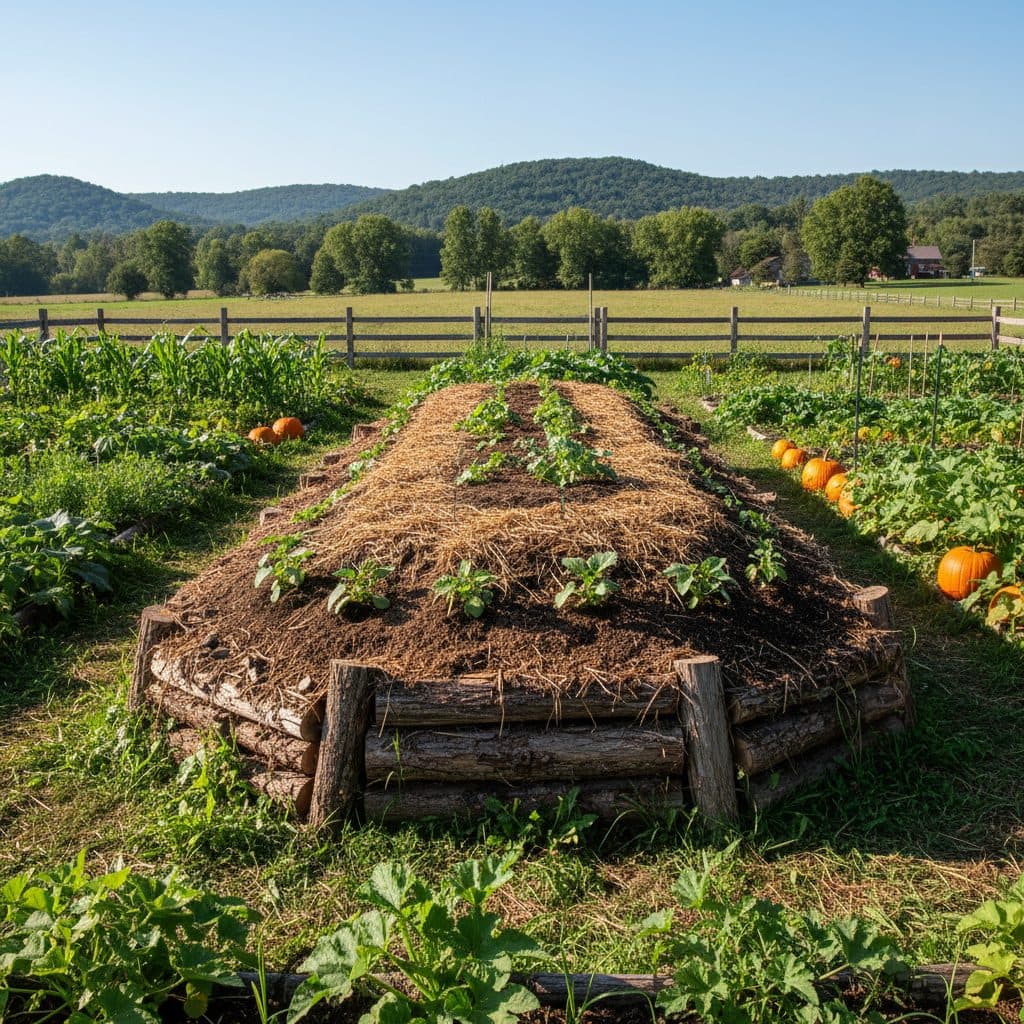
Hugelkultur beds are essentially raised garden beds built over a mound of decaying wood. This core of wood provides several long-term benefits for a garden, particularly in regions like the high desert of New Mexico, where annual rainfall might only be 8 to 15 inches. As the wood slowly breaks down over 10 to 20 years, it creates a rich, spongy soil structure that can hold a remarkable amount of water. This internal water reservoir means plants have consistent access to moisture, even during extended dry periods, reducing the need for frequent watering by as much as 50% compared to flat beds. The decomposition process also releases essential nutrients, enriching the soil over time and supporting robust plant growth without heavy fertilization.
The role of decomposition in water retention
The magic of hugelkultur lies in the wood’s decomposition. Initially, fresh logs absorb water like a sponge. As fungi and bacteria break down the wood, they create a porous, humus-rich material that can hold its own weight in water, sometimes up to 100% more than surrounding soil. This process is most active in the first 3 to 5 years, but the benefits continue for decades. For example, a 3-foot tall hugelkultur mound in USDA zone 7 can effectively store thousands of gallons of water over its lifespan, slowly releasing it to plant roots. This consistent moisture also helps regulate soil temperature, keeping roots cooler in summer and warmer in winter, which is a significant advantage in areas with extreme temperature swings, often exceeding 40°F in a single day.
- Increased water retention: Decaying wood acts like a sponge, holding significant moisture.
- Nutrient release: As wood decomposes, it slowly feeds the soil and plants.
- Improved soil structure: Creates porous, aerated soil ideal for root growth.
- Temperature regulation: Moderates soil temperatures, protecting roots from extremes.
- Reduced irrigation: Can cut watering needs by 30% to 70% over time.
The problematic picks: woods to avoid for healthy plants
While almost any wood will eventually decompose, some species contain compounds that actively harm other plants. This phenomenon, known as allelopathy, is a critical consideration for hugelkultur, especially in a productive garden. The most notorious culprit is black walnut (Juglans nigra), common in the eastern US, particularly in states like Ohio and Pennsylvania. Its roots, leaves, and even decaying wood release juglone, a potent chemical that inhibits the growth of many common garden vegetables, including tomatoes, peppers, and blueberries. Planting within 50 feet of a mature black walnut tree, or using its wood in a hugelkultur bed, can lead to stunted growth and crop failure for sensitive plants, often resulting in a 75% reduction in yield.
Identifying and avoiding allelopathic trees
Beyond black walnut, other woods pose challenges. Most species of cedar, like the Deodar Cedar (Cedrus deodara) found in USDA zones 7-9, contain natural preservatives and oils that can slow decomposition significantly and release compounds that may inhibit plant growth, though less severely than juglone. These woods can take 20 years or more to break down, tying up nitrogen in the soil and making it unavailable for plants in the interim. Eucalyptus species, prevalent in California, also exhibit allelopathic properties and should be avoided. When sourcing wood, it matters to know the species. If you’re unsure, especially if you’re salvaging wood from an unknown source, it’s safer to avoid using it in your hugelkultur bed to prevent potential crop losses that could exceed 50%.
- Black walnut (Juglans nigra): Releases juglone, highly toxic to many plants.
- Cedar (e.g., Cedrus deodara): Contains natural preservatives, slow to decompose, may inhibit growth.
- Eucalyptus: Known for allelopathic compounds, especially in California.
- Black cherry (Prunus serotina): Can release cyanide compounds when decaying, though less of a concern than juglone.
- Chemically treated wood: Never use, as it leaches harmful chemicals into the soil.
The best choices: woods for optimal hugelkultur performance
For creating a thriving hugelkultur bed, you want woods that decompose at a reasonable rate, release nutrients without inhibiting growth, and contribute to a stable, water-retentive structure. Generally, a mix of softwoods and hardwoods works best. Softwoods, like pine, spruce, and poplar, break down relatively quickly, often within 3 to 7 years, providing an initial burst of organic matter and nutrient cycling. These are abundant in states like Oregon and Washington. This rapid decomposition helps to quickly establish the spongy, moisture-holding core of your bed, which can absorb up to 20% more water in the first few years compared to beds built solely with dense hardwoods.
Balancing decomposition rates for long-term benefits
Hardwoods, such as oak, maple, birch, and fruit tree trimmings (apple, pear, cherry – but avoid black cherry), decompose more slowly, typically over 10 to 20 years. While they take longer to break down, they provide a more stable, long-lasting structure and a sustained release of nutrients. A good strategy is to use larger hardwood logs at the base of the mound for structural integrity and long-term water storage, then layer smaller softwood pieces and other organic matter on top. This layering approach ensures both immediate benefits and sustained performance, making your hugelkultur bed productive for 15 years or more. Even in dry regions like southern California, using a mix of woods ensures consistent moisture and nutrient availability. Consider using wood from local tree services, often available for free within a 50-mile radius, especially after storm events.
- Pine (e.g., Ponderosa pine): Decomposes relatively quickly, good for initial nutrient release.
- Spruce: Similar to pine, offers quick organic matter contribution.
- Poplar: Fast-growing, decomposes well, provides good structure.
- Oak: Slow decomposition, excellent for long-term water retention and stability.
- Maple: Moderate decomposition, good for sustained nutrient release.
- Fruit tree trimmings (apple, pear): Excellent, nutrient-rich, and readily available.
Sourcing and building: getting your hugel right from the start
Once you’ve identified the best wood types, the next step is sourcing and building your hugelkultur bed. Look for local sources such as fallen trees on your property, tree service companies, or even municipal brush piles. Many tree services are happy to drop off wood chips or logs for free, especially if you’re within a 10-mile radius of their current job site, saving them disposal fees. Aim for logs ranging from 6 inches to 2 feet in diameter for the base, and smaller branches and twigs for upper layers. Ensure the wood is not treated with chemicals, as these can leach into your garden soil and harm plants, reducing yields by 80% or more. The ideal time to gather wood is often in late fall or early spring, when trees are dormant and local services are clearing storm damage.
Layering for maximum water retention and fertility
Building a hugelkultur bed involves strategic layering. Start with the largest logs at the bottom, creating a stable base that can be 2 to 4 feet wide. Fill the gaps between these logs with smaller branches, twigs, and wood chips to maximize surface area for decomposition and water absorption. On top of the wood, add layers of nitrogen-rich materials like grass clippings, leaves, and compost. This nitrogen helps balance the high carbon content of the wood, preventing nitrogen depletion in the topsoil for your plants. Finally, cap the mound with a thick layer of topsoil, at least 6 to 12 inches deep, to provide an immediate planting medium. A well-built mound in USDA zone 6, for example, can be 3 to 5 feet tall and 4 to 8 feet wide, providing ample planting space and significant water storage. For efficient watering during establishment, consider using a garden PE irrigation hose for precise water delivery.
- Start with large logs: Form the stable, long-term core at the base.
- Fill gaps with smaller wood: Maximizes surface area for decomposition and water absorption.
- Add nitrogen-rich layers: Grass clippings, leaves, and compost balance carbon.
- Top with deep soil: Provide 6 to 12 inches of quality topsoil for planting.
- Mound dimensions: Aim for 3-5 feet tall and 4-8 feet wide for optimal performance.
Beyond the mound: integrating passive irrigation and water harvesting
While hugelkultur significantly reduces watering needs, combining it with other passive irrigation techniques can create an even more resilient and water-efficient garden. For growers in drought-prone areas like California’s Central Valley, where summer temperatures regularly exceed 95°F, this integrated approach can mean the difference between a thriving garden and a struggling one. Consider embedding ollas, unglazed clay pots, directly into your hugelkultur beds. When filled with water, ollas slowly release moisture through their porous walls directly to plant roots, reducing surface evaporation by up to 70% compared to overhead watering. A single 1-gallon olla can effectively irrigate a 2-foot radius for several days, providing consistent moisture without waste.
Maximizing water efficiency with earthworks and wicking beds
Beyond ollas, incorporating small earthworks around your hugelkultur beds can capture and direct rainwater more effectively. Swales, shallow ditches on contour, can slow down runoff and allow water to infiltrate the soil, recharging the hugelkultur mound’s internal reservoir. For example, a 10-foot long swale can capture hundreds of gallons of water from a single rain event, directing it to your beds. For smaller spaces or specific crops, wicking beds can be a valuable addition. These raised beds have a built-in water reservoir at the bottom, allowing plants to draw water up as needed, minimizing evaporation and ensuring consistent moisture. A 4-foot by 8-foot wicking bed can reduce watering frequency by 50% to 80% compared to a conventional raised bed, making them ideal for high-value crops in regions with limited water, such as those in USDA zone 9. For larger operations, solar water pumps can efficiently move harvested rainwater or well water to these systems.
- Ollas: Unglazed clay pots that slowly release water directly to roots.
- Swales: Contour ditches that capture and infiltrate rainwater into the soil.
- Wicking beds: Raised beds with a bottom reservoir for consistent, efficient watering.
- Rainwater harvesting: Collecting water from roofs to supply irrigation systems.
- Living mulches: Cover crops like Black Medick reduce evaporation and build soil.
Hugelkultur Wood Comparison: Best vs. Worst
Wood Type | Decomposition Rate | Allelopathic Effect | Water Retention | Suitability |
|---|---|---|---|---|
Black Walnut | Slow | High (Juglone) | Moderate | Avoid (Toxic) |
Cedar | Very Slow | Mild (Preservatives) | Low (Initial) | Avoid (Slow/Inhibitory) |
Pine/Spruce | Fast (3-7 yrs) | None | High (Initial) | Excellent (Quick benefits) |
Oak/Maple | Slow (10-20 yrs) | None | Very High (Long-term) | Excellent (Stability/Longevity) |
Poplar/Willow | Very Fast (1-3 yrs) | None | High | Good (Quick start) |
Fruit Woods | Moderate (5-10 yrs) | None | High | Excellent (Nutrient rich) |
Water Savings: Established hugelkultur beds can reduce irrigation needs by 30% to 70% in regions like USDA zone 7, especially during dry periods.
Toxic Zone: Avoid planting sensitive crops within 50 feet of a black walnut tree or using its wood, as juglone can reduce yields by 75%.
Long-Term Benefits: Hardwoods like oak provide structural integrity and sustained nutrient release for 15-20 years, forming the core of a resilient bed.
Frequently asked questions
How long does it take for a hugelkultur bed to become effective?
A hugelkultur bed starts providing benefits immediately by holding water. Significant decomposition and nutrient release typically begin within 1 to 3 years, with peak benefits often observed after 5 years as the wood fully integrates into the soil structure, reducing watering by 30% or more.
Can I use wood chips instead of logs for hugelkultur?
While wood chips can be used, especially in the upper layers, they decompose much faster than logs, typically within 1 to 3 years. For the long-term water retention and structural benefits of hugelkultur, it’s best to use larger logs (6 inches to 2 feet in diameter) at the base of the mound, which can last for 15-20 years.
What if I accidentally used black walnut in my hugelkultur bed?
If you’ve used black walnut, you might experience stunted growth or death for sensitive plants like tomatoes or peppers. To mitigate this, you can try planting juglone-tolerant species, or, for best results, excavate the black walnut wood, which can be a significant effort if the bed is established, and replace it with suitable wood. A 2-foot deep layer of soil over the walnut wood can sometimes help, but is not guaranteed.
How deep should the soil layer be on top of the wood?
For most garden plants, a topsoil layer of at least 6 to 12 inches is recommended over the wood core. This provides sufficient depth for root development and ensures that plants have access to a rich, stable growing medium while the wood below decomposes, contributing to soil fertility for decades.
Does hugelkultur attract pests?
Initially, decaying wood might attract some insects like termites or carpenter ants. However, a healthy, active hugelkultur bed with a thick soil cap and thriving plant life generally balances these populations. Over 90% of insects in a garden are beneficial or neutral, and the bed’s ecosystem typically manages potential issues without intervention.
Can I build a hugelkultur bed in a wet area?
While hugelkultur excels in dry conditions, it can also be beneficial in wet areas by improving drainage and aeration. The raised mound elevates the planting area, preventing waterlogging, which can be critical for crops in regions receiving over 40 inches of annual rainfall. Ensure good drainage around the base to prevent the wood from becoming waterlogged and rotting too quickly.
References
- Avoiding the Worst Impacts (2022). Avoiding the Worst Impacts.
- Avoiding the Worst Impacts (2018). Avoiding the Worst Impacts.
- Therapeutics (1999). Therapeutics.
- The best of intentions and the worst of results : monochronicity and the employment of feedback avoiding behavior as a temporal self-regulatory strategy (2023). The best of intentions and the worst of results : monochronicity and the employment of feedback avoiding behavior as a temporal self-regulatory strategy.
- Embracing the Best, Avoiding the Worst: Living an Ancient Tradition Today (2022). Embracing the Best, Avoiding the Worst: Living an Ancient Tradition Today.
- USDA Natural Resources Conservation Service (2024). USDA Natural Resources Conservation Service.