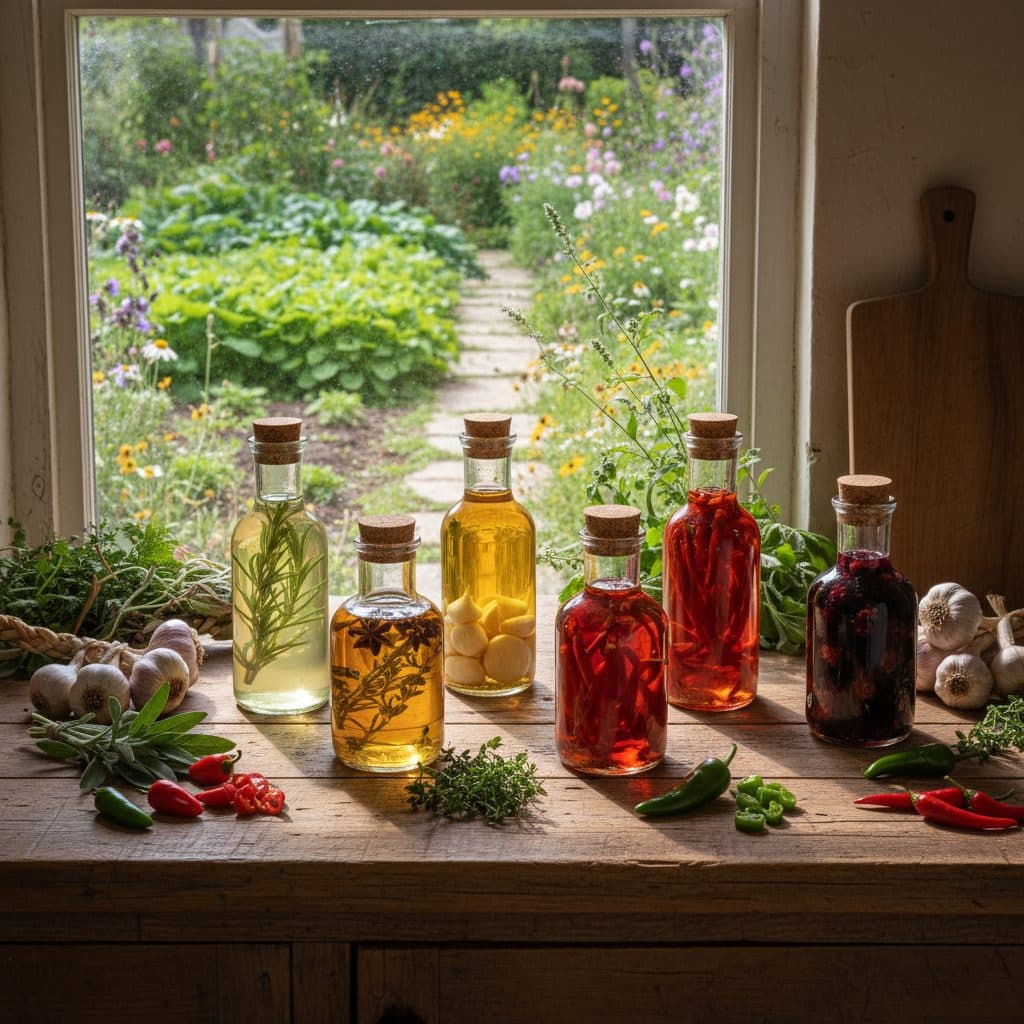
Key takeaways
- Infused vinegars preserve garden herbs, garlic, and chilies for months, reducing food waste by extending the harvest.
- Use vinegars with at least 5% acidity, such as distilled white, apple cider, or white wine vinegar, to ensure a safe pH level for infusions.
- Garlic infusions require specific safety measures: vinegar of at least 5% acidity and refrigeration throughout infusion and storage, to mitigate botulism risk.
- Hardy herbs like rosemary, thyme, and oregano are excellent choices, thriving in USDA zones 5-9 with strong, long-lasting flavor.
- Chili-infused vinegars can be customized from mild to intensely hot, depending on the pepper variety and steeping duration, adding significant culinary versatility.
- Store finished vinegars in a cool, dark pantry and monitor them for changes; discard any that turn cloudy or mouldy or develop an off odor.
Quick answer: Infused vinegars offer a practical method to preserve garden flavors like herbs, garlic, and chilies for months. Using vinegars with at least 5% acidity ensures safety and extends the harvest.
In the fertile valleys of California’s Central Valley, where summer harvests yield an abundance of herbs and peppers, many growers seek methods to extend the flavors of their gardens through the colder months. Preserving these ingredients keeps the fresh taste of garden produce available for cooking and seasoning year-round. Infused vinegars are a straightforward, effective solution that need minimal specialized equipment and keep for up to 18 months when prepared correctly.
This traditional preservation technique allows home growers across the US, from the humid climate of Florida to the arid plains of Arizona, to capture the essence of their efforts. By steeping fresh herbs, pungent garlic, or fiery chilies in a high-quality vinegar, you create a versatile pantry staple that adds depth to dressings, marinades, and cooked dishes. The process is simple, yet the results are complex and rewarding, transforming surplus garden produce into flavorful liquid assets for your kitchen.
The foundation: choosing your vinegar and equipment
Selecting the right vinegar is the first critical step in creating safe and flavorful infusions for your pantry. The acidity level, specifically the acetic acid content, is paramount for preservation. Vinegars with a minimum of 5% acidity are recommended for infusions, as this pH level helps inhibit the growth of harmful bacteria, including Clostridium botulinum. Common choices include distilled white vinegar, which offers a neutral base that allows the infused flavors to shine, and apple cider vinegar, which contributes a fruity, slightly tangy note that complements many herbs and spices. White wine vinegar provides a milder, more delicate profile, often favored for lighter infusions like edible flowers [5]. In contrast, balsamic vinegar, with its lower acidity and complex flavor, is generally not suitable for long-term infusions with fresh ingredients due to potential safety concerns.
Beyond the vinegar itself, minimal equipment is needed, making this a highly accessible preservation method for growers in any USDA zone. You will need clean, sterilized glass bottles or jars with tight-fitting, non-reactive lids — swing-top bottles or canning jars work well. A fine-mesh sieve or cheesecloth for straining, a funnel, and a cutting board with a sharp knife are also essential. For measuring, a liquid measuring cup and a kitchen scale can ensure precise ratios, especially when working with garlic or chilies where specific weights are often recommended. Most of these items are readily available in US households, keeping the initial outlay modest.
preparing your infusion vessels
Proper preparation of your containers matters, since it prevents spoilage and helps your infused vinegars keep for longer. Before beginning, wash all glass bottles and jars thoroughly with hot, soapy water, then rinse completely. Sterilize them by boiling in water for 10 minutes, ensuring they are fully submerged, or by running them through a dishwasher on a hot cycle. Allow the sterilized containers to air dry completely on a clean rack or towel, as any residual moisture can dilute the vinegar and potentially compromise its preservative qualities. This step, though simple, significantly reduces the risk of contamination, supporting the vinegar’s ability to safely preserve ingredients for up to 18 months in a cool, dark pantry.
- Wash glass bottles and jars thoroughly with hot, soapy water.
- Rinse all containers completely to remove soap residue.
- Sterilize vessels by boiling for 10 minutes or using a dishwasher’s hot cycle.
- Allow containers to air dry fully on a clean surface before use.
- Ensure lids are also clean and dry, ready for a tight seal.
Herb-infused vinegars: garden variety and methods
Herbs are perhaps the most straightforward ingredients to infuse into vinegar, offering a wide array of flavors that can transform everyday dishes. Many common garden herbs, such as rosemary, thyme, oregano, and sage, thrive across a broad range of US climates, from USDA zone 4 to 9, making them accessible to most home growers. For instance, a single mature rosemary plant in USDA zone 7 can yield several pounds of aromatic sprigs annually, more than enough for multiple batches of infused vinegar. When selecting herbs, choose fresh, healthy sprigs that are free from blemishes or signs of pest damage. Rinse them gently under cool water and pat them completely dry with a clean towel; any residual moisture can lead to mold or a cloudy vinegar, compromising the quality of your infusion. Consider growing a dedicated herb patch for this purpose, as outlined in our guide on starting a herb garden.
The ratio of herbs to vinegar typically ranges from one-quarter to one-half cup of packed fresh herbs per cup of vinegar, though this can be adjusted based on desired intensity. For strong-flavored herbs like rosemary or oregano, a 1:2 ratio (herb to vinegar) often provides a strong flavor after 2-4 weeks of steeping. Delicate herbs such as basil or mint may require a higher concentration or a shorter infusion period, around one to two weeks, to prevent bitterness. After the initial steeping, strain the vinegar through a fine-mesh sieve or cheesecloth to remove all solid herb particles. This step matters, since plant material left in the vinegar can eventually break down and introduce undesirable flavors or even mold. Properly strained and bottled, these vinegars can last for 12 to 18 months in a cool, dark pantry, retaining their fresh, herbaceous notes.
popular herb choices and their uses
Certain herbs excel in vinegar infusions due to their strong aromatic compounds and stability. Rosemary, with its piney, pungent flavor, makes an excellent vinegar for lamb marinades or roasted vegetables, particularly potatoes grown in regions like Idaho. Thyme, a staple in many kitchens, offers an earthy, slightly floral note that pairs well with poultry or salad dressings; a single plant can produce enough sprigs for several 16-ounce bottles of vinegar. Oregano, widely used in Mediterranean cuisine, provides a bold, peppery flavor that works well in tomato-based sauces and with grilled meats. For a brighter, more citrusy profile, consider lemon verbena or lemon balm, both of which grow vigorously in full sun across many US states. Experiment with different combinations, such as a blend of tarragon and chives, to discover unique flavor profiles that suit your culinary preferences.
- Rosemary: Robust, piney flavor; excellent for marinades and roasted root vegetables.
- Thyme: Earthy, slightly floral; pairs well with chicken, fish, and salad dressings.
- Oregano: Bold, peppery; ideal for Italian dishes, grilled meats, and vinaigrettes.
- Basil: Sweet, pungent; best for shorter infusions, good with tomatoes and mozzarella.
- Dill: Fresh, grassy; perfect for fish, cucumbers, and creamy dressings.
Garlic-infused vinegars: safety and flavor
Infusing vinegar with garlic offers a potent, aromatic condiment, but it requires careful attention to safety due to the risk of botulism. Garlic, a low-acid food, can harbor Clostridium botulinum spores, which thrive in anaerobic (oxygen-free) environments. When submerged in oil, these spores can produce a deadly toxin. While vinegar’s acidity generally inhibits this growth, fresh garlic in vinegar still poses a potential risk if not handled properly, especially if the vinegar’s acidity is compromised or if the garlic is not adequately prepared. To mitigate risk, always use vinegar with at least 5% acetic acid and keep the jar refrigerated for the entire infusion and storage period. A 30-second blanch does not destroy Clostridium botulinum spores, which survive boiling water, so it is not a substitute for acidity and refrigeration.
Another option is to use dried garlic or garlic powder, which brings far less moisture into the jar than fresh cloves; the vinegar's acidity remains the control either way. However, the flavor profile will differ significantly, often lacking the fresh pungency of raw garlic. If using fresh garlic, a common ratio is one-half cup of peeled, blanched garlic cloves per 2 cups of 5% acidity vinegar. After combining, store the mixture in a sterilized jar in the refrigerator for the entire infusion period, typically 2-4 weeks. This refrigeration adds an extra layer of safety, especially for home preparations. Once the desired flavor is achieved, strain out all garlic solids completely. Any remaining garlic pieces can potentially spoil the vinegar or, in rare cases, create an unsafe environment. For more on growing this essential ingredient, visit our guide on how to grow garlic.
storage and shelf life considerations
Proper storage is paramount for garlic-infused vinegars. After straining, bottle the vinegar in clean, sterilized glass containers and seal them tightly. While some sources suggest room temperature storage for strained vinegar, the safest approach for home-prepared garlic infusions is to store them in the refrigerator. This extends their shelf life and provides an additional barrier against microbial growth, particularly if there is any doubt about the complete removal of garlic solids or the vinegar’s exact acidity. Refrigerated garlic vinegar can maintain its quality for 6 to 12 months. Label each bottle with the date of preparation and the ingredients to keep track of its freshness. Discard any vinegar that shows signs of cloudiness, mold, or an off-odor, as these are indicators of spoilage.
- Always use vinegar with at least 5% acetic acid for garlic infusions.
- Keep garlic infusions refrigerated from the first day; blanching does not destroy botulism spores.
- Refrigerate garlic-infused vinegars throughout the infusion and storage periods.
- Strain out all garlic solids completely before bottling for long-term storage.
- Discard any garlic vinegar showing signs of spoilage, such as cloudiness or mold.
Chili-infused vinegars: heat and versatility
Chili-infused vinegars offer a sharp kick and depth of flavor, ranging from mildly piquant to intensely fiery, depending on the pepper variety used. This type of infusion is particularly popular in regions like the American Southwest and the Carolinas, where a wide range of chili peppers are cultivated. Peppers like jalapeños, serranos, and cayenne (a variety of Capsicum annuum) are excellent choices for a medium heat level, while bird’s eye chilies (Capsicum frutescens) or habaneros will produce a significantly hotter vinegar. When preparing chilies, always wear gloves to protect your hands from capsaicin, the compound responsible for their heat, which can cause irritation for up to several hours. Wash the peppers thoroughly and pat them dry. For a stronger infusion, you can lightly bruise the peppers or make a few small slits in their skins to allow the capsaicin and other flavor compounds to release more readily into the vinegar.
The ratio for chili infusions typically involves 5 to 10 medium-sized peppers per 2 cups of vinegar, or 3 to 5 very hot peppers. The infusion time can vary greatly, from a few days for a subtle heat to 2-4 weeks for a more pronounced spiciness. Some growers prefer to leave the peppers in the vinegar indefinitely, but for optimal flavor and to prevent the peppers from breaking down and clouding the vinegar, it is generally recommended to strain them out after 4 weeks. After straining, the chili-infused vinegar can be stored in a cool, dark pantry for 12 to 18 months. The shelf life of chili sauces, and by extension, chili-infused vinegars, is a subject of ongoing research, with studies like those on black garlic chili sauce exploring accelerated shelf-life testing methods [4].
creating custom chili blends
The true artistry of chili-infused vinegars lies in blending different pepper varieties and even adding complementary aromatics. For example, combining a mild bell pepper with a few habaneros can create a complex flavor profile with both sweetness and heat. Consider adding a few sprigs of cilantro or a bay leaf to the infusion for an additional layer of flavor, ensuring these are also thoroughly washed and dried. You can also roast the chilies lightly before infusing them; this process deepens their flavor and adds a smoky note to the vinegar, which is particularly appealing for use in barbecue sauces or marinades. Just remember to cool the roasted peppers completely before adding them to the vinegar. For those interested in preserving other garden produce, our article on fermenting and pickling vegetables offers additional methods.
- Wear gloves when handling hot chili peppers to prevent skin irritation.
- Wash and dry peppers thoroughly; bruise or slit for stronger flavor release.
- Infuse 5-10 medium chilies per 2 cups of vinegar for 2-4 weeks.
- Strain out all chili solids after infusion to prevent spoilage and cloudiness.
- Experiment with roasting chilies or adding herbs like cilantro for complex flavors.
Common Vinegars for Infusion
Vinegar Type | Acidity (approx.) | Flavor Profile | Best Uses for Infusion |
|---|---|---|---|
Distilled White Vinegar | 5% | Neutral, sharp | Allows infused flavors to dominate, good for all types. |
Apple Cider Vinegar | 5-6% | Fruity, tangy, slightly sweet | Complements herbs, garlic, and fruit-based infusions. |
White Wine Vinegar | 5-7% | Mild, delicate, slightly floral | Ideal for delicate herbs, edible flowers [5], and lighter infusions. |
Red Wine Vinegar | 5-7% | Robust, fruity, tart | Excellent for strong herbs like oregano, garlic, and savory chili blends. |
Rice Vinegar | 4-4.5% | Mild, slightly sweet | Not recommended for infusing fresh ingredients, as most rice vinegars fall below the 5% acidity minimum. |
Acidity Check: For safe home infusions, always select vinegars with a minimum of 5% acetic acid, a standard recommended by food safety guidelines.
Yield Potential: A modest dedicated herb bed will produce far more fresh herbs than a household can use fresh, with the surplus well suited to infusing.
Frequently asked questions
What is the safest way to make garlic-infused vinegar at home?
The safest method is to use vinegar with at least 5% acidity, combine it with peeled garlic, and keep the entire infusion refrigerated for the 2-4 week steeping period. Blanching does not destroy Clostridium botulinum spores, so it is not a safety step. Always strain out all garlic solids completely before bottling and continue to refrigerate the finished product for up to 12 months.
Can I use any type of vinegar for infusion?
No, it is critical to use vinegars with a minimum of 5% acetic acid for safe infusions, especially when using fresh ingredients. Distilled white, apple cider, and white wine vinegars typically meet this requirement. Vinegars with lower acidity, like some rice vinegars or balsamic, are not recommended for infusions with fresh herbs, garlic, or chilies due to increased risk of bacterial growth.
How long do infused vinegars last?
Properly prepared and strained herb or chili-infused vinegars, stored in a cool, dark pantry, can last for 12 to 18 months. Garlic-infused vinegars, even when strained, are best stored in the refrigerator and consumed within 6 to 12 months for optimal safety and flavor. Always check for signs of spoilage like cloudiness or mold.
What are the best herbs to use for infusions?
Hardy, aromatic herbs like rosemary, thyme, oregano, and sage are excellent choices for infusions, thriving in USDA zones 5-9. These herbs impart strong, stable flavors. For a brighter note, consider lemon verbena or dill. A single rosemary plant can provide several pounds of sprigs annually for infusions.
Do I need to remove the solids from the vinegar after infusion?
Yes, it is highly recommended to remove all solid ingredients (herbs, garlic, chilies) from the vinegar after the infusion period. Leaving solids in can lead to spoilage, cloudiness, and a breakdown of the plant material, potentially compromising the vinegar’s safety and flavor over its 12-18 month shelf life. Strain thoroughly using a fine-mesh sieve or cheesecloth.
Can I reuse the infused ingredients?
No, once herbs, garlic, or chilies have been steeped in vinegar for an extended period (typically 2-4 weeks), their flavor compounds have largely been extracted, and their texture will be compromised. They should be discarded after straining. Attempting to reuse them in other preparations is unlikely to yield good results and could pose food safety risks due to their altered state.
References
- Therapeutic Effects of the Wonder Herb-Garlic (2016). Therapeutic Effects of the Wonder Herb-Garlic.
- Classification of Flavored Filipino Vinegars Using Electronic Nose (2025). Classification of Flavored Filipino Vinegars Using Electronic Nose.
- GARLIC (Allium sativum L.) FLAVORED VEGGIE COOKIES: TECHNO – GUIDE (2025). GARLIC (Allium sativum L.) FLAVORED VEGGIE COOKIES: TECHNO – GUIDE.
- The Shelf-Life Prediction of Black Garlic Chili Sauce and “Cahyo” Garlic Chili Sauce with Accelerated Shelf-Life Testing (ASLT) Method Based on The Arrhenius Mo (2023). The Shelf-Life Prediction of Black Garlic Chili Sauce and “Cahyo” Garlic Chili Sauce with Accelerated Shelf-Life Testing (ASLT) Method Based on The Arrhenius Mo.
- Characterization of Edible Flower-Enriched Vinegars Infused with Cornflower, Cosmos, and Wild Pansy: A Multidisciplinary Approach (2025). Characterization of Edible Flower-Enriched Vinegars Infused with Cornflower, Cosmos, and Wild Pansy: A Multidisciplinary Approach.
- USDA Natural Resources Conservation Service (2024). USDA Natural Resources Conservation Service.