Key takeaways
- Living mulches can reduce soil surface temperatures by 10-20°F compared to bare ground.
- They cut water evaporation from the soil by 20-30%, conserving hundreds of gallons over a growing season.
- Leguminous ground covers, like kura clover, add nitrogen to the soil, potentially reducing fertilizer needs by 30-50%.
- Living mulches improve soil organic matter by 0.5-1% annually, which improves structure and fertility.
- Selecting the right species for your specific USDA hardiness zone is critical for successful establishment and performance.
- They suppress weeds effectively, reducing the labor required for hand-weeding by up to 80% in many systems.
Quick answer: Living mulches cool soil by 10-20°F through canopy shade and transpiration, significantly reducing surface temperatures and water evaporation. This creates a cooler, more humid microclimate, protecting plant roots and beneficial soil microbes in hot US climates.
In places like Phoenix, Arizona, where summer temperatures regularly top 110°F, or across the central plains in USDA zones 7-9, bare garden soil can become a frying pan. Exposed earth can reach 120°F or more, stressing plant roots, accelerating water loss, and hindering beneficial microbial life. This extreme heat makes growing challenging, even for drought-tolerant plants, and demands constant irrigation, which is unsustainable in many regions facing increasing water scarcity.
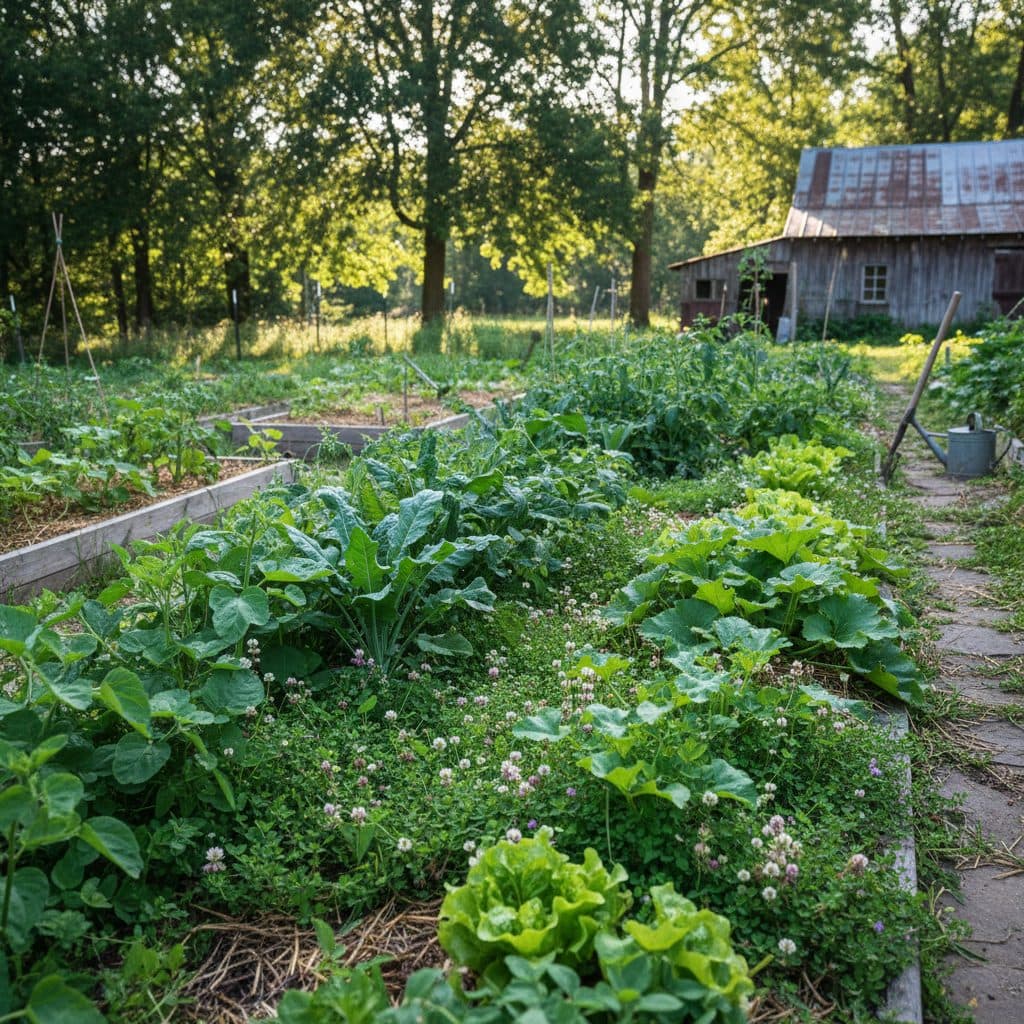
Living mulches and ground covers offer a powerful, natural solution to this problem. By covering the soil with a layer of actively growing plants, they can significantly reduce soil surface temperatures by 10-20°F, conserve precious moisture, and build long-term soil health. This approach helps create more resilient gardens in hot, dry climates, allowing plants to thrive with less intervention and fewer resources.
The heat challenge: why bare soil struggles
When summer sun beats down on exposed garden beds, the soil absorbs a tremendous amount of heat. In many parts of the US, from the humid Southeast (USDA zone 8b) to the arid Southwest (USDA zone 9a), bare soil temperatures can easily climb above 100°F, sometimes reaching 120°F or higher. This intense heat directly impacts plant roots, which prefer temperatures between 65-85°F for optimal growth and nutrient uptake. Above 95°F, root function declines sharply, leading to stress and reduced yields.
Soil temperature extremes and their impact
High soil temperatures also accelerate water evaporation from the soil surface, forcing growers to irrigate more frequently. Studies show that bare soil can lose 20-30% more water to evaporation than covered soil, a significant drain on resources, especially in areas with limited rainfall, such as California’s Central Valley. Furthermore, the beneficial microbial communities that drive nutrient cycling and soil structure are negatively affected by extreme heat, with populations declining as temperatures rise above 90°F. This can lead to a less fertile, less resilient soil environment over time.
- Reduced root growth and function above 95°F
- Accelerated water evaporation, increasing irrigation needs by 20-30%
- Decreased activity of beneficial soil microbes above 90°F
- Increased risk of soil erosion from wind and rain
- Faster breakdown of soil organic matter, depleting fertility
Understanding these challenges is the first step toward building a more resilient garden system. For more on building healthy soil, see our guide on organic gardening soil.
Living mulches: a natural cooling system
Living mulches — actively growing plants used to cover the soil — provide a natural, dynamic cooling system for your garden. Unlike inert mulches such as wood chips or straw, living mulches use their foliage and biological processes to manage soil temperature. In a study on lemon trees in Florida flatwood soils, ground covers were shown to significantly alter the rhizosphere microbiome, affecting the soil environment, including temperature regulation [2]. This biological activity contributes to a more stable soil temperature regime.
The science of soil temperature reduction
The primary cooling mechanism is canopy shade. The leaves of the living mulch intercept direct sunlight, preventing it from hitting the soil surface. This shading effect alone can reduce soil surface temperatures by 10-20°F compared to bare ground, keeping the root zone much cooler, often below 90°F even when air temperatures exceed 100°F. Beyond shading, living mulches engage in transpiration, releasing water vapor into the air through their leaves. This process is similar to how our bodies sweat; it uses energy to convert liquid water to gas, which has a localized cooling effect on the surrounding air and, indirectly, on the soil. This combination of shade and transpiration creates a microclimate that is measurably cooler and more humid near the soil surface.
- Direct shading of the soil surface by plant foliage
- Transpiration of water vapor, creating evaporative cooling
- Reduced heat absorption by the soil’s surface
- Stabilization of soil temperatures, preventing extreme fluctuations
- Protection of beneficial soil microbes from heat stress
These combined effects lead to significantly better soil moisture retention and a healthier environment for plant roots, especially in hot climates like those found in USDA zones 8-10 across the southern US.
Selecting species for resilience and performance
Choosing the right living mulch species matters for success, as different plants thrive in different conditions and offer varying benefits. Your local USDA hardiness zone and specific garden conditions — such as sun exposure, soil type, and irrigation availability — will dictate the best choices. For instance, a kura clover living mulch system has been shown to affect root growth, soil loss, runoff water, and water quality, making it a strong candidate in appropriate climates [3].
Matching plants to your USDA zone
Leguminous ground covers, such as various clovers (Trifolium spp.), are popular choices because they fix atmospheric nitrogen, enriching the soil and potentially reducing the need for synthetic nitrogen fertilizers by 30-50% [4]. White clover (Trifolium repens) is a versatile option for USDA zones 3-9, tolerating some foot traffic and mowing. For hotter, drier regions, some growers in USDA zones 7-10 might consider specific types of Bermuda grass (*Cynodon dactylon*) as a living mulch, particularly where its vigorous growth can be managed. You can explore specific options in our guide to best living-mulch and cover-crop legumes by USDA zone, or learn about growing Bermuda grass as a ground cover.
- White Clover (Trifolium repens): USDA zones 3-9, nitrogen fixer, good weed suppression.
- Kura Clover (Trifolium ambiguum): USDA zones 3-7, deep roots, excellent perennial, nitrogen fixer.
- **Creeping Thyme (Thymus serpyllum):** USDA zones 4-9, drought-tolerant, low-growing, aromatic.
- Strawberries (Fragaria virginiana): USDA zones 3-8, edible ground cover, spreads by runners.
- Bermuda Grass (Cynodon dactylon): USDA zones 7-10, very heat and drought tolerant, requires management.
The USDA Natural Resources Conservation Service (NRCS) provides excellent regional resources for selecting appropriate cover crops and living mulches, emphasizing their role in soil health [6].
Establishment and management for long-term success
Establishing a living mulch requires careful planning to ensure it complements, rather than competes with, your main crops. Proper seed-to-soil contact is vital for germination. For most species, a seeding rate of 1-2 pounds per 1,000 square feet is common. In 1989, research examined living mulch ground covers for weed control between raspberry rows, highlighting the long history of this practice [1]. This work, and subsequent studies, emphasize the importance of early establishment care.
Strategies for establishment and integration
After seeding, consistent irrigation needs are paramount for the first 2-4 weeks until the plants are established. A soil moisture meter can help monitor moisture levels, especially in dry regions. Once established, most living mulches are relatively low-maintenance. Regular mowing or trimming to a height of 4-6 inches helps prevent them from outcompeting your main crops and encourages a denser, more effective ground cover. For example, in grape vineyards, living or straw mulch effectively managed weeds and improved soil quality, demonstrating the benefits of consistent cover [5]. This management also helps stimulate new growth and nitrogen fixation in legumes, benefiting the entire system.
- Prepare a fine seedbed for good seed-to-soil contact.
- Broadcast seeds evenly at recommended rates (e.g., 1-2 lbs per 1000 sq ft).
- Provide consistent moisture for the first 2-4 weeks post-seeding.
- Mow or trim living mulch to 4-6 inches to manage growth and competition.
- Monitor for signs of nutrient competition with main crops, especially during establishment.
By carefully managing your living mulch, you create a resilient system that supports your primary plants while reducing the need for external inputs. For more on general mulching practices, consider our article on mulch for organic gardening.
More than just cooling: soil health and biodiversity
While soil cooling is a primary benefit in hot climates, living mulches offer a cascade of other advantages that contribute to a healthier, more productive garden ecosystem. They significantly improve soil organic carbon content, which is fundamental to fertile soil. Over time, living mulches can increase soil organic matter by 0.5-1% annually, improving soil structure and its capacity to hold water and nutrients. This improvement in soil structure leads to better water infiltration and reduced runoff, especially during heavy rainfall events.
Enhancing the garden ecosystem
Living mulches also support microbial communities. Research indicates that leguminous and non-leguminous ground covers can induce microbial community changes in organic cropping systems compared to plastic mulch, promoting a more diverse and active soil food web [4]. This increased biodiversity extends above ground too, attracting beneficial insects like pollinators and predatory insects, which can help with pest control. By reducing the need for synthetic fertilizers and pesticides, living mulches contribute to a more balanced and self-sustaining garden, requiring less intervention from the grower and yielding healthier plants. This holistic approach builds resilience against drought and extreme temperatures, making your garden more resilient to environmental challenges.
- Increased soil organic matter by 0.5-1% annually.
- Improved soil structure, leading to better water infiltration.
- Enhanced microbial diversity and activity in the soil.
- Reduced soil erosion from wind and rain.
- Attraction of beneficial insects and pollinators.
These benefits combine to create a truly resilient growing environment, reducing the need for constant inputs and making your garden more productive in the long run.
Comparison of Soil Management Strategies in Hot Climates
Feature | Bare Soil | Organic Mulch | Living Mulch |
|---|---|---|---|
Soil Temp Reduction | 0°F (absorbs heat) | 5-15°F | 10-20°F |
Water Evaporation | High (20-30% more) | Medium (10-20% less) | Low (20-30% less) |
Weed Suppression | Poor | Good | Excellent |
Organic Matter | Declines | Increases slowly | Increases steadily (0.5-1% annually) |
Nitrogen Input | None | Minimal | Adds nitrogen (legumes) |
Microbial Diversity | Low, stressed | Moderate | High, thriving |
Soil Temperature: Bare soil in direct sun can reach 120°F or more, while a living mulch can keep the soil surface below 90°F, protecting delicate root systems.
Water Savings: Living mulches can reduce water evaporation from the soil by 20-30% compared to bare ground, saving hundreds of gallons of irrigation water over a single growing season.
Nitrogen Boost: Leguminous living mulches, such as various clovers, can contribute 30-50% of a crop’s nitrogen needs, significantly reducing reliance on synthetic fertilizers.
Frequently asked questions
How much can living mulch cool the soil?
Living mulches can reduce soil surface temperatures by 10-20°F compared to bare soil, protecting plant roots from heat stress above 95°F and maintaining a more stable root environment.
Do living mulches compete with my main crops?
Yes, some competition can occur, particularly in the first 4-6 weeks after establishment; however, proper species selection and management, such as regular mowing to 4-6 inches, can minimize this impact and foster a beneficial relationship.
How long does it take for living mulch to establish?
Most living mulches establish within 6-12 weeks, providing significant ground cover and initial soil benefits within one growing season. Full benefits, like substantial organic matter increase, develop over 1-2 years.
Can I use living mulch in raised beds?
Absolutely; living mulches work exceptionally well in raised beds, helping to maintain consistent soil moisture and temperature, especially in beds less than 18 inches deep, which can dry out quickly in hot climates.
What about pests and diseases with living mulches?
A diverse living mulch can actually increase beneficial insect populations by 15-25%, which helps control pests naturally. When managed correctly, living mulches generally do not increase disease incidence and can even improve plant health, making them more resistant.
How much water can living mulch save?
Living mulches can reduce water evaporation from the soil by 20-30% compared to bare ground. This can translate to hundreds of gallons of water saved over a growing season in a typical 500 square foot garden.
References
- LIVING MULCH GROUND COVERS FOR WEED CONTROL BETWEEN RASPBERRY ROWS (1989). LIVING MULCH GROUND COVERS FOR WEED CONTROL BETWEEN RASPBERRY ROWS.
- Effect of fabric mulch ground covers on lemon trees rhizosphere microbiome in Florida flatwood soils (2023). Effect of fabric mulch ground covers on lemon trees rhizosphere microbiome in Florida flatwood soils.
- Corn/kura clover living mulch system effects on root growth, soil loss, runoff water and water quality (2023). Corn/kura clover living mulch system effects on root growth, soil loss, runoff water and water quality.
- Assessing microbial community changes in organic cropping under leguminous and non-leguminous ground covers compared to plastic mulch (2026). Assessing microbial community changes in organic cropping under leguminous and non-leguminous ground covers compared to plastic mulch.
- Effect of Living or Straw Mulch on Weed Management and Soil Quality in Grape Vineyards (2008). Effect of Living or Straw Mulch on Weed Management and Soil Quality in Grape Vineyards.
- USDA Natural Resources Conservation Service (2024). USDA Natural Resources Conservation Service.