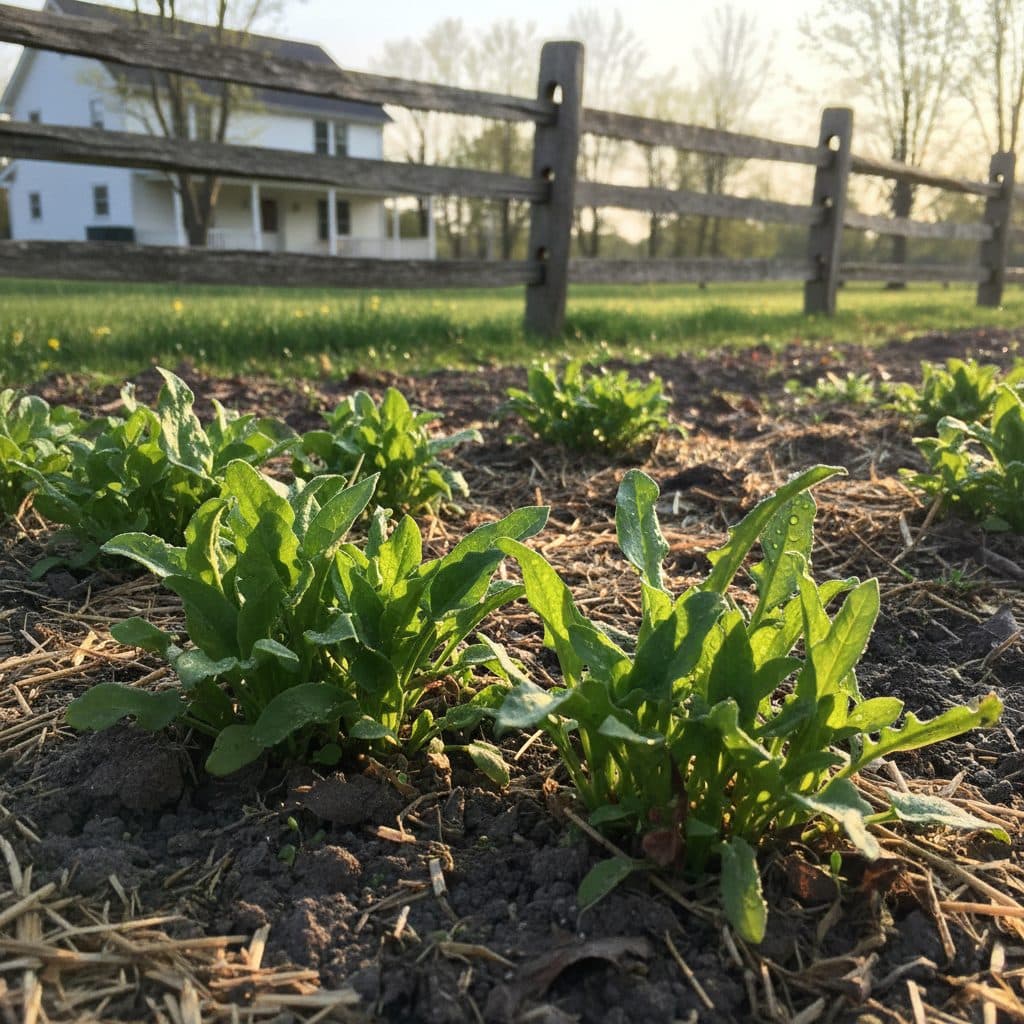
Key takeaways
- Many perennial greens, like sorrel and Good King Henry, thrive from USDA zone 3 to 9, offering early spring harvests.
- Proper site selection and soil preparation matter for perennial beds, which aim for a pH between 6.0 and 7.0.
- Sorrel (Rumex acetosa) can yield up to 3 pounds of tangy leaves per plant annually, starting early in the season.
- Good King Henry (Chenopodium bonus-henricus) is a heritage vegetable, providing edible leaves, shoots, and flower buds.
- Harvesting perennial greens correctly (taking outer leaves or young shoots) ensures continuous production for 10 to 20 years.
- Consider diversifying your perennial greens patch with walking onions, perennial kales, and asparagus for varied early season nutrition.
Quick answer: Perennial greens like sorrel and Good King Henry can be grown in USDA zones 3-9, providing early spring harvests with minimal annual effort. They require proper site selection, rich soil, and consistent moisture to thrive for many years.
Across the northern United States, from Michigan’s Upper Peninsula to the high plains of Montana, gardeners often face a hungry gap in early spring. While annuals are just being sown indoors, the ground is still cold, and fresh produce is scarce. However, certain resilient plants, many of which are hardy down to USDA zone 3, offer a consistent harvest year after year with minimal effort. These perennial greens emerge as soon as the snow melts, providing some of the earliest fresh food from the garden, often weeks before other crops are ready for harvest.
Cultivating perennial greens like sorrel and Good King Henry can significantly extend your harvest season, offering a reliable supply of nutritious leaves from March through November in many regions. These plants require less annual labor than traditional vegetable gardens, as they establish deep root systems that help them withstand temperature fluctuations and return with vigor each spring. By investing a little effort upfront, you can enjoy decades of fresh greens at the time of year when the annual garden has least to offer.
Sorrel: the tangy spring tonic
Common sorrel (Rumex acetosa) is a perennial herb valued for its tart, lemon-like flavor, which brightens salads and sauces. That tartness is oxalic acid — the same compound that makes rhubarb leaves inedible. Sorrel is safe in the modest amounts used in a salad, soup or sauce, but it should not be eaten in quantity, is best avoided by anyone prone to kidney stones or gout, and should not be fed in bulk to livestock. This hardy plant thrives in USDA zones 3 through 9, tolerating a wide range of conditions. It prefers full sun to partial shade, especially in warmer southern climates where afternoon shade can prevent bolting. Sorrel typically grows to a height of 12 to 24 inches, forming a neat clump of arrow-shaped leaves. In a well-maintained bed, a single plant can produce up to 3 pounds of leaves per season, starting as early as March in temperate zones.
planting and care for robust sorrel
To establish sorrel, sow seeds 0.25 inches deep in early spring or fall, spacing plants 6 to 12 inches apart. Ensure the soil is rich in organic matter, with a pH between 6.0 and 7.0, which is ideal for nutrient uptake. Water consistently, providing about 1 inch of water per week, especially during dry spells. You can begin harvesting outer leaves when plants are 4 to 6 inches tall, typically 60 to 70 days after seeding. Regular harvesting encourages new growth and can extend the productive life of the plant for 5 to 10 years. For more zone-specific perennial plant ideas, explore our Perennial Leafy Greens and Edible Weeds for Every Zone guide.
- Choose a site with at least six hours of sunlight per day.
- Amend soil with 2 inches of compost before planting.
- Sow seeds 0.25 inches deep, 6 to 12 inches apart.
- Maintain consistent soil moisture, providing 1 inch of water weekly.
- Harvest outer leaves when plants reach 4 to 6 inches in height.
Good King Henry: a forgotten vegetable
Good King Henry (Chenopodium bonus-henricus) is a fascinating, often overlooked perennial vegetable with a rich history, once a staple in European cottage gardens. This plant is exceptionally hardy, thriving in USDA zones 3 to 9, and can produce for 15 to 20 years from a single planting. It prefers rich, moist soil and partial shade, especially in regions with hot summers like those found in USDA zone 7. The plant can reach 18 to 30 inches in height, offering multiple edible parts: young leaves, asparagus-like shoots, and flower buds. Historically, it was cultivated for its nutritional value, providing essential vitamins and minerals.
cultivating this heritage green
Plant Good King Henry from root divisions or seeds in early spring or fall, spacing plants about 12 to 18 inches apart. Ensure the soil is consistently moist, especially during dry periods, by applying 1 to 2 inches of water weekly. Mulching with 3 inches of straw or shredded leaves helps retain soil moisture and suppress weeds. The young shoots, harvested in spring when 4 to 8 inches tall, can be steamed or sautéed like asparagus. Leaves can be picked throughout the growing season, offering a mild, spinach-like flavor; like spinach they carry oxalates, plus saponins that give raw leaves a soapy edge, so cook them rather than eating them raw in quantity. This plant appeared in gardening texts from as early as 1889 and has long been valued by gardeners for reliable, long-term yields [1]. For more on establishing long-term perennial beds, consider our guide on How to grow asparagus.
- Plant root divisions or seeds 12 to 18 inches apart.
- Ensure rich, moist soil with a pH between 6.0 and 7.5.
- Mulch with 3 inches of organic material to retain moisture.
- Harvest young shoots when 4 to 8 inches tall in spring.
- Pick leaves throughout the season for a spinach-like flavor.
Establishing a perennial greens bed for longevity
Creating a dedicated perennial greens bed is an investment that pays dividends for years, sometimes for over 20 years with proper care. The key to success lies in thorough site preparation and thoughtful plant selection. Choose a location that receives at least six hours of direct sunlight daily, though some greens like Good King Henry appreciate afternoon shade in hotter climates, such as those found in USDA zone 8. Good drainage is paramount; perennial roots dislike sitting in water, which can lead to rot. Consider building raised beds 8 to 12 inches high if your native soil is heavy clay, improving drainage significantly.
soil preparation and initial planting
Before planting, conduct a soil test to determine pH and nutrient levels. Most perennial greens prefer a slightly acidic to neutral pH, ranging from 6.0 to 7.0. Amend the soil generously with 4 to 6 inches of well-rotted compost or other organic matter, working it into the top 8 to 10 inches of soil. This improves soil structure, fertility, and water retention. When planting, space your perennial greens according to their mature size; for example, sorrel needs 6 to 12 inches, while Good King Henry benefits from 12 to 18 inches. Water thoroughly after planting, providing about 1 gallon per square foot, to settle the soil around the roots. This careful preparation gives plants a strong start that carries them through many seasons.
- Select a site with 6+ hours of daily sunlight.
- Ensure excellent drainage, considering raised beds if needed.
- Amend soil with 4 to 6 inches of compost to a depth of 10 inches.
- Space plants according to their mature size, typically 6 to 18 inches apart.
- Water new plantings with 1 gallon per square foot to establish roots.
Beyond sorrel and Good King Henry: other hardy choices
While sorrel and Good King Henry are excellent choices, the world of perennial greens offers many other options to diversify your early spring harvest. Consider walking onions (Allium proliferum), which are hardy down to USDA zone 3 and produce small bulblets at the top of their stalks, which then ‘walk’ to new locations. These provide a continuous supply of mild onion flavor from March to November. Perennial kales, such as ‘Daubenton’s’ or ‘Nine Star’, are also fantastic for gardeners in USDA zones 5 through 9, yielding tender leaves for up to 10 years. These kales can grow quite large, sometimes reaching 3 to 4 feet in height and width, providing substantial harvests. You can find more information on specific varieties like spring onion or mustard greens for perennial options.
expanding your perennial palate
Asparagus (Asparagus officinalis) is another classic perennial, producing edible spears for 20 years or more in USDA zones 3 to 8. Rhubarb (Rheum rhabarbarum), though often used as a fruit, is botanically a vegetable and provides tart stalks for pies and crumbles, thriving in zones 3 to 8 for up to 15 years. Even some varieties of mustard greens, like ‘Osaka Purple’, can be perennial in milder climates (USDA zone 8 and above), offering spicy leaves through winter. When selecting these plants, always check their specific hardiness zones to ensure they will thrive in your local climate.
- Walking onions provide mild onion flavor and ‘walk’ to new spots.
- Perennial kales like ‘Daubenton’s’ offer tender leaves for up to 10 years.
- Asparagus yields spears for 20+ years in appropriate zones.
- Rhubarb provides tart stalks for 15 years or more.
- Some mustard greens can be perennial in warmer USDA zones.
Harvesting and maintenance for years of yield
To ensure your perennial greens provide a consistent yield for many years, proper harvesting techniques and ongoing maintenance are essential. For plants like sorrel and Good King Henry, harvest the outer, younger leaves regularly, leaving the inner leaves to continue growing. This ‘cut-and-come-again’ method encourages continuous production and prevents the plant from bolting (going to seed) prematurely. Aim to harvest about 30% of the plant’s foliage at any one time, allowing it to recover and produce new growth. With this approach, a single sorrel plant can be harvested every 2 to 3 weeks from spring through fall in USDA zone 6.
long-term care for perennial vigor
Beyond harvesting, perennial greens benefit from a few key maintenance practices. Apply a 1-inch layer of compost around the base of plants each spring to replenish soil nutrients. Mulch with 2 to 4 inches of straw or wood chips to suppress weeds, conserve soil moisture, and regulate soil temperature. Divide mature clumps of sorrel or Good King Henry every 3 to 5 years to rejuvenate the plants and prevent overcrowding, which reduces vigor and yield. In colder climates (USDA zone 4 and below), a thick layer of mulch (6 inches) in late fall can provide extra winter protection. Regular pest and disease monitoring, addressing issues early, will help your perennial bed thrive for 10 years or more, providing a dependable source of fresh food.
- Harvest outer leaves using a ‘cut-and-come-again’ method.
- Remove no more than 30% of the plant’s foliage at once.
- Apply 1 inch of compost annually in spring.
- Maintain a 2 to 4 inch layer of mulch for moisture and weed control.
- Divide mature clumps every 3 to 5 years to maintain vigor.
Comparison of popular perennial greens for US gardens
Feature | Sorrel (Rumex acetosa) | Good King Henry (Chenopodium bonus-henricus) | Perennial Kale (e.g., ‘Daubenton’s’) |
|---|---|---|---|
Hardiness Zone | USDA Zone 3-9 | USDA Zone 3-9 | USDA Zone 5-9 |
Flavor Profile | Tangy, lemony | Mild, spinach-like | Sweet, nutty cabbage |
Edible Parts | Leaves | Leaves, shoots, flower buds | Leaves |
Mature Height | 12-24 inches | 18-30 inches | 3-4 feet |
Expected Lifespan | 5-10 years | 15-20 years | 5-10 years |
Sun Preference | Full sun to partial shade | Partial shade to full sun | Full sun |
Early Season Harvest: Perennial greens can provide fresh produce up to 4 weeks earlier than most annual vegetables, starting in March in USDA zone 6.
Long-Term Productivity: A well-established perennial greens bed can yield consistent harvests for 10 to 20 years, significantly reducing annual planting efforts.
Frequently asked questions
What are the easiest perennial greens to grow in the US?
Sorrel, Good King Henry, and walking onions are among the easiest perennial greens for most US gardeners. They are hardy from USDA zone 3 to 9 and require minimal care once established, providing harvests for 5 to 20 years.
How much sunlight do perennial greens need?
Most perennial greens perform best with at least six hours of direct sunlight daily. However, in hotter climates like USDA zone 7 and 8, some, like Good King Henry, benefit from partial afternoon shade to prevent stress and bolting, both of which cut the leaf harvest.
Can I grow perennial greens in containers?
Yes, many perennial greens, especially sorrel and walking onions, can be grown successfully in containers at least 10 to 12 inches deep and wide. Ensure containers have good drainage holes and provide consistent moisture, watering up to 2 times a day in hot weather.
When is the best time to plant perennial greens?
The best time to plant perennial greens is in early spring, after the last frost, or in early fall, at least 6 weeks before the first hard frost. This allows plants to establish their root systems before extreme temperatures, which improves their odds of coming through the first winter.
How often should I fertilize my perennial greens?
Perennial greens benefit from an annual application of 1 to 2 inches of well-rotted compost applied around the base of plants in early spring. This typically provides sufficient nutrients for the entire growing season, with little or no need for synthetic fertilizer.
References
- Good things for the garden / (1889). Good things for the garden /.
- Northern grown tested good seeds / (1897). Northern grown tested good seeds /.