Key takeaways
- Implement succession planting every 10-14 days to ensure a continuous harvest of young greens.
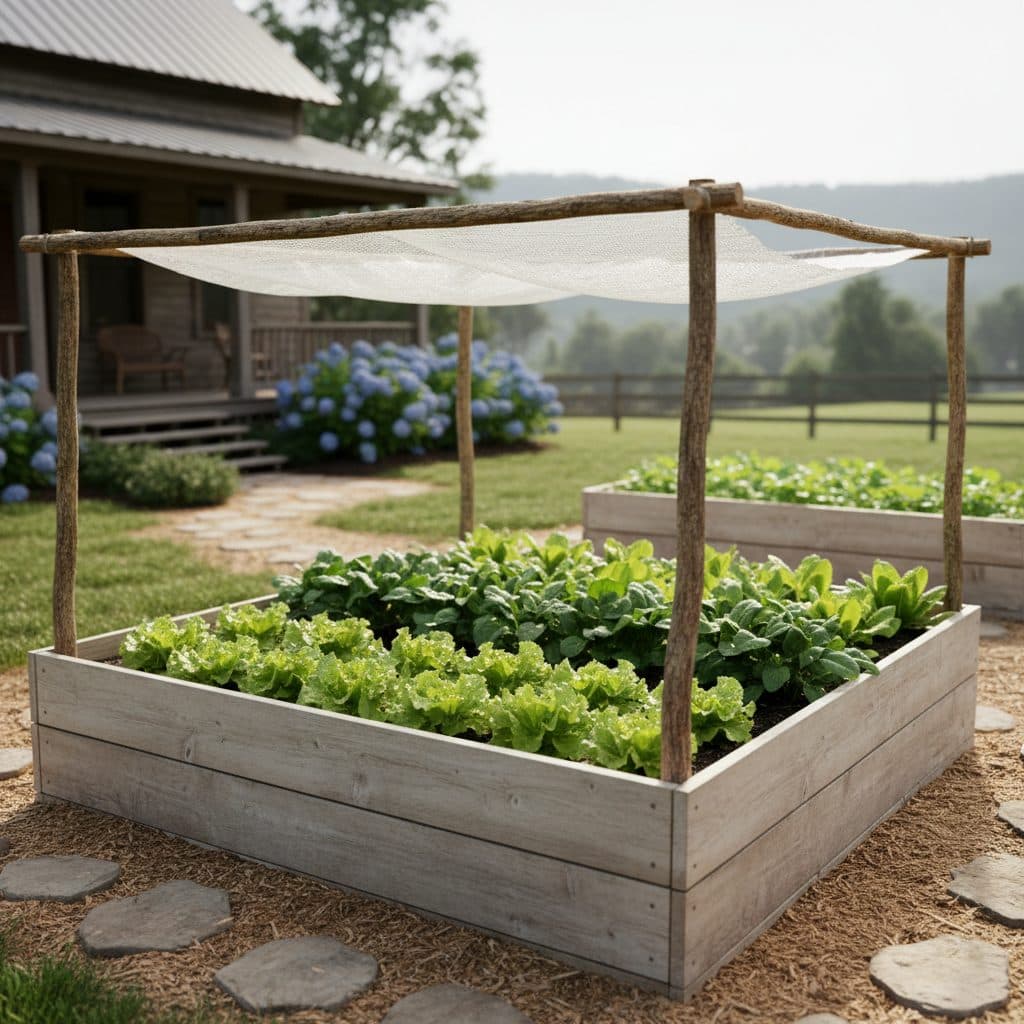
- Utilize shade cloth or natural shade from taller plants to reduce leaf temperatures by 5-10°F during peak afternoon sun.
- Maintain consistent soil moisture with 1-2 inches of water per week and a 2-4 inch layer of organic mulch.
- Select heat-tolerant lettuce varieties like ‘Nevada’ and spinach varieties such as ‘Corvair’ to extend your growing season.
- Practice cut-and-come-again harvesting to encourage continuous leaf production for 2-4 additional weeks.
- Employ container gardening to easily move heat-sensitive plants to cooler, shadier locations as needed.
Quick answer: To prevent premature bolting in lettuce and spinach, implement succession planting, utilize shade, maintain consistent soil moisture, and select heat-tolerant varieties. These strategies help extend the harvest of tender greens even in warmer temperatures.
In many parts of the United States, from the hot, humid summers of USDA zone 7 in the Southeast to the dry heat of USDA zone 9 in California, growers face a common challenge: keeping cool-season crops like lettuce and spinach from bolting. When temperatures consistently rise above 75°F, these plants quickly shift their energy from producing tender leaves to forming a flower stalk and seeds, often rendering the leaves bitter and unpalatable. This premature flowering can cut short a promising harvest by several weeks, costing gardeners time and effort.
Successfully extending the harvest of these leafy greens requires a thoughtful approach, integrating strategies like selecting appropriate varieties, managing microclimates, and employing smart planting schedules. By understanding the specific triggers for bolting — primarily day length and sustained high temperatures — growers can implement practical steps to maintain a continuous supply of fresh, sweet greens throughout the warmer months, even when daily highs reach 90°F. A well-planned garden can yield fresh greens for much of the year in many temperate zones.
The science of bolting: light, heat, and plant hormones
Bolting, or premature flowering, is a plant’s natural response to environmental stress, particularly in species like Lactuca sativa (lettuce) and Spinacia oleracea (spinach). This process is primarily triggered by two factors: increasing day length and elevated temperatures. As summer approaches, day length can extend to 14 or 15 hours in northern latitudes, signaling to the plant that it’s time to reproduce. When temperatures consistently exceed 75°F, as they often do in USDA zone 6 from late May through August, the plant accelerates its reproductive cycle. This hormonal shift directs the plant’s energy away from leaf production and towards developing a seed stalk, which can eventually reach 2 to 3 feet tall. The leaves become smaller, tougher, and produce bitter compounds, like lactucin in lettuce, making them undesirable for consumption. This rapid change can render a harvest inedible within 3 to 5 days once bolting begins. Understanding these triggers is the first step in mitigating their effects and ensuring a longer harvest of palatable greens.
- Day length exceeding 12-14 hours.
- Soil temperatures consistently above 70°F.
- Air temperatures consistently above 75°F.
- Water stress or inconsistent moisture.
- Nutrient imbalances, particularly low nitrogen.
Strategic planting — crop rotation and succession
Effective crop rotation and succession planting are fundamental practices for extending the harvest of greens like lettuce and spinach, particularly in regions like USDA zone 5 where summer heat arrives predictably in June. Crop rotation involves not planting the same crop in the same spot year after year, which helps manage soil-borne diseases and nutrient depletion [3]. For instance, following a bed of spring spinach with a summer squash crop, then a fall brassica, can break pest cycles and improve soil health. Succession planting, on the other hand, means planting small batches of crops every 10 to 14 days rather than planting an entire bed at once. This ensures a continuous supply of young, tender leaves before older plants have a chance to bolt. In a typical growing season in USDA zone 6, a gardener might sow a new row of lettuce every two weeks from early April through late May, then again from late August through October, effectively dodging the peak summer heat. This method can yield 4 to 6 distinct harvests from a single 4-foot by 8-foot bed over a season.
- Plant small batches of seeds every 10-14 days.
- Rotate crops to different beds each season to prevent disease buildup.
- Utilize diverse plant families in rotation to improve soil structure.
- Plan for 3-4 distinct planting windows for cool-season greens.
- Consider planting heat-tolerant varieties in mid-summer succession.
Site selection and microclimates
Thoughtful site selection and the creation of microclimates are powerful tools for growing cool-season greens in warmer months. In regions like the arid Southwest (USDA zone 8), where summer temperatures can regularly exceed 100°F, even a few degrees of temperature reduction can make a significant difference. Planting lettuce and spinach in areas that receive morning sun but are shaded from the intense afternoon sun — typically from 1 PM to 5 PM — can lower leaf temperatures by 5 to 10°F. This can be achieved by positioning beds on the east side of a fence, building, or taller crops like corn or pole beans. Using shade cloth with a 30% to 50% light reduction factor is another effective strategy, especially in open, sunny gardens. This material can reduce ambient air temperature beneath it by several degrees and significantly decrease leaf surface temperature, thereby delaying bolting. For example, a 40% shade cloth deployed over a lettuce bed in USDA zone 7 can extend the harvest by 2 to 3 weeks when daily highs are consistently above 85°F. Consider integrating drought-tolerant trees and shrubs on the western side of your garden for long-term shade solutions.
- Utilize existing structures for afternoon shade.
- Plant taller crops like tomatoes or corn to cast shade on greens.
- Install shade cloth with 30-50% light reduction over beds.
- Position beds to receive only 4-6 hours of direct morning sun.
- Consider planting in containers that can be moved to shadier spots.
Water management and soil health
Proper water management and healthy soil are critical in preventing bolting, especially in warmer climates where soil moisture can deplete rapidly. Spinach and lettuce thrive in consistently moist soil, not waterlogged, but never dry. In USDA zone 8, where summer temperatures can reach 95°F, beds may require 1 to 2 inches of water per week, often necessitating daily watering in sandy soils to maintain sufficient moisture. Deep and consistent watering encourages deeper root growth, making plants more resilient to heat stress, with roots potentially reaching 6 to 12 inches deep. Drip irrigation or soaker hoses are more efficient than overhead sprinklers, delivering water directly to the root zone and minimizing evaporation. Furthermore, a 2 to 4 inch layer of organic mulch, such as straw or wood chips, helps retain soil moisture, suppress weeds, and keep soil temperatures up to 10°F cooler. Healthy soil, rich in organic matter (aiming for 3% to 5% organic matter), also improves water retention and provides a steady supply of nutrients, reducing plant stress. Building soil organic matter measurably increases how much water the soil can hold. For enhancing soil structure and nutrient cycling, consider incorporating living mulches or cover crops in your rotation.
- Apply 1-2 inches of water per week, adjusted for soil type.
- Use drip irrigation or soaker hoses for efficient watering.
- Maintain a 2-4 inch layer of organic mulch.
- Incorporate compost annually to build soil organic matter.
- Monitor soil moisture daily during peak summer heat.
Choosing the right varieties and harvesting techniques
One of the most direct ways to combat bolting is by selecting heat-tolerant varieties of lettuce and spinach. While no variety is entirely bolt-proof in extreme heat, some are bred to withstand higher temperatures and longer days better than others. For lettuce, look for varieties like ‘Black Seeded Simpson’, ‘Green Star’, ‘Nevada’, or ‘Mascara’, which are often listed as slow-to-bolt. Spinach varieties such as ‘Corvair’, ‘Bloomsdale Long Standing’, or ‘New Zealand Spinach’ (which is botanically different but used similarly) show greater resilience to summer heat. These varieties can extend the harvest window by several weeks in USDA zone 6, allowing for production when standard varieties would have already bolted. Harvesting technique matters too. Continuously harvesting the outer leaves of lettuce and spinach, rather than cutting the entire head, signals to the plant to produce more foliage. This “cut-and-come-again” method can prolong the harvest by 2 to 4 weeks. Once a plant shows even the slightest sign of a central stalk forming, which might be 1-2 inches tall, harvest the entire plant immediately to prevent bitterness. Timely harvesting can maintain leaf quality for an additional 7 to 10 days. For more options, explore perennial edible greens that naturally tolerate diverse climates.
- Choose ‘Black Seeded Simpson’ or ‘Nevada’ lettuce for heat tolerance.
- Plant ‘Corvair’ or ‘Bloomsdale Long Standing’ spinach for summer.
- Consider ‘New Zealand Spinach’ (Tetragonia tetragonioides) as a heat-tolerant alternative; blanch the leaves and discard the water before eating, and pull volunteer seedlings as they appear, since it self-sows freely.
- Harvest outer leaves regularly using the cut-and-come-again method.
- Remove entire plants at the first sign of a central stalk.
Container gardening and vertical systems
For growers with limited space or those in particularly hot microclimates, container gardening and vertical growing systems offer flexible solutions for preventing bolting. Using containers, from 5-gallon buckets to fabric grow bags, allows gardeners to move lettuce and spinach plants to shadier locations as the sun intensifies throughout the day. In USDA zone 9, where afternoon sun can be relentless, shifting pots from full sun in the morning to a protected patio in the afternoon can extend the harvest of a single lettuce plant by 3 to 4 weeks. Vertical planters, such as stackable towers or wall-mounted pockets, also create natural shade for lower plants and can be positioned to optimize sun exposure, potentially increasing planting density by 50% to 100% in a small footprint. These systems often use less soil and water, making precise moisture management crucial. Furthermore, the limited soil volume in containers means nutrients can deplete faster, so regular feeding with a balanced liquid fertilizer (e.g., 5-1-1 NPK ratio) every 2 to 3 weeks keeps plants vigorous, less prone to stress-induced bolting, and able to grow for up to 8 more weeks.
- Use 5-gallon containers or larger for individual lettuce plants.
- Move containers to afternoon shade when temperatures exceed 80°F.
- Utilize vertical planters to create self-shading tiers.
- Monitor container soil moisture daily, as it dries faster.
- Fertilize container plants every 2-3 weeks with a liquid feed.
Heat Tolerance of Common Lettuce and Spinach Types
Crop Type | Heat Tolerance | Typical Bolting Temp |
|---|---|---|
Loose Leaf Lettuce | Moderate | 75-80°F |
Romaine Lettuce | Moderate-High | 80-85°F |
Butterhead Lettuce | Low | 70-75°F |
Standard Spinach | Low | 70-75°F |
New Zealand Spinach | High | 85-95°F |
Malabar Spinach | Very High | Does not bolt like true spinach; flowers late in the season |
Soil Temperature: Maintaining soil temperatures below 70°F can delay bolting by several weeks in USDA zone 7.
Shade Cloth Use: A 40% shade cloth can reduce leaf surface temperature by 5-10°F, extending harvest by 2-3 weeks in hot climates.
Frequently asked questions
What is the ideal temperature range for growing lettuce and spinach without bolting?
Lettuce and spinach prefer cooler temperatures, ideally between 50°F and 70°F. Consistent temperatures above 75°F, especially combined with long day lengths, will typically trigger bolting within 10 to 14 days for most varieties.
Can I stop a lettuce plant from bolting once it has started?
Once a lettuce or spinach plant has started to bolt and form a central stalk, it is very difficult to reverse the process. The leaves will likely become bitter quickly. It is best to harvest the entire plant immediately, even if small, to salvage some edible leaves before bitterness fully develops, often within 3-5 days.
How much water do lettuce and spinach need in hot weather to prevent bolting?
In hot weather, lettuce and spinach require consistent moisture, typically 1 to 2 inches of water per week, delivered deeply to the root zone. In sandy soils or during heatwaves exceeding 90°F, daily watering might be necessary to keep the soil consistently moist and cool.
Are there any specific lettuce varieties that are truly bolt-resistant for summer?
While no lettuce variety is completely bolt-proof in extreme summer heat, some are significantly more tolerant. Varieties like ‘Nevada’, ‘Mascara’, ‘Green Star’, and ‘Black Seeded Simpson’ are known for their slow-to-bolt characteristics and can extend your harvest by 2 to 3 weeks in USDA zone 6.
Does planting lettuce in partial shade really make a difference?
Yes, planting lettuce in partial shade, particularly from the intense afternoon sun (1 PM to 5 PM), can make a substantial difference. It can reduce leaf temperatures by 5 to 10°F and delay bolting by several weeks, especially in regions like USDA zone 7 where summer sun is very strong.
How does crop rotation help prevent bolting?
Crop rotation primarily helps prevent bolting indirectly by improving overall plant health and reducing stress. By rotating crops, you mitigate soil-borne diseases and pest buildup, ensuring plants have access to adequate nutrients and face fewer stressors, which can otherwise trigger premature bolting.
References
- USDA Natural Resources Conservation Service (2024). USDA Natural Resources Conservation Service.
- EPA — Soak Up the Rain (2024). EPA — Soak Up the Rain.
- SARE — Sustainable Agriculture Research & Education (2023). SARE — Sustainable Agriculture Research & Education.
- ATTRA / NCAT Sustainable Agriculture (2023). ATTRA / NCAT Sustainable Agriculture.
- USDA National Agroforestry Center (2023). USDA National Agroforestry Center.