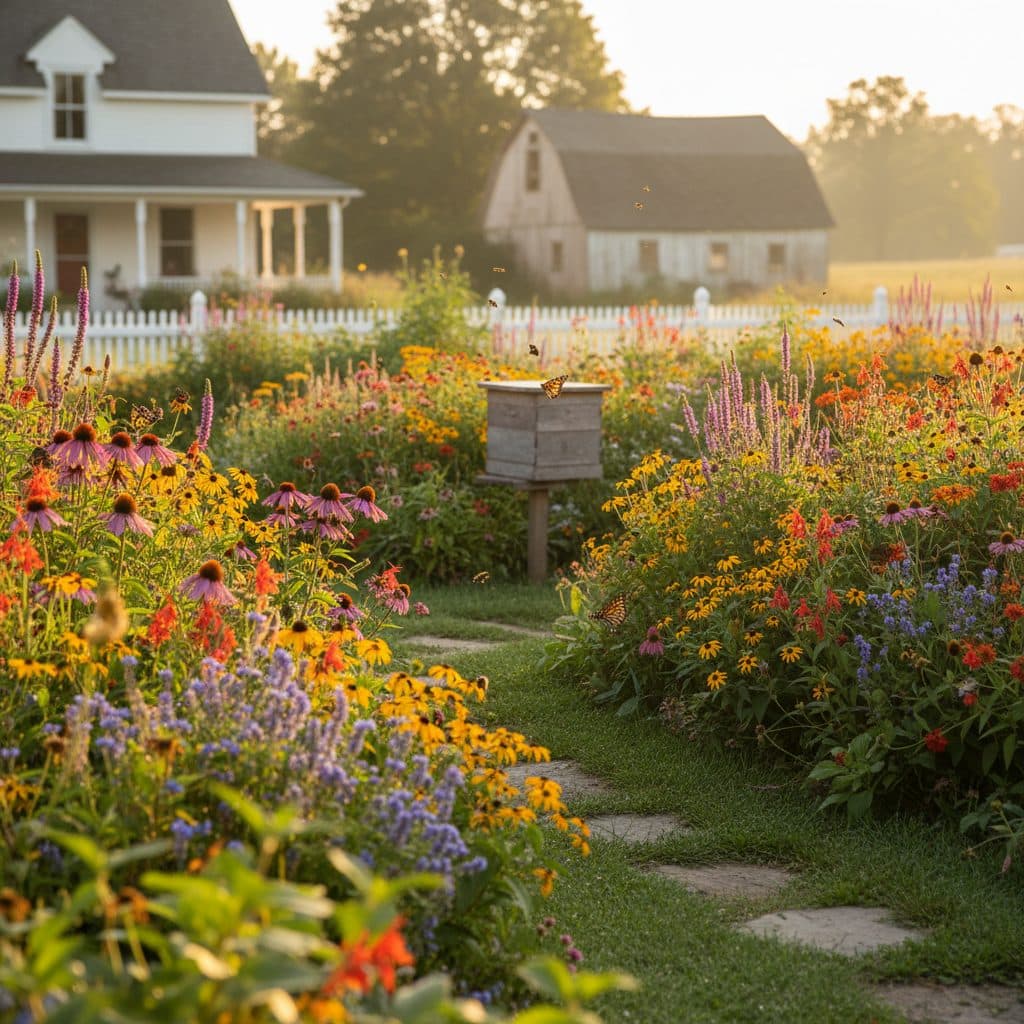
Key takeaways
- Match plant selections to your specific USDA hardiness zone to ensure winter survival and optimal growth.
- Prioritize native plants for your region, as they are best adapted to local conditions and support local wildlife.
- Design your garden with continuous bloom times from early spring to late fall to provide consistent pollinator forage.
- Incorporate water sources, bare ground, and shelter to create a comprehensive habitat for diverse pollinator species.
- Avoid systemic pesticides, which can harm pollinators even when applied to non-flowering parts of plants.
- Consider plant structure and flower type to attract a wider range of pollinators, including bees, butterflies, and hummingbirds.
Quick answer: To select pollinator plants for USDA zones 3-10, match plant selections to your specific USDA hardiness zone, prioritize native species, and design for continuous bloom times. This ensures winter survival, supports local wildlife, and provides consistent forage for diverse pollinator species.
In the vast landscapes of the United States, from the chilly peaks of Colorado’s USDA zone 3 to the subtropical warmth of Florida’s USDA zone 10, gardeners face diverse challenges and opportunities. Selecting the right plants is paramount, especially when aiming to support the critical work of pollinators. These tiny workers are responsible for pollinating many flowering plants, including a significant portion of the world's food crops, including many of the fruits and vegetables we consume daily.
Understanding your specific USDA Plant Hardiness Zone is the first step in creating a thriving pollinator garden. This guide provides a region-by-region breakdown, offering practical advice and plant suggestions to help establish a productive habitat for bees, butterflies, and other insects. The USDA Plant Hardiness Zone Map, updated by the USDA Agricultural Research Service, divides North America into 13 zones based on average annual extreme minimum winter temperatures [6].
Understanding USDA plant hardiness zones for pollinator success
The USDA Plant Hardiness Zone Map is a practical tool for any grower, especially when planning a pollinator garden. It helps determine which perennial plants are most likely to survive the winter in a specific location, based on the average annual extreme minimum winter temperature. For instance, a plant rated for USDA zone 6 can typically withstand winter temperatures down to -10 °F. Ignoring these zones can lead to plant failure and wasted effort, as a plant suited for USDA zone 9 will not survive a typical winter in USDA zone 4, where temperatures can drop to -30 °F.
Choosing plants adapted to local conditions, as outlined by USDA zones, can significantly significantly reduce the need for supplemental irrigation. This conserves water and produces healthier, more resilient plants that support pollinator populations. The map is divided into 10-degree Fahrenheit zones, which are further split into ‘a’ and ‘b’ subzones representing 5-degree Fahrenheit differences. For example, USDA zone 7a has an average minimum winter temperature of 0 to 5 °F, while 7b ranges from 5 to 10 °F. For more low-maintenance options, consider exploring low maintenance perennials that thrive in your specific zone.
Key considerations for zone selection
When selecting plants, always confirm their hardiness rating against your local zone. Many nurseries and seed suppliers list this information clearly. Beyond just winter survival, consider other factors like summer heat tolerance, which can be just as critical in regions like USDA zone 9, where temperatures can regularly exceed 90 °F for extended periods. Pollinator activity, critical for many flowering plants, can vary significantly with environmental factors like altitude, as observed with Berberis lycium pollinators [3]. This demonstrates that growers should match plants to the entire local climate profile, including summer conditions as well as winter lows.
- Identify your specific USDA zone and subzone using the official map.
- Research native plants that are naturally adapted to your region’s climate.
- Consider microclimates within your property, such as sheltered areas or south-facing walls.
- Factor in summer heat and humidity, not just winter cold, for optimal plant health.
- Choose plants with diverse bloom times to provide continuous forage for pollinators throughout the growing season.
Pollinator plants for northern regions: USDA zones 3-5
Northern gardens in USDA zones 3 to 5 face harsh winters and shorter growing seasons. The average annual extreme minimum temperatures in these zones can drop to -40 °F in zone 3 and -20 °F in zone 5. Despite the cold, many resilient native plants thrive here and provide essential resources for pollinators. Early spring bloomers are particularly important in these zones to support emerging queen bees and other early-season insects. For optimal establishment, many perennial pollinator plants in USDA zone 5 typically require a minimum of 6 hours of direct sunlight daily during the growing season.
Primary species include milkweeds (Asclepias spp.), essential host plants for monarch butterflies, which are hardy even in USDA zone 3. Other excellent choices are coneflowers (Echinacea spp.), asters (Symphyotrichum spp.), and goldenrods (Solidago spp.), all of which offer abundant nectar and pollen. These plants often establish within one to two growing seasons in USDA zone 6. Consider planting in large drifts of at least 3 feet by 3 feet to create a more visible and attractive target for pollinators. You might also want to look into best fodder trees and shrubs that can also provide early pollen sources.
Cold-hardy pollinator picks
When designing a garden in these colder zones, choose plants that tolerate winter cold and provide a succession of blooms from early spring through late fall. For example, pussy willow (Salix discolor) offers vital pollen in early spring (USDA zones 4-8), while New England aster (Symphyotrichum novae-angliae) extends the season into October (USDA zones 4-8). The USDA Forest Service has been documenting sensitive plant species, such as those found in Region 1, since at least 1996 to inform conservation strategies [1]. This research helps identify species that may need extra protection or promotion in restoration efforts.
- Wild Bergamot (Monarda fistulosa): Attracts bees and butterflies, hardy in USDA zones 3-9.
- Smooth Blue Aster (Symphyotrichum laeve): Provides late-season nectar, thrives in USDA zones 3-8.
- Butterfly Milkweed (Asclepias tuberosa): Essential for monarchs, grows well in USDA zones 3-9.
- Canada Goldenrod (Solidago canadensis): A late-season powerhouse, suitable for USDA zones 3-9. Be aware that this species can spread aggressively via rhizomes in garden settings; consider planting less aggressive goldenrod species or providing containment.
- Purple Coneflower (Echinacea purpurea): A popular choice for many pollinators, hardy in USDA zones 3-8.
Pollinator plants for mid-continental regions: USDA zones 6-7
Mid-continental regions, typically falling within USDA zones 6 and 7, offer a longer growing season and a wider array of plant choices compared to their northern counterparts. Average annual extreme minimum temperatures in these zones range from -10 °F in zone 6a to 10 °F in zone 7b. This allows for a diverse selection of perennials, shrubs, and even some smaller trees that can support a rich variety of pollinators. In USDA zone 6, selecting native plants can significantly reduce water needs compared to non-adapted species and conserve local water supplies.
Excellent plant choices for these zones include bee balm (Monarda didyma), which is a magnet for hummingbirds and various bee species, hardy in USDA zones 4-9. Garden phlox (Phlox paniculata) produces colorful blooms and attracts butterflies, growing well in USDA zones 4-8. For vertical interest, consider blazing star (Liatris spicata), a tall, purple-flowered perennial that attracts monarch butterflies and other beneficial insects, hardy in USDA zones 3-8. Historic data from USDA Forest Service lands in northern and intermountain regions, collected since 1999, helps track changes in plant communities and resource availability [5].
Diverse options for moderate climates
Designing a pollinator garden in USDA zones 6-7 allows for significant creativity due to the moderate climate. You can easily incorporate a mix of sun-loving and partial-shade plants, creating different microhabitats. Consider adding native shrubs like serviceberry (Amelanchier spp.), which offers early spring blooms and berries for birds, hardy in USDA zones 2-9. Plant canopy position and regional climate significantly influence the diversity of pollinator guilds, affecting how many different types of pollinators a plant attracts [2]. This suggests that varying plant heights and structures can increase the number of pollinator species visiting your garden. For more drought-tolerant options, see our guide on drought-tolerant trees and shrubs by zone.
- Anise Hyssop (Agastache foeniculum): Attracts bees and butterflies, hardy in USDA zones 4-8.
- Cardinal Flower (Lobelia cardinalis): A hummingbird favorite, thrives in moist areas in USDA zones 3-9.
- Purple Lovegrass (Eragrostis spectabilis): Provides nesting material and late-season interest, hardy in USDA zones 5-9.
- Virginia Bluebells (Mertensia virginica): An early spring ephemeral, suitable for USDA zones 3-8.
- Spicebush (Lindera benzoin): Host plant for swallowtail butterflies, hardy in USDA zones 4-9.
Pollinator plants for southern and warm regions: USDA zones 8-10
Southern and warm regions across USDA zones 8 to 10 typically experience mild winters with average annual extreme minimum temperatures ranging from 10 °F in zone 8a to 30 °F in zone 10a. This allows for an extended growing season, often year-round in the warmest areas, and a wide selection of heat-tolerant and sometimes drought-tolerant plants. However, intense summer heat and humidity can also be a factor, requiring careful plant selection. A well-designed pollinator garden in these zones can attract a wide variety of insect species, including various bees, butterflies, and moths, within a typical 1000 square foot area.
Excellent choices for these zones include salvias (Salvia spp.), which come in many varieties and colors, attracting hummingbirds and bees, with many hardy in USDA zones 7-10. Lantana (Lantana camara) is another sturdy option, providing continuous blooms and attracting butterflies, thriving in USDA zones 8-11. Note that in some regions, particularly the southeastern US, it is considered invasive and should be planted with caution or substituted with a sterile cultivar or native alternative. For a unique native, consider passionflower (Passiflora incarnata), a host plant for several butterfly species, hardy in USDA zones 6-9. These regions also benefit from living mulch and cover crop legumes to improve soil health and suppress weeds.
Heat-loving pollinator favorites
In these warmer zones, it is critical to select plants that can withstand high summer temperatures and potential dry spells. Many native plants from the southeastern US or southwestern US are perfectly adapted. For example, Gaillardia (Gaillardia pulchella), or blanket flower, is very drought-tolerant and blooms profusely, attracting bees and butterflies in USDA zones 3-10. Pentas (Pentas lanceolata) offers clusters of star-shaped flowers that are highly attractive to butterflies, typically grown as an annual in cooler zones but perennial in USDA zones 10-11. Providing consistent water during dry periods, even for drought-tolerant plants, can increase nectar production for visiting pollinators. Consider adding a bird bath or shallow water source, refilling regularly during dry spells.
- Tropical Sage (Salvia coccinea): Attracts hummingbirds and butterflies, hardy in USDA zones 8-10.
- Coreopsis (Coreopsis lanceolata): Provides bright yellow blooms, suitable for USDA zones 4-9.
- Mistflower (Conoclinium coelestinum): A late-season nectar source for butterflies, hardy in USDA zones 5-10.
- Coral Honeysuckle (Lonicera sempervirens): A native vine that attracts hummingbirds, hardy in USDA zones 4-9.
- Shrimp Plant (Justicia brandegeeana): Unique flowers that attract hummingbirds, hardy in USDA zones 8-11.
Beyond plants: designing a comprehensive pollinator habitat
Creating a truly effective pollinator garden extends beyond merely selecting the right plants for your USDA zone. A comprehensive habitat provides food, water, shelter, and nesting sites. For example, a 1000 square foot garden works as a complete ecosystem when these elements are included. Bare patches of soil, small bare patches of soil, are essential for ground-nesting bees, which comprise about 70% of native bee species. These habitat elements are as important as nectar-rich flowers.
Consider adding a shallow water source, such as a bird bath with pebbles for landing, and refill it with fresh water every one to two days. Leaving some dead wood or hollow stems, at least 6 inches long and 0.25 to 0.5 inches in diameter, provides nesting sites for cavity-nesting bees. Avoid using systemic pesticides, which can harm pollinators even when applied to non-flowering parts of plants. For a holistic approach to garden design, exploring principles of permaculture design can offer further insights into creating self-sustaining ecosystems.
Creating diverse habitat structures
Pollinators require diverse structures for different life stages. For example, butterflies need host plants for their caterpillars, which might be different from the nectar plants they feed on as adults. A patch of native grasses, roughly 5 feet by 5 feet, can provide shelter and overwintering sites for many beneficial insects. Plant diversity is also key; aim for at least 10-15 different flowering species that bloom at various times throughout the season. A diverse pollinator garden can support a wide variety of insect species in a typical 1000 square foot area. This richness contributes to overall ecosystem health and resilience against pests, reducing the need for chemical interventions.
- Provide a consistent, shallow water source with landing spots for small insects.
- Leave small patches of bare, undisturbed soil for ground-nesting bees.
- Incorporate brush piles or hollow stems (at least 6 inches long) for shelter and nesting.
- Plant native grasses and small shrubs for cover and overwintering sites.
- Minimize or eliminate pesticide use, especially broad-spectrum insecticides, to protect beneficial insects.
Recommended pollinator plants by USDA zone
Plant Name | USDA Zone Range | Primary Pollinators | Bloom Season |
|---|---|---|---|
Butterfly Milkweed (Asclepias tuberosa) | 3-9 | Monarch butterflies, Bees | Summer |
Wild Bergamot (Monarda fistulosa) | 3-9 | Bees, Butterflies, Hummingbirds | Summer |
Purple Coneflower (Echinacea purpurea) | 3-8 | Bees, Butterflies | Summer to Fall |
Blazing Star (Liatris spicata) | 3-8 | Monarch butterflies, Bees | Summer |
Anise Hyssop (Agastache foeniculum) | 4-8 | Bees, Butterflies | Summer to Fall |
Tropical Sage (Salvia coccinea) | 8-10 | Hummingbirds, Butterflies | Spring to Fall |
Lantana (Lantana camara) | 8-11 | Butterflies | Spring to Fall |
Native plant benefits: Selecting native plants adapted to your USDA zone can significantly reduce water consumption and require fewer chemical inputs [6].
Pollinator diversity: A well-designed pollinator garden, even one as small as 500 square feet, can attract a wide variety of insect species [6].
References
- Plant characterization abstracts : sensitive plant species, USDA Forest Service, Region 1 (1996).
- The Influence of Canopy Position, Pollinator Syndrome, and Region on Evolutionary Transitions in Pollinator Guild Size (2008).
- Plant-Pollinator Interactions along the Altitudinal Gradient in Berberis lycium Royle: An Endangered Medicinal Plant (2024). https://doi.org/10.1101/2024.09.04.611343
- Nonlinear Regularization Decoding Method for Speech Recognition (2024).
- Historic resource production from USDA Forest Service northern and intermountain region lands. (1999).
- USDA Natural Resources Conservation Service (2024).