Key takeaways
- Many popular vegetables, including tomatoes, peppers, and beans, are primarily self-pollinating, making them ideal for urban gardens.
- Self-pollinating crops do not require insects or wind for fruit set, offering reliability in environments with limited pollinator access.
- Container, balcony, and vertical gardens can successfully grow a wide array of self-pollinating plants with proper care.
- Even self-pollinating plants can benefit from manual pollination or air movement for improved yields.
- Understanding a crop’s pollination method helps maximize harvests in small-space gardening setups.
- Wind-pollinated crops like corn can be grown in urban settings if sufficient air circulation is provided.
Quick answer: Urban gardeners can successfully grow many self-pollinating crops like tomatoes, peppers, and beans, which do not require insects or wind for fruit set. These plants are ideal for containers, balconies, and vertical gardens, especially in USDA Zone 7.
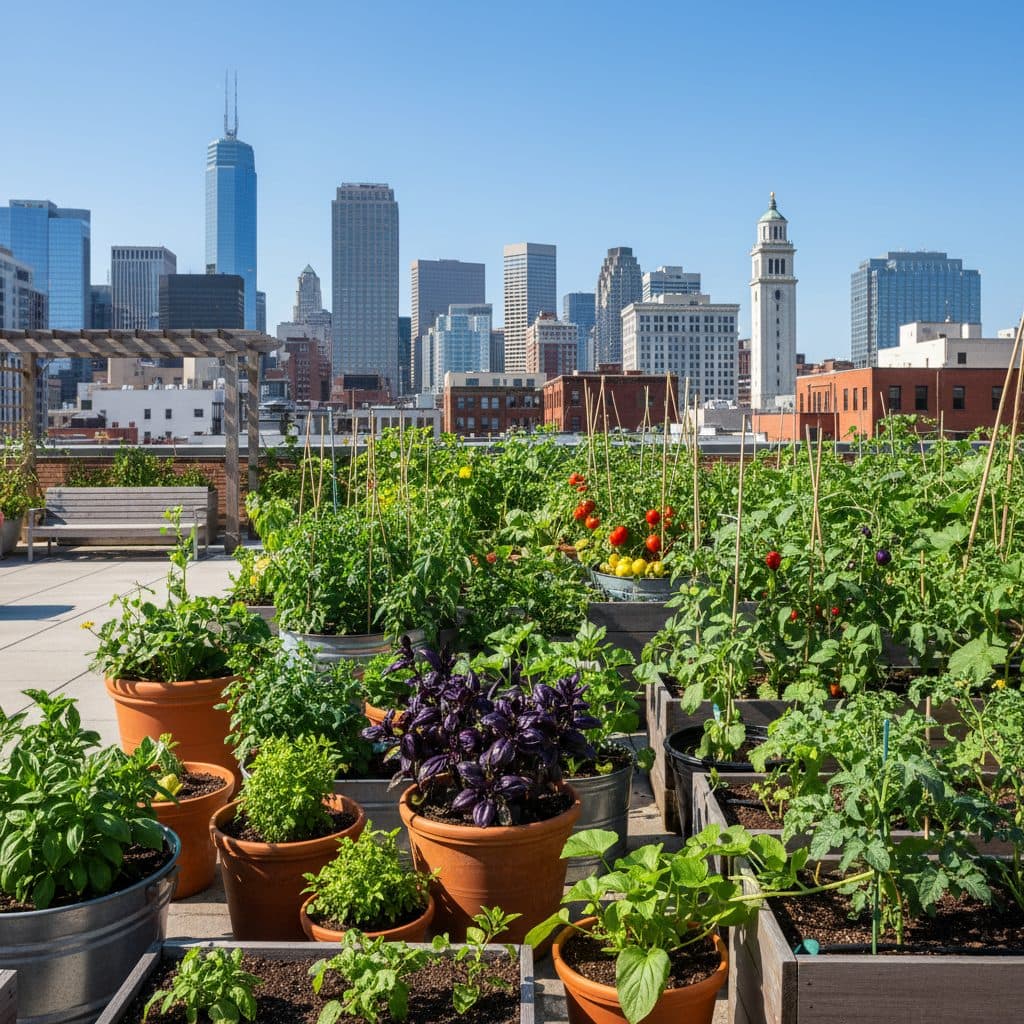
In many US cities, from the bustling rooftops of New York City to the sun-drenched balconies of Los Angeles, gardeners are finding creative ways to grow food in limited spaces. For those cultivating vegetables in containers, on balconies, or in vertical systems, a key consideration often arises: how will my plants get pollinated? While a healthy garden typically relies on a diverse population of insects, urban environments, especially those several stories up, might not always have a consistent stream of bees or other pollinators.
Fortunately, a significant number of common garden vegetables are self-pollinating, meaning they can produce fruit without external help from insects or wind [2]. This characteristic makes them excellent candidates for urban gardening where pollinator access might be limited. Understanding which crops fall into this category can help you plan a productive garden that yields fresh produce, even if you’re gardening 10 stories above street level in a USDA zone 7 climate.
Understanding pollination types for urban gardens
Pollination is the transfer of pollen from the male part of a flower to the female part, a necessary step for most plants to produce fruits and seeds. In urban gardening, especially in confined spaces or at elevated heights, understanding the three main types of pollination (self-pollination, wind pollination, and insect pollination) is necessary for success. For instance, a gardener in downtown Chicago, facing limited green space, might prioritize crops that don’t rely on external factors.
The three primary pollination methods
Self-pollination occurs when a plant can pollinate itself, either within the same flower or between different flowers on the same plant [1]. This means no external agent, like a bee or the wind, is strictly required. Examples include tomatoes, peppers, and beans, which are often excellent choices for a balcony garden in a USDA zone 8 climate. Wind pollination relies on air currents to carry pollen from one plant to another, or within the same plant, as seen with corn or spinach. This requires good air circulation, which can be a challenge on a sheltered balcony. Insect pollination, on the other hand, depends on insects like bees, butterflies, or other creatures to move pollen between flowers, and crops like cucumbers, squash, and many fruit trees fall into this category, contributing over $29 billion annually to US agricultural output [5].
- Self-pollination: Reliable fruit set without external help.
- Wind pollination: Requires adequate air movement, often a factor for corn.
- Insect pollination: Dependent on local pollinator populations, which can vary.
- Urban challenge: Limited pollinator access in high-rise or dense areas.
- Yield impact: Pollination directly affects fruit quantity and quality.
Self-pollinating vegetables: the urban gardener’s best friends
For gardeners working with limited space, such as a 4-foot by 8-foot raised bed on a rooftop or a collection of containers on a small patio, self-pollinating vegetables offer a significant advantage. These crops consistently produce without the need for a bustling bee population, ensuring a more predictable harvest. Many common garden vegetables, from the humble bean to the versatile tomato, are primarily self-pollinating, making them ideal for urban settings where pollinator visits might be sporadic.
Top choices for container and vertical gardens
Tomatoes are perhaps the quintessential self-pollinating crop, with most varieties having ‘perfect’ flowers containing both male and female parts. They thrive in containers as small as 5 gallons, producing 10 to 15 pounds of fruit per plant in a good season. Peppers, including sweet and hot varieties, are also self-pollinating and can be very productive in 3-gallon pots, often yielding a steady flush of fruit through the season. Common beans (Phaseolus vulgaris), both bush and pole types, are excellent choices, with bush beans cropping heavily for two to three weeks from a single sowing. Peas, eggplant, and lettuce are other reliable self-pollinators that do well in containers as small as 1 gallon for lettuce, and 5 gallons for peas and eggplant. They set fruit reliably without any external assistance, which makes them dependable choices for a sheltered urban space.
- Tomatoes: High yield in 5-gallon containers.
- Peppers: Productive in 3-gallon pots.
- Beans: Bush and pole varieties are self-fertile.
- Peas: Early season, consistent production.
- Eggplant: Good for larger containers, 5 gallons or more.
- Lettuce: Self-pollinating for seed saving, but harvested before flowering.
Wind-pollinated crops and how to help them thrive
While self-pollinating crops are a clear win for urban gardeners, some wind-pollinated plants can also be grown successfully with a bit of planning. Corn relies on air currents to distribute pollen [3]. Spinach and Swiss chard are wind-pollinated too, but you harvest their leaves long before they flower, so pollination has no bearing on that crop at all. For a gardener on a high-rise balcony in a windy city like Chicago, this might be less of an issue than for someone in a more sheltered courtyard in a USDA zone 9 climate. The key is to ensure pollen can travel effectively from male to female flowers.
Managing air circulation for wind-pollinators
For corn, which is monoecious (having separate male and female flowers on the same plant), planting in blocks instead of single rows can significantly improve pollination rates. A block of at least 4 by 4 plants lets wind carry pollen from the tassels (male flowers) down to the silks (female flowers). Fewer plants than that and you should expect gappy, half-filled ears. If you’re growing corn in large containers, such as 15-gallon fabric pots, consider placing them in an area with consistent, gentle breezes. For smaller wind-pollinated crops like spinach or chard, which are often grown for their leaves, pollination is less critical for harvest, but good air circulation still helps prevent fungal diseases, especially in humid climates with over 70% relative humidity. Even for these, a gentle fan can simulate natural breezes if your space is too still, improving overall plant health and seed set if you plan to save seeds.
- Plant in blocks: Far better kernel fill than single rows.
- Ensure air flow: Critical for pollen distribution in urban settings.
- Consider fans: Supplemental air movement for sheltered areas.
- Choose appropriate varieties: Dwarf corn varieties for smaller spaces.
- Monitor humidity: Good air flow reduces disease risk in humid conditions.
Manual pollination: boosting yields in confined spaces
Even for self-pollinating plants, a little manual assistance can sometimes lead to significantly better yields. A tomato plant sets much of its fruit on its own, but a gentle shake or vibration lifts that further and often gives larger, more uniform fruits. This is particularly true in environments with very still air, such as an enclosed vertical garden system or a sheltered balcony in a USDA zone 10 climate. The goal is to mimic the natural vibrations caused by wind or a visiting bee.
Simple techniques for higher harvests
For plants like tomatoes and peppers, which have ‘perfect’ flowers, you can gently shake the plant’s main stem for 5 to 10 seconds every few days when the flowers are open. This dislodges pollen, allowing it to fall onto the stigma. A soft-bristled paintbrush or a cotton swab can also be used to transfer pollen from the anthers to the stigma of individual flowers. This method is especially useful for eggplant, whose heavier pollen does not always shed on its own in still air. Another useful tool is an electric toothbrush; simply touch the vibrating head to the flower’s stem for a few seconds. Perform these tasks during the warmest, driest part of the day, typically between 10 AM and 3 PM, when pollen is most viable and flowers are fully open. This simple step can add several pounds of produce to your total harvest from a 4-foot by 4-foot container garden.
- Shake plants gently: 5-10 seconds per plant, every 2-3 days.
- Use a paintbrush: Transfer pollen manually for delicate flowers.
- Electric toothbrush: Effective for vibrating pollen loose.
- Timing is key: Best results between 10 AM and 3 PM.
- Observe pollen: Look for visible pollen on the brush or stigma.
Insect-pollinated crops: when to adapt or choose alternatives
While self-pollinating crops are a reliable choice, many delicious vegetables and fruits rely heavily on insect pollination. Cucumbers, squash, melons, pumpkins, and many berries fall into this category. For a gardener on a high-rise balcony in a dense urban area, attracting enough pollinators to ensure a good harvest can be challenging, as bee populations might be sparse or inconsistent. Insect pollinators underpin a large share of US crop value, from apples and almonds to squash and berries [5].
Strategies for insect-dependent plants in urban settings
If you’re set on growing insect-pollinated crops, there are a few strategies. First, choose compact, bush varieties suitable for containers, such as ‘Bush Crop’ cucumbers or ‘Patio Star’ squash, which can be grown in 5-gallon to 10-gallon pots. Second, consider planting pollinator-attracting flowers nearby, like marigolds or borage, though their effectiveness on a 15th-floor balcony might be limited. Third, and most reliably, you can manually pollinate these plants yourself. For squash or cucumbers, which have separate male and female flowers, identify the male flowers (which have a thin stem and pollen-dusted anthers) and female flowers (which have a small, immature fruit at their base). Pick a fresh male flower, remove its petals, and gently rub the pollen-laden anther onto the stigma of several female flowers. This must be done daily during flowering, typically between 6 AM and 10 AM, to ensure successful fruit set. If these steps seem too involved for your urban setup, consider focusing on the more reliable self-pollinating options for a less labor-intensive harvest.
- Identify male/female flowers: Needed for manual pollination of squash and cucumbers.
- Use a male flower: Pick and transfer pollen directly to female flowers.
- Daily effort: Manual pollination is a daily task during flowering.
- Early morning: Best time for pollen viability, typically 6-10 AM.
- Compact varieties: Choose bush types for container growing.
- Pollinator plants: Limited effectiveness in high-rise settings.
Planning your urban garden for maximum yield
Successfully growing vegetables in urban environments, whether on a small balcony or a sprawling rooftop, hinges on smart planning. Focusing on self-pollinating crops can significantly reduce the uncertainty associated with limited pollinator access. This approach allows a gardener in a USDA zone 5 city like Denver to achieve consistent harvests without relying on a robust local bee population. However, even with self-pollinators, paying attention to specific growing conditions remains paramount.
Key considerations for container and vertical systems
When selecting varieties, look for those labeled ‘bush’ or ‘determinate’ for tomatoes and cucumbers, as they are typically more compact and better suited for containers ranging from 3 to 15 gallons. Ensure your containers have adequate drainage holes (at least three 0.5-inch holes per 5-gallon pot) to prevent root rot. For vertical gardens, choose plants with a vining habit that can be easily trained, such as pole beans or small-fruited tomato varieties. Providing consistent moisture is necessary, as containers dry out faster than in-ground beds, often requiring watering 1 to 2 times per day during peak summer temperatures over 85°F. Furthermore, regular feeding with a balanced liquid fertilizer, perhaps every 2 weeks, will support vigorous growth and fruit production, which is the difference between a plant that keeps setting and one that stalls after the first flush. Remember that good soil and proper watering are foundational to any successful garden, urban or otherwise.
- Choose compact varieties: ‘Bush’ or ‘determinate’ types for containers.
- Adequate drainage: Essential for preventing root issues.
- Consistent watering: Containers dry out 2-3 times faster.
- Regular feeding: Liquid fertilizer every 10-14 days.
- Sunlight requirements: Most vegetables need 6-8 hours of direct sun.
- Vertical support: Trellises or cages for vining plants.
Self-pollinating vs. insect-pollinated crops for urban gardens
characteristic | self-pollinating crops | insect-pollinated crops |
|---|---|---|
pollinator requirement | minimal to none (can self-pollinate) | high (rely on bees, etc.) |
urban garden suitability | excellent (reliable harvests) | challenging (may need manual help) |
examples | tomatoes, peppers, beans, peas, eggplant, lettuce | cucumbers, squash, melons, pumpkins, strawberries |
yield reliability | high and consistent without insect visits | variable, dependent on pollinator visits |
manual intervention | optional, for boosting yields | often necessary for fruit set |
typical container size | 1-5 gallons (e.g., lettuce, peppers) | 5-15 gallons (e.g., bush squash, compact cucumbers) |
pollination value: Insect pollination contributes over $29 billion annually to US agricultural output, highlighting its economic importance [5].
tomato yields: Tomatoes, a self-pollinating crop, can yield 10 to 15 pounds per plant in a 5-gallon container with proper care.
Frequently asked questions
What are the easiest self-pollinating vegetables to grow in containers?
Tomatoes, peppers, and bush beans are among the easiest self-pollinating vegetables for containers. Tomatoes can yield 10 to 15 pounds per plant in a 5-gallon pot, while peppers are productive in 3-gallon containers, often producing 10 to 15 fruits per plant. These crops consistently produce without needing external pollinators.
Can I grow corn on a balcony without bees?
Yes, you can grow corn on a balcony without bees because it is wind-pollinated. To ensure good pollination, plant corn in a block formation, such as a 4×4 grid, instead of a single row. This allows wind to effectively carry pollen from the male tassels to the female silks. With fewer plants than that, expect gappy, half-filled ears.
How can I manually pollinate my self-pollinating plants for better yields?
For self-pollinating plants like tomatoes and peppers, gently shaking the main stem for 5 to 10 seconds every few days can significantly boost yields. You can also use an electric toothbrush to vibrate the flower stems, or a small paintbrush to transfer pollen from anthers to stigmas, especially between 10 AM and 3 PM when pollen is most viable.
Which insect-pollinated crops are most challenging for urban gardeners?
Crops like cucumbers, squash, and melons are challenging for urban gardeners because they rely heavily on insect pollination and often have separate male and female flowers. Without a consistent bee population, fruit set can be very low, unless manual pollination is performed daily during flowering, typically in the early morning hours.
Do I need special soil for container gardening self-pollinating crops?
Using a high-quality potting mix is necessary for container gardening. It should be lightweight, well-draining, and retain moisture. A good mix will provide adequate aeration and nutrients for your plants, supporting healthy growth and yields of 10 to 15 pounds for a tomato plant in a 5-gallon container.
What is the best container size for self-pollinating vegetables?
The best container size varies by crop. For instance, lettuce can thrive in 1-gallon pots, while peppers do well in 3-gallon containers. Tomatoes and eggplant typically require larger 5-gallon containers or even 10-gallon pots for optimal growth and a yield of 10-15 pounds per tomato plant. Ensure containers have at least three 0.5-inch drainage holes.
References
- Breeding Self-Pollinated Crops (1987). Breeding Self-Pollinated Crops.
- Section 2: Crop differentiation: Self-pollinated crops versus cross-pollinated (2002). Section 2: Crop differentiation: Self-pollinated crops versus cross-pollinated.
- Crop Differentiation (2002). Crop Differentiation.
- Breeding Self-Pollinated Crops (2019). Breeding Self-Pollinated Crops.
- Insect Pollinated Crops, Insect Pollinators and US Agriculture: Trend Analysis of Aggregate Data for the Period 1992–2009 (2012). Insect Pollinated Crops, Insect Pollinators and US Agriculture: Trend Analysis of Aggregate Data for the Period 1992–2009.
- USDA Natural Resources Conservation Service (2024). USDA Natural Resources Conservation Service.