Key takeaways
- Install 30% to 50% shade cloth over plants when temperatures consistently exceed 85°F to protect fruit set.
- Select heat-set tomato varieties like ‘Florida 91’ or ‘Solar Fire’ for reliable fruit production above 90°F.
- Time planting for early spring (February-March) or late summer (July-August) in USDA zones 8-10 to avoid peak summer heat.
- Implement deep, infrequent watering, aiming for 1 to 2 inches of water per week, and use 3 to 4 inches of mulch.
- Improve soil organic matter with compost and cover crops to increase water retention by up to 20% to 30% in sandy soils.
- Monitor soil moisture regularly with a soil moisture meter to prevent both over and under-watering during heat waves.
Quick answer: To successfully garden in Southwest and Texas heat, use 30-50% shade cloth, select heat-set varieties like ‘Florida 91’, and time planting for early spring or late summer to avoid peak temperatures. Implement deep watering and mulch to retain soil moisture.
Growing vegetables in the intense heat of the Southwest and Texas presents unique challenges, especially when summer temperatures regularly climb above 90°F. In regions like Phoenix, Arizona, or Dallas, Texas, where summer highs can reach 105°F for weeks on end, traditional gardening methods often lead to crop failure, particularly for sensitive plants like tomatoes and cucurbits. The goal isn’t just to keep plants alive, but to encourage them to produce a harvestable yield during these demanding conditions.
Successful heat management requires a multi-pronged approach, combining physical protection, strategic timing, and careful variety selection. By understanding the specific impacts of high temperatures on plant physiology and implementing proven strategies, growers in USDA zones 8 through 10 can achieve bountiful harvests even when the sun is at its fiercest. We’ll explore practical steps, from deploying shade cloth to optimizing water use and choosing the right plants for a 90-day growing season.
The challenge of high temperatures for fruit set
High temperatures are a major obstacle for many popular garden vegetables, particularly during their reproductive stages. For tomatoes (Solanum lycopersicum) and cucurbits like squash and cucumbers, fruit set can drastically decline or cease when daytime temperatures consistently exceed 85°F and nighttime temperatures remain above 70°F. This phenomenon, often called blossom drop, is due to several factors impacting pollen viability and fertilization processes. Research indicates that pollen from many tomato varieties becomes sterile above 90°F, leading to flowers that simply fall off without producing fruit [3].
Understanding pollen viability and stress
When temperatures soar, plants divert energy from reproduction to survival, reducing flower production and fruit development. In a typical Texas summer, with temperatures frequently hitting 100°F, this means a significant loss of potential yield. For example, a tomato plant might produce hundreds of flowers, but if only 5% of them set fruit due to heat stress, the harvest will be minimal. Cucurbits also suffer, with male flowers often appearing before female flowers during heat waves, leading to poor pollination rates. Ensuring adequate water supply is critical, as water stress exacerbates heat damage, making plants more susceptible to wilting and reduced photosynthesis when soil moisture drops below 35% of field capacity.
- Pollen sterility: Tomato pollen loses viability above 90°F.
- Blossom drop: Flowers fall off without setting fruit.
- Reduced photosynthesis: Plant metabolic processes slow down.
- Stunted growth: Overall plant development is inhibited.
- Poor fruit quality: Smaller, misshapen, or sunscalded fruits.
Deploying shade cloth effectively
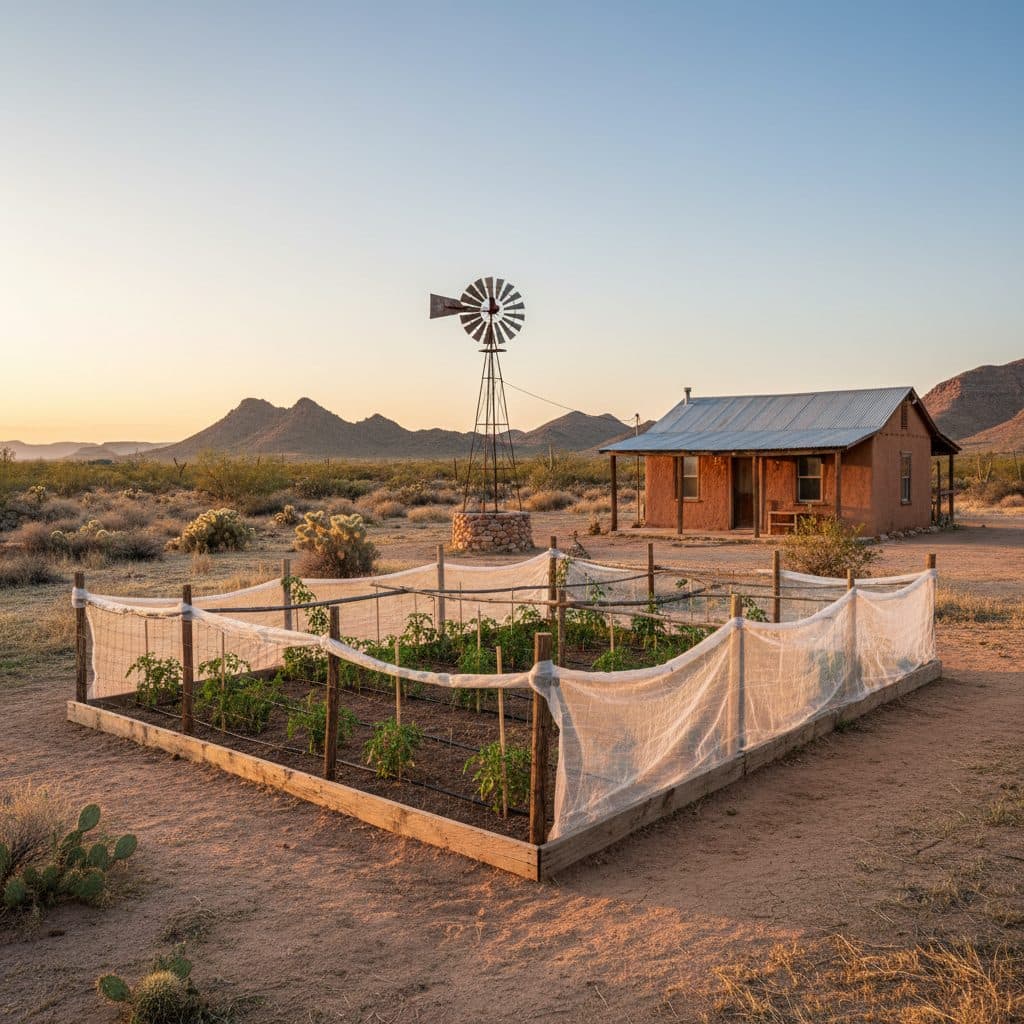
Shade cloth is one of the most effective tools for mitigating heat stress in hot climates. It works by reducing the amount of direct sunlight reaching plants, thereby lowering leaf temperatures and air temperatures around the canopy. For regions like Southern California or Central Arizona, where summer sun can be intense, a 30% to 50% shade cloth is generally recommended for tomatoes and cucurbits. A 30% shade cloth can reduce ambient temperatures by 5°F to 10°F, while a 50% cloth offers even more protection, potentially lowering temperatures by 10°F to 15°F, which can be the difference between fruit set and blossom drop [4].
Choosing and installing your shade structure
When selecting shade cloth, consider its weave and color. Black shade cloth absorbs heat, while white or reflective materials can reflect it, offering slightly cooler conditions. Install the shade cloth on a frame or hoop structure at least 6 to 7 feet above the plants to allow for adequate air circulation. This prevents heat from building up underneath the cloth. For a detailed guide on climate control structures, refer to our article on greenhouse climate control. Ensure the structure is sturdy enough to withstand summer winds, which can reach 20 to 30 miles per hour in many parts of the Southwest. You might also consider a reflective indoor grow tent for smaller, more controlled environments.
- Material: Woven or knitted polyethylene.
- Shade percentage: 30% to 50% is ideal for most vegetables.
- Height: Minimum 6 feet above plants for air flow.
- Color: Black for absorption, white/reflective for reflection.
- Durability: UV-stabilized for multi-year use.
Strategic planting times and variety selection
Timing is everything when gardening in hot climates. In USDA zones 8-10, the traditional summer planting window is often too late for many heat-sensitive crops. Instead, growers should aim for an early spring planting, typically in February or March, to allow plants to establish and set fruit before the most intense summer heat arrives in June. A second planting can occur in late summer, usually in July or August, for a fall harvest when temperatures begin to moderate. This dual-season approach maximizes the chances of success for crops like tomatoes, peppers, and beans, providing two distinct harvest periods rather than one prolonged struggle through extreme heat.
Selecting heat-set varieties for resilience
Choosing the right varieties is paramount. Many modern tomato varieties have been bred specifically for their ability to set fruit in high temperatures. Look for varieties labeled as ‘heat-set’ or ‘heat-tolerant.’ Examples include ‘Florida 91,’ ‘Solar Fire,’ ‘Heatwave II,’ and ‘Arkansas Traveler.’ For cucurbits, ‘Desert Sweet’ watermelon, ‘Cocozelle’ zucchini, and ‘Armenian’ cucumber are known to perform better in warmer conditions. These varieties can often set fruit at temperatures up to 95°F, significantly extending their productive season. For more insights on specific crop timings, explore resources like our article on how to grow peppers, which also benefit from careful timing.
- Early spring: Plant heat-sensitive crops in February-March.
- Late summer: Plant for a fall harvest in July-August.
- Tomato varieties: ‘Florida 91,’ ‘Solar Fire,’ ‘Heatwave II.’
- Cucurbit varieties: ‘Desert Sweet’ watermelon, ‘Cocozelle’ zucchini.
- Optimal temperatures: Varieties that set fruit up to 95°F.
Water management and soil health in extreme heat
Effective water management is non-negotiable in hot climates. Plants under heat stress transpire more water, meaning they lose more moisture through their leaves. This increased demand necessitates deep, infrequent watering to encourage strong, deep root systems that can access water deeper in the soil profile. Aim to provide 1 to 2 inches of water per week, delivered slowly over several hours to ensure deep penetration, especially in sandy soils prevalent in parts of Texas and Arizona. Surface watering encourages shallow roots, making plants more vulnerable to drought stress when the topsoil dries out rapidly in 100°F heat.
Mulching and soil moisture monitoring
Applying a 3 to 4 inch layer of organic mulch, such as straw, wood chips, or shredded leaves, around plants is critical. Mulch helps to conserve soil moisture by reducing evaporation by up to 30%, moderates soil temperature by 10°F to 15°F, and suppresses weeds [2]. To accurately gauge when to water, a soil moisture meter is an invaluable tool. It helps prevent both overwatering, which can lead to root rot, and underwatering, which causes wilting and blossom drop. Incorporating organic matter like compost or fermented soybean meal also significantly improves soil structure and water retention, increasing the soil’s capacity to hold water by 10% to 20% [1].
- Deep watering: 1 to 2 inches of water per week.
- Mulch application: 3 to 4 inches of organic material.
- Soil temperature: Mulch reduces soil temperature by 10-15°F.
- Evaporation reduction: Mulch can reduce evaporation by 30%.
- Moisture monitoring: Use a soil moisture meter for accuracy.
Building resilience with crop rotation and cover cropping
Beyond immediate heat mitigation, long-term soil health strategies help build a resilient garden in hot climates. Crop rotation helps break disease cycles and improves soil structure over time. For instance, rotating tomatoes with legumes can replenish nitrogen in the soil, reducing the need for synthetic fertilizers. In Texas, a three-year rotation cycle is often recommended to effectively manage soil-borne pathogens and pests that thrive in warm conditions.
The role of cover crops in soil improvement
Cover cropping is another powerful tool. Planting cover crops like sesbania, cowpeas, or sunn hemp during fallow periods can significantly improve soil organic matter, which improves water infiltration and retention. In sandy soils, adding 1% organic matter can increase water holding capacity by 10% to 20% [1]. For example, growing sesbania for twelve weeks before planting fruit trees can dramatically improve soil structure and nutrient availability. These crops also provide living root systems that prevent soil erosion during heavy summer rains and suppress weeds, reducing competition for scarce water resources. The USDA Natural Resources Conservation Service emphasizes the benefits of cover crops in improving soil health and reducing irrigation needs by up to 20% in arid regions [1].
- Crop rotation: Use a three-year cycle for disease management.
- Cover crops: Plant sesbania, cowpeas, or sunn hemp.
- Organic matter: Increases soil water retention by 10-20%.
- Erosion control: Living roots prevent soil loss during rain.
- Weed suppression: Reduces competition for water and nutrients.
Heat-set vs. standard tomato varieties in hot climates
Feature | Standard tomato varieties | Heat-set tomato varieties |
|---|---|---|
Fruit set above 90°F | Poor to none (often <5%) | Good (often >50%) |
Blossom drop | High likelihood | Reduced likelihood |
Pollen viability above 90°F | Low to sterile | Moderate to high |
Recommended USDA zones | 6-8 (cooler summers) | 8-10 (hot summers) |
Examples | Brandywine, Better Bush | Florida 91, Solar Fire, Heatwave II |
Shade cloth temperature drop: A 30% shade cloth can lower ambient temperatures around plants by 5°F to 10°F on a 100°F day [4].
Water retention increase: Increasing soil organic matter by 1% can boost water holding capacity by 10% to 20% in sandy soils [1].
Mulch evaporation reduction: A 3 to 4 inch layer of organic mulch can reduce soil moisture evaporation by up to 30% [2].
Shop heat-tolerant gardening supplies
Frequently asked questions
What is the best shade cloth percentage for tomatoes in Texas?
For tomatoes in Texas, a 30% to 50% shade cloth is generally recommended. This range provides enough protection to lower temperatures by 5°F to 15°F, preventing blossom drop while still allowing sufficient light for photosynthesis and fruit development.
When should I apply shade cloth in the Southwest?
You should apply shade cloth when daytime temperatures consistently exceed 85°F, and especially when they are forecasted to reach 90°F or higher for several consecutive days. In many Southwest regions, this typically means from late May or early June through September.
What are some good heat-set tomato varieties for USDA zone 9?
For USDA zone 9, excellent heat-set tomato varieties include ‘Florida 91,’ ‘Solar Fire,’ ‘Heatwave II,’ and ‘Phoenix.’ These varieties are specifically bred to set fruit reliably even when temperatures climb above 90°F, offering a much better chance of harvest.
How much water do heat-stressed plants need per week?
Heat-stressed plants, especially in sandy soils, typically need 1 to 2 inches of water per week, delivered through deep, infrequent watering. This encourages deep root growth, making plants more resilient to dry periods and high temperatures above 95°F.
Can cover crops really help my garden in hot climates?
Yes, cover crops significantly benefit gardens in hot climates by improving soil organic matter, which can increase water holding capacity by 10% to 20% in sandy soils [1]. They also reduce soil erosion, suppress weeds, and moderate soil temperatures by 5°F to 10°F.
References
- USDA Natural Resources Conservation Service (2024). USDA Natural Resources Conservation Service.
- EPA — Soak Up the Rain (2024). EPA — Soak Up the Rain.
- SARE — Sustainable Agriculture Research & Education (2023). SARE — Sustainable Agriculture Research & Education.
- ATTRA / NCAT Sustainable Agriculture (2023). ATTRA / NCAT Sustainable Agriculture.
- USDA National Agroforestry Center (2023). USDA National Agroforestry Center.