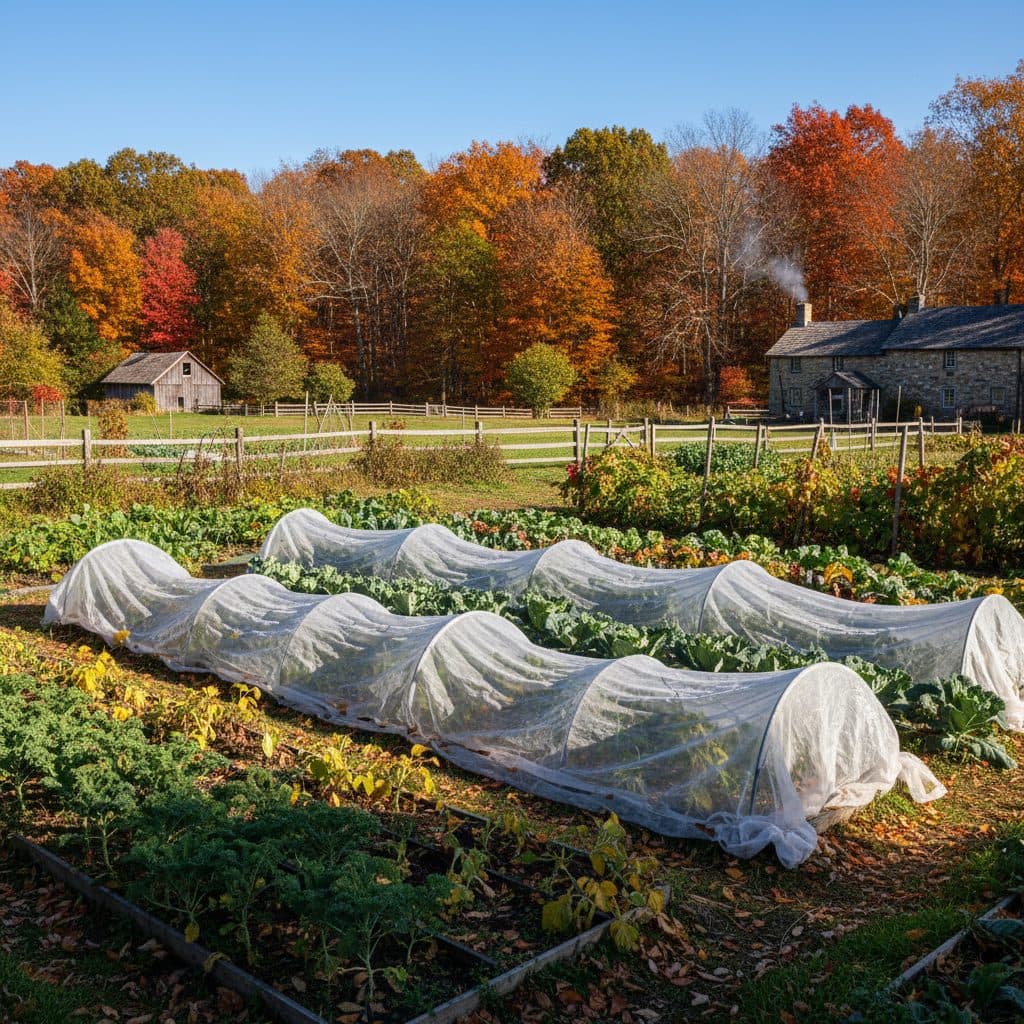
Key takeaways
- Row covers provide 2-10°F of frost protection, which extends the life of cool-season crops.
- Low tunnels can extend the harvest season by 6-8 weeks in many US regions, especially USDA zones 5-7.
- Cold frames offer passive solar heating, protecting plants by keeping soil temperatures 15-20°F above the outside air.
- Strategic crop rotation and succession planting maximize growing space and yields under season extension structures.
- In USDA zone 5, these methods allow for harvesting hardy greens like kale and spinach into December and often January.
Quick answer: You can extend your fall harvest by 45 days or more, especially in USDA zone 6, by utilizing season extension tools like row covers, low tunnels, and cold frames. These structures provide frost protection, allowing cool-season crops to thrive longer into winter when combined with strategic crop rotation and succession planting.
In the Great Lakes region, where the first hard frost can arrive by mid-October, extending the growing season by even a few weeks can significantly increase your harvest. For growers in USDA zone 6, using simple season extension tools like row covers, low tunnels, and cold frames can push the harvest window by 45 days or more, allowing for fresh produce well into winter. These tools add just enough insulation to keep cool-season crops thriving when temperatures dip.
This article will guide you through the practical application of these tools, focusing on how they integrate with smart crop rotation and succession planting strategies. We’ll explore the benefits for various US regions, from the Pacific Northwest to the Mid-Atlantic, ensuring you can keep your garden productive long after your neighbors have put theirs to bed for the winter. By understanding the specific temperature advantages of each method, you can make informed decisions to protect your plants from early frosts and late freezes, and keep cutting long after an unprotected bed has finished.
Understanding the tools: row covers, low tunnels, and cold frames
Extending your harvest into the colder months requires a foundational understanding of the tools available. Each offers a different level of protection and flexibility, suited for various crops and climates across the US. For instance, a lightweight 0.5 oz/sq yd row cover can add 2-4°F of frost protection, sufficient for protecting tender greens like lettuce from a light freeze in USDA zone 7. Heavier 1.5 oz/sq yd covers can offer up to 8-10°F of protection, making them useful in colder regions like USDA zone 4 where temperatures can drop significantly faster.
The specific benefits of each structure
Low tunnels, essentially mini-hoop houses, provide a more substantial microclimate, often extending the season by 6-8 weeks. These structures, typically 2-4 feet tall and 3-5 feet wide, are particularly effective for protecting crops like spinach, kale, and radishes from repeated frosts in areas like the Northeast. Research on growing blackberries in cold climates using high tunnels, which share similar principles, shows significant season extension benefits. A well-constructed low tunnel can maintain temperatures 10-15°F warmer than the ambient air, even when outside temperatures fall to 25°F. Cold frames, on the other hand, are rigid, bottomless boxes with transparent tops, usually glass or polycarbonate. They are excellent for overwintering hardy plants or getting an early start in spring. A typical cold frame, roughly 2 ft by 4 ft, can keep soil temperatures 15-20°F above the outside air, protecting plants even when temperatures drop to 15°F in regions like the Mountain West.
- Row covers: Lightweight fabric, 2-10°F protection.
- Low tunnels: Hooped structures, 10-15°F protection, 6-8 week extension.
- Cold frames: Rigid boxes, 15-20°F protection, excellent for overwintering.
- Material choice: Consider UV-stabilized polyethylene for tunnels, recycled windows for frames.
Strategic planting for a longer season: crop rotation and succession
Maximizing the fall harvest under protective structures relies heavily on thoughtful planning, specifically through crop rotation and succession planting. In a 100-square-foot garden bed in USDA zone 5, you might aim for three distinct harvests from a single area. For example, after harvesting early summer peas, you could plant a second crop of radishes, which mature in just 25-30 days, followed by kale or spinach for a fall harvest under a low tunnel. This approach prevents nutrient depletion and reduces pest and disease pressure, which can be particularly challenging in confined spaces. For more on maximizing pea harvests, refer to our guide on how to grow peas.
Planning your fall and winter garden layout
Effective crop rotation involves moving plant families to different beds each season over a 3-4 year cycle. For example, if you grew tomatoes (Solanaceae) in a bed during summer, you might follow with brassicas (Brassicaceae) like kale or broccoli for fall. This practice, advocated by the USDA Natural Resources Conservation Service, improves soil health [1]. Succession planting means sowing small batches of seeds every 2-3 weeks, rather than planting everything at once. This ensures a continuous supply of fresh vegetables, preventing gluts and extending the harvest period for specific crops like lettuce or cilantro into late November in USDA zone 8. Consider planting a quick-maturing crop like radishes, which can go from seed to harvest in as little as 21 days, making them ideal for filling gaps between slower-growing crops. For insights on fast-growing crops, see our article on how to grow radishes.
- Rotate plant families: Prevent nutrient depletion and disease buildup over 3-4 years.
- Succession plant: Sow small batches every 2-3 weeks for continuous harvest.
- Utilize quick crops: Radishes (21-30 days), lettuce (30-45 days) are excellent fillers.
- Plan for structure size: Match crop needs to the protection offered by row covers, tunnels, or frames.
Implementing season extension: practical steps and materials
Setting up effective season extension structures doesn’t require complex engineering, but it does demand attention to detail and appropriate materials. For a 20-foot long garden bed, you might need about 25 feet of 10-foot wide row cover fabric, costing around $30-$50. When installing row covers, ensure they are loosely draped over plants to allow for growth, and secure the edges with soil, rocks, or fabric staples every 2-3 feet to prevent wind from lifting them. This can add 4-6°F of warmth on a cold night in USDA zone 5, protecting crops like Swiss chard from light freezes down to 28°F.
Building low tunnels and cold frames
For low tunnels, common materials include 1/2-inch or 3/4-inch PVC pipes or metal hoops for frames, spaced 3-4 feet apart, covered with 4-mil or 6-mil greenhouse-grade polyethylene film. A 20-foot low tunnel might cost $100-$200 in materials. Ensure the plastic is taut to shed snow and rain, and secure it firmly to the ground with clips and stakes. Ventilation matters; on sunny days when temperatures inside the tunnel can soar above 80°F, you’ll need to lift the sides for several hours to prevent overheating and disease. Cold frames can be built from salvaged lumber and old windows, or purchased as kits. A standard 3 ft by 6 ft cold frame can be constructed for under $150 using new materials. Position cold frames with the high side facing north and the low, transparent side facing south to maximize solar gain, which can raise internal temperatures by 20°F on a sunny winter day in USDA zone 6.
- Row cover materials: 0.5-1.5 oz/sq yd fabric, securing pins or weights.
- Low tunnel materials: PVC or metal hoops, 4-6 mil greenhouse plastic, clips, stakes.
- Cold frame materials: Lumber, recycled windows/polycarbonate, hinges, handles.
- Ventilation: Essential for all structures when internal temperatures exceed 70°F.
Winterizing and maintenance: keeping the harvest going
Once your season extension structures are in place, ongoing maintenance matters for their success and the health of your plants. In regions like USDA zone 4, where winter snow loads can be significant, regularly clearing snow from low tunnels and cold frames is critical to prevent collapse. A 10-foot section of low tunnel can accumulate hundreds of pounds of snow, potentially damaging plants and structures. For cold frames, ensure the transparent tops are clean to maximize light penetration, which can be reduced by 20-30% by dirt and debris.
Managing moisture and pests in enclosed spaces
Moisture management matters too. In enclosed environments, humidity can build up, leading to fungal diseases like powdery mildew. Ventilate low tunnels and cold frames on sunny days when temperatures are above 40°F, even for a few hours, to reduce humidity and refresh the air. This practice is especially important in the Pacific Northwest, where winter humidity is naturally high. Water plants sparingly; cold-season crops require significantly less water than their summer counterparts. Check soil moisture every 7-10 days, watering only when the top 1-2 inches are dry. Pests can also be an issue; aphids and slugs can thrive in protected environments. Inspect plants regularly, perhaps once a week, and remove any pests by hand or with a gentle spray of water. Applying a 1-inch layer of straw or shredded leaf mulch around your main plants can also help regulate soil temperature and moisture.
- Clear snow: Prevent structural collapse and maximize light, especially in zones 3-5.
- Clean covers: Ensure maximum light penetration for photosynthesis.
- Ventilate: Open structures on warm days (above 40°F) to reduce humidity and prevent disease.
- Water sparingly: Check soil moisture every 7-10 days; plants need less water in cold.
- Monitor pests: Inspect plants weekly for aphids, slugs, and other common winter garden pests.
Choosing the right crops for late-season growth
Not all plants are equally suited for extended fall and winter harvests under protection. The best candidates are cool-season crops that can tolerate light frosts and even thrive with protection. In USDA zone 5, hardy greens like kale, spinach, and collards can survive temperatures down to 15-20°F under a low tunnel, providing fresh leaves well into January. Some varieties of carrots and beets can also be overwintered in the ground under heavy mulch or a cold frame, ready for harvest in early spring. For example, ‘Winterbor’ kale is known for its extreme cold hardiness, often tasting sweeter after a few frosts. You can learn more about growing cold-hardy greens in our article on how to grow kale.
varieties that excel under protection
When selecting seeds for fall and winter planting, look for varieties specifically bred for cold tolerance or quick maturity. ‘Mascara’ lettuce, a red romaine, performs well in cool conditions, as does ‘Tyee’ spinach. For root crops, ‘Danvers 126’ carrots are robust and store well in the ground. Even some herbs like parsley and cilantro can continue producing under row covers in USDA zone 7 until temperatures consistently drop below 20°F. Consider planting a diverse range of these cold-hardy vegetables to ensure a varied harvest. By focusing on these resilient crops, you can keep harvesting greens through the colder months.
- Hardy greens: Kale (‘Winterbor’), spinach (‘Tyee’), collards, Swiss chard.
- Root vegetables: Carrots (‘Danvers 126’), beets, radishes (for quick turnaround).
- Cold-tolerant herbs: Parsley, cilantro, chives.
- Quick-maturing varieties: Look for ‘early’ or ‘fast-growing’ labels on seed packets.
Comparison of Season Extension Methods
Feature | Row Cover | Low Tunnel | Cold Frame |
|---|---|---|---|
Cost (per 20 linear ft) | $30-$50 | $100-$200 | $150-$300 (for 3×6 ft) |
Temp Protection | 2-10°F | 10-15°F | 15-20°F |
Season Extension | 2-4 weeks | 6-8 weeks | 8-12+ weeks |
Ease of Installation | Very Easy | Moderate | Moderate to Hard |
Ventilation Needs | Low (fabric breathes) | High (manual lifting) | High (manual lifting) |
Best Use | Light frost, pest control | Fall/early spring crops | Overwintering, seed starting |
Frost Protection: A single layer of lightweight row cover (0.5 oz/sq yd) can add 2-4°F of frost protection, which extends the life of leafy greens into late fall in USDA zone 7.
Temperature Boost: Well-built cold frames can maintain temperatures 10-20°F above outside air, even when ambient temperatures drop to 20°F, allowing for harvests into January in USDA zone 6.
Harvest Extension: Low tunnels can extend the growing season by 6-8 weeks, enabling continuous harvests of cool-season crops like spinach and kale in regions like the Midwest, even into early winter.
Frequently asked questions
How much temperature protection do row covers provide?
Lightweight row covers (0.5 oz/sq yd) typically offer 2-4°F of frost protection, while heavier fabrics (1.5 oz/sq yd) can protect plants by 8-10°F. This can be enough to save tender crops from an unexpected early frost in USDA zone 7.
What’s the main difference between a low tunnel and a cold frame?
A low tunnel is a flexible, hooped structure covered with plastic or fabric, typically extending over a garden bed for several feet. A cold frame is a rigid, bottomless box with a transparent lid, usually smaller and more permanent, offering greater insulation and protection against temperatures dropping below 20°F.
Can I use these methods in USDA zone 3?
Yes, these methods are highly beneficial in USDA zone 3, where the growing season is short and winters are harsh. You’ll need to use the heaviest row covers, double-layer low tunnels, or well-insulated cold frames to achieve significant season extension.
What crops are best for late fall under protection?
Hardy cool-season crops are best, including kale, spinach, collards, Swiss chard, carrots, beets, and radishes. Many of these can tolerate temperatures down to 15-20°F with adequate protection, allowing for harvests into December in USDA zone 5.
How do I ventilate low tunnels and cold frames?
Ventilation prevents overheating and fungal diseases. On sunny days when the outside temperature is above 40°F, lift the sides of low tunnels or prop open the lid of cold frames for a few hours. This prevents internal temperatures from rising above 70°F, which can stress plants.
How long can I expect to extend my season?
With proper implementation, row covers can extend your season by 2-4 weeks, low tunnels by 6-8 weeks, and cold frames by 8-12 weeks or more. In USDA zone 6, this means harvesting fresh greens and root crops from a 100-square-foot bed well into December or even January.
References
- Growing blackberries in a cold climate using high tunnels (2016). Growing blackberries in a cold climate using high tunnels.
- USDA Natural Resources Conservation Service (2024). USDA Natural Resources Conservation Service.