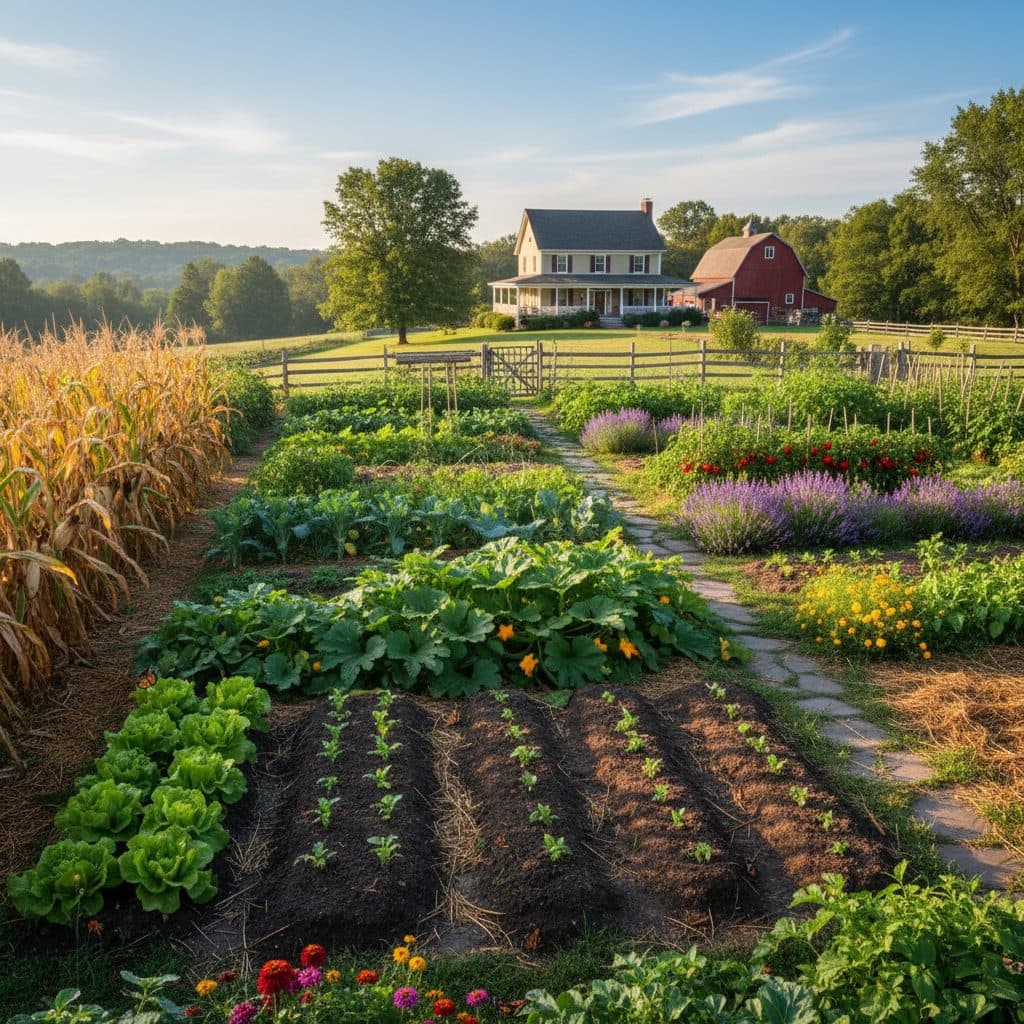
Key takeaways
- Implement same-crop succession for continuous harvests of fast-growing vegetables like radishes, planting every 2-3 weeks.
- Utilize interplanting to maximize space, growing complementary crops like corn, beans, and squash together.
- Employ relay planting to extend the harvest season, introducing new crops before the previous one finishes, such as tomatoes followed by cool-season greens.
- Practice follow-on planting to maintain soil health and productivity, rotating crop families and replenishing nutrients over a 3-year cycle.
- Tailor your succession planting strategy to your specific USDA hardiness zone and local climate conditions for optimal results.
- Plan your garden layout and planting schedule carefully to ensure successful crop transitions and efficient resource management throughout the growing season.
Quick answer: Succession planting involves planting crops in sequence to ensure continuous harvests and maximize garden space. This strategy includes same-crop, interplanting, relay, and follow-on methods, tailored to your USDA hardiness zone.
In USDA zone 6, a typical growing season might offer 180 frost-free days, a significant window for gardeners to produce a substantial harvest. However, many growers only plant their beds once in spring, leaving garden space underutilized for half the season or more. This approach often results in a feast-or-famine cycle, with an abundance of produce for a few weeks and then little to nothing for the rest of the year.
Succession planting offers a practical solution, allowing you to harvest fresh produce continuously from early spring through late fall. This strategy involves planting crops in sequence, so that as one crop finishes, another is ready to take its place, and a bed carries two or three crops in a season instead of one. By understanding the four primary types of succession planting—same crop, interplanting, relay, and follow-on—you can design a more productive and resilient garden system, no matter if you’re working with 10 square feet or 10 acres.
Same crop succession: continuous harvest from a single variety
Same crop succession is perhaps the most straightforward method for extending your harvest. It involves replanting the same crop in the same bed multiple times throughout the growing season. This technique is particularly effective for fast-maturing vegetables like radishes, lettuce, spinach, and bush beans, which can go from seed to harvest in as little as 25 to 60 days. For instance, in USDA zone 7, you could plant a 10-foot row of radishes every two weeks from early April until late May, then resume in late August for a fall harvest.
planning for rapid turnover
To implement this method successfully, you need to monitor maturity dates closely and prepare new planting areas promptly. After harvesting an initial crop, clear the spent plants, amend the soil with 1 inch of fresh compost, and replant. This ensures continuous soil fertility and structure. Consider planting a small section, perhaps 3 feet by 5 feet, with a single crop like ‘Black Seeded Simpson’ lettuce every 14 days. This staggered approach prevents an overwhelming glut of produce all at once and guarantees a steady supply of fresh greens for up to 12 weeks in cooler climates.
- Choose fast-maturing varieties, like ‘Cherry Belle’ radishes (25 days).
- Plant small batches, around 5-10 feet of row, every 2-3 weeks.
- Amend soil with 1 inch of compost after each harvest to replenish nutrients.
- Monitor weather patterns; high summer temperatures (above 80°F) can cause some cool-season crops to bolt.
- Consider different varieties for different seasons, such as heat-tolerant lettuce for summer.
Interplanting: maximizing space with companion crops
Interplanting, sometimes called companion planting, involves growing two or more different crops in close proximity within the same bed at the same time. This strategy maximizes garden space, particularly beneficial for growers with limited acreage, such as a 200-square-foot urban garden. By selecting plants with different growth habits and nutrient requirements, you can achieve higher yields per square foot. A classic example is the ‘Three Sisters’ method—corn, pole beans, and squash—practiced by Indigenous peoples for centuries, where corn provides a trellis for beans, beans fix nitrogen, and squash shades the soil to hold down weeds.
strategic plant pairings
When interplanting, consider the mature size of each plant and its light, water, and nutrient needs. Tall, sun-loving crops like tomatoes can provide partial shade for heat-sensitive greens such as lettuce or spinach, extending their harvest into warmer periods in USDA zone 5. Root crops like carrots or radishes can be planted between slower-growing, leafy vegetables, occupying the soil surface for 30-60 days before the main crop fully expands. This approach can meaningfully increase overall bed productivity compared to monoculture plantings. For more ideas on beneficial plant combinations, consider exploring resources on living mulch and cover crop legumes for your specific zone.
- Pair tall crops (e.g., corn, sunflowers) with climbing crops (e.g., pole beans, cucumbers).
- Plant shallow-rooted crops (e.g., lettuce, spinach) under deeper-rooted ones (e.g., tomatoes, peppers).
- Utilize fast-maturing crops (e.g., radishes, scallions) to fill space between slow-growing plants.
- Choose plants with complementary nutrient needs; nitrogen-fixers like beans can benefit heavy feeders.
- Ensure adequate spacing for air circulation to prevent disease, using each crop's mature spacing — 6 inches suits lettuce and spinach, but tomatoes and squash need 18 inches to 3 feet.
Relay planting: overlapping growth for extended harvests
Relay planting involves seeding or transplanting a new crop into the same growing space before the previous crop has been fully harvested. This method creates an overlap in the growing cycle, so the soil stays continuously productive and you get a seamless transition from one harvest to the next. For instance, in USDA zone 8, you might plant a fall crop of broccoli while your summer tomatoes are still producing. As the tomato plants begin to decline in late September, the young broccoli plants are already established and ready to take over the bed for a winter harvest.
timing is critical for seamless transitions
The key to successful relay planting is precise timing. You need to introduce the subsequent crop when the first crop is nearing the end of its productive life but still healthy enough to allow the new plants to establish without undue competition. This overlap might be 3-4 weeks for some crops. For example, you could sow pole bean seeds at the base of your sweet corn stalks once the corn has reached 3 feet tall, letting the beans climb as the corn matures and keep producing after the ears are picked. This maximizes the use of vertical space and extends the garden’s output well into the shoulder seasons, potentially adding another 4-6 weeks of harvest. Understanding the specific growth habits of your chosen plants is vital; resources like perennial edible greens by zone can offer insights into plant vigor and timing.
- Introduce the second crop 3-4 weeks before the first crop’s decline.
- Ensure the first crop is still healthy enough to provide some initial shade or support.
- Choose crops with different light and nutrient requirements for the overlap period.
- Consider crops that can tolerate partial shade initially, like lettuce or spinach, under taller plants.
- Plan for soil amendments; a light side-dressing of compost or a balanced fertilizer such as 5-5-5 can support both crops.
Follow-on planting: crop rotation for long-term soil health
Follow-on planting, often synonymous with crop rotation, involves planting a different crop in a bed after the previous one has been fully harvested and removed. This method matters for maintaining long-term soil fertility, managing pests, and preventing disease buildup. Instead of planting tomatoes in the same spot year after year, which can deplete specific nutrients and encourage blight, you might follow tomatoes with a legume crop like bush beans — though bush beans are modest fixers and remove much of what they fix in the harvested pods, so turn the vines under to capture the benefit. This strategy is foundational for sustainable agriculture, as highlighted by the USDA Natural Resources Conservation Service.
designing a rotation plan
A typical crop rotation plan involves dividing your garden into sections and rotating different plant families through them over a 3-4 year cycle. For example, in a four-bed system, you might rotate heavy feeders (e.g., corn, squash), light feeders (e.g., carrots, potatoes), nitrogen-fixers (e.g., peas, beans), and brassicas (e.g., cabbage, broccoli). After harvesting a heavy feeder, you could plant a nitrogen-fixing cover crop like clover for 60 days to improve soil structure and add organic matter. This systematic approach reduces how much fertilizer the beds need and can significantly mitigate pest and disease problems that often plague monoculture systems. For enhancing soil health further, consider nitrogen-fixing trees in larger systems.
- Rotate crops by family (e.g., Solanaceae, Leguminosae, Brassicaceae) to break pest and disease cycles.
- Follow heavy feeders (e.g., corn, tomatoes) with nitrogen-fixing crops (e.g., beans, peas).
- Incorporate cover crops, like winter rye or clover, for 60-90 days to build soil organic matter.
- Amend soil with 2-3 inches of compost between rotations to maintain fertility.
- Maintain a 3-4 year rotation cycle for optimal disease and pest management.
Comparison of Succession Planting Methods
Method | Timing | Space Use | Primary Benefit |
|---|---|---|---|
Same Crop Succession | Staggered plantings every 2-3 weeks | Dedicated small sections | Continuous harvest of a single crop |
Interplanting | Simultaneous planting of different crops | Shared space, vertical and horizontal | Maximized yield per square foot |
Relay Planting | New crop introduced before old crop finishes (3-4 week overlap) | Sequential use of same space with overlap | Extended harvest season, seamless transition |
Follow-On Planting | New crop planted after old crop is fully harvested | Sequential use of same space | Long-term soil health, pest/disease management (3-4 year rotation) |
Early spring planting: In USDA zone 5, cool-season crops like spinach and radishes can go in as soon as the soil thaws enough to be worked — typically four to six weeks before your last frost date.
Soil amendment: Incorporating 2 inches of compost before each new planting cycle improves soil structure and nutrient availability.
Frequently asked questions
What is the main difference between relay and follow-on planting?
Relay planting involves an overlap where the second crop is established before the first crop is fully removed, typically for 3-4 weeks. Follow-on planting, however, means the first crop is completely harvested and cleared before the next crop is planted, often as part of a longer 3-4 year rotation cycle to manage soil health.
How do I choose the right crops for succession planting?
Select crops based on their maturity rates, growth habits, and seasonal preferences. Fast-growing crops like radishes (25 days) are excellent for same-crop succession, while complementary pairs like corn and beans work well for interplanting. Always consider your USDA hardiness zone to ensure crops are suited to your local climate, aiming for at least 60 frost-free days for most vegetables.
What are common mistakes in succession planting?
One common mistake is inadequate soil preparation between plantings, leading to nutrient depletion. Another is not planning for mature plant size, resulting in overcrowding and reduced yields. Failing to account for local climate shifts, such as early heat waves above 85°F, can also cause cool-season crops to bolt prematurely.
Can succession planting work in small gardens?
Absolutely, succession planting is particularly effective in small gardens, such as a 4×8 foot raised bed, as it maximizes every square inch of available space. Interplanting and relay planting are especially useful for small areas, letting a single bed carry several crops across a season instead of one.
How does soil fertility factor into succession planting?
Maintaining soil fertility is critical for continuous production. Each harvest removes nutrients, so it’s important to replenish them. Incorporate 1-2 inches of high-quality compost or aged manure into beds after each harvest, and consider using organic fertilizers with a balanced NPK ratio like 5-5-5 to support vigorous growth throughout the season.
References
- SUCCESSION PLANTING (2023). SUCCESSION PLANTING.
- USDA Natural Resources Conservation Service (2024). USDA Natural Resources Conservation Service.