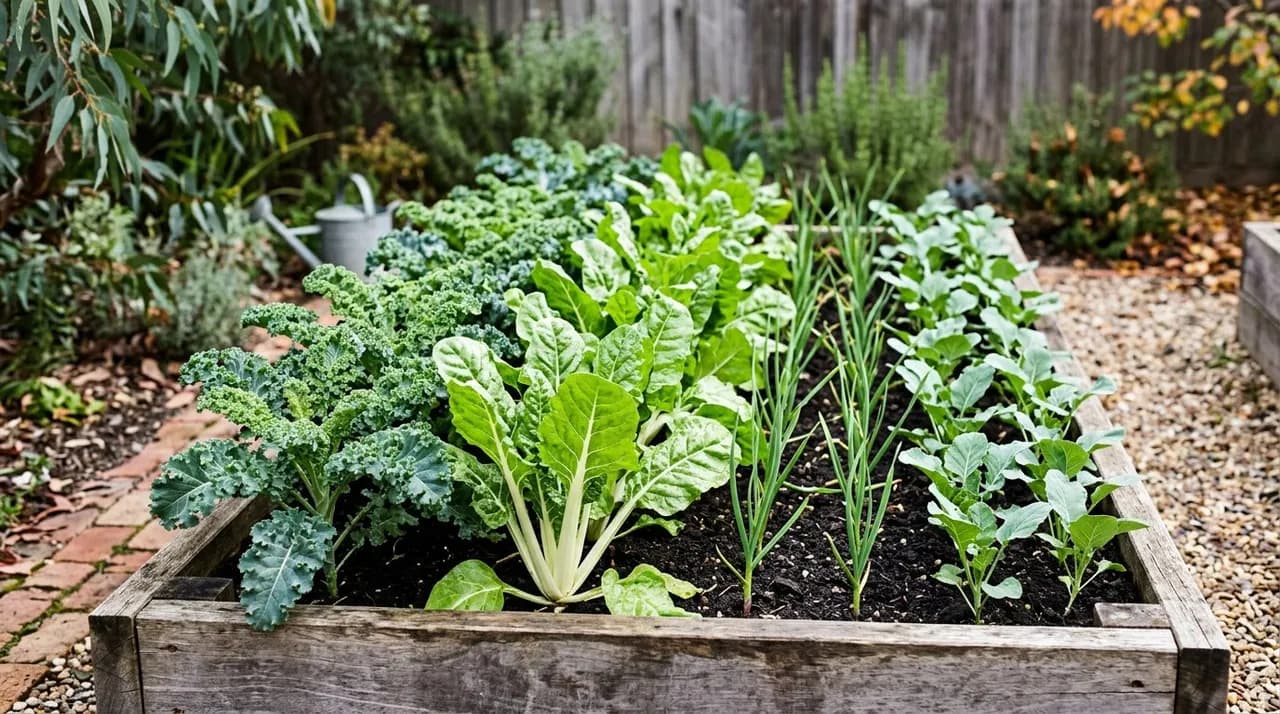
Key takeaways
- Autumn (March to May) is Australia's primary planting window, combining warm soil with cooler air and reduced pest pressure.
- In temperate zones (Sydney, Melbourne, Adelaide, Perth), sow brassicas, silverbeet, carrots, garlic, and broad beans.
- In subtropical and tropical northern Australia, autumn marks the end of wet season humidity and the start of the prime vegetable year.
- Cool and cold mountain regions must establish frost-hardy winter greens and root crops early in March before winter freezes arrive.
- Plant garlic cloves in April and May, spacing them 15 cm apart in rich, well-draining soil with the pointed tip facing upwards.
Quick answer: In Australia, autumn (March to May) is the ideal time to plant cool-season crops including broccoli, cauliflower, kale, silverbeet, carrots, garlic, peas, and broad beans. Warm soils encourage fast root establishment while cooling daytime temperatures prevent premature bolting.
Knowing what to plant in autumn across Australia opens up what is often the most productive growing season of the year. As the scorching heatwaves of summer (December to February) begin to fade, the arrival of autumn in March brings gentle daytime temperatures, cool evenings, and restorative rains.
Many beginner gardeners mistakenly view spring as the only major planting season. Australian autumn offers suitable growing conditions for many cool-season vegetables. Soil temperatures remain warm from months of summer solar absorption, allowing newly sown seeds and seedlings to develop deep root systems rapidly. At the same time, the drop in extreme heat stops leafy greens bolting, and heat-driven pests like fruit fly and mites fall away — though aphids and cabbage white still work brassicas through autumn.
Because Australia encompasses diverse climate profiles (ranging from tropical northern savannas to temperate coastal plains and frosty southern highlands), planting success depends on matching your crop choices to your regional climate zone. By organizing your autumn sowings around local climate rhythms, replenishing soil nutrients, and planting staples like brassicas, alliums, and winter legumes, you ensure a continuous harvest right through the winter months.
Why autumn is Australia's main growing season
Gardening in autumn presents distinct horticultural advantages over spring:
- Warm Soil and Rapid Germination: In March and April, soil temperatures remain high enough to stimulate rapid seed germination within days, eliminating the sluggish establishment common in cold spring soils.
- Reduced Water Evaporation: Cooler air and a weaker, lower sun mean far less evaporation, so soil holds moisture much longer and daily irrigation demand drops. If your beds developed water repellence during summer, treat them early following our guide on how to fix hydrophobic soil.
- Subtropical and Tropical Climate Shift: In northern Australia (from Brisbane north to Darwin and Cairns), the oppressive monsoonal wet season finishes in autumn. The transition to dry, mild weather opens the primary annual window for growing traditional Mediterranean vegetables like tomatoes, capsicums, and eggplants.
- Sweetened Cool-Season Crops: Cool overnight temperatures trigger brassicas (broccoli, Brussels sprouts, kale) and root crops (carrots, parsnips) to convert complex starches into natural sugars, producing sweeter, crisper harvests than spring-grown crops.
For structural garden layouts that support multi-season rotations, explore inspiring designs in our veggie patch ideas for Australian backyards.
Regional autumn planting guides by climate zone
Select your specific Australian climate category below to identify the best crops for your local autumn calendar:
1. Temperate climates (Sydney, Melbourne, Perth, Adelaide, coastal Victoria and NSW)
Perth and Adelaide have hot dry summers and wet winters; Sydney, Melbourne and coastal NSW get their heaviest rain in summer and autumn. All share mild winters with occasional light frosts in inland valleys.
- Brassicas (Plant seedlings in March/April): Broccoli, broccolini, cauliflower, cabbage, Brussels sprouts, kohlrabi, and kale.
- Leafy Greens & Asian Veg (March to May): Silverbeet, English spinach, rocket, loose-leaf lettuce, mizuna, pak choi, and tatsoi.
- Root Crops (Direct sow in March/April): Carrots, beetroot, radishes, parsnips, turnips, and leeks.
- Alliums (April/May): Garlic cloves, shallots, and brown and red storage onions.
- Legumes (April/May): Broad beans, snow peas, and sugar snap peas. Learn complete seasonal cultivation techniques in our guide on how to grow broad beans.
2. Subtropical climates (Brisbane, Sunshine Coast, Gold Coast, northern NSW)
Characterized by warm, humid summers with high rainfall and mild, frost-free winters with warm, sunny days.
- Autumn is the Main Growing Season: Start sowing as soon as heavy summer rains subside in March and April.
- Warm-Season Edibles: Tomatoes, capsicums, chillies, eggplants, zucchini, cucumber, sweet corn, and dwarf French beans.
- Cool-Season Crops: Broccoli, cabbage, cauliflower, silverbeet, lettuce, carrots, beetroot, and coriander.
- Herbs & Alliums: Sweet basil, parsley, coriander, oregano, garlic, and shallot sets.
3. Tropical climates (Darwin, Cairns, Townsville, Broome, Kimberley)
Characterized by distinct wet and dry seasons with high temperatures year-round.
- The Dry Season Transition (April/May): As the wet season monsoon winds down, prepare beds for the major dry season vegetable harvest.
- Top Crops: Tomatoes, capsicums, climbing snake beans, pumpkin, zucchini, okra, sweet potato, basil, watermelons, rockmelons, and Asian greens.
- Note on Timing: Avoid planting delicate cool-climate brassicas like cauliflower, focusing instead on heat-hardy Asian cabbages and sweet tropical roots.
4. Cool and cold climates (Hobart, Canberra, Ballarat, the Tablelands and inland highlands)
Characterized by warm summers, cold winters, and regular frosts below 0°C from May to September.
- Plant Early in Autumn (March to early April): In cool regions, crops must reach near-mature size before daylight hours drop below 10 hours and hard frosts arrive in May.
- Hardy Greens: Winter kale (Tuscan black and curly varieties), English spinach, silverbeet, endive, and winter-hardy lettuces.
- Roots and Brassicas: Brussels sprouts, swedes, winter leeks, turnips, and early broccoli seedlings.
- Winter Legumes: Broad beans and cold-hardy field peas for late winter emergence.
For growers interested in establishing permanent edible layers that survive across varied microclimates, explore our guide to perennial edible greens.
Top autumn crops: planting depth and spacing
Follow these proven horticultural guidelines when setting out autumn seeds and seedlings:
Crop | Propagation Method | Sowing Depth | Plant Spacing | Harvest Window |
|---|---|---|---|---|
Garlic | Individual cloves | 3 cm to 5 cm | 15 cm | 7 to 8 months (Nov/Dec) |
Broccoli | Seedlings / Modules | 5 mm (seeds) | 40 cm to 50 cm | 10 to 14 weeks |
Silverbeet | Direct sow / Seedlings | 1 cm | 30 cm | 8 to 10 weeks (continuous) |
Carrots | Direct sow only | 5 mm | 5 cm (after thinning) | 12 to 16 weeks |
Snow Peas | Direct sow | 2.5 cm | 10 cm (with trellis) | 9 to 12 weeks |
Broad Beans | Direct sow | 5 cm | 20 cm (double rows) | 16 to 20 weeks |
How to plant garlic in autumn
Garlic (Allium sativum) is a staple Australian autumn crop, traditionally planted from late March through May:
- Select certified Australian seed garlic: Avoid imported supermarket garlic, which is frequently treated with growth inhibitors to prevent sprouting and may harbor exotic fungal diseases. Buy Australian-grown seed garlic from a local nursery or garlic grower.
- Break bulbs into cloves: Just prior to planting, carefully separate the bulb into individual cloves, selecting the largest, fattest outer cloves for the biggest harvest.
- Soil preparation: Garlic demands rich, well-draining soil with a neutral pH (6.5 to 7.0). Work in aged compost and a handful of organic blood and bone two weeks before planting.
- Planting technique: Push cloves 3 cm to 5 cm deep into the soil with the flat root end facing downwards and the pointed tip pointing up. Space cloves 15 cm apart in rows 20 cm apart.
- Mulch lightly: Cover with a 3 cm layer of sugar cane mulch or pea straw to conserve moisture and suppress weed competition. Shoots will emerge within 10 to 14 days.
Preparing your veggie patch for autumn sowing
Transitioning your beds from summer to autumn ensures rapid establishment and disease prevention:
- Clear Spent Summer Crops: Remove exhausted tomato vines, mildewed zucchini plants, and finished sweet corn stalks. Shake off root soil and compost healthy foliage.
- Replenish Soil Nutrients: Summer vegetables are heavy feeders that deplete soil nitrogen and potassium. Top-dress beds with a 3 cm to 5 cm layer of mature garden compost or well-rotted cow manure, supplemented with certified organic pelletised poultry fertiliser.
- Maintain Protective Mulch: Apply clean pea straw, lucerne, or sugar cane mulch around newly transplanted seedlings to keep soil warm and protect against heavy autumn downpours. Review moisture buffering principles in sheet mulching for moisture retention.
- Support Perennial Climbers: In addition to annual vegetables, give established backyard climbers an autumn nutrient boost. Diagnose any vine issues with our advice on passionfruit troubleshooting in Australia.
Taking advantage of warm autumn soils and establishing garlic, brassicas, and winter greens early keeps an Australian vegetable patch productive through winter.