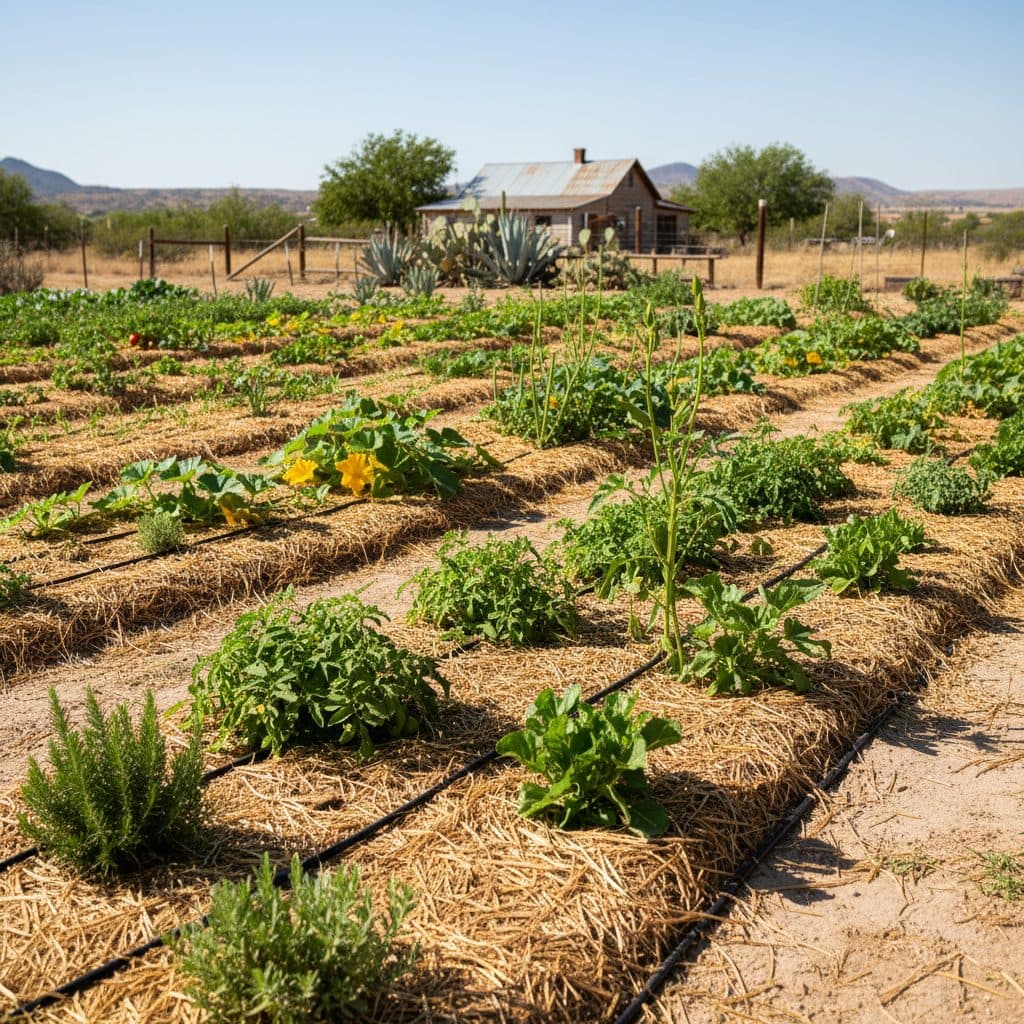
Key takeaways
- Xeriscaping for edibles focuses on water conservation without sacrificing yield, reducing water needs by 30% to 50% in many US climates.
- Effective site analysis, including sun exposure and soil drainage, matters for designing a water-efficient garden that thrives.
- Improving soil with 2 to 4 inches of organic matter and using 3 to 6 inches of mulch significantly retains moisture and suppresses weeds.
- Selecting drought-tolerant plant varieties, such as ‘Black Krim’ tomatoes or ‘Purple Majesty’ millet, matters for success in drier conditions.
- Efficient irrigation methods, like drip systems, deliver water directly to plant roots, minimizing evaporation and runoff by up to 60%.
Quick answer: To grow resilient vegetables and herbs with less water, apply xeriscaping principles like efficient site analysis, soil improvement with organic matter, mulching, selecting drought-tolerant varieties, and using drip irrigation. These methods can significantly reduce water consumption while maintaining abundant harvests.
In regions like California’s Central Valley or the arid Southwest, where water resources are increasingly strained, gardeners are adapting their approaches to food production. A traditional vegetable garden can demand significant water, often 1 to 2 inches per week, which becomes unsustainable during prolonged drought periods or with rising water costs. This challenge has led many US growers to reconsider how they cultivate their food, focusing on resilience and efficiency.
Xeriscape design, traditionally applied to ornamental landscapes, offers a powerful framework for creating productive vegetable and herb gardens that thrive with less water. The term ‘xeriscape’ itself was coined in Denver in 1981, combining ‘xeros’ (dry) with ‘landscape’ to describe landscaping with water conservation as a central goal [4]. By integrating these principles, gardeners can build food systems that resist heat, drought, and even poor soil conditions, potentially reducing irrigation needs by 30% or more while still yielding abundant harvests.
Understanding xeriscape for food production
Many people picture cacti and rocks when they hear the word xeriscaping, but its core principles are highly adaptable to growing edible plants. The primary goal is to conserve water by designing landscapes that require minimal supplemental irrigation [1]. For a productive garden, this means carefully selecting plants, improving soil structure, and using efficient watering techniques. In a typical US residential garden, outdoor water use can account for 50% or more of total household consumption, with much of that going to irrigation. Applying xeriscape principles can cut this significantly, often by 30% to 50% in regions like USDA zone 9 in Arizona.
the seven principles applied to edibles
The original seven principles of xeriscape design guide edible gardens well. These include planning and design, soil improvement, efficient irrigation, appropriate plant selection, mulching, turf reduction (or elimination), and ongoing maintenance [1]. For instance, a well-designed edible xeriscape in a hot climate like Texas might incorporate shade structures for heat-sensitive plants, reducing water stress by 20% during peak summer months. Understanding these principles allows growers to create a garden that is both resilient and productive, yielding pounds of food per square foot with less water.
- Good design: Map sun exposure, wind patterns, and slopes.
- Soil improvement: Add organic matter to boost water retention.
- Efficient irrigation: Use drip systems or soaker hoses for targeted watering.
- Appropriate plant selection: Choose drought-tolerant vegetables and herbs.
- Mulching: Apply 3 to 6 inches of organic mulch to conserve moisture.
Site analysis and design for water efficiency
These understanding xeriscape points carry into this section, too.
A successful xeriscape edible garden begins with a thorough site analysis. Understanding your garden’s specific conditions is paramount for maximizing water efficiency and plant health. Start by observing sun exposure throughout the day, noting areas that receive full sun (six to eight hours), partial sun, or shade. For example, a south-facing wall in USDA zone 8 will receive intense sun, potentially increasing soil temperatures by 10°F to 15°F, which impacts plant selection and water needs. Mapping these zones helps you place plants according to their light requirements, reducing stress and the need for extra water.
zoning and microclimates
Next, assess your soil. A simple percolation test can reveal drainage rates; dig a one-foot deep hole, fill it with water, and measure how long it takes to drain. If it drains slower than one inch per hour, you have poor drainage, which can lead to root rot for many edibles. Consider also wind patterns, as strong winds can increase evaporation by 15% to 20%, especially in open areas like the Great Plains. Designing windbreaks, such as a fence or a row of taller, drought-tolerant plants, can mitigate this. Create zones based on water needs, placing thirsty plants closer to the water source and grouping less thirsty plants together. This approach, known as hydrozoning, can reduce overall water consumption by 20% to 30% across the garden.
- Observe sun paths: Track direct sunlight hours for at least one full day.
- Test soil drainage: A simple percolation test shows water absorption rate.
- Identify wind patterns: Note prevailing winds to plan windbreaks.
- Map microclimates: Locate cooler, shadier spots and hotter, sunnier areas.
- Plan hardscaping: Use pathways and raised beds to define zones and manage water flow.
Soil preparation and water management
That work on site analysis and sets up what follows here.
The foundation of any productive garden, especially a xeriscape, is healthy soil. Improving your soil’s ability to retain moisture is one of the most impactful steps you can take. Incorporating 2 to 4 inches of organic matter, such as compost or well-rotted manure, into the top six to eight inches of soil can increase its water-holding capacity by up to 20% [6]. For example, in sandy soils common in Florida, adding organic matter can transform a rapidly draining bed into one that holds moisture for days longer. This also enhances soil structure, improving aeration and nutrient availability for plants.
mulching and efficient irrigation systems
Once your soil is prepared, mulching becomes your best friend for water conservation. A 3 to 6 inch layer of organic mulch (like wood chips, straw, or shredded leaves) can reduce soil evaporation by 20% to 30% [6]. This also suppresses weeds, which compete with your edibles for water and nutrients, potentially reducing your weeding time by 50%. For irrigation, move beyond overhead sprinklers. Drip irrigation systems or soaker hoses deliver water directly to the plant’s root zone, minimizing evaporation and runoff. These systems can reduce water usage by 30% to 60% compared to traditional methods, making them ideal for arid climates like those in USDA zone 10 in Southern California. Regularly check soil moisture levels using a soil moisture meter to ensure plants receive just the right amount of water, preventing both overwatering and underwatering.
- Add compost: Incorporate 2-4 inches of organic material annually.
- Apply thick mulch: Use 3-6 inches of straw, wood chips, or leaves.
- Install drip irrigation: Target water delivery to plant roots.
- Group plants by water needs: Hydrozone to optimize irrigation schedules.
- Monitor soil moisture: Use a meter to guide watering decisions, avoiding excess.
Plant selection for resilience
This builds directly on soil preparation and.
Choosing the right plants is perhaps the most enjoyable aspect of designing a xeriscape edible garden. Focus on varieties known for their drought tolerance and suitability for your specific climate, especially if you’re in a challenging region like USDA zone 9 in Nevada. Many vegetables and herbs, with proper soil and irrigation, can thrive with significantly less water than commonly assumed. Consider heat-loving plants that naturally perform well in arid conditions. For example, specific varieties of tomatoes, like ‘Celebrity’ or ‘Roma’, show good drought resistance once established, producing 15 to 20 pounds of fruit per plant with careful watering.
drought-tolerant vegetables and herbs
Look for vegetables with deep root systems or waxy leaves, which are natural adaptations to conserve water. Examples include many types of squash, melons, and certain bean varieties. Herbs like garden sage, rosemary, thyme, and lavender are inherently drought-tolerant and flourish in sunny, well-drained conditions, requiring minimal water once established, often less than one inch per week. Even some leafy greens, like ‘Black Seed Simpson’ lettuce, can be grown in cooler microclimates or with afternoon shade to reduce water stress. Don’t overlook native edibles or those from similar arid climates, such as tepary beans, which are known to produce yields with as little as 4 inches of rain per year in the Southwest. For a productive garden, consider also perennial vegetables like asparagus or artichokes, which establish deep roots over several years and become very water-efficient.
- Prioritize deep-rooted plants: Choose varieties like carrots, sweet potatoes, and some tomatoes.
- Select heat-loving crops: Okra, peppers, and eggplant thrive in warm, dry conditions.
- Grow Mediterranean herbs: Rosemary, thyme, oregano, and lavender are naturally drought-resistant.
- Explore native edibles: Consider plants like prickly pear cactus or mesquite for arid regions.
- Choose specific drought-resistant varieties: ‘Cherokee Purple’ tomato, ‘Waltham Butternut’ squash, and ‘Kentucky Wonder’ pole beans are good examples.
Maintenance and ongoing care for efficiency
Those plant selection habits matter here as well.
Even a well-designed xeriscape garden requires consistent, mindful maintenance to ensure its long-term productivity and water efficiency. Regular monitoring of soil moisture is critical; a simple hand test or a soil moisture meter can help you decide if and when to water, preventing the common mistake of overwatering. In many arid regions, watering deeply and infrequently is more effective than frequent, shallow watering, encouraging deeper root growth that helps plants access water from a larger soil volume. For example, watering once every five to seven days with 1 inch of water can be more beneficial than daily light watering.
pest management and season extension
Effective pest and disease management also contributes to water efficiency. Stressed plants are more susceptible to pests, which can reduce yields and increase the need for water to help them recover. Employing integrated pest management (IPM) techniques, such as encouraging beneficial insects or using physical barriers, can keep your plants healthy without relying on excessive watering. Consider season extension techniques like row covers or cold frames to protect plants from early frosts or intense summer heat. A small hoop house can extend the growing season by 30 to 60 days in USDA zone 6, allowing for more harvests with the same water investment. Regular harvesting also encourages more production, ensuring that your water-wise efforts translate into abundant food.
- Monitor soil moisture: Check soil at 4-6 inches deep before watering.
- Weed regularly: Remove competing plants to conserve water and nutrients.
- Inspect for pests: Early detection prevents widespread infestations, saving plant health.
- Replenish mulch: Annually add 1-2 inches of organic mulch to maintain depth.
- Prune appropriately: Remove dead or diseased foliage to direct plant energy to production.
Traditional vs. Xeriscape Edible Garden Features
Feature | Traditional Edible Garden | Xeriscape Edible Garden |
|---|---|---|
Water Use | High (1-2 inches per week) | Low (0.5-1 inch per week, or less) |
Irrigation Method | Overhead sprinklers, hand watering | Drip irrigation, soaker hoses |
Soil Preparation | Often minimal organic matter | High organic matter (2-4 inches added) |
Mulch Depth | Thin or none | Thick (3-6 inches) |
Plant Selection | Any desired variety | Drought-tolerant, climate-appropriate varieties |
Maintenance | Frequent watering, weeding | Less frequent watering, reduced weeding |
Resilience | Vulnerable to drought/heat | Highly resilient to drought/heat |
Water Savings: Xeriscape vegetable gardens can reduce irrigation water use by 30% to 50% compared to traditional methods in many US climates.
Soil Improvement: Adding 2 to 4 inches of organic matter to garden beds can increase soil water retention by up to 20%.
Mulch Benefits: A 3 to 6 inch layer of organic mulch can reduce soil evaporation by 20% to 30% and suppress 70% of weeds.
Frequently asked questions
Can a xeriscape garden really be productive for vegetables?
Yes, absolutely. By selecting appropriate drought-tolerant varieties, improving soil to retain moisture, and using efficient irrigation, a xeriscape garden can yield significant harvests. Many growers in USDA zone 9 report harvests of 15-20 pounds of tomatoes per plant with careful water management.
What are the easiest drought-tolerant vegetables to start with?
For beginners, good choices include sweet potatoes, okra, certain squash varieties like butternut, and heat-tolerant peppers. Herbs such as rosemary, thyme, and oregano are also very forgiving and require less than one inch of water per week once established.
How much water can I realistically save with a xeriscape design?
Water savings can vary based on climate and existing practices, but many gardeners report reducing their irrigation water use by 30% to 50%. In extremely arid regions, this can mean saving hundreds of gallons per season for a 100 square foot garden.
Is it expensive to set up a xeriscape vegetable garden?
Initial costs for drip irrigation systems or significant soil amendments might be higher, ranging from $100 to $500 for a medium-sized garden. However, these investments often pay for themselves within two to three years through reduced water bills and less time spent on maintenance.
What kind of mulch is best for a xeriscape vegetable garden?
Organic mulches like straw, wood chips, or shredded leaves are excellent choices. They break down over time, adding organic matter to the soil, and a 3-6 inch layer effectively suppresses weeds and conserves moisture, reducing evaporation by 20-30%.
References
- Xeriscape in Landscape Design (2012). Xeriscape in Landscape Design.
- Appendix C Colors for the Xeriscape (2021). Appendix C Colors for the Xeriscape.
- Productive vegetable growing / by John W. Lloyd. (1914). Productive vegetable growing / by John W. Lloyd..
- xeriscape, v. (2023). xeriscape, v..
- Xeriscape design to solve regional problems (2021). Xeriscape design to solve regional problems.
- USDA Natural Resources Conservation Service (2024). USDA Natural Resources Conservation Service.