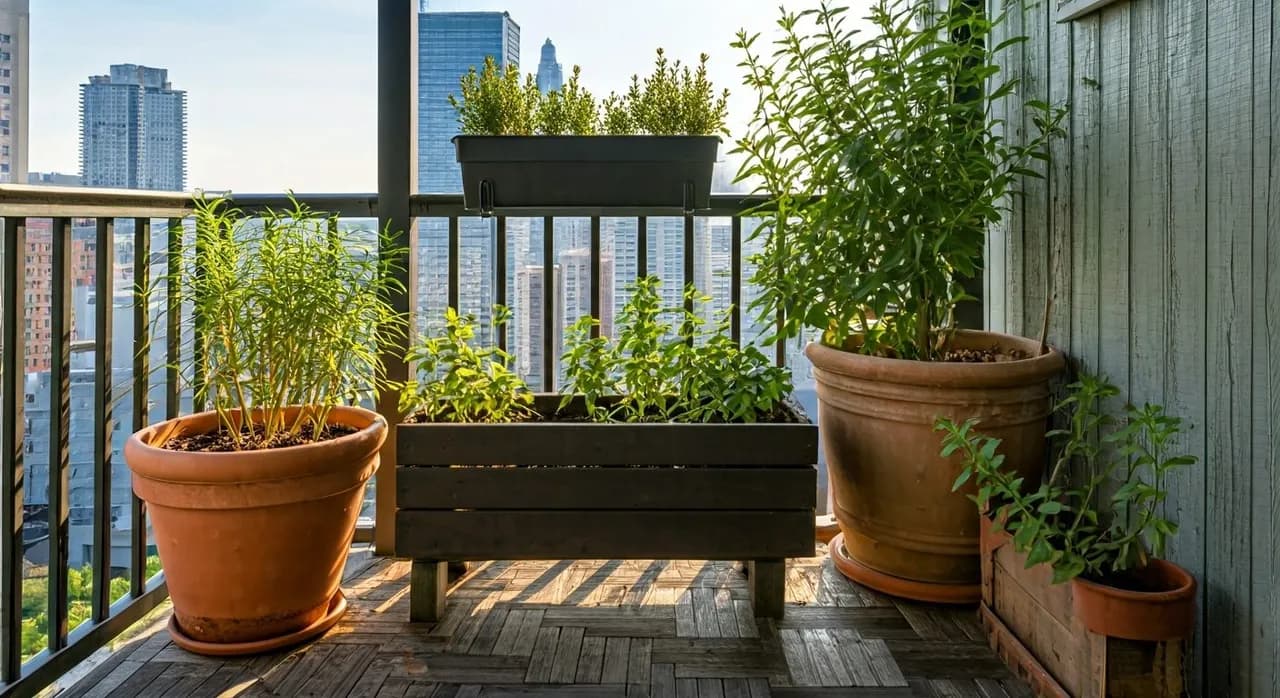
Key takeaways
- Assess your balcony’s sun exposure by tracking direct light in 30-minute intervals over a full day.
- North-facing balconies receive the least direct sun, often less than two hours, favoring shade-tolerant plants.
- South-facing balconies get the most intense sun, typically six to eight hours or more, requiring heat-tolerant varieties and diligent watering.
- East-facing balconies enjoy gentle morning sun for three to five hours, ideal for many vegetables.
- West-facing balconies endure harsh afternoon sun for four to six hours, needing heat management for plant health.
- Container size and color significantly impact soil temperature and moisture, influencing plant choice and care.
Quick answer: To map balcony sun exposure, track direct light in 30-minute intervals over a full day, noting hours for north, south, east, and west-facing areas. This helps determine optimal plant selection and care for your specific urban microclimate.
In Portland, Oregon, a small south-facing balcony can receive eight hours of direct sunlight on a summer day, offering prime conditions for sun-loving vegetables. However, a north-facing balcony in the same city might get less than two hours of direct light, drastically changing planting options. Understanding your balcony’s specific sun exposure is the single most important step for successful container gardening, dictating everything from plant selection to watering schedules. Without this knowledge, even a dedicated grower might struggle to keep plants thriving.
Many urban gardeners in USDA zones 6 through 9 face similar challenges, whether they are in Boston, Massachusetts, or Sacramento, California. Balcony gardens, rooftop plots, and vertical setups all have unique microclimates influenced by surrounding buildings, overhangs, and even the color of the balcony floor. Accurately mapping the light your space receives throughout the day and across seasons will save you time, money, and frustration, leading to a more productive and enjoyable growing experience.
Why mapping your balcony’s sun is essential
Before you purchase a single seed packet or container, knowing your balcony’s sun profile is critical. Plants are particular about light; a tomato plant, for example, needs at least six hours of direct sun daily to produce well, while lettuce might bolt with too much afternoon heat. Guessing can lead to wasted effort and dead plants, a common frustration for new gardeners. A precise light map helps you choose appropriate varieties, plan your layout, and anticipate watering needs.
The difference between direct and indirect light
Direct sunlight means the sun’s rays hit the plant without obstruction, casting a sharp shadow. Indirect light, or bright shade, is when the area is well-lit but not directly exposed to the sun, like under a porch roof or on the north side of a building. Most fruiting vegetables, such as peppers and cucumbers, require direct sun. Leafy greens, like spinach and kale, can often tolerate or even prefer bright shade, especially in hotter climates like USDA zone 8. Understanding this distinction is key to placing plants correctly and maximizing their growth potential. For more on what plants need specific light, you can check out our guide on plants for full sun.
- Full sun: Six or more hours of direct sunlight daily.
- Partial sun: Four to six hours of direct sunlight daily, often morning sun.
- Partial shade: Two to four hours of direct sunlight daily, usually morning or late afternoon.
- Full shade: Less than two hours of direct sunlight daily, or bright indirect light.
- Microclimates: Localized variations in temperature, humidity, and light on a balcony.
North-facing balconies: embracing the shade
A north-facing balcony, common in urban apartments, typically receives the least amount of direct sunlight. In many parts of the US, especially above 35 degrees latitude, these spaces may get only one to two hours of direct sun, usually in the early morning or late evening during summer. This limited light means you’ll need to focus on plants that thrive in partial to full shade. Sun-loving tomatoes won’t work here, but you can still cultivate a productive and beautiful garden with shade-tolerant plants.
Best plants for low-light conditions
Don’t despair if your balcony faces north; many delicious and ornamental plants prefer these cooler, shadier conditions. Leafy greens like spinach, lettuce, kale, and Swiss chard are excellent choices, often producing better in partial shade than in harsh full sun, especially in USDA zones 7 and 8 where summer temperatures can exceed 90°F. Herbs such as mint, parsley, and cilantro also do well. For a splash of color, consider impatiens or fuchsias. Remember that even shade-loving plants need consistent moisture, so check soil levels regularly with a soil moisture meter, especially in containers that dry out faster than in-ground beds.
- Leafy greens: Lettuce, spinach, kale, Swiss chard.
- Herbs: Mint, parsley, cilantro.
- Root vegetables: skip these — radishes and carrots need several hours of direct sun to size up and will make leaves but no usable root in deep shade.
- Ornamentals: Impatiens, fuchsias, hostas.
- Container size: Use containers at least 8 inches deep for most shade-loving vegetables.
South-facing balconies: harnessing intense light
South-facing balconies are the holy grail for sun-loving plants, often receiving six to eight hours or more of direct sunlight daily, especially during the peak growing season in USDA zones 5 through 9. This abundance of light is perfect for most fruiting vegetables and herbs, allowing you to grow a wide variety of produce. However, this intensity comes with its own set of challenges, primarily managing heat and moisture. In regions like Arizona, temperatures can soar above 100°F, making container gardening particularly demanding.
Managing heat and moisture for sun-lovers
With intense sun comes rapid evaporation and high soil temperatures. To combat this, choose larger containers, at least 15 gallons for tomatoes, as they retain moisture better and insulate roots from extreme heat. Light-colored pots reflect more sunlight, keeping soil up to 10°F cooler than dark pots. Mulching the soil surface with a one-inch layer of straw or wood chips also helps retain moisture and regulate temperature. Consistent watering, sometimes twice a day during heatwaves, matters most here. Consider self-watering containers or drip irrigation systems to ease the burden. Good air circulation is also important to prevent fungal diseases in humid climates, so space plants about 12 inches apart.
- Vegetables: Tomatoes, peppers, eggplants, cucumbers, squash, beans.
- Herbs: Basil, oregano, thyme, rosemary.
- Container size: Minimum 10-gallon for most fruiting plants, 15 gallons or more for indeterminate tomatoes.
- Watering: Often daily, sometimes twice daily in peak summer heat above 90°F.
- Mulch: One to two inches of straw or shredded leaves to conserve moisture.
East and west-facing balconies: balancing morning and afternoon sun
East and west-facing balconies offer a middle ground in terms of sun exposure, each with its unique benefits and drawbacks. An east-facing balcony receives gentle morning sun for three to five hours, which is less intense and less likely to scorch plants. This exposure is often considered ideal for a wide range of vegetables and herbs, as it provides sufficient light without the harshness of afternoon heat. Plants get a good start to their day, photosynthesizing efficiently before temperatures climb.
Adapting to varied light intensities
West-facing balconies, on the other hand, receive four to six hours of intense afternoon sun. This can be challenging in hot climates like those in Texas or Florida, where afternoon temperatures routinely reach 95°F or higher. The sun’s angle in the afternoon is lower, and its rays are more direct and hotter, leading to rapid water loss and potential leaf burn. For west-facing spaces, choose heat-tolerant varieties and implement strategies like using shade cloth during the hottest part of the day, between 2:00 PM and 5:00 PM. For both exposures, consider vertical gardening solutions to maximize space and potentially create micro-shades for lower plants. You can find more information on starting your garden with our beginner vegetable gardening FAQs.
- East-facing benefits: Gentle morning sun, less heat stress, good for most vegetables.
- West-facing challenges: Intense afternoon sun, high heat, rapid drying.
- Plant choices for west: Okra, sweet potatoes, some pepper varieties, sunflowers.
- Watering frequency: East-facing may need watering every 1-2 days; west-facing often daily.
- Shade solutions: Use 30% shade cloth for west-facing balconies during peak hours.
Optimizing light and managing challenges
Beyond simply knowing your balcony’s direction, strategic management of light and environmental factors can significantly boost your gardening success. Even a south-facing balcony in USDA zone 9 might need intervention during summer afternoons when temperatures consistently exceed 95°F. Conversely, a north-facing balcony can be made more productive by utilizing reflective surfaces or specific container choices. These techniques allow you to push the boundaries of what you can grow in limited spaces.
Tools and techniques for microclimate control
To mitigate the harshness of intense sun, consider using shade cloth. A 30% shade cloth measurably lowers leaf surface temperatures during peak afternoon sun on west-facing balconies, which prevents scorching. For north-facing areas, painting nearby walls a light color or placing reflective mulch around plants can increase ambient light by up to 25%. Vertical gardening systems, like a tiered planter or a wall-mounted pocket garden, not only save space but also create varying light conditions at different levels, allowing you to grow a wider range of plants. The sun’s noon angle swings by about 47 degrees between the summer and winter solstice at every latitude, so seasonal adjustments to plant placement or shade provision are essential rather than optional.
- Shade cloth: Use 30-50% blockage for afternoon sun protection.
- Reflective mulch: White or silver mulches can increase light by 15-25% in shady spots.
- Vertical planters: Maximize space and create varied light zones.
- Self-watering containers: Stretch the interval between waterings in hot, sunny spots.
- Container material: Fabric pots breathe and run cooler than plastic in direct sun, but they also dry out considerably faster, so budget for more frequent watering.
Balcony Exposure Quick Reference
Exposure | Direct Sun Hours (Summer) | Typical Challenges | Best Plant Types |
|---|---|---|---|
North | 1-2 hours (indirect) | Low light, cooler temperatures | Leafy greens, shade herbs, ornamentals |
South | 6-8+ hours (intense) | High heat, rapid drying, sunburn | Tomatoes, peppers, eggplant, most fruiting vegetables |
East | 3-5 hours (morning) | Less intense, generally ideal | Lettuce, carrots, beans, many herbs, strawberries |
West | 4-6 hours (afternoon) | Harsh afternoon heat, water stress | Okra, sweet potatoes, some peppers, heat-tolerant flowers |
Sun Tracking: Tracking your balcony’s sun exposure for a full day routinely turns up hours of difference from what you assumed.
Container Size: Moving a thirsty plant like a tomato from a 5-gallon to a 15-gallon container meaningfully cuts how often you have to water.
Shade Cloth: A 30% shade cloth lowers leaf surface temperatures during peak afternoon sun on west-facing balconies.
Frequently asked questions
How many hours of direct sun is considered ‘full sun’ for vegetables?
For most fruiting vegetables, ‘full sun’ means at least six hours of direct sunlight per day. Some heat-loving crops like tomatoes and peppers can benefit from eight or more hours, especially in cooler climates like USDA zone 5.
Can I grow vegetables on a north-facing balcony?
Yes, you can grow many vegetables on a north-facing balcony, though your options will be limited to shade-tolerant varieties. Leafy greens such as lettuce, spinach, and kale, along with herbs like mint and parsley, can manage on two to three hours of direct sun plus bright ambient light — expect slower growth and smaller leaves than in full sun.
What’s the best way to protect plants from intense afternoon sun?
To protect plants from intense afternoon sun, especially on west-facing balconies in USDA zone 9, use shade cloth with 30-50% blockage during the hottest part of the day, typically between 1:00 PM and 5:00 PM. Larger, light-colored containers also help keep roots cooler by up to 10°F.
Does the color of my containers matter for plant health?
Yes, container color significantly impacts soil temperature. Dark-colored containers absorb more solar radiation, increasing soil temperatures by 10-15°F compared to light-colored pots. This can stress roots, especially in hot climates, so choose lighter colors for sun-exposed areas.
How often should I water balcony plants in full sun?
Balcony plants in full sun, particularly in smaller containers, often require daily watering. During heatwaves above 90°F, some plants may need watering twice a day. Always check the top two inches of soil for dryness before watering to avoid over or under-watering.
Will my sun exposure change throughout the year?
Yes, your balcony’s sun exposure will change significantly with the seasons. The sun’s path is higher and longer in summer, providing more direct light, while in winter, it’s lower and shorter, resulting in fewer sun hours. It’s wise to re-map your sun exposure at least three times a year.
References
- USDA Natural Resources Conservation Service (2024). USDA Natural Resources Conservation Service.