Key takeaways
- Select suitable container sizes, at least 8 inches deep and 10-12 inches wide, for optimal root development.
- Plant garlic cloves about 2 inches deep and shallot bulbs with their tips just at the soil surface, spacing both 4-6 inches apart, in late fall, typically 6-8 weeks before the first hard frost.
- Use a well-draining potting mix with 30-40% organic matter to support healthy growth and prevent waterlogging.
- Ensure containers receive at least 6-8 hours of direct sunlight daily once spring growth starts, which is when bulbs form. Over winter the plants are largely dormant and short days are not a problem.
- Maintain consistent soil moisture, watering whenever the top inch or two of mix is dry, especially during spring growth and bulb development.
- Harvest when lower leaves turn yellow and begin to dry, usually in late June or July, followed by a 2-3 week curing process.
Quick answer: To grow garlic and shallots in containers for a summer harvest, select containers at least 8 inches deep, use a well-draining potting mix with 30-40% organic matter, and plant 6-8 weeks before the first hard frost. Ensure 6-8 hours of daily sunlight and consistent moisture.
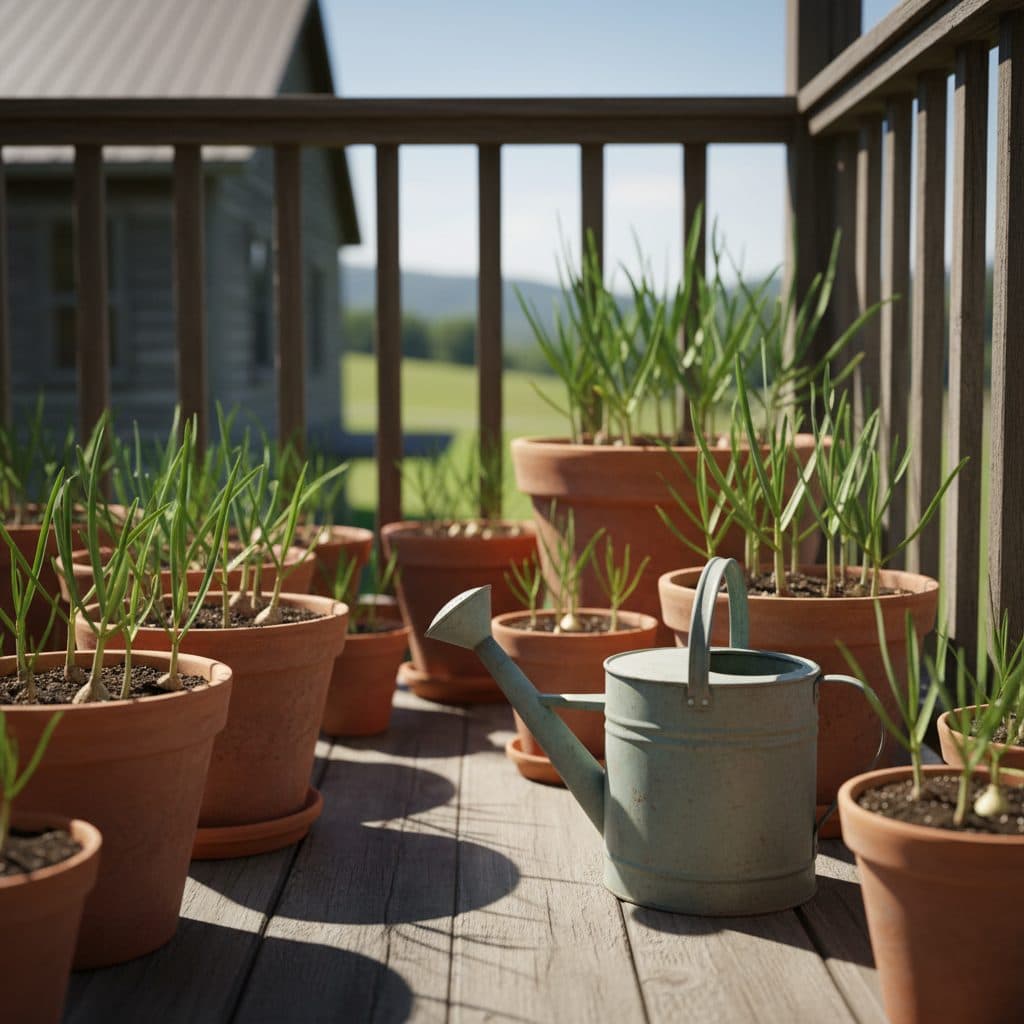
For many growers across the US, from the urban rooftops of New York City to the sunny patios of Southern California, the idea of cultivating garlic and shallots often brings to mind large garden beds. However, these pungent alliums are surprisingly well-suited for container growing, offering a practical solution for gardeners with limited space. By understanding their specific needs, you can achieve a rewarding harvest right on your balcony or patio, even in colder regions like USDA zone 4 where winter protection is key.
Planting garlic (Allium sativum) and shallots (Allium cepa, Aggregatum Group) in containers during the fall sets up a strong summer harvest. This method allows for precise control over soil conditions and moisture, which is particularly beneficial in areas with heavy clay soils or inconsistent rainfall. With proper planning and care, a single 15-gallon container can yield a dozen or more bulbs, providing fresh ingredients for months.
Choosing the right containers and soil for alliums
Successful container gardening with garlic and shallots begins with selecting appropriate vessels and a quality growing medium. For garlic, a container should be at least 8 inches deep to accommodate root development, and for shallots, a similar depth is ideal. A 10-gallon container can comfortably house 6-8 garlic cloves, while a 15-gallon size might hold 10-12 cloves or a similar number of shallot bulbs. Material choice matters; terracotta pots offer good drainage but dry out faster, requiring more frequent watering, perhaps 2-3 times per week in warmer climates. Plastic or glazed ceramic pots retain moisture longer, reducing watering needs to once or twice weekly in most USDA zones.
Crafting the ideal potting mix for container alliums
The soil mix is paramount for container-grown alliums. A well-draining, nutrient-rich blend is essential to prevent waterlogging and promote healthy bulb growth. Start with a base of high-quality potting mix, then amend it significantly. Adding 30-40% organic matter, such as compost or well-rotted manure, improves soil structure, water retention, and nutrient availability. For instance, a 5-gallon bucket of potting mix could be blended with 2 gallons of compost. Incorporating perlite or coarse sand at a ratio of 1:4 (one part perlite to four parts soil mix) further improves drainage, which matters for preventing fungal issues in moist conditions. The ideal pH for alliums ranges from 6.0 to 7.0, a neutral to slightly acidic environment that supports nutrient uptake.
- Select containers at least 8 inches deep.
- Use pots with ample drainage holes.
- Amend potting mix with 30-40% organic matter.
- Incorporate perlite or coarse sand for drainage.
- Aim for a soil pH between 6.0 and 7.0.
Fall planting: timing and technique for success
The timing of fall planting is critical for garlic and shallots, particularly in regions with cold winters. Across USDA zones 4-8, the optimal window is typically 6-8 weeks before the first hard frost, allowing roots to establish before the ground freezes solid. In northern states like Minnesota (zone 4) or Maine (zone 5), this might be late September to early October. Further south, in zones 7-9, planting can extend into November or even early December. Variety matters more than timing there: garlic needs several weeks near 40°F to split into cloves, so in zones 8-9 choose softneck types suited to mild winters, and refrigerate seed cloves for four to eight weeks before planting. Without that chilling, garlic in a mild-winter zone often produces a single undivided round instead of a bulb. Planting too early can lead to premature top growth that may be damaged by severe cold, while planting too late might prevent sufficient root development before winter dormancy.
Planting garlic cloves and shallot bulbs
When planting, separate garlic bulbs into individual cloves, keeping each clove’s papery wrapper intact. For shallots, use individual bulbs. Plant each garlic clove with the pointed end facing up, about 2 inches deep — up to 3 in the coldest zones — and 4-6 inches apart. Shallots go shallower still: set each bulb so its tip sits just at the soil surface, barely covered. Burying either one 4-6 inches down in an 8-inch container leaves almost no room for roots and invites rot. In a 12-inch diameter container, you might fit 3-4 garlic cloves or 5-6 shallot bulbs. After planting, water thoroughly to settle the soil, providing about 1 inch of water. In colder zones (4-6), applying a 2-3 inch layer of mulch, such as straw or shredded leaves, over the soil surface helps insulate the containers, protecting the developing roots from extreme temperature fluctuations. Learn more about growing garlic in general for additional tips.
- Plant 6-8 weeks before the first hard frost.
- Separate garlic into individual cloves.
- Plant pointed end up — garlic about 2 inches deep, shallot tips just at the surface.
- Space cloves/bulbs 4-6 inches apart.
- Apply 2-3 inches of mulch in cold zones.
Winter care and spring growth management
Once planted, containerized garlic and shallots require specific care through the winter months and into spring. During winter, especially in USDA zones 4-6, containers benefit from protection. Moving them to an unheated garage, cold frame, or against a south-facing wall can shield them from extreme cold and drying winds. If left outdoors, ensure containers are elevated slightly to prevent water from freezing and cracking the pot. Even in dormancy, soil moisture needs attention; check soil moisture every 2-3 weeks, providing a light watering if the top 2 inches are dry. Overwatering during winter can lead to rot, while complete drying out can damage roots.
Nutrient and water needs during active growth
As spring arrives and temperatures consistently rise above 40°F, visible green shoots will emerge. This marks the beginning of the active growth phase, and nutrient and water requirements increase significantly. Alliums are hungry plants, so an organic fertilizer such as a 4-4-4 should be applied every 3-4 weeks from early spring until bulb development begins, typically around late May or early June. A high-nitrogen feed like 5-1-1 fish emulsion is not balanced; save it for the early leafy weeks, since nitrogen close to bulbing pushes top growth at the expense of bulb size and storage life. Water deeply and consistently, checking the top inch or two of mix and watering whenever it is dry — in warm spring weather that can mean every day or two. A soil moisture meter can help monitor levels so the soil remains evenly moist but not waterlogged. Adequate sunlight, at least 6-8 hours daily, matters for strong bulb formation.
- Protect containers in zones 4-6 during winter.
- Water lightly every 2-3 weeks in winter if dry.
- Begin fertilizing in spring with a balanced organic blend.
- Water whenever the top inch or two of mix is dry during active growth.
- Ensure 6-8 hours of direct sunlight daily.
Harvesting and curing for long-term storage
The culmination of months of patient container gardening is the summer harvest. For both garlic and shallots, timing matters for optimal bulb size and storage potential. Generally, they are ready for harvest in late June or July, typically 8-9 months after fall planting. Look for visual cues: the lower one-third to one-half of the plant’s leaves will turn yellow and begin to dry out, while the upper leaves remain green. Waiting too long can cause the outer wrappers to split, reducing storage life, while harvesting too early results in smaller, less flavorful bulbs. In a typical growing season in USDA zone 6, this usually occurs around the third week of July.
The curing process for extended shelf life
Once harvested, proper curing is essential for long-term storage. Gently loosen the soil around the bulbs with a hand trowel or fork, then carefully pull the plants from the containers, keeping the leaves and roots intact. Brush off excess soil, but avoid washing the bulbs. Cure them in a warm (75-85°F), dry, and well-ventilated area with good air circulation for 2-3 weeks. Hang them in bundles or spread them on screens in a shed or garage. After curing, the outer wrappers will be papery and dry, and the necks will be tight. Trim the roots to about 0.5 inch and cut the tops to 1-2 inches above the bulb. Store cured garlic and shallots in a cool (50-60°F), dark, and dry place with 60-70% humidity, where they can last for 6-9 months.
- Harvest when lower leaves are one-third to one-half yellow.
- Avoid washing bulbs after harvest.
- Cure in a warm, dry, well-ventilated area for 2-3 weeks.
- Trim roots to 0.5 inch and tops to 1-2 inches.
- Store in a cool, dark, dry place at 50-60°F.
Garlic vs. Shallots: Container Growing Considerations
Feature | Garlic (Allium sativum) | Shallots (Allium cepa, Aggregatum Group) |
|---|---|---|
Bulb Type | Individual cloves planted, forms one large bulb with multiple cloves. | Individual bulbs planted, forms a cluster of smaller bulbs. |
Container Depth | Minimum 8 inches deep for root development. | Minimum 8 inches deep for root development. |
Spacing (in-container) | 4-6 inches apart for optimal bulb size. | 4-6 inches apart for cluster formation. |
Growth Cycle | 8-9 months from fall planting to summer harvest. | 8-9 months from fall planting to summer harvest. |
Flavor Profile | Pungent, strong, essential in many cuisines. | Milder, sweeter, more delicate than garlic. |
Container Size: A 15-gallon container can yield 10-12 garlic bulbs or a similar number of shallot bulbs, providing a significant harvest from a small footprint.
Soil Organic Matter: Incorporating 30-40% organic matter into your potting mix improves structure and nutrient availability for alliums; perlite or coarse sand is what keeps it draining freely.
Winter Protection: In USDA zones 4-6, straw mulch helps, but a pot freezes from the sides as well as the top — moving containers into an unheated garage or against a sheltered wall does far more than mulch alone.
Frequently asked questions
What size container is best for growing garlic and shallots?
For optimal growth, use containers at least 8 inches deep and 10-12 inches wide. A 10-gallon container can typically hold 6-8 garlic cloves, while a 15-gallon container can accommodate 10-12 cloves or a similar number of shallot bulbs, providing ample space for root development and bulb sizing.
When should I plant garlic and shallots in containers in the fall?
Plant garlic and shallots in containers approximately 6-8 weeks before the first anticipated hard frost in your USDA zone. This timing allows the plants to establish a strong root system before winter dormancy. For example, in USDA zone 6, this typically means planting in mid-October.
How much sunlight do container garlic and shallots need?
Garlic and shallots require a minimum of 6-8 hours of direct sunlight daily for strong growth and bulb formation. Position your containers in the sunniest spot on your balcony or patio, even during the shorter days of winter, to ensure they receive adequate light.
How often should I water container-grown alliums?
During the active growing season in spring and early summer, water whenever the top inch or two of mix is dry, keeping the soil consistently moist but not waterlogged. In winter, during dormancy, reduce watering to every 2-3 weeks, only if the top 2 inches of soil feel dry.
How do I know when garlic and shallots are ready to harvest?
Harvest garlic and shallots when the lower one-third to one-half of their leaves have turned yellow and started to dry, usually in late June or July, about 8-9 months after planting. The upper leaves should still be green, indicating the bulbs are mature but not overripe.
Can I grow both garlic and shallots in the same container?
Yes, you can grow both garlic and shallots in the same large container, provided it is at least 15 gallons in size and you maintain proper spacing of 4-6 inches between each clove or bulb. Ensure both receive adequate nutrients and water, as their requirements are very similar.
References
- USDA Natural Resources Conservation Service (2024). USDA Natural Resources Conservation Service.
- SARE — Sustainable Agriculture Research & Education (2023). SARE — Sustainable Agriculture Research & Education.
- ATTRA / NCAT Sustainable Agriculture (2023). ATTRA / NCAT Sustainable Agriculture.