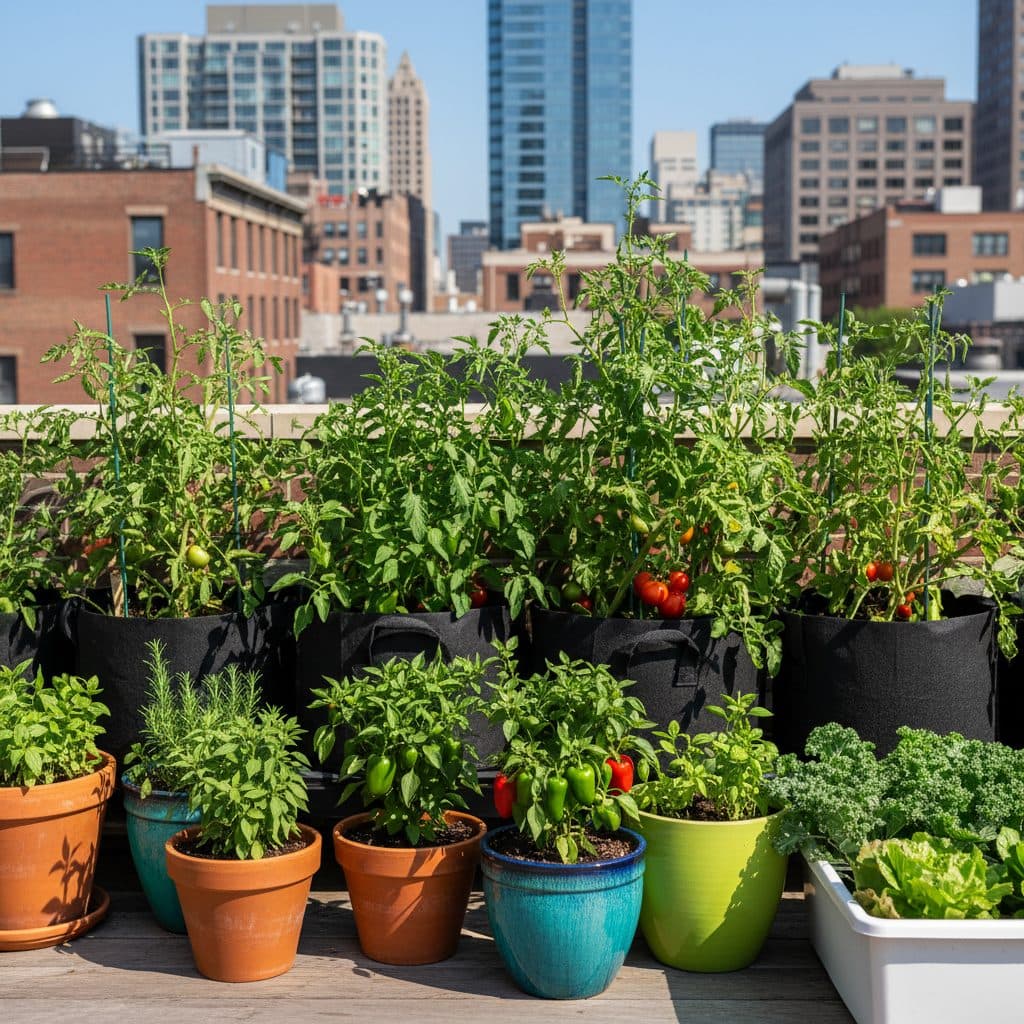
Key takeaways
- Fabric grow bags offer superior root aeration and evaporative cooling, reducing root zone temperatures by 5-15°F compared to plastic pots.
- Plastic containers are affordable and retain moisture well, but dark colors can lead to root zone temperatures exceeding 100°F in direct sun.
- Unglazed terracotta pots provide excellent breathability and evaporative cooling, but their porosity can lead to rapid moisture loss, requiring frequent watering.
- Glazed terracotta pots retain moisture effectively and offer aesthetic appeal, yet they trap heat similar to plastic, potentially overheating roots in hot climates.
- Strategic container choice, mulching, and proper watering schedules matter for plant health, especially in summer temperatures above 85°F.
- Consider your local climate, plant species, and watering commitment when selecting containers to ensure optimal growth and yield.
Quick answer: Different container materials like fabric grow bags, plastic, and terracotta pots significantly impact root zone temperatures and moisture retention. Fabric grow bags offer evaporative cooling, while dark plastic and glazed pots can trap heat, stressing plants in hot climates.
Container gardening is a practical solution for many US growers, whether on a small balcony in Chicago or a rooftop in Los Angeles. Container growing is widespread among US gardeners, with tomatoes, peppers, and herbs among the most common container crops. However, selecting the right container material is more than just an aesthetic choice; it critically impacts plant health, particularly when summer temperatures consistently reach 85°F or higher in regions like USDA zone 7 and 8.
Understanding how different container materials — fabric grow bags, plastic, unglazed terracotta, and glazed terracotta — manage heat and moisture is essential for a successful harvest. Each material has distinct properties that affect root zone temperatures, water retention, and aeration, directly influencing plant vigor and yield. For instance, a black plastic pot sitting in direct sun in Phoenix, Arizona, can quickly elevate soil temperatures to over 100°F, while a fabric grow bag might keep roots 5-15°F cooler through evaporative cooling.
Fabric grow bags: breathability and evaporative cooling
Fabric grow bags have gained popularity among US growers for their unique ability to promote healthy root systems. Made from porous, non-woven fabric, these bags allow air to prune the roots naturally, preventing circling and encouraging a denser, more fibrous root ball. This air pruning leads to a more efficient uptake of water and nutrients, often resulting in healthier plants and higher yields, especially for heavy feeders like indeterminate tomatoes in a 10-gallon bag.
One of the most significant advantages of fabric grow bags, particularly in warmer climates like those found in USDA zones 8 and 9, is their superior heat management. The porous material facilitates evaporative cooling, which can keep the root zone significantly cooler than traditional plastic pots. Growers commonly report soil temperatures in fabric bags running 5-15°F lower than in black plastic containers when ambient temperatures are consistently above 90°F. This cooling effect is vital for preventing root stress and ensuring continued growth during hot summer months. However, this same porosity means they dry out faster, often requiring watering once or even twice daily in peak summer heat.
managing moisture in fabric grow bags
While the breathability of fabric grow bags is a major benefit, it also presents a challenge: increased water loss. Growers in arid regions, such as parts of California or Texas, might find themselves watering 20-30% more frequently than with plastic pots. To mitigate this, consider these strategies:
- Use larger bags: A 15-gallon fabric bag holds more moisture than a 5-gallon bag, reducing watering frequency.
- Mulch heavily: A 2-inch layer of straw or wood chips on the soil surface can reduce evaporation by up to 25%.
- Group containers: Placing bags close together creates a microclimate, slightly increasing humidity around the plants.
- Automated irrigation: Drip systems can provide consistent moisture without constant manual effort.
- Choose lighter colors: Lighter-colored fabric bags reflect more sunlight, keeping the soil 2-5°F cooler.
For crops like potatoes, which thrive in consistent moisture, fabric grow bags can be an excellent choice, particularly when paired with a good watering regimen. You can find more details on growing potatoes in various containers at How to grow potatoes: in ground, bags, and towers.
Plastic containers: affordability and moisture retention
Plastic containers are ubiquitous in gardening, primarily due to their low cost and excellent moisture retention. A standard 5-gallon plastic bucket can be purchased for less than five dollars, making it an accessible option for many gardeners, especially those just starting out. These containers are non-porous, meaning water evaporates almost exclusively from the soil surface, which can be an advantage in dry climates or for growers who prefer less frequent watering, perhaps every 2-3 days in moderate temperatures.
However, the non-porous nature of plastic also presents significant challenges, particularly regarding heat. Dark-colored plastic pots, such as black or dark green, absorb a substantial amount of solar radiation. In direct sunlight during a 90°F summer day in USDA zone 8, the sides of a black plastic pot can reach temperatures exceeding 120°F, and the soil within can easily hit 100°F. These elevated root zone temperatures can severely stress plants, inhibiting nutrient uptake, stunting growth, and even leading to root death. This is particularly problematic for heat-sensitive crops like lettuce or spinach.
mitigating heat in plastic pots
While plastic pots offer benefits, managing their heat absorption is critical for plant survival and productivity. Here are some effective strategies:
- Choose lighter colors: White or light-colored plastic pots reflect more sunlight, keeping soil temperatures 10-15°F cooler than black pots.
- Paint dark pots: A coat of white or reflective paint can significantly reduce heat absorption.
- Shade the sides: Position other plants or use a physical barrier to shade the pot’s sides during the hottest parts of the day.
- Use a double-potting method: Place a smaller plastic pot inside a larger one, filling the gap with insulating material like straw or newspaper.
- Elevate pots: Lifting pots off hot surfaces like concrete can reduce heat transfer by up to 5°F.
For new gardeners, understanding these nuances can prevent common pitfalls. For more foundational advice, consider reviewing Vegetable gardening for beginners: your questions answered.
Terracotta pots: classic beauty and natural cooling
Unglazed terracotta pots have a timeless appeal, offering a rustic aesthetic that complements many garden designs. Beyond their visual charm, these porous clay pots provide excellent breathability, allowing air and moisture to pass through their walls. This porosity is a double-edged sword: it promotes healthy root aeration, similar to fabric bags, and contributes to evaporative cooling, which can keep soil temperatures 3-7°F cooler than plastic pots in a 90°F environment. This natural cooling is particularly beneficial for plants in hot, humid climates like Florida or the Gulf Coast, where air circulation around roots is paramount.
However, the very porosity that makes terracotta beneficial for aeration also means it loses moisture rapidly. In dry, windy conditions typical of the high plains in USDA zone 5, a 12-inch terracotta pot might require watering twice a day during peak summer, potentially losing 20-30% more water than a plastic pot of the same size. This high evaporation rate can be a significant commitment for gardeners, especially when growing thirsty plants like cucumbers or bell peppers. Additionally, terracotta pots are heavy and fragile, with a 14-inch pot weighing over 20 pounds when filled with moist soil, making them less portable than plastic or fabric alternatives.
optimizing terracotta for moisture and heat
To harness the benefits of terracotta while minimizing its drawbacks, consider these strategies for your garden:
- Seal the interior: Applying a non-toxic sealant to the inside can reduce moisture loss by up to 50%, though it diminishes evaporative cooling.
- Use saucers: Placing a saucer underneath can catch runoff and allow some reabsorption, especially useful in dry climates.
- Mulch heavily: A 1-2 inch layer of mulch helps retain soil moisture and stabilize soil temperature.
- Group pots: Clustering terracotta pots can create a slightly more humid microclimate, slowing evaporation.
- Choose larger sizes: Larger pots (e.g., 16-inch diameter) hold more soil volume, which retains moisture longer than smaller pots.
For gardeners looking for tools to manage watering, a Soil Moisture Meter can be an invaluable asset, providing precise data on when to water your terracotta containers.
Glazed terracotta pots: aesthetics and moisture retention without breathability
Glazed terracotta pots combine the classic form of clay with a non-porous, often colorful, outer layer. Today, these pots are chosen primarily for their aesthetic appeal and their ability to retain moisture, much like plastic containers. The glaze prevents water from evaporating through the pot walls, reducing watering frequency compared to unglazed terracotta by as much as 40-50%.
However, the glaze also eliminates the evaporative cooling benefit inherent in unglazed terracotta. This means glazed pots perform similarly to plastic in terms of heat retention. A dark-colored glazed pot in direct sun in a hot climate like USDA zone 9 can heat up significantly, potentially raising soil temperatures to levels that stress plant roots, often exceeding 95°F. While they are more durable than unglazed terracotta, they are still heavy and can be expensive, with an 18-inch glazed pot potentially costing over $50. The lack of breathability also means that drainage holes are critically important to prevent waterlogging and root rot, especially in areas with heavy rainfall.
choosing and caring for glazed pots
When incorporating glazed terracotta into your container garden, consider these points to ensure plant health and longevity:
- Ensure adequate drainage: Always select pots with at least one large drainage hole (1-inch diameter or more) to prevent water accumulation.
- Monitor soil moisture: While they retain moisture well, overwatering is a risk due to lack of porosity. Use a finger test or a moisture meter.
- Consider color: Lighter glazes will absorb less heat than darker ones, keeping roots cooler in intense sun.
- Protect from frost: Glazed pots can crack in freezing temperatures if they absorb water, so bring them indoors in USDA zones 6 and below.
- Pair with appropriate plants: Plants that prefer consistently moist soil and can tolerate some root zone warmth, such as many tropical foliage plants, often do well in glazed pots.
For gardeners considering expanding their growing space, a Reflective Indoor Grow Tent can offer a controlled environment for starting seeds or growing plants that require specific conditions, regardless of outdoor pot choice.
Comparing container materials: a grower’s perspective
When deciding among fabric grow bags, plastic, unglazed terracotta, and glazed terracotta, a grower in a region like USDA zone 6 must weigh several factors: cost, durability, heat management, and watering commitment. For instance, a gardener in Kansas City, Missouri, experiencing hot, humid summers and cold winters, might find fabric bags excellent for summer tomatoes but would need to consider their short lifespan (typically 2-5 years) compared to plastic or glazed pots that can last 10+ years. Plastic offers the lowest initial cost, often less than five dollars for a 5-gallon container, but demands careful heat management to prevent root damage.
Unglazed terracotta provides natural cooling, which is a boon in 90°F summer days, but its high evaporation rate requires diligent watering, sometimes twice daily. This might be manageable for a few pots but becomes a significant chore for dozens. Glazed terracotta offers a balance of moisture retention and aesthetic appeal, but at a higher cost and with similar heat retention issues to plastic. Ultimately, the best choice depends on your specific climate, the plants you intend to grow, and your willingness to water frequently. For example, a gardener in arid Arizona might prefer glazed pots for moisture-loving plants, while a gardener in humid Georgia might lean towards fabric or unglazed terracotta for better aeration.
making the right choice for your garden
Consider these points to help you select the most appropriate container for your gardening needs:
- Climate considerations: In hot, dry climates (e.g., USDA zone 9 deserts), moisture retention matters most; in hot, humid climates (e.g., USDA zone 8 Gulf Coast), breathability and aeration are vital.
- Plant requirements: Heat-sensitive plants (e.g., lettuce, spinach) benefit from cooler root zones provided by fabric or unglazed terracotta. Thirsty plants (e.g., squash, tomatoes) may require larger containers or more frequent watering in porous pots.
- Watering commitment: If you can only water once a day, plastic or glazed pots are more forgiving. If you’re willing to water more, fabric or unglazed terracotta offer other benefits.
- Budget and aesthetics: Plastic is cheapest, glazed terracotta is often most expensive but offers decorative options. Fabric bags are mid-range and practical.
- Durability: Plastic and glazed pots generally last longer (5-10+ years) than fabric bags (2-5 years) or unglazed terracotta (prone to cracking).
By carefully evaluating these aspects, you can create a thriving container garden that withstands the challenges of varying US climates, ensuring your plants reach their full potential, whether you are growing a single tomato plant or an entire balcony farm.
Container Material Comparison for a 90°F Summer Day
Feature | Fabric Grow Bag | Plastic Pot | Unglazed Terracotta | Glazed Terracotta |
|---|---|---|---|---|
Root Zone Temp (relative) | Coolest (5-15°F cooler than plastic) | Hottest (can exceed 100°F) | Cooler (3-7°F cooler than plastic) | Hot (similar to plastic) |
Moisture Retention | Low (dries fastest) | High (dries slowest) | Low (dries fast) | High (dries slow) |
Breathability/Aeration | Excellent (air pruning) | Poor (non-porous) | Excellent (porous) | Poor (non-porous) |
Cost (5-10 gal) | Moderate ($5-$15) | Low ($3-$10) | Moderate to High ($10-$30) | High ($20-$60+) |
Durability/Lifespan | Moderate (2-5 years) | High (5-10+ years) | Moderate (prone to cracking) | High (5-10+ years) |
Weight (filled, 10 gal) | Light (15-25 lbs) | Light (15-25 lbs) | Heavy (25-40 lbs) | Heavy (25-40 lbs) |
Root Temperature: In 90°F ambient temperatures, soil in dark plastic pots can reach over 100°F, while fabric grow bags can keep roots 5-15°F cooler.
Watering Frequency: Unglazed terracotta pots can require watering twice daily in 95°F heat, losing 20-30% more water than plastic pots.
Frequently asked questions
What is the best container material for hot climates?
For hot climates, fabric grow bags or unglazed terracotta are generally superior due to their evaporative cooling properties, which can keep root zone temperatures 5-15°F cooler than plastic. However, they require more frequent watering, sometimes twice daily in 90°F heat.
How much more often do I need to water terracotta pots?
Unglazed terracotta pots can require 20-30% more frequent watering than plastic pots, especially in dry or windy conditions. In peak summer heat (e.g., 95°F), you might need to water them once or even twice a day.
Can I use black plastic pots in hot weather?
Yes, but with caution. Black plastic pots absorb significant heat, potentially raising soil temperatures above 100°F. To mitigate this, paint them a light color, shade their sides, or use a double-potting method to keep roots cooler by 10-15°F.
Do glazed terracotta pots keep roots cooler?
No, glazed terracotta pots do not offer evaporative cooling. The glaze prevents moisture from escaping through the pot walls, meaning they retain heat similarly to plastic pots, potentially reaching root zone temperatures above 95°F in direct sun.
What is air pruning and why is it beneficial?
Air pruning occurs when roots grow to the edge of a porous container (like a fabric grow bag) and are exposed to air, causing them to stop growing outward and instead branch internally. This creates a denser, more fibrous root system with more absorptive surface area for water and nutrients.
How long do fabric grow bags typically last?
Fabric grow bags typically last between two and five years, depending on the material quality, sun exposure, and how they are stored. Some higher-quality bags can last up to seven years with proper care.
References
- USDA Natural Resources Conservation Service (2024). USDA Natural Resources Conservation Service.