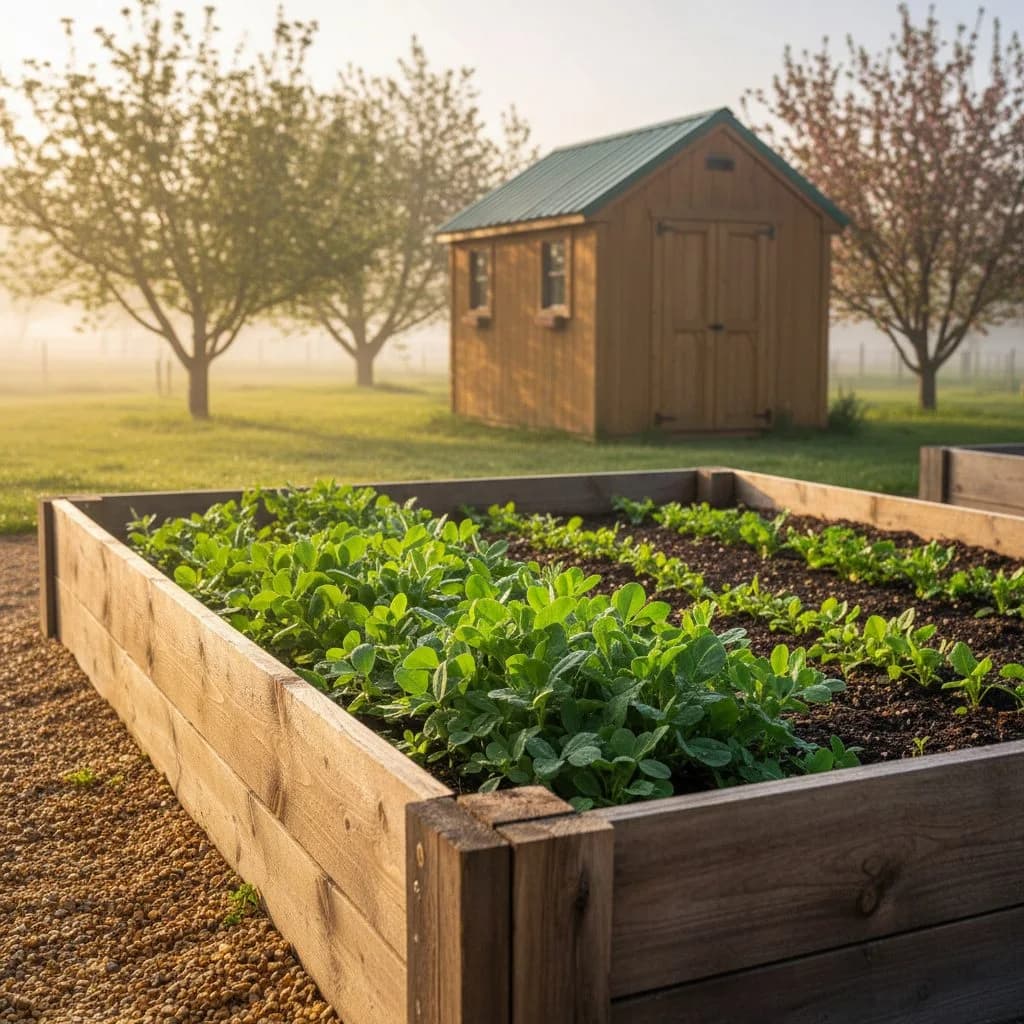
Key takeaways
- Cover crops improve soil structure and steadily add organic matter to raised beds season over season.
- Integrating cover crops into small spaces like raised beds can reduce water needs by 10-20% due to improved soil moisture retention.
- Selecting appropriate cover crop species for your USDA zone and specific garden goals is important for success, with legumes fixing up to 150 lbs of nitrogen per acre.
- Permaculture principles, such as plant guilds and zones, can improve the effectiveness of cover cropping in small, intensive systems.
- Proper termination methods, whether crimping or cutting, are essential to prevent cover crops from competing with subsequent cash crops.
- Even small-scale cover cropping noticeably reduces weed pressure over a growing season, though a dense living mulch can also shelter slugs and voles in a raised bed.
Quick answer: Cover cropping in raised beds improves soil health by increasing organic matter, improving water retention, and suppressing weeds. This practice, especially when combined with permaculture principles, creates resilient and productive small-scale gardening systems.
For many growers across the United States, from the arid Southwest to the humid Southeast, raised beds offer a practical solution for gardening in challenging soils or limited spaces. These elevated planting areas, often 6 to 12 inches deep, provide advantages like better drainage and warmer soil temperatures earlier in the spring. However, the intensive cultivation common in raised beds can deplete soil nutrients and organic matter quickly if not managed thoughtfully. Raised-bed soils vary widely (anything from sandy loam to clay loam), which is why they need consistent soil improvement.
Cover cropping is common on large farms, but it works just as well in a small garden. By intentionally planting specific species during off-seasons or between cash crops, even a 4×8 foot raised bed can benefit from increased soil organic matter, improved water infiltration, and reduced weed pressure. Trials on permanent raised beds have shown improved soil quality and profitability over successive seasons, benefits that translate to smaller scales [2].
The permaculture approach to raised beds and cover crops
Permaculture design principles offer a practical framework for integrating cover crops into raised beds and small gardens. Instead of viewing cover crops as a separate practice, we can weave them into a holistic system that mimics natural ecosystems. This means considering how different plants interact, how water moves through the system, and how to maximize beneficial relationships within a limited footprint. For example, in a small garden in USDA zone 6, you might design a plant guild with a central fruit bush, surrounded by nitrogen-fixing cover crops like clover, and then a dynamic accumulator such as sterile Bocking 14 comfrey (use that cultivar instead of seed-setting common comfrey, Symphytum officinale, which self-sows freely, and site it alongside the bed instead of in it, since the taproot regrows from any fragment left behind). Comfrey is mulch, not food or fodder: its pyrrolizidine alkaloids are hepatotoxic.
Designing for resilience in small spaces
Applying permaculture principles to raised beds means thinking beyond a single growing season. It involves creating a resilient system where soil health comes first, water is conserved, and biodiversity is encouraged. A study in 2013 on permanent raised beds found significant improvements in soil chemical properties, including organic carbon and available nitrogen, over time [1]. This long-term perspective is central to permaculture. We aim for self-sustaining ecosystems, where each element supports the others, reducing the need for external inputs. This can mean planting a living mulch of white clover under tomatoes in a 4×4 foot bed, which can reduce weed growth by up to 75%.
- Zone 1 intensive beds: Focus on quick-growing, edible cover crops like radishes or annual rye between short-season vegetables.
- Zone 2 perennial beds: Integrate perennial cover crops such as white clover or creeping thyme around fruit bushes and asparagus.
- Guild planting: Combine cover crops with cash crops in beneficial groups, like planting vetch around young fruit trees to fix nitrogen.
- Water harvesting: Design raised beds with slight depressions or adjacent swales to capture and infiltrate more rainwater instead of shedding it.
- Succession planting: Follow a harvested crop with a cover crop so the soil is never bare for more than one to two weeks.
For more on integrating these ideas, explore Permaculture gardening: no-dig beds, guilds, and zones.
Choosing the right cover crops for small-scale systems
Selecting the appropriate cover crop is important for success in raised beds and small gardens. The choice depends on your specific goals (nitrogen fixation, biomass production, weed suppression, or soil aeration) and your local climate. In USDA zone 7, for instance, a winter cover crop of crimson clover and cereal rye can be planted in early fall, providing soil protection through temperatures as low as 10°F. These mixtures are particularly effective, with legumes fixing up to 150 pounds of nitrogen per acre, while grasses scavenge residual nutrients.
Types of cover crops and their benefits
Cover crops are generally categorized into legumes, grasses, and brassicas, each offering distinct advantages. Legumes, such as clover, vetch, and peas, are prized for their ability to fix atmospheric nitrogen, making it available to subsequent crops. A stand of hairy vetch can add 80-120 pounds of nitrogen per acre. Grasses, including cereal rye, oats, and wheat, excel at building soil organic matter, preventing erosion, and scavenging excess nutrients. Cereal rye, for example, can produce 5,000-8,000 pounds of biomass per acre. Brassicas, like daikon radish and mustard, are excellent for breaking up compacted soil with their deep taproots and can suppress nematodes. Daikon radishes can penetrate hardpans up to 24 inches deep.
- Nitrogen fixers: Hairy vetch, crimson clover, field peas: ideal for beds needing a nitrogen boost for hungry crops like corn or tomatoes.
- Biomass builders: Cereal rye, oats, wheat, which increase organic matter, especially in new raised beds with low initial organic content (below 2%).
- Weed suppressors: Buckwheat, annual rye, crimson clover, which outcompete weeds and reduce their presence by 60-80% over a growing season.
- Soil aerators: Daikon radish, tillage radish; their deep roots can break up compaction in beds that have seen heavy foot traffic or equipment.
- Pest suppressors: Mustard and some marigold varieties can suppress root-knot nematodes when grown as a dense stand and chopped in, though results vary widely by cultivar and by which nematode is present.
For more specific recommendations by region, see Best Living-Mulch and Cover-Crop Legumes by USDA Zone for No-Dig Beds.
Implementing cover crops in small, intensive spaces
Successfully integrating cover crops into raised beds requires careful planning, especially regarding planting times and termination methods. Unlike large fields, where machinery might be used, small gardens rely on hand tools and precise timing. In a 4×8 foot raised bed in USDA zone 5, you might plant oats in late summer after harvesting early tomatoes, allowing them to grow for 6-8 weeks before winter freezes. This ensures maximum biomass accumulation before winter kill. The goal is to grow the cover crop enough to provide benefits, but not so much that it becomes difficult to manage.
Planting and termination strategies
When planting, ensure good seed-to-soil contact. For most cover crops, a seeding depth of one-quarter to one-half inch is sufficient. Broadcast seeds evenly over the bed, then lightly rake them in. After planting, a light watering helps germination. In a 3×6 foot bed, a small hand seeder can ensure even distribution. Termination is equally important. For annual cover crops like oats or buckwheat, winter kill in colder zones (USDA zone 4-6) can be sufficient. In milder climates (USDA zone 7-10), or for perennial cover crops, methods like crimping, cutting, or solarization are necessary. A 1996 study on young grapevines showed that ground cover directly influenced their growth and survival [4].
- Winter kill: Sow oats in late summer or early fall in zones where winter temperatures drop below about 20°F and let the freeze terminate them. Buckwheat is not a fall cover crop (the first light frost kills it outright), so sow it between spring and late summer instead.
- Chop and drop: Cut down mature cover crops at their base and leave the biomass on the soil surface as a mulch, feeding the soil as it breaks down.
- Crimping: For larger, more fibrous cover crops, use a roller-crimper or even a heavy board to flatten and terminate them without cutting.
- Solarization: In warmer climates (USDA zone 8-10), cover a bed with clear plastic for 4-6 weeks during the hottest part of summer to kill cover crops and weeds.
- Under-sowing: Plant a low-growing cover crop, like white clover, simultaneously with a main crop, allowing it to act as a living mulch throughout the growing season.
Consider using a Soil Moisture Meter to monitor soil conditions and optimize planting and watering schedules for your cover crops.
Long-term benefits and troubleshooting common issues
The sustained use of cover crops in raised beds yields significant long-term benefits, transforming the soil into a more fertile and resilient medium. Over several years, you can expect to see a noticeable increase in soil organic matter, often from an initial 1-2% to 4-5% or more, which greatly improves soil structure and water retention. This improved soil health supports more vigorous plant growth and can lead to higher yields, as observed in a 2001 study in North-East India where raised beds improved maize productivity [2]. The USDA Natural Resources Conservation Service (NRCS) champions cover cropping for its broad benefits, including erosion control and nutrient cycling [5].
Addressing challenges in small-scale cover cropping
While the benefits are substantial, growers might encounter a few challenges. One common issue is timing: ensuring the cover crop has enough time to grow before it needs to be terminated for the next cash crop. In a small 2×4 foot bed, this might mean selecting a fast-growing cover crop like buckwheat, which matures in 30-45 days. Another challenge is managing biomass; if a cover crop grows too vigorously, it can be difficult to cut down by hand. For example, a dense stand of cereal rye can produce over 5,000 pounds of biomass per acre, requiring a sharp scythe or heavy-duty pruners for manual termination. Finally, preventing cover crops from going to seed and becoming weeds is important, especially for brassicas like mustard.
- Insufficient growth: If a cover crop doesn’t grow enough, it won’t provide full benefits. Ensure adequate moisture and nutrients for the cover crop itself, aiming for at least 6-8 weeks of growth.
- Over-vigorous growth: If a cover crop gets too large, terminate it earlier than planned. A 12-inch tall stand of clover is easier to manage than a 3-foot tall stand of rye.
- Volunteer seeds: Terminate cover crops before they set seed. For example, buckwheat should be cut when 50% of its flowers are open to prevent reseeding.
- Nutrient imbalance: If using only carbon-rich cover crops like rye, you might temporarily tie up nitrogen. Balance with nitrogen-fixing legumes or add a small amount of compost.
- Pest/disease carryover: Rotate cover crop families just as you would cash crops to prevent the build-up of specific pests or diseases, especially with brassicas.
Common Cover Crops for Raised Beds and Small Gardens
Cover Crop Type | Primary Benefit | Typical Planting Time (USDA Zone 6-7) | Termination Method |
|---|---|---|---|
Crimson Clover | Nitrogen fixation, weed suppression | Late summer to early fall | Winter kill, chop and drop |
Cereal Rye | Biomass, erosion control, nutrient scavenging | Late summer to late fall | Chop and drop, crimp |
Buckwheat | Quick biomass, weed suppression, phosphorus solubilization | Spring to late summer | Chop and drop (before seeding) |
Daikon Radish | Soil aeration, nematode suppression | Late summer to early fall | Winter kill, chop and drop |
Hairy Vetch | High nitrogen fixation, biomass | Late summer to early fall | Winter kill, chop and drop, crimp |
Oats | Biomass, nutrient scavenging, winter kill | Spring to late summer | Winter kill, chop and drop |
Soil Organic Matter: Regular cover cropping builds soil organic matter in raised beds season over season, improving fertility.
Water Savings: Improved soil structure from cover crops can reduce irrigation needs by 10-20% in a typical growing season.
Nitrogen Boost: Legume cover crops like hairy vetch fix nitrogen at field-scale rates reaching 150 pounds per acre (in a 4×8 bed that is under two ounces, so treat it as a supplement to compost rather than a replacement for it).
References
- Effects of Permanent Raised Beds on Soil Chemical Properties in a Wheat-Maize Cropping System (2013).
- Maize (Zea mays)-based cropping system on raised beds influenced the productivity, soil quality and profitability in North-East India (2001).
- Production of Short-Day Strawberries on Raised Beds in British Columbia (1997).
- INFLUENCE OF RAISED BEDS, GROUND COVER AND IRRIGATION ON GROWTH AND SURVIVAL OF YOUNG GRAPEVINES (1996).
- USDA Natural Resources Conservation Service (2024).